

&imwidth=800&imheight=600&format=webp&quality=medium "Strait of Hormuz on Edge: Inside America’s high-stakes naval blockade")
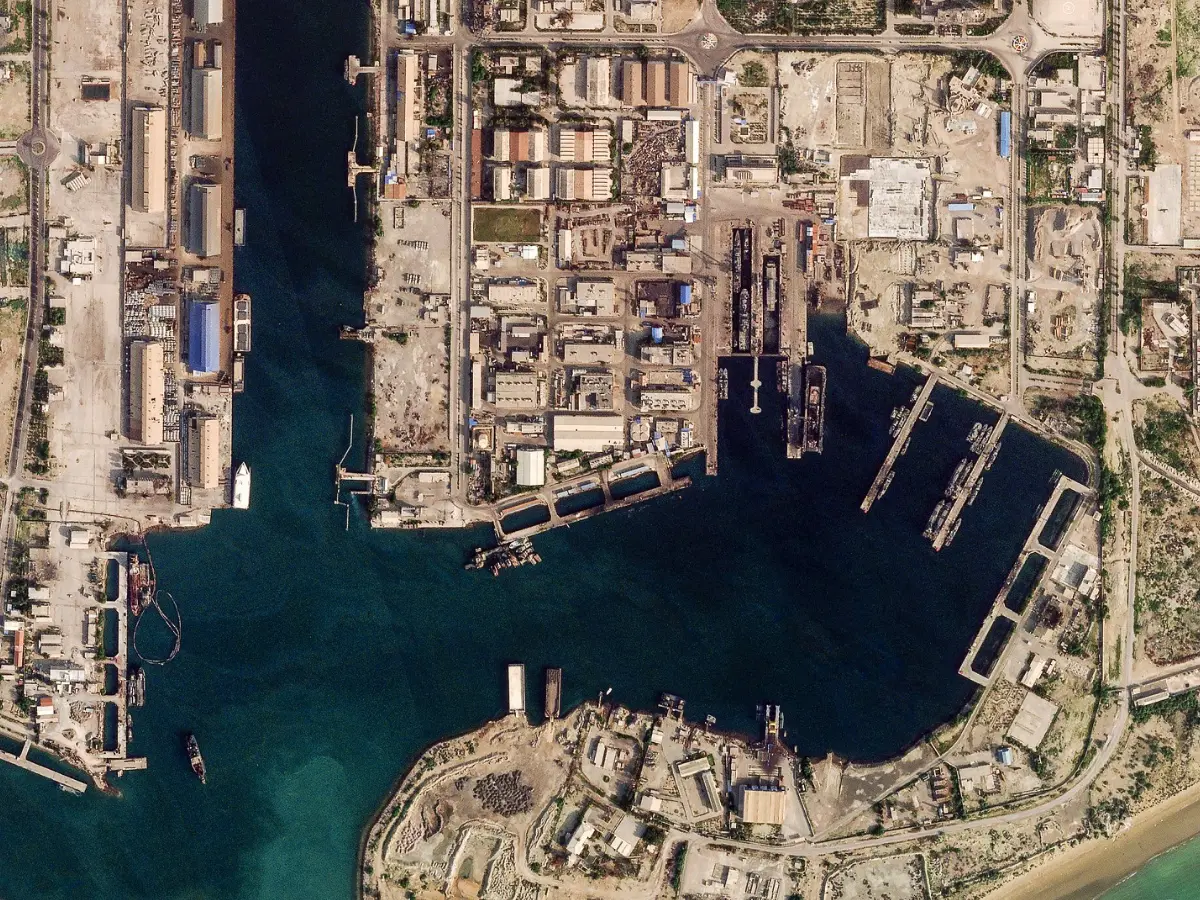
Imagine a narrow strip of sea, just 33 kilometres wide at its narrowest point. Every single day, nearly one-fifth of the world's oil supply flows through this small passage called the Strait of Hormuz. Right now, this stretch of water has turned into one of the most tense and closely watched places on the planet.
Allow me to explain the current situation in clear and simple terms for a broader understanding.
Why America Started the Blockade
Peace talks between the United States and Iran took place in Islamabad, Pakistan. Both sides sat and discussed for a long 21 hours. But the talks ended without any agreement. Iran did not agree to stop its nuclear enrichment work, which many fear could lead to making nuclear weapons. US Vice President JD Vance also joined the discussions, but Iran refused to accept the terms offered.
Seeing no progress, US President Donald Trump gave the order for a naval blockade of the Strait of Hormuz. It began on April 13, 2026, at 7:30 PM Indian time. The US Central Command, or CENTCOM, is carrying out this order.
Trending Stories
&im=FitAndFill=(700,400)&imwidth=180&imheight=135&format=webp&quality=medium)
Navratri 2026: 9 days, 9 forms of Goddess Durga and 9 colours- Check the complete list
&imwidth=180&imheight=135&format=webp&quality=medium)
Korean peninsula tensions escalate as North Korea launches multiple ballistic missiles, PACOM says 'no threat to US personnel'
&imwidth=180&imheight=135&format=webp&quality=medium)
Trump weighs firing Kimberly Guilfoyle as US ambassador to Greece amid misconduct allegations: Report
&imwidth=180&imheight=135&format=webp&quality=medium)
Anti-SIR protest in Mumbai: Protestors wear black masks & ribbons in Mumbai
&imwidth=180&imheight=135&format=webp&quality=medium)
UK PM Andy Birnham renews claims of Russian meddling in Brexit vote
&imwidth=180&imheight=135&format=webp&quality=medium)
BCCI rejects venue shift reports, India vs Sri Lanka 1st ODI to remain in Delhi
&imwidth=180&imheight=135&format=webp&quality=medium)
'Absolutely disgusting': Australia slams US plan to livestream Nidal Hasan's execution; Mike Johnson raises concerns, warns of terrorist propaganda
&imwidth=180&imheight=135&format=webp&quality=medium)
1,500 drones illuminate Mumbai sky as Cordelia Cruises unveils second ship, Cordelia Sky
&imwidth=180&imheight=135&format=webp&quality=medium)
Houthis warns US of 'painful response' if Washington joins Saudi war in Yemen as airlines suspend flights to Saudi Arabia
&imwidth=180&imheight=135&format=webp&quality=medium)
India Rejects Pakistan-China Boundary Commission, Tells Islamabad to Drop 'Theatrics' | GRAVITAS
&imwidth=180&imheight=135&format=webp&quality=medium)
Congress demands action against chief election commissioner
&imwidth=180&imheight=135&format=webp&quality=medium)
Apple HomeView smart home hub may launch soon with A18 chip, display and Siri controls: What to expect
&imwidth=180&imheight=135&format=webp&quality=medium)
'Turn approver, resign, we'll forgive you': Rahul Gandhi claims receiving messages from CEC Gyanesh Kumar
&imwidth=180&imheight=135&format=webp&quality=medium)
'I will not be silenced': Ilhan Omar alleges political intimidation after federal officers search her Washington home
&imwidth=180&imheight=135&format=webp&quality=medium)
Use AI as your ‘second brain’: Meta AI chief Alexandr Wang’s message to young people
&imwidth=180&imheight=135&format=webp&quality=medium)
Robotic surgery, advanced treatment: What is coming to this small Gujarat town?
&imwidth=180&imheight=135&format=webp&quality=medium)
Pakistan's government blames PTI for rise of terrorism in Khyber Pakhtunkhwa
&imwidth=180&imheight=135&format=webp&quality=medium)
‘This is just the start’: Maaya Rajeshwaran on historic ITF title, confidence boost and future goals
&im=FitAndFill=(700,400)&imwidth=180&imheight=135&format=webp&quality=medium)
How does a robot decide what to do next?
&imwidth=180&imheight=135&format=webp&quality=medium)
Trump says he 'may' meet North Korean leader Kim Jong Un during upcoming Asia trip
&imwidth=180&imheight=135&format=webp&quality=medium)
'Ouch!!! That must hurt': Kangana Ranaut hails Kamal Haasan's sharp reply to Elon Musk over Starlink row
&imwidth=180&imheight=135&format=webp&quality=medium)
Sidhu Moose Wala’s younger brother wins hearts by recreating late singer’s signature move at Toronto Hologram Show
&imwidth=180&imheight=135&format=webp&quality=medium)
UK school ditches technology, shifts from screen to pen and paper for learning
&imwidth=180&imheight=135&format=webp&quality=medium)
Opposition’s 10 demands in Supreme Court petition range from stay on SIR to audit of voter rolls
&imwidth=180&imheight=135&format=webp&quality=medium)
'I am thoroughly unamused': Judge slams Trump administration after 400 trees cut at Washington golf course
&imwidth=180&imheight=135&format=webp&quality=medium)
Portugal Federation confirms Cristiano Ronaldo’s return to national team despite suspension
&im=FitAndFill=(700,400)&imwidth=180&imheight=135&format=webp&quality=medium)
New OTT releases this week (October 12-18, 2026): Sacrifice, Koffee with Karan S9, Roadies Rebirth- 6 titles coming on Netflix, JioHotstar and more
&imwidth=180&imheight=135&format=webp&quality=medium)
Rishabh Pant ruled out of India A squad for New Zealand tour, Kumar Kushagra named replacement
&imwidth=180&imheight=135&format=webp&quality=medium)
India's Ajit Doval, Iran's Mohsen Rezaei hold talks amid escalating West Asia tensions, discuss 'issues of mutual interest'
&imwidth=180&imheight=135&format=webp&quality=medium)
'Almost certainly': UK Prime Minister Andy Burnham says Iran's IRGC behind RAF Fairford threat
&imwidth=180&imheight=135&format=webp&quality=medium)
Elon Musk pumps $276 million into Republican campaigns ahead of US midterm elections
What Does a Blockade Really Mean Here?
A blockade means the US Navy will stop and inspect certain ships. But it is not a total shutdown of the entire strait. Ships carrying oil or goods to or from Saudi Arabia, the UAE, Kuwait and other friendly Gulf countries can still pass freely. Only ships heading to or coming from Iranian ports will be stopped and checked.
The main aim is simple — to cut off Iran's money from oil exports and push Tehran to return to serious talks. President Trump also pointed out that Iran's Revolutionary Guard Corps had been demanding up to 2 million dollars from ships just to pass safely. He called this kind of demand unacceptable extortion and said it cannot continue.
The Hidden Danger: Sea Mines
Things are more serious because Iran’s Islamic Revolutionary Guard Corps (IRGC) has placed many sea mines in the waters. A sea mine is like an underwater bomb. It stays hidden below the surface. When a ship passes over it, the mine explodes with huge force, damaging or sinking the vessel and putting lives at risk.
Because of these mines and the tension, around 800 ships have been stuck in the area for weeks, unable to move safely. This has made normal shipping very risky for everyone. Iran even released a video giving a "last warning" to a US warship and issued maps for ships to avoid the mined areas.
How America Plans to Clear the Mines Safely
The US has sent two strong guided-missile destroyers — USS Frank E. Peterson Jr and USS Michael Murphy — to the region. These ships recently transited the Strait of Hormuz as part of the mission. They are not just for fighting; they are helping in a smart mine-clearing plan.
Instead of risking sailors’ lives in dangerous waters, the Navy is using robotic underwater vehicles called Unmanned Underwater Vehicles (UUVs). These look like torpedo-shaped drones. They move on their own under water and use special sonar — basically sound waves that act like underwater radar — to find hidden mines on the seabed.
From the sky, military helicopters such as the MH-60S use an advanced laser system known as the Airborne Laser Mine Detection System (ALMDS). This laser can spot mines floating near the surface or just below it, even from high up.
Once a mine is located, a remote-controlled system called the Airborne Mine Neutralisation System (AMNS) sends a small robot to the spot. The robot then safely explodes the mine without any human being close by. This keeps our sailors safe.
These destroyers also carry the powerful Aegis Combat System and advanced missiles that can destroy threats coming from air or sea. This gives full protection to the entire clearing operation.
US Admiral Brad Cooper has said that a new safe route for ships is being prepared. This safe path will soon be shared with shipping companies around the world so trade can continue smoothly.
What This Means for All of Us — Especially India
The Strait of Hormuz is the lifeline for a huge part of global oil and gas. Any problem here affects prices everywhere. Already, because of the tension, oil prices have jumped past 100 dollars per barrel and crossed 103 dollars — an increase of more than 8 percent in a short time. Some experts even worry it could go up to 150 dollars if the situation worsens.
For India, which buys a large amount of its oil from the Gulf, this means higher costs at the pump for petrol, diesel and even cooking gas. Families will feel the pinch in daily expenses like travel, transport and kitchen needs.
Countries like the UK and Australia have said they will not join the US in this blockade. China, which buys a lot of Iranian oil, is watching carefully. Experts worry that if the situation worsens, China could get more directly involved, which might make things even more dangerous for the whole world.
Pakistan continues to play a role as mediator, hoping to bring both sides back to the table.
Right now, every ship moving — or waiting — in that narrow strait carries big consequences for all nations. The coming days will be important as the world hopes for calm, safe passage and lower prices again.
