Sri Lanka at crossroads; how should India react?

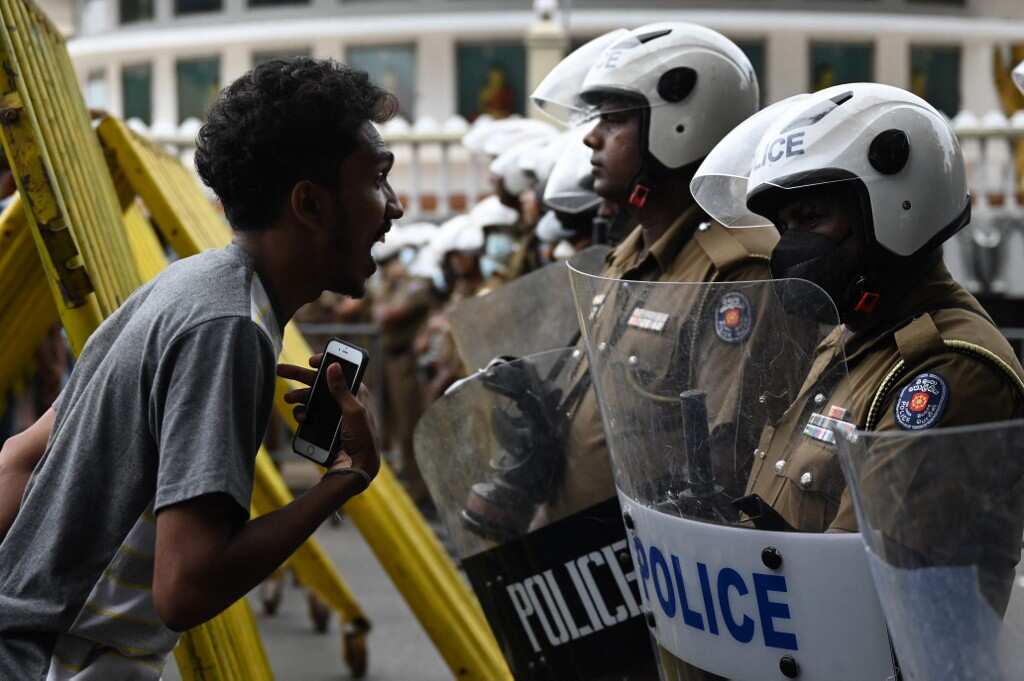
Social and political unrest in Sri Lanka
It has been a turbulent year so far for Sri Lanka with the island states’ worst fears being realised. The present economic crisis was in the making for a few years owing to Sri Lanka’s bad political decisions and policies, ill-effects of over-centralisation of leadership even at the cost of weakening of democratic institutions, deficient future economic planning, opportunism of lender countries like China. The result was a situation of grave foreign exchange shortage, leading to a record high level of inflation and a scarcity of essentials to citizens including, fuel, food and medicines.
With President Gotabaya Rajapaksa abandoning citizens and fleeing to Singapore, followed by his resignation, there remains no doubt that the social and political unrest in the state is here to stay and the disturbing images of protesters storming the Presidential house and government offices and days-long ques outside fuel pumps are not exaggerations but a genuine depiction of the chaos.
Sri Lanka thus finds itself amidst a whirlpool. These strong currents which are pulling Sri Lanka further into the storm, call for a strong, strategic and well-crafted reaction from India in the given situation. India is a leading country in the South Asia region and an immediate neighbour having a historically cordial relationship with Sri Lanka.

What should be the Indian reaction?
India as a leading civilisational power in the region. It not just has a strategic requirement and national interest reasons but also a greater moral responsibility to act when an immediate neighbour is in crisis. External Affairs Minister, S Jaishankar pointed this out earlier in July that the present economic and political crisis “pertains to a very close neighbour and, given the near proximity, we naturally worry about the consequences, the spillover it has for us”.
India ought to have twin goals in the given situation where Sri Lanka is not just encountering a political instability but a grave shortage of foreign exchange reserves which has led to the country struggling to pay for essential imports.
&imwidth=180&imheight=135&format=webp&quality=medium)
100,000 strikes in 3 years: How October 7 redefined Israel's war
&im=FitAndFill=(700,400)&imwidth=180&imheight=135&format=webp&quality=medium)
Happy Birthday Rekha: Watch these 7 evergreen Bollywood hits on Netflix, Prime Video and more
&imwidth=180&imheight=135&format=webp&quality=medium)
‘Your people don’t even let us near it’: IAF chief’s blunt response on US F-35; India yet to decide on Russia’s Su-57
&imwidth=180&imheight=135&format=webp&quality=medium)
Real or fake? PIB fact-checks protest videos; Delhi Police clarifies on Gurdwara Bangla Sahib clip
&imwidth=180&imheight=135&format=webp&quality=medium)
UK navy hit by espionage scandal: Sailor accused of spying for Russia | Gravitas
&imwidth=180&imheight=135&format=webp&quality=medium)
Delhi on high alert for CJP protest: Delhi police to use body cams to 'prove whether we did anything’; Pink Force, RAF, 35,000 personnel deployed
&imwidth=180&imheight=135&format=webp&quality=medium)
‘Never-ending flow of cheap labour’: JD Vance hits back at Indian-origin Congresswoman over US green card curbs for major tech companies
&imwidth=180&imheight=135&format=webp&quality=medium)
Panama president declares ‘major disaster’ after powerful 7.7-magnitude earthquake; over 80 aftershocks recorded
&imwidth=180&imheight=135&format=webp&quality=medium)
'Jantar Mantar not the story of India': BJP's Sambit Patra claims 'anarchists' tried to hold Delhi captive
&imwidth=180&imheight=135&format=webp&quality=medium)
BJP MP Ravi Shankar Prasad slams CJP protests, calls it 'shadow boxing for AAP'
&imwidth=180&imheight=135&format=webp&quality=medium)
Riyadh airport hit in missile attack, dozens injured; 5 in intensive care
&imwidth=180&imheight=135&format=webp&quality=medium)
'Spent Rs 2,000 cr to elect Trump': Elon Musk bought US President's loyalty by writing the biggest political cheque in human history
&imwidth=180&imheight=135&format=webp&quality=medium)
Powerful 7.7 magnitude earthquake strikes Panama, tsunami warning issued
&imwidth=180&imheight=135&format=webp&quality=medium)
US mid-term elections: What are PACs - Unique American System that lets corporates shape voting
&imwidth=180&imheight=135&format=webp&quality=medium)
Elon musk & India clash over Starlink's market entry terms
&imwidth=180&imheight=135&format=webp&quality=medium)
INDIA bloc plans mega protest on Monday amid Delhi crackdown, Wangchuk's warns to launch 'padyatra'
&imwidth=180&imheight=135&format=webp&quality=medium)
Who is Ajinkya Shinde, announced to lead CJP protest after Dipke, Das and Ranka's detention?
&imwidth=180&imheight=135&format=webp&quality=medium)
'Ouch!!! That must hurt': Kangana Ranaut hails Kamal Haasan's sharp reply to Elon Musk over Starlink row
&imwidth=180&imheight=135&format=webp&quality=medium)
‘Right to protest must be protected, but...’: Delhi Police reveals why it denied CJP permission for October 10 Jantar Mantar protest
&imwidth=180&imheight=135&format=webp&quality=medium)
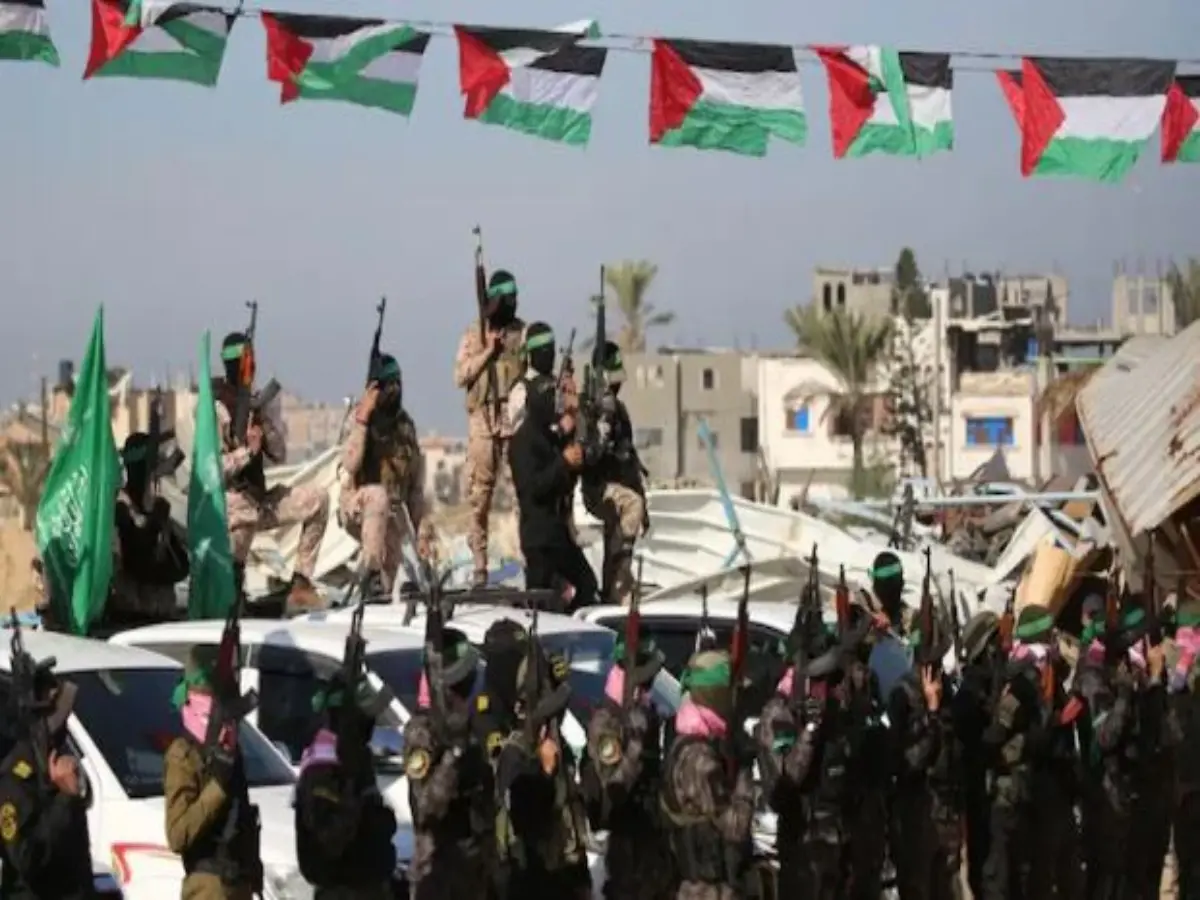
Hamas used double agents, deceived Israel to carry out October 7 massacre
&imwidth=180&imheight=135&format=webp&quality=medium)
NIA files FIR in Flydubai hijack attempt and attack on Smit Machchhar, probes ‘larger conspiracy’
&imwidth=180&imheight=135&format=webp&quality=medium)
Portugal Federation confirms Cristiano Ronaldo’s return to national team despite suspension
&imwidth=180&imheight=135&format=webp&quality=medium)
All 22 Indian seafarers safe in attack on Panama-flagged tanker off UAE coast
&imwidth=180&imheight=135&format=webp&quality=medium)
‘Time for Ukraine to get a new president’: Trump lashes out at Zelensky over Russia strikes
&im=FitAndFill=(700,400)&imwidth=180&imheight=135&format=webp&quality=medium)
Food shortages, suicide attempts and more: USS Abraham Lincoln returns to US after 321 day deployment — What happened aboard the US carrier?
&imwidth=180&imheight=135&format=webp&quality=medium)
Thai queen becomes first reigning monarch to fly jet solothailand #queen #wion
&imwidth=180&imheight=135&format=webp&quality=medium)
‘Every game against Liverpool is special’: Erling Haaland ahead of Anfield clash
&imwidth=180&imheight=135&format=webp&quality=medium)
Rahul Gandhi calls Modi, Shah ‘cowards’ amid CJP protest crackdown in Delhi
&imwidth=180&imheight=135&format=webp&quality=medium)
Four years, 3 licenses, zero launch: Why is Elon Musk’s Starlink still struggling to crack Indian market? EXPLAINED
&imwidth=180&imheight=135&format=webp&quality=medium)
AUS vs SA 1st Test, Day 2: Renshaw shines with 190 as Australia dominate South Africa
&imwidth=180&imheight=135&format=webp&quality=medium)
Why was CJP founder Abhijeet Dipke detained? What Delhi Police said
&imwidth=180&imheight=135&format=webp&quality=medium)
Putin conveys Iran’s proposal to Trump, offers to take Tehran’s enriched uranium
&imwidth=180&imheight=135&format=webp&quality=medium)
'It’s been 12 hours': CJP writes to Delhi Police, demands release of Dipke, Saurav Das and Ranka
First, to provide maximum possible assistance and support to Sri Lanka. This would serve two purposes, to save the Sri Lankan democracy and its vibrant institutions and governance record from degenerating into a politically, economically and socially disturbed state in the years to come. It is certainly not in the Indian national interest to have another neighbouring state, after the unpleasant experiences from Afghanistan, Pakistan and Myanmar, to becoming hotbed of notorious non-state actors, non-democratic regimes and overall socio-economic turmoil.
After all, not many decades ago India had to cater to the refugees from Sri Lanka, send the rather controversial peacekeeping mission to the state between 1987 and 1990 and the in later years after the conclusion of the Sri Lankan civil war send aid. India provided aid for the rehabilitation of numerous Internally Displaced Persons (IDPs), the Sri Lankan Tamils uprooted due to the situation emanating from a prolonged civil war in Sri Lanka.
Answering a question in the Parliament, inquiring whether India is taking any steps/measures to help Sri Lanka from the unprecedented crisis, the Minister of State in the Ministry of External Affairs, V. Muraleedharan cited the details of India’s continued support and efforts to the economic development of the people of Sri Lanka in overcoming the economic challenges.
He stated that, early this year “India extended a US$ 400 million currency swap to Sri Lanka under the SAARC Framework and deferred successive Asian Clearing Union (A.C.U.) settlements. India also offered a Line of Credit of US$ 500 million for the purpose of fuel import from India. A credit facility of US$ 1 billion has been introduced to help Sri Lanka procure food, medicines and other essential items from India. There was also a humanitarian assistance or gift of essential medicines, kerosene oil and Urea fertilizer.”
Another crucial purpose the Indian support would serve would be in proving the domestic critics of the Modi government’s foreign policy wrong. There has been criticism that the government of India in recent years has not prioritised the maintenance of healthy bilateral relationships in the neighbourhood, especially with smaller states in South Asia like Nepal etc.
Brushing aside the recent criticisms based on a report stating that Sri Lanka in 2020 had requested India for a debt deferral, the EAM Jaishankar said that, no formal request had been made for help earlier, thus the Indian assistance could not be termed as “too little too late” in this case.
The Sri Lanka crisis has given the Indian government led by PM Modi a good opportunity to strengthen it’s ‘neighbourhood first policy’ and display how the policy could be implemented and be widely seen in action. With India committing a $3.8 billion for the support of Sri Lanka, EAM Jaishankar reiterated that the Prime Minister is committed to its neighbourhood first policy where the government makes special efforts to try and support the country’s neighbours in a manner that meets their requirements.
Indian commitment to, as V. Muraleedharan mentions, support the quest of the people of Sri Lanka for stability and economic recovery, through established democratic norms, institutions and constitutional framework, remains firm.
A second goal for India and notably of equal importance is to name and shame the PRC. This would build diplomatic pressure on PRC and attract international attention and probably later invite international condemnation towards the ‘by-design’, ‘ill-intended’ bad loans China offers to many developing states like Sri Lanka.
Since 2019, there has been an overall decline in the Sri Lanka’s foreign reserves and a record increase in the external debt. China alone has making around 10% of the total debt, what Jaishankar calls as an “unsustainable debt”, of approximately $34.6 billion.
ANI reports that as per a study last yearby two Sri Lankan economists, the “official data from the Sri Lanka’s Finance Ministry showing it as 10% might just cater to the government-to-government debt. And the commercial lending to the government and loans to Sri-Lankan state owned enterprises”. For instance, in the case of the Hambantota Port development, China enveloped Sri Lanka into an unequal deal with a controversial 99-year lease contract. Sri Lanka defaulted and had issues with the repayment of the loan and eventually lost control over its own port.
China has aimed to destabilize many Asian and African economies in the past with its ‘debt traps’. It is one of the biggest investors in various infrastructure projects in Sri Lanka though there has been both domestic and international concerns about China luring Sri Lanka into a debt trap.
However, it must be acknowledged that several reasons proliferating the recent economic and political crisis in Sri Lanka have internal or domestic causes, yet the role of China in the present turmoil could not be completely overlooked. Many political and economic analysts believe that the Sri Lankan crisis could not be seen as a bolt from the blue or unprecedented as there was in making from some years now owing to Sri Lanka’s bad political choices and poor economic planning.
To conclude, for Prime Minister Modi’s ‘Neighbourhood First Policy’ to be seen in action, the politico-economic crisis in Sri Lanka presents a ripe moment for India where it could act and assist the state in every possible manner.
Apart from the several strategic benefits, what India could draw from this crisis would be to emerge as a strong state in the region and provide a support system for many SAARC and the BIMSTEC member states. There is a vacuum for a leadership role for the fraternity of states which have borrowed heavily based on contracts and conditions designed by Beijing. Many of these economies are in ‘debt traps’ with their economies already showing the signs of strains. India is known for its soft power credentials and in Sri Lankan recovery that support from India is paramount.
The author is an Assistant Professor in the Department of Political Science, Lady Shri Ram College for Women, University of Delhi.
(Disclaimer: The views of the writer do not represent the views of WION or ZMCL. Nor does WION or ZMCL endorse the views of the writer.)