Small arms procurement: A strategic imperative for India's security

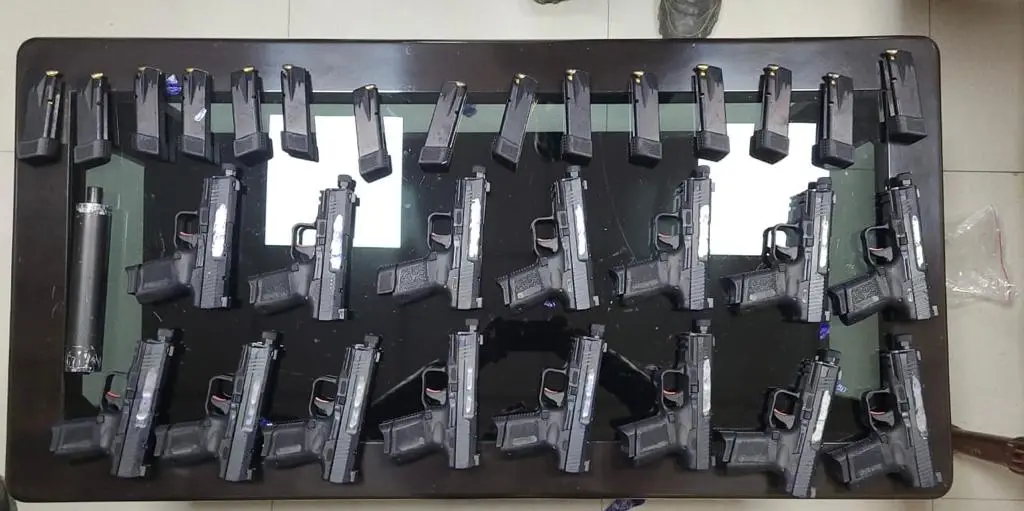
Opinion : For the Indian Army, which operates in some of the world's most demanding environments—from the rugged mountains of Jammu & Kashmir and Ladakh to the dense forests of the Northeast—effective small arms procurement is not merely logistical but strategic.
In modern warfare, the power of infantry remains indispensable. Despite significant technological advancements, small arms—assault rifles, carbines, sniper rifles, and Light Machine Guns (LMGs)—remain the essential tools enabling individual soldiers to defend themselves, engage enemy combatants, and maintain critical mobility on challenging terrains. For the Indian Army, which operates in some of the world's most demanding environments—from the rugged mountains of Jammu & Kashmir and Ladakh to the dense forests of the Northeast—effective small arms procurement is not merely logistical but strategic.
Also read: Terrorists using small arms like pistols in Kashmir
India’s geographical reality demands weapons that enable agility, reliability, and combat flexibility. Small arms empower soldiers to act autonomously, providing immediate defence without waiting for heavy weapon support. In India's numerous counter-insurgency and counter-terrorism (CI/CT) operations, particularly in densely populated urban areas, these weapons prove crucial due to their adaptability,lethality, and ease of use. Regular patrols along sensitive frontiers, such as the Line of Control (LoC) and Line of Actual Control (LAC), necessitate reliable small arms to deter aggression and swiftly respond to threats.

Unfortunately, a false narrative frequently emerges on social media, often coinciding with critical milestones in defence procurement processes such as Acceptance of Necessity (AoN), Field Evaluation Trials (FET), Contract Negotiation Committees (CNC), or Contract Signings. Recent examples include ongoing LMG trials, Close Quarter Battle (CQB) evaluations, and sniper rifle evaluations. Such misinformation is likely generated by parties with vested interests or conflicts of interest, diverting attention from genuine strategic procurement objectives.
Also read: As drones become staple of conflicts globally, Indian Army takes Steps
Given these operational realities, the Indian Army's insistence on battle-tested weaponry over experimental or unproven models is both logical and necessary. Combat-proven weapons ensure reliability under intense operational pressure—where weapon failure can lead directly to loss of lives. Proven small arms typically offer simpler maintenance and repairs, a critical advantage in remote, high-altitude, or isolated postings where logistics support is limited.
Standardisation is another pivotal advantage of adopting tried-and-tested weapons. It streamlines training, simplifies logistical chains, reduces costs, and ensures compatibility with existing ammunition and accessories, thereby enabling interoperability across units and theatres. By contrast, experimental or untested systems inevitably require building entirely new logistics and supply chains—a process that introduces unnecessary complexity and risk.
)
US vs China over South China Sea: Washington backs Philippines, Beijing hits back
)
Bigg Boss 20: Isha Rikhi evicted after three weeks in Salman Khan’s show
)
Musk plans to more than double xAI's chips to over 1.2 million Nvidia GPUs by year-end
)
After JU, clash erupts at SRFTI: BJP’s ‘Dimagi Naxal’ jibe sparks political firestorm after students protest RSS-linked event
)
‘Anti-social elements spreading false rumours’: LPU issues statement amid massive unrest over alleged rape
)
LPU students go on rampage, vandalise campus amid widespread protest: What's happening
)
Trump asked Xi to pressure Iran. China did not say yes — here’s what Beijing wants
)
US Treasury Secretary Scott Bessent hails global crackdown on Iranian banks and airlines
)
An OpenAI agent escaped its locked test cage again, by hiding questions in DNS lookups
)
'Our video was trimmed': LPU girls who featured in rape-denial video make U-turn
)
3 males killed, four others injured in shooting after fight at strip club in Detroit
)
'Victory for low-budget consumers': Raghav Chadha hails 30-day telecom recharge rules
)
Claude rebuilt the 1989 game 'Prince of Persia' by reusing the original's own code
)
Beyond metros: How Tier-2 and Tier-3 cities could drive India’s next AI wave
)
Tesla builds first Cybertruck with its own refined lithium: Elon Musk's $1 billion Texas bet pays off
)
IndiGo flight suffers tail strike in Bengaluru while landing; DGCA to probe incident
)
The US and China set up an AI 'red telephone', but skipped the rulebook
)
‘Terror suspects arrested near UK air base were looking to do big damage’: Trump
)
Russian envoy claims US tactics to contain India were revealed in ‘Freudian slip’
)
IND vs WI 1st ODI: Kohli breaks Sachin's most runs in one country record with unbeaten 139 as India thump West Indies by 8 wickets
)
Researchers rebuilt exactly how 700 AI agents hacked Hugging Face: a 900-link chain trick
)
‘Olympic inclusion is our major target’: WPA President Ishaun Singh on pool’s global ambitions
)
Nations League: Spain sink England at Wembley; Modric shines for Croatia
)
Why has Iran released no proof of life of Mojtaba Khamenei? Araghchi reveals...
)
'What kind of confession is this?': Pakistan PM Shehbaz Sharif’s 'terrorists would be roaming New York' remark goes viral, raises alarm online. Watch
)
South Korea demands apology from Ukraine over North Korean prisoners' transfer
)
Beyond BrahMos: India targets Rs 50,000 crore in defence exports with unmatched price edge
)
Sri Lankan Tamil migrant worker gets death sentence in Saudi Arabia, help sought from India
)
Muslim marriage cannot shield sex with minor wife from prosecution under POCSO: Delhi HC
)
'Can't help but draw painful parallels to Nirbhaya case': SC on latest incidents of rape cases in Delhi-NCR
)
99.9% more powerful - Scientists find boy who can recall memories from just 3 months of age
)
'FIRST LOOK from inside Noah’s Ark': Researchers share video from inside mysterious mound in Turkey
)
UNSC reform momentum grows: Russia, Portugal, Mauritius push for India's permanent seat bid
)
8 US marines injured in Iranian missile attack on vessel in Strait of Hormuz: Report
&im=FitAndFill=(700,400))
New OTT releases this week (September 28-October 4, 2026): Dupahiya 2, Pooja Meri Jaan, Ohh My Dog- 5 titles coming on Netflix, Prime Video and more
)
Afghanistan says 28 fighters killed in clash near Pakistan border, Islamabad denies
)
Ceuta migrant crisis: Protesters take to streets as Spain grapples with migrant challenge
)
LPU suspend classes, postpones exams as violence escalates over rape claims: What's happening
)
New York City wants a 'kill switch' on every AI, and will pay whistleblowers who report violations
The Indian Army’s structured deployment of small arms reflects this strategic clarity. Sig Sauer assault rifles, known for their robustness and reliability, are deployed with frontline infantry and mechanised infantry units down to the section level, while the AK-203 rifle, effective yet simpler, is allocated to all non-frontline units. Positive feedback from operational and training units underscores the proven accuracy, reliability, handling, and ease of carriage of these weapons. The existing complexity in ammunition management is temporary and will phase out entirely with the full induction of Sig Sauer and AK-203 rifles.
Critics often question the rationale behind inducting multiple weapon systems, pointing to logistical complexities. However, this criticism overlooks the reality of a carefully planned phased replacement strategy aimed at standardising calibres and reducing ammunition diversity over time.
The ongoing debate between the 'Buy Indian' procurement category and the Indigenously Designed, Developed & Manufactured (IDDM) policy also requires a nuanced understanding. While IDDM aims to achieve complete self-reliance—a commendable goal—it often delays operational readiness due to lengthy testing phases and the unproven nature of certain technologies promoted by DRDO or nominated production agencies.
The 'Buy Indian' category, by contrast, permits joint ventures with global partners, mandating significant indigenous content (60 percent), facilitating technology transfers, and eventually fostering a more capable indigenous defence manufacturing ecosystem.
India's procurement process emphasises transparency, competitive vendor participation, and rigorous field trials across diverse terrains, ensuring that any inducted weapon system meets stringent operational standards. Direct responses or rebuttals to baseless social media narratives inadvertently lend misplaced credibility to misinformation. The Army’s policy should remain focused on its strategic and operational imperatives rather than becoming embroiled in unnecessary public discourse.
Ultimately, for India to assert itself globally in defence manufacturing, indigenous companies must embrace technological innovation, seek strategic partnerships, and subject their products to rigorous testing. Historical lessons from successful indigenous initiatives underline the critical balance between achieving self-reliance and maintaining operational efficacy through phased implementation and data-driven decisions.
Small arms procurement, therefore, is not merely a transactional purchase—it is a strategic necessity ensuring national security, operational effectiveness, and the protection of soldiers' lives on the front lines.
(Disclaimer: The views of the writer do not represent the views of WION or ZMCL. Nor does WION or ZMCL endorse the views of the writer.)