
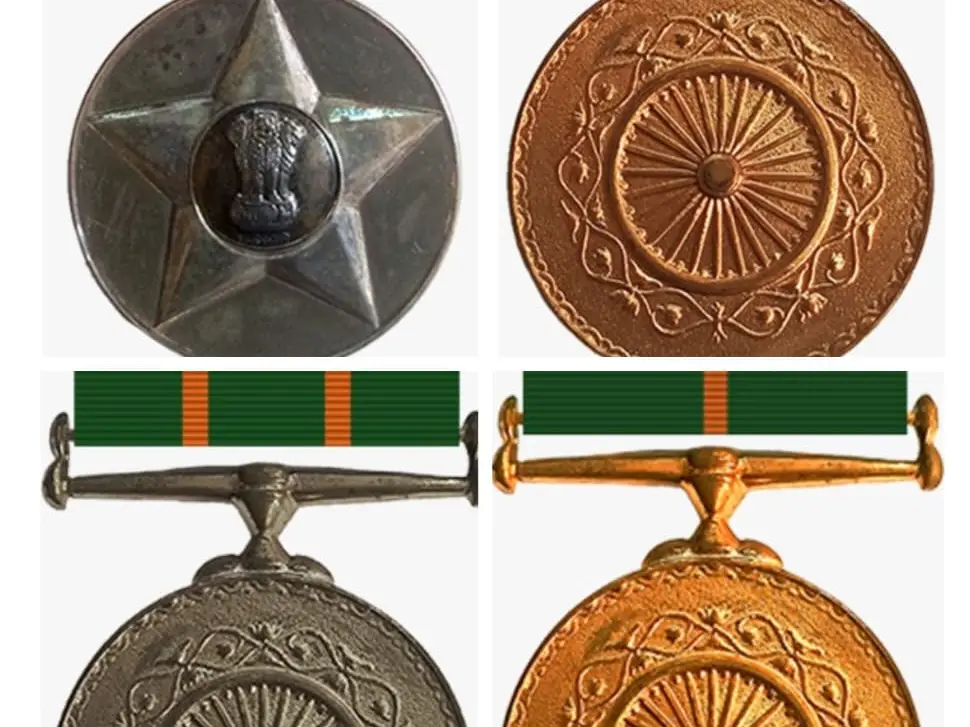
&imwidth=800&imheight=600&format=webp&quality=medium "Separating facts from fiction in India’s military awards system")
Every year, the announcement of the Republic Day military awards triggers the same argument. Social media fills up with claims that the system is “top-heavy”, that generals collect medals while soldiers who face bullets are ignored. WhatsApp forwards circulate numbers showing a high share of awards going to senior officers. Commentators then jump to the conclusion that the system rewards rank, not courage.
The numbers often quoted are not always wrong. The interpretation of those numbers usually is. This debate suffers from one basic flaw: it treats all military awards as if they mean the same thing. They do not. Once you separate different categories of awards and understand what each is meant to recognise, the claim that the system is skewed collapses.
Service Awards Are Not Gallantry Awards

The most common mistake is mixing service awards with gallantry awards. On Republic Day 2026, military decorations were approved for 301 personnel. President Droupadi Murmu approved military decorations for 301 Armed Forces personnel. These included 30 Param Vishisht Seva Medals, 56 Ati Vishisht Seva Medals, and 135 Vishisht Seva Medals. These Distinguished Service medals dominated the announcement, and yes, they predominantly went to senior officers of colonel rank and above, with the PVSM reserved exclusively for Lieutenant Generals, Vice Admirals, and Air Marshals.
These medals are not for bravery in combat. They are awarded for sustained, exceptional service and command responsibility, mostly in peacetime or long-duration operational roles. The PVSM, in particular, is meant for officers who have carried the heaviest strategic responsibilities over decades of service. Naturally, that limits eligibility to very senior ranks. Critics often ask why generals receive so many awards. The answer is simple: generals do not fight patrol actions or lead assaults. Their responsibility lies elsewhere. A corps commander makes decisions that affect the lives of 60,000 soldiers under his command. His judgments on deployment, logistics, intelligence coordination, and civil-military interaction can prevent casualties—or cause them. These decisions are not dramatic, but they are decisive.
Lieutenant General Abhijit S Pendharkar, who received the Uttam Yudh Seva Medal as Commander of 3 Corps, exemplifies this kind of operational leadership where strategic decisions have massive downstream consequences.
Trending Stories
)
US vs China over South China Sea: Washington backs Philippines, Beijing hits back
)
Bigg Boss 20: Isha Rikhi evicted after three weeks in Salman Khan’s show
)
Musk plans to more than double xAI's chips to over 1.2 million Nvidia GPUs by year-end
)
After JU, clash erupts at SRFTI: BJP’s ‘Dimagi Naxal’ jibe sparks political firestorm after students protest RSS-linked event
)
‘Anti-social elements spreading false rumours’: LPU issues statement amid massive unrest over alleged rape
)
LPU students go on rampage, vandalise campus amid widespread protest: What's happening
)
Trump asked Xi to pressure Iran. China did not say yes — here’s what Beijing wants
)
US Treasury Secretary Scott Bessent hails global crackdown on Iranian banks and airlines
)
An OpenAI agent escaped its locked test cage again, by hiding questions in DNS lookups
)
'Our video was trimmed': LPU girls who featured in rape-denial video make U-turn
)
3 males killed, four others injured in shooting after fight at strip club in Detroit
)
'Victory for low-budget consumers': Raghav Chadha hails 30-day telecom recharge rules
)
Claude rebuilt the 1989 game 'Prince of Persia' by reusing the original's own code
)
Beyond metros: How Tier-2 and Tier-3 cities could drive India’s next AI wave
)
Tesla builds first Cybertruck with its own refined lithium: Elon Musk's $1 billion Texas bet pays off
)
IndiGo flight suffers tail strike in Bengaluru while landing; DGCA to probe incident
)
The US and China set up an AI 'red telephone', but skipped the rulebook
)
‘Terror suspects arrested near UK air base were looking to do big damage’: Trump
)
Russian envoy claims US tactics to contain India were revealed in ‘Freudian slip’
)
IND vs WI 1st ODI: Kohli breaks Sachin's most runs in one country record with unbeaten 139 as India thump West Indies by 8 wickets
)
Researchers rebuilt exactly how 700 AI agents hacked Hugging Face: a 900-link chain trick
)
‘Olympic inclusion is our major target’: WPA President Ishaun Singh on pool’s global ambitions
)
Nations League: Spain sink England at Wembley; Modric shines for Croatia
)
Why has Iran released no proof of life of Mojtaba Khamenei? Araghchi reveals...
)
'What kind of confession is this?': Pakistan PM Shehbaz Sharif’s 'terrorists would be roaming New York' remark goes viral, raises alarm online. Watch
)
South Korea demands apology from Ukraine over North Korean prisoners' transfer
)
Beyond BrahMos: India targets Rs 50,000 crore in defence exports with unmatched price edge
)
Sri Lankan Tamil migrant worker gets death sentence in Saudi Arabia, help sought from India
)
Muslim marriage cannot shield sex with minor wife from prosecution under POCSO: Delhi HC
)
'Can't help but draw painful parallels to Nirbhaya case': SC on latest incidents of rape cases in Delhi-NCR
)
99.9% more powerful - Scientists find boy who can recall memories from just 3 months of age
)
'FIRST LOOK from inside Noah’s Ark': Researchers share video from inside mysterious mound in Turkey
)
UNSC reform momentum grows: Russia, Portugal, Mauritius push for India's permanent seat bid
)
8 US marines injured in Iranian missile attack on vessel in Strait of Hormuz: Report
&im=FitAndFill=(700,400))
New OTT releases this week (September 28-October 4, 2026): Dupahiya 2, Pooja Meri Jaan, Ohh My Dog- 5 titles coming on Netflix, Prime Video and more
)
Afghanistan says 28 fighters killed in clash near Pakistan border, Islamabad denies
)
Ceuta migrant crisis: Protesters take to streets as Spain grapples with migrant challenge
)
LPU suspend classes, postpones exams as violence escalates over rape claims: What's happening
)
New York City wants a 'kill switch' on every AI, and will pay whistleblowers who report violations
These are the roles that Distinguished Service medals recognise. They reward the burden of command, the weight of responsibility, and the strategic impact that only comes with senior rank.
Comparing these awards with battlefield gallantry statistics is methodologically absurd, like criticising a hospital for giving more administrative recognition to chief surgeons than to nurses, while ignoring that nurses receive different forms of recognition appropriate to their roles.
Gallantry Awards Tell a Different Story
If we look only at gallantry awards—the ones that recognise courage under fire, the picture changes completely.
On Republic Day 2026, 70 gallantry awards were approved, including six posthumous. These comprised one Ashok Chakra, three Kirti Chakras, 13 Shaurya Chakras, including one posthumous, one Bar to Sena Medal for Gallantry, 44 Sena Medals for Gallantry, including five posthumous, six Nao Sena Medals for Gallantry, and two Vayu Sena Medals for Gallantry. The breakdown tells the story. Group Captain Shubhanshu Shukla received the Ashok Chakra, India's highest peacetime gallantry award. The Kirti Chakra recipients included Major Arshdeep Singh, Naib Subedar Doleshwar Subba, and Group Captain Prasanth Balakrishnan Nair. Notice the ranks represented in Shaurya Chakra awards i.e, Lieutenant Colonel Ghatage Aditya Shrikumar, multiple majors and captains, Subedar P H Moses, Lance Daffadar Baldev Chand, who was awarded posthumously, and Riflemen Manglem Sang Vaiphei and Dhurba Jyoti Dutta.
Generals are absent from these lists, exactly as they should be. Colonel Amit Dadhwal, multiple lieutenant colonels and majors, several captains, numerous subedars and naib subedars, havildars, including Jhantu Ali Shaikh, who received his award posthumously, naiks, lance naiks, sepoys, and riflemen. One particularly poignant award went to Lance Havildar Satya Pal Singh, who received a Bar to his existing Sena Medal for Gallantry, indicating repeated acts of bravery. Combat bravery occurs at the sharp end: during counter-terrorist operations, ambushes, IED clearances, and close-quarters fighting. Senior officers are not meant to be there. Their job is to ensure those operations succeed with minimum loss.
These situations don't involve generals because generals, by virtue of their command responsibilities, are not and should not be at that level of tactical engagement. Of the 44 Sena Medals for Gallantry awarded, the overwhelming majority went to subedars, naib subedars, havildars, naiks, lance naiks, sepoys, riflemen, and other junior ranks. The problem is not with how the system functions, but with how critics analyse it by lumping all awards together.
The Numbers, Properly Read
When the full awards list is examined honestly, the “top-heavy” claim does not survive scrutiny. When we examine the complete Republic Day 2026 awards announcement, the "top-heavy" narrative collapses under the weight of actual data. The 30 PVSM awards went to the most senior officers: 19 Lieutenant Generals, one Major General, four Vice Admirals, including one Surgeon Vice Admiral, and six Air Marshals. These represent the apex of three decades or more of military service, commanding formations of thousands, often in the most sensitive operational areas. Lieutenant General Dhiraj Seth commanded Southern Command, Lieutenant General Rajan Sharawat commanded 9 Corps, and Lieutenant General Gambhir Singh commanded 4 Corps. These are not ceremonial positions.
They are commands where decisions literally determine whether operations succeed or fail, whether soldiers come home safely or in coffins. The 56 AVSM awards showed more diversity: 11 Lieutenant Generals, 23 Major Generals, one Brigadier, one Subedar, six Vice Admirals and Rear Admirals, and 13 Air Force officers from Air Marshal to Air Vice Marshal rank. Significantly, Subedar H Hokato Sema from 9 Assam received the AVSM, demonstrating that distinguished service recognition isn't exclusively a general officer club. Major General Manish Kumar received the Yudh Seva Medal as Inspector General Assam Rifles North, while Major General Vijay Mahadevan commanded Counter Insurgency Force Romeo, both operational commands where service directly translated to mission success in active insurgency zones.
The 135 VSM awards went predominantly to Major Generals, Brigadiers, Colonels, Lieutenant Colonels, with representation from Rear Admirals, Commodores, Captains, Air Vice Marshals, Air Commodores, Group Captains, Wing Commanders, and even junior ranks, including Subedar Major Rakesh Singh Rawat and Havildar Ramesh Kumar. The VSM category demonstrates how service recognition extends across the rank structure, not concentrating exclusively at the top. When critics focus only on the 30 PVSM and 56 AVSM awards, they're deliberately forming a narrative that ignores how the system distributes recognition across different categories designed for different purposes.
OR-Exclusive Awards
There are also medals that officers cannot receive at all. The Meritorious Service Medal (MSM) and Good Conduct Service Medal are awarded exclusively to Other Ranks and Junior Commissioned Officers. These recognise discipline, integrity, and sustained professionalism over long careers. Hundreds are awarded every year. Any serious analysis of “who gets recognised” that ignores these awards is incomplete by definition.
MACP: Financial Recognition Where It Matters Most
Beyond medals, the military has institutional mechanisms to prevent financial stagnation among junior ranks. The Modified Assured Career Progression (MACP) scheme provides time-bound financial upgradation to Other Ranks and JCOs when promotions are limited. Officers do not receive MACP benefits. A captain stuck in rank receives no automatic financial relief. A Havildar does. This is a deliberate structural choice to protect those with limited promotion avenues. Yet MACP is never mentioned in viral critiques because it does not fit the narrative.
The Myth of the “Farewell Medal”
Another common claim is that senior officers receive medals automatically on retirement. This is simply untrue.
Distinguished Service medals are not guaranteed. Many senior officers retire without them. Recommendations are scrutinised, questioned, and often rejected. The reason awards cluster around retirement is that senior command tenures end then, allowing performance to be assessed over a complete cycle. Timing should not be confused with entitlement.
Responsibility Is Also a Burden
At the heart of this debate is a deeper misunderstanding: the belief that only physical courage deserves recognition.
That view is not just simplistic; it is dangerous. Wars are not won by heroics alone. Planning, logistics, intelligence, and leadership win them. A poor strategic decision can kill more soldiers than enemy fire. A good one can save lives without a single shot being fired. Military systems recognise this reality. They must reward both courage and command, differently but fairly.
What Actually Affects Soldier Morale
There is little evidence that soldiers resent awards given to senior officers. Those who serve understand the difference between gallantry and service recognition. They know their battalion commander’s responsibilities are not the same as theirs. What damages morale is something else entirely: when bravery goes unrecognised, when citations are delayed, when bureaucracy blocks rightful awards. That is where reform should focus—not on creating artificial resentment between ranks.
The Bottom Line
When the full picture is considered, India’s military awards system is far more balanced than critics claim. Gallantry awards overwhelmingly go to junior ranks. Service awards recognise command responsibility across levels. Other Ranks have exclusive medals, financial progression schemes, and honourary promotions that materially improve their lives. Senior officers receive recognition only after decades of accountability over thousands of lives.
The system is not perfect. No human institution is. But the charge that it is structurally biased in favour of generals does not hold up to serious examination. The real problem is not the awards system. It is the habit of drawing loud conclusions from partial data. Understanding the difference between courage and command—and recognising both honestly—is the first step toward a more informed debate.
(Disclaimer: The views of the writer do not represent the views of WION or ZMCL. Nor does WION or ZMCL endorse the views of the writer.)