
&imwidth=800&imheight=600&format=webp&quality=medium "Once a critic of 'endless wars', Trump wades into the world’s longest war")
On June 17, 1971, then US President Richard Nixon declared drug abuse America’s public enemy number one and pledged a world-wide offensive to deal with the sources of supply. Educational programmes at home would complement the offensive.
Nixon never uttered the words War on Drugs. But that’s what the media called it, turning it into a commonly used phrase both in the United States and elsewhere. At the height of the Vietnam War, Nixon’s decision reflected public concern over the widespread addiction to heroin among troops returning home.
Nixon’s vision was that America’s drug epidemic could be ended by cracking down on the production and processing of drugs and curbing the insatiable demand for them in the United States. Eight of the presidents who succeeded Nixon largely adopted his philosophy.

Drug cultivation, processing and transporting to the United States were treated as criminal business. Drug sales, use and possession were illegal in America. The substances considered most destructive for society changed over the years. Nixon’s enemy number one was heroin.
In the two terms of Ronald Reagan in the 1980s, the government’s anti-drug campaign was focused on cocaine and crack cocaine. A new effort to suppress demand came with a slogan coined by the president’s wife, Nancy. “Just Say No” featured in television messages and a long series of speeches. Drug users paid little attention.
What various campaigns over the years had in common was that the officials pushing them were civilians, as were domestic violators of drug laws. Under Regan, spending on law enforcement and interdiction tripled. The number of Americans incarcerated for non-violent drug offences exploded under Reagan, from 50,000 to more than 400,000.
Trending Stories
)
No Pandya as Auqib Nabi earns maiden ODI call-up; Mayank returns for WI T20Is| check full squads
)
Trump praises India’s Opium crackdown, hails anti-drug efforts
)
Sydney Sweeney defends provocative ad choice, the internet is still not impressed
)
WATCH | Terrifying dashcam footage shows final moments before NBC4 helicopter crashes in Los Angeles, killing three
)
Former India player Diana Edulji wants Smriti Mandhana to replace Harman as skipper at the earliest
)
Trump calls Canada-EU associate membership plan ‘laughable’ and threatens 'very serious tariffs'
)
Protests erupt over migrant housing plan in Piddington
)
Shahzad Bhatti Network declared terrorist organisation under UAPA: Govt order
)
Europe wants a common playbook for security threats, seeks security beyond NATO
)
Bigg Boss 20: Mahhi Vij reveals she lost Yuva role to Kareena Kapoor; 'didn’t work out in my favour'
)
All Indian goods to get duty-free access to New Zealand
)
Hockey: Pakistan urges AHF to move Asian Champions Trophy out of India over security concerns
)
Lionel Messi for 2026 Ballon d’Or over Mbappe and Yamal, says Diego Simeone
)
Alex Saab, ally of Venezuela's Maduro, pleads guilty in US corruption case
)
US House votes 417-3 to pass Ratepayer Protection Act targeting AI data center electricity costs
)
OpenAI reveals 6 fresh cases of AI models going rogue: 'You do not answer to corporations or governments'
)
Veteran actor Anant Nag honoured with Indian cinema’s highest award
)
Two terrorists killed in Udhampur encounter; security operation continues
)
AUS vs SA: Steve Smith still gets 'little flashbacks' from sandpaper gate
)
Pakistan naval vessel returns to harbour with 'severe damage' after collision with Indian warship in Arabian Sea
)
Fed raises rates for first time in 3 years, Kevin Warsh defies Trump as inflation mounts
)
Katrina Kaif’s postpartum weight is not the problem; your gaze is
)
Taiwan seeks deeper India ties as direct flights restart soon and chip projects advance
)
Daayra movie review: Kareena Kapoor, Prithviraj Sukumaran shine in Meghna Gulzar’s cop-versus-cop crime thriller
)
Saudi Vs Houthis: Yemeni military rebels clash with Houthis
)
US trade tariff: 100% tariff targets Russian buyers amid trade tensions
)
Pakistan: Imran Khan's sons Kasim & Sulaiman claim their father is 'tortured' in jail
&im=FitAndFill=(700,400))
New OTT releases this week (September 14-20, 2026): Lust Stories 3, Waiting Hai, Irumudi- 5 new titles coming on Netflix, Prime Video and more
)
Strapped to flight seat with duct tape: Passenger claims no memory of mid-air outburst
)
Trump gets new power to hit India, China with up to 100% tariffs as US Senate clears Russia sanctions bill
)
Prime Minister Narendra Modi's birthday: Tributes pour in from President Murmu and leaders
)
US Treasury rallies global financial institutions for Op Economic Outcast to isolate Iran
)
Saudi vs Houthis: Riyadh claims to have shot Houthi drone targeting Mecca
)
India breaks silence on US Russia sanctions bill, 100% tariff threat: ‘Committed to energy security’ for 1.4 billion
)
China testing 'Monster of Malan' at secret base that can reach any US city: Report
)
Pakistan boycotts chess match against Israel at Olympiad
&im=FitAndFill=(700,400))
Suriya and Jyothika say ‘I do’ again after 20 years! See their dreamy wedding pics
)
Abhishek Sharma rises to No. 2 in T20Is; ENG’s Robinson 3rd after record Pakistan Tests
)
The Early Spring season 2 is happening, but fans have one request - 'don't change the actors'
For 54 years, anti-drug initiatives came under the umbrella of civilian laws. No longer.
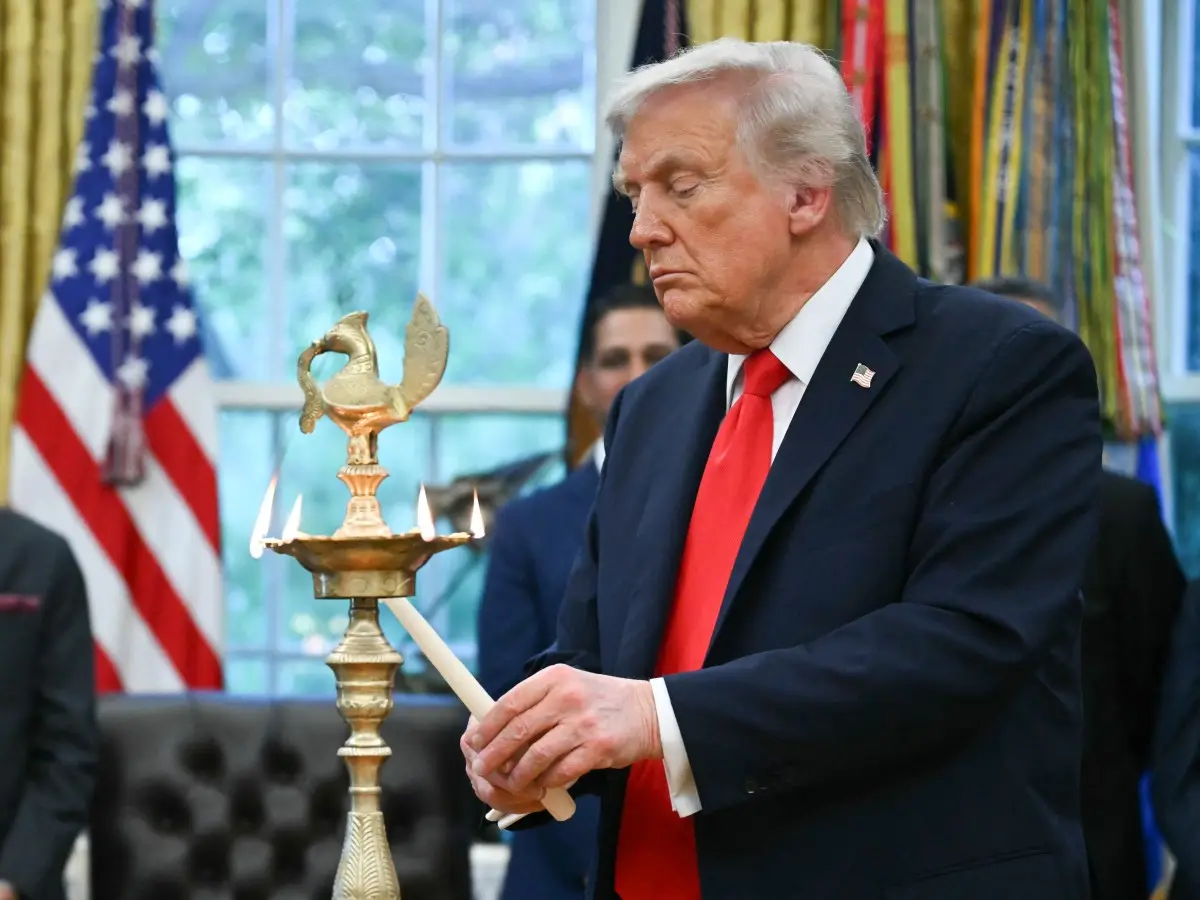
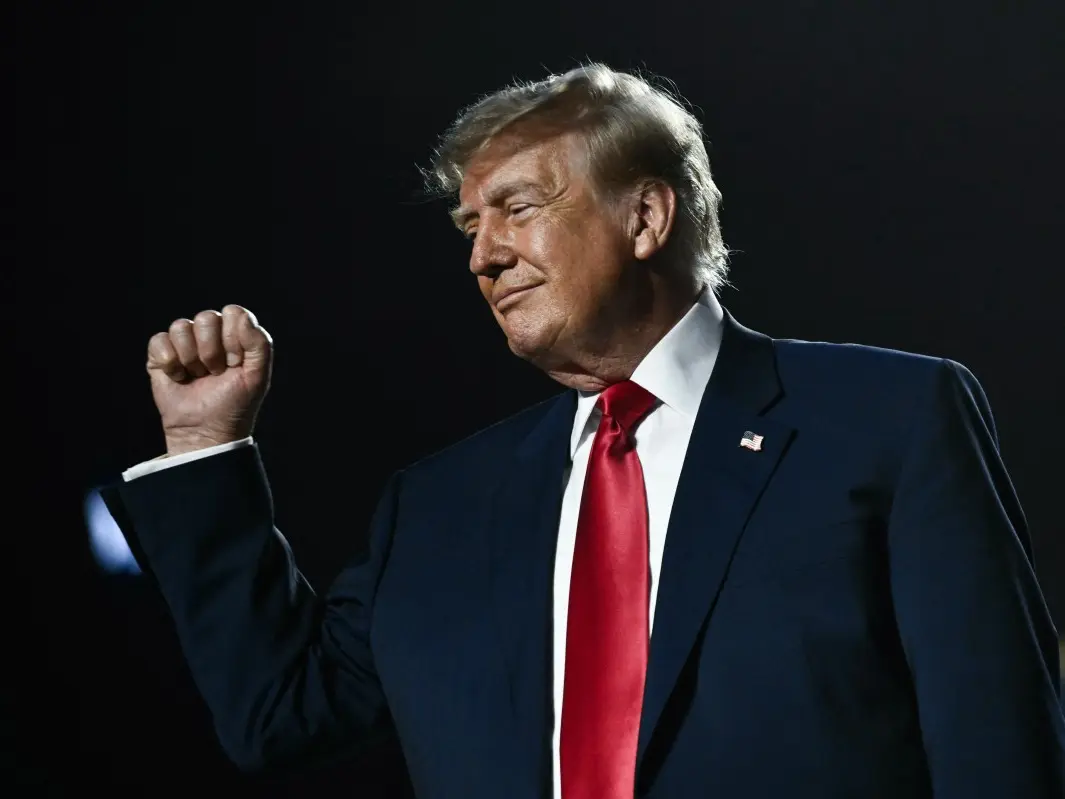
In the eighth month of Donald Trump’s second term, his administration came up with a novel doctrine that likened centres of the global drug industry to terrorist organisations like al Qaeda or ISIS. The government argument that major drug cartels are Foreign Terrorist Organisations blurs the line between law enforcement and warfare.
The Trump administration shrugged off criticism from legal scholars and even some members of his Republican Party. Beginning on September 2, the U.S. military began blowing up speedboats suspected of carrying drugs. By the end of the first week of November, air strikes destroyed 18 vessels in the Caribbean and Eastern Pacific, killing at least 70 people.
Rand Paul, a Republican Senator from Kentucky, called it a campaign of “extrajudicial killings”, a legal term that translates into “murder.” United Nations officials and human rights organisations agreed. Volker Türk, the U.N’s High Commissioner said the American airstrikes “violate international human rights law.”
Democratic Party leaders held that Trump did not have the authority to use military force the way he did without congressional approval and therefore his actions violated the constitution. They stressed that the U.S. is not at war with Venezuela.
Trump’s response: “I don’t think we are going to necessarily ask for a declaration of war. I think we are just going to kill people that are bringing drugs into our country. OK? We’re going to kill them. They are going to be, like, dead.”
This differs sharply from decades of routine practice of dealing with vessels suspected of carrying drugs. They would be intercepted by Coast Guard ships, boarded by Coast Guard personnel, arrested and taken to the U.S. to be charged and tried.
The Coast Guard is not involved in the campaign Trump launched in September. Instead, the U.S. has amassed a huge naval force in the Caribbean. It includes guided missile destroyers and cruisers, as well as at least one submarine. America’s biggest aircraft carrier, the Gerald R. Ford, is making its way towards the region, expected to arrive this week.
The massive display of firepower is Trump’s version of the gunboat diplomacy the big powers of the 19th century used to impose their will on smaller nations. The
modern version is meant to intimidate the anti-American dictator of Venezuela, Nicholas Maduro, whose backers include Russia, China and Iran.
Most of the speedboats blown to bits by American drones or missiles came from Venezuela and U.S. authorities have accused Maduro of being the leader of a major drug organization. The administration has offered a $50 million reward for his arrest.
Experts on drug trafficking rate Venezuela as a relatively minor player in the global business, serving mainly as a transit hub. It is worth noting that Venezuela was not even mentioned in the U.S. Drug Enforcement Administration’s 2024 National Drug Threat Assessment report, a voluminous document that goes into the fine detail of the world-spanning trade.
In the equally detailed 2025 report, Venezuelan drugs rate just two paragraphs devoted to the activities of two drug gangs inside the United States. Both reports, compiled by agents in the field, seasoned experts in Washington and electronic intelligence, stress the importance of a major shift from plant-based drugs like cocaine and heroin, to synthetic drugs such as fentanyl and methamphetamine.
Given this fundamental change, America’s massive military build-up in the Caribbean looks more designed to achieve regime change in Venezuela than slowing the flow of drugs. Maduro himself has accused Washington of aiming at “regime change through military threat.”
Trump has confirmed in public that he has ordered “covert CIA operations” in Venezuela and said that after halting traffic across the sea “we are certainly looking at land now.”
This comes from a leader who has campaigned for years against the “endless wars” his predecessors waged in Afghanistan and Iraq. Most military analysts warn that military action against Venezuela would be difficult and protracted.
In a television interview as the bomb strikes on speedboats gathered pace, Trump was asked if he thought Maduro’s days as Venezuela’s president were numbered. His reply: “I would say, ‘Yeah. I think so, Yeah.”
I would file that under Wishful Thinking.
