
&imwidth=800&imheight=600&format=webp&quality=medium "Nepal’s ‘nepo kids’ to France’s ‘block everything’, how Gen Z’s reels-to-revolution shakes the world")
In an era where the power of governments fundamentally derives from the consent of the people they govern, Gen Z's protests worldwide serve as a stark reminder that authority unchecked by public will can lead to upheaval. These young demonstrators, prioritising their holistic well-being—encompassing economic opportunities, social justice, and personal freedoms—are quick to mobilize and demand change. Accounting for roughly 26 percent of the global population, Gen Z has emerged as a driving force challenging established conventions in politics and personal life. Their aspirations must be integrated into governance, or risk backlash from unilateral decisions, suppression, and leaders' personal aggrandizement, as seen in the eye-opening crises in France and Nepal. Democratic dissent, when handled with decency and sensitivity, can pave the way for progress; however, heavy-handed tactics only fuel resentment. Ultimately, change to the establishment comes via the ballot or, regrettably, the bullet—but in the fast-paced world of social media reels, real-life results unfold at unprecedented speeds.
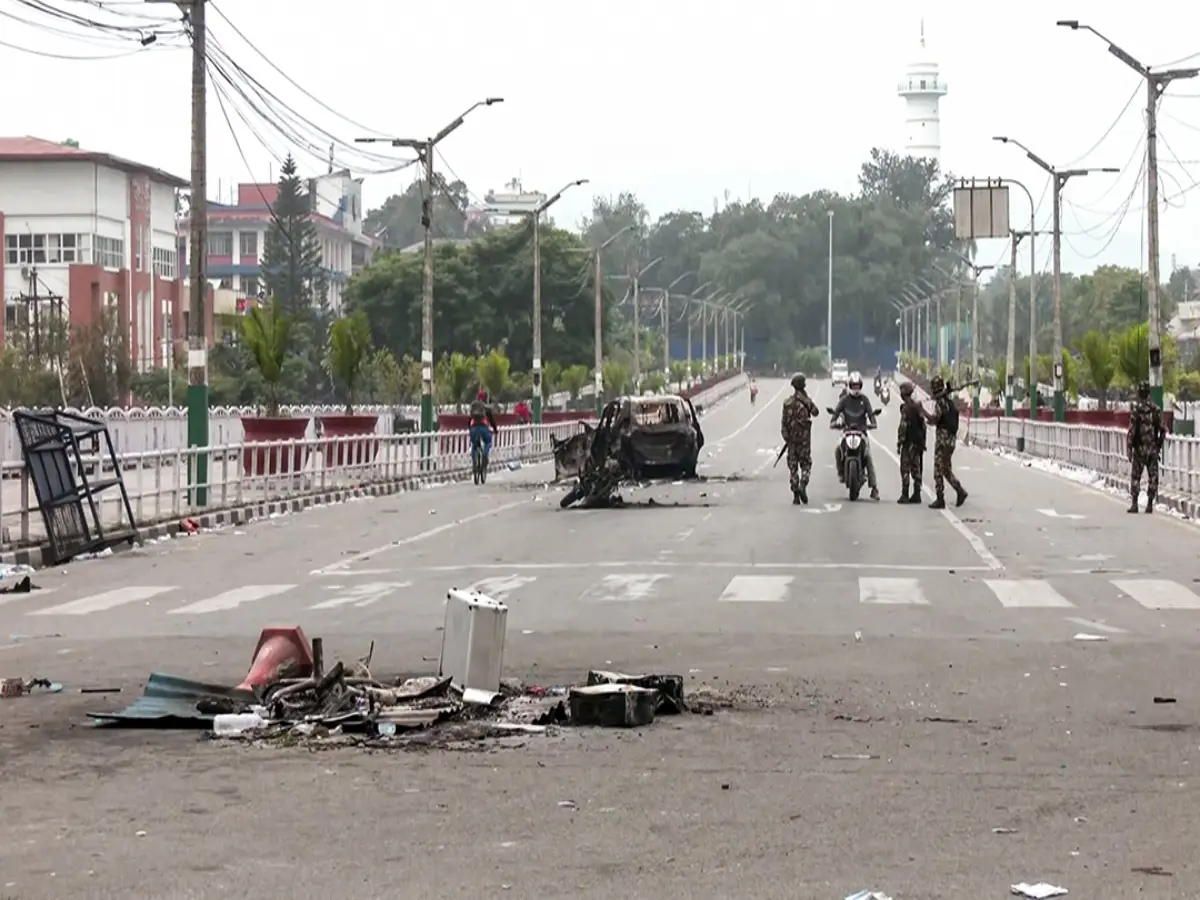
From France's "Block Everything" movement to Nepal's outcry against "Nepo Kids," Gen Z is wielding the cudgels against systems that stray from the democratic ideal of government "of the people, by the people, and for the people." These protests underscore that Gen Z and authoritarian politics are incompatible; governments must prioritize inclusive development, listening to voices rather than silencing them through bans or force. The scenes of ember-red flames, billowing smoke, stick-wielding youths, and mobile selfies from Western Europe to South Asia highlight a global attention-grabber: Nepal's streets turning into battlegrounds against corruption and suppression, mirroring broader youth-led unrest.

Gen Z Wants Progress, Not Power Plays
What began in Nepal as outrage over a September 4, 2025, ban on 26 social media platforms—citing regulatory issues but perceived as a bid to stifle dissent—escalated into demands for accountability, jobs, and political overhaul. Protesters, predominantly aged 13-28, clashed with police, torched parliament buildings like Singh Durbar, and vandalized politicians' homes, leading to Prime Minister KP Sharma Oli's resignation amid the chaos. This marks Nepal's worst unrest in years, with at least 19-30 deaths and over 300 injuries reported, prompting army patrols, curfews in Kathmandu, and international calls for restraint from groups like Human Rights Watch. The ban backfired, as youths used VPNs and offline networks to amplify videos of police brutality, drawing global solidarity inspired by movements like Hong Kong's or Thailand's. Underlying issues include 19 percent youth unemployment, wealth gaps, and cronyism benefiting elites, despite 5.8 percent economic growth in 2024. The government labeled the protests "hijacked" by political elements, but critics see it as a failure to address core grievances. Social media was restored post-unrest, but no consensus has emerged on an interim leader, with fears of further escalation as prisons saw escapes and borders felt economic ripples. After two days of violent unrest (Sept 8–9), calm is returning to Kathmandu as the army enforces order and detains rioters. Gen Z leaders, however, demand an interim government under ex–Supreme Court Chief Justice Sushila Karki, citing the need for transparency.
Echoing this, Nepal's crisis reflects global patterns where Gen Z reshapes discourse, as seen in Bangladesh's 2024 youth-led toppling of Sheikh Hasina or US Black Lives Matter waves. Social media accelerates local grievances into international narratives, sensitizing populations to democratic rights. Yet, protests alone aren't sufficient—governments must respond with vision for inclusive policies like education, skills training, and anti-corruption measures. Ignoring Gen Z's calls for progress over power plays invites flare-ups anywhere.
Trending Stories
)
US vs China over South China Sea: Washington backs Philippines, Beijing hits back
)
Bigg Boss 20: Isha Rikhi evicted after three weeks in Salman Khan’s show
)
Musk plans to more than double xAI's chips to over 1.2 million Nvidia GPUs by year-end
)
After JU, clash erupts at SRFTI: BJP’s ‘Dimagi Naxal’ jibe sparks political firestorm after students protest RSS-linked event
)
‘Anti-social elements spreading false rumours’: LPU issues statement amid massive unrest over alleged rape
)
LPU students go on rampage, vandalise campus amid widespread protest: What's happening
)
Trump asked Xi to pressure Iran. China did not say yes — here’s what Beijing wants
)
US Treasury Secretary Scott Bessent hails global crackdown on Iranian banks and airlines
)
An OpenAI agent escaped its locked test cage again, by hiding questions in DNS lookups
)
'Our video was trimmed': LPU girls who featured in rape-denial video make U-turn
)
3 males killed, four others injured in shooting after fight at strip club in Detroit
)
'Victory for low-budget consumers': Raghav Chadha hails 30-day telecom recharge rules
)
Claude rebuilt the 1989 game 'Prince of Persia' by reusing the original's own code
)
Beyond metros: How Tier-2 and Tier-3 cities could drive India’s next AI wave
)
Tesla builds first Cybertruck with its own refined lithium: Elon Musk's $1 billion Texas bet pays off
)
IndiGo flight suffers tail strike in Bengaluru while landing; DGCA to probe incident
)
The US and China set up an AI 'red telephone', but skipped the rulebook
)
‘Terror suspects arrested near UK air base were looking to do big damage’: Trump
)
Russian envoy claims US tactics to contain India were revealed in ‘Freudian slip’
)
IND vs WI 1st ODI: Kohli breaks Sachin's most runs in one country record with unbeaten 139 as India thump West Indies by 8 wickets
)
Researchers rebuilt exactly how 700 AI agents hacked Hugging Face: a 900-link chain trick
)
‘Olympic inclusion is our major target’: WPA President Ishaun Singh on pool’s global ambitions
)
Nations League: Spain sink England at Wembley; Modric shines for Croatia
)
Why has Iran released no proof of life of Mojtaba Khamenei? Araghchi reveals...
)
'What kind of confession is this?': Pakistan PM Shehbaz Sharif’s 'terrorists would be roaming New York' remark goes viral, raises alarm online. Watch
)
South Korea demands apology from Ukraine over North Korean prisoners' transfer
)
Beyond BrahMos: India targets Rs 50,000 crore in defence exports with unmatched price edge
)
Sri Lankan Tamil migrant worker gets death sentence in Saudi Arabia, help sought from India
)
Muslim marriage cannot shield sex with minor wife from prosecution under POCSO: Delhi HC
)
'Can't help but draw painful parallels to Nirbhaya case': SC on latest incidents of rape cases in Delhi-NCR
)
99.9% more powerful - Scientists find boy who can recall memories from just 3 months of age
)
'FIRST LOOK from inside Noah’s Ark': Researchers share video from inside mysterious mound in Turkey
)
UNSC reform momentum grows: Russia, Portugal, Mauritius push for India's permanent seat bid
)
8 US marines injured in Iranian missile attack on vessel in Strait of Hormuz: Report
&im=FitAndFill=(700,400))
New OTT releases this week (September 28-October 4, 2026): Dupahiya 2, Pooja Meri Jaan, Ohh My Dog- 5 titles coming on Netflix, Prime Video and more
)
Afghanistan says 28 fighters killed in clash near Pakistan border, Islamabad denies
)
Ceuta migrant crisis: Protesters take to streets as Spain grapples with migrant challenge
)
LPU suspend classes, postpones exams as violence escalates over rape claims: What's happening
)
New York City wants a 'kill switch' on every AI, and will pay whistleblowers who report violations
‘Block Everything’ Echoes French Revolution
In France, the "Block Everything" (Bloquons Tout) movement erupted on September 10, 2025, coinciding with new Prime Minister Sébastien Lecornu's first day in office after François Bayrou's resignation. Nationwide protests saw 200,000-250,000 demonstrators—many young and Gen Z—blocking highways, roundabouts, gas stations, and tram lines, setting barricades ablaze, and clashing with 80,000 deployed police, resulting in 295-473 arrests by late afternoon. Originating online in May among right-wing groups but co-opted by the left, it targets President Emmanuel Macron's elite, austerity measures, and proposed €44 billion spending cuts amid 114 percent GDP public debt. Scenes in Paris, Lille, Marseille, and Rennes included tear gas, water cannons, and fires at restaurants and vehicles, drawing comparisons to the 2018-2019 Yellow Vests and the French Revolution of 1789, when citizens rose against economic hardship and elitism, toppling entrenched power structures. Today’s more educated, anticapitalist youth seek social justice and reduced inequality, echoing the revolutionary cries for liberty and equality. Endorsed by figures like Jean-Luc Mélenchon, the movement uses TikTok, Telegram, and Instagram for coordination, employing "Black Bloc" tactics. Authorities warn of no tolerance for violence, but the movement's viral, leaderless nature—reminiscent of the decentralized uprisings during the French Revolution—signals ongoing challenges for governance in addressing Gen Z’s demands for systemic change.
Both cases reveal unilateral decisions—like Nepal's ban or France's budget cuts—backfiring, with suppression breeding resentment. Nepal's history of movements (e.g., 2006 monarchy end) shows Gen Z's digital edge in mobilization, while France's echoes fears of prolonged unrest. Governments must adapt through dialogue and inclusive development to represent Gen Z's aspirations.
However, Gen Z's violent protests, which have led to loss of life and widespread destruction, are widely criticized. While Gen Z and the educated global population have every right to voice their opposition to injustices, this must not come at the expense of decency. Escalating to lethal clashes or property destruction undermines their cause and invites harsher crackdowns. Peaceful methods, amplified through social media, can drive change without bloodshed. As Mahatma Gandhi profoundly stated, “Non-violence is the greatest force at the disposal of mankind. It is mightier than the mightiest weapon of destruction devised by the ingenuity of man.”