MANPADS – Need to fill up stocks!

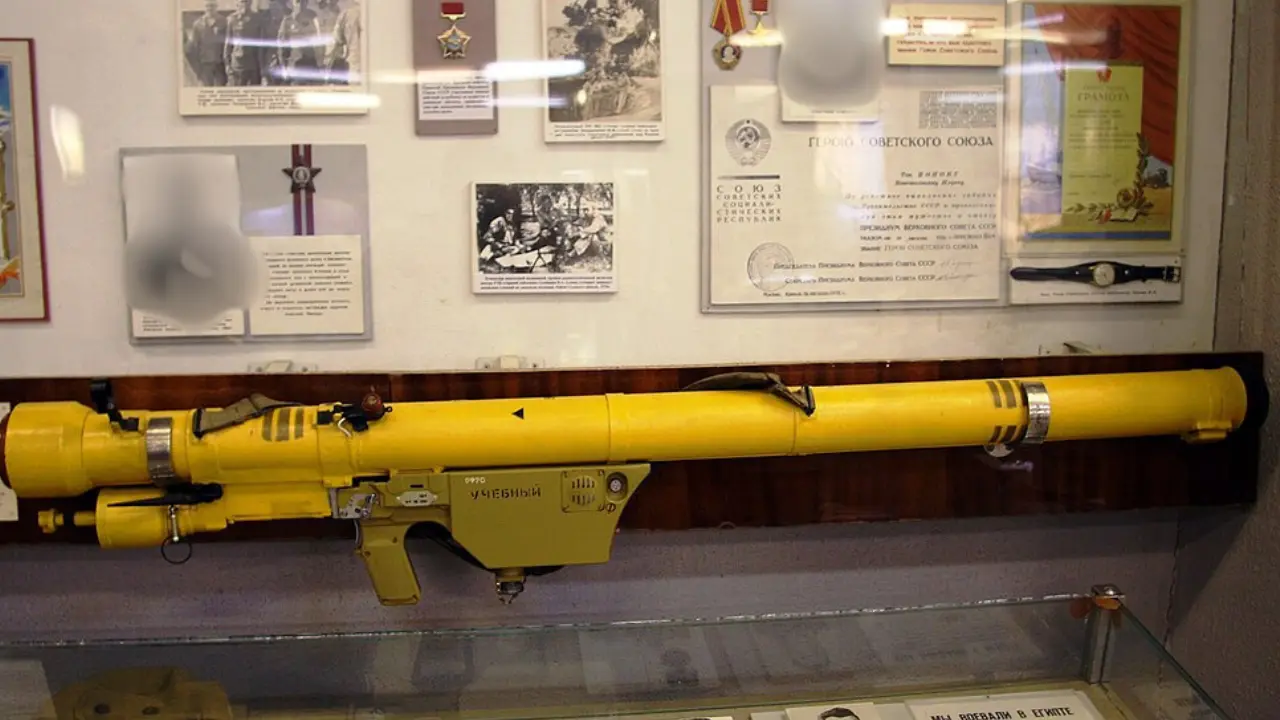
India News MANPADS, which stands for ‘Man Portable Air Defence Systems’ refers to very short-range surface-to-air missiles that can easily be carried by a crew of one or two men and can be fired from the shoulder or a pedestal.
What are MANPADS?
MANPADS, which stands for ‘Man Portable Air Defence Systems’ refers to very short-range surface-to-air missiles that can easily be carried by a crew of one or two men and can be fired from the shoulder or a pedestal. Their weight and size allow them to be moved quickly from one place to another on the battlefield.
MANPADs are generally fire-and-forget weapons, which implies that once the firer has launched the missile, it will reach the target using its guidance system on board with no further assistance from the firer.
Where MANPADS fit in the air defence matrix?
Air defence is all about detecting the enemy’s air threat (aircraft, helicopters missiles etc.) and destroying these using various types of air defence weapons. Such weapons could be carried by aircraft or ships at sea or deployed on the round.
Also Read: Trump’s Gaza takeover plan and non-nuclear Iran: A game-changer or a political fantasy?
Trending Stories
)
)
)
)
)
)
)
)
)
)
)
)
)
)
)
)
)
)
)
)
)
)
)
)
)
)
)
)
)
)
)
)
)
)
&im=FitAndFill=(700,400))
)
)
)
)
The ground-based air defence weapons are knitted in a layered fire-arm starting from the lowest range and going up to hundreds of km. At the lowest end are the air defence guns and MANPADS ( 0-7 km), followed by short-range missiles ( range up to 30 km) and medium-range missiles (range 70-100+ km). MANPADs along with the guns thus constitute the lowest end of the air defence firearm.
The value of MANPADS
MANPADs play a very important role at the terminal end. These along with the guns actually get to face two types of enemies. One – the most determined one that has evaded all the longer-range missiles and other weapons and is now coming this close to destroying the asset being protected; and two- the one that has managed to surprise the air defence network by evading radar detection and has suddenly appeared at close range.
Also Read: Where is the Quad heading in 2025?
Both these threats are deadly and only an optimal mix of air defence guns and missiles capable of inflicting effective fire can ward off this threat.
MANPADs provide such a mix along with air defence guns at the bottom of the fire-arm.
The magic of MANPADS in the Tactical Battle Area (TBA)
What is Tactical Battle Area (TBA)?Very basically, this is the forward zone of the battle where most of the mechanised and tank-to-tank battle takes place between own and enemy forces.
The weapons which the mechanised forces fear most are the Attack Helicopters (AHs) of the adversary. These deadly machines, armed to the teeth have the capability to fly ultra-low in the nap-of-the-earth. At such low altitudes, it is difficult for the defender’s radars to catch them and hence destroy them.
Thus, it mostly remains undetected in this manner, descending on the prey with deadly firepower delivered in shock-and-awe mode maintaining total surprise and deception. MANPADs are very effective AH destroyers. These can be launched with total speed, accuracy and precision matching the sudden appearance of the AHs from unexpected directions in the TBA.
What defenders do is proliferate the TBA with such a preponderance of MANPADS that it simply overwhelms the countermeasure capability of the AHs. In this way, these can claim disproportionate casualties on the AHs thereby preserving our mechanised assets in the battlefield.
This is what the Ukrainians did in the initial months of the Russo-Ukraine war. They deployed so many MANPADS in the TBA that it simply went beyond the capability of the Russian AHs to detect them and avoid them. A whopping 26 out of a total 100 deployed (Kamov 51 and 52 or the Mi series - Mi35, Mi24, Mi28N and more) succumbed to the MANPAD fire.
This very effectively stymied the Russian AH operations in the TBA and their hunter-killer missions deep inside the Ukrainian territory.
Lessons in our scenario
We face a very real and potent threat. The TBA battles in our scenario are likely to be intense with multiple air threat vehicles in particular AHs and combat drones scoring big kills on the mechanised forces. The side that can proliferate the TBA with MANPADS is likely to have the last laugh.
We must fill up our MANPAD stock sufficiently to force the desired outcome in the TBA as well as ensure the gun-missile mix to deal with the most determined threat.
One point of caution though, all MANPADS must remain dully knitted in the overall air defence network of command and control. By doing that, their deployment and fire can be optimised as an integral part of the overall air defence battle. Using these as loose cannons is an invitation to disaster as it can erroneously shoot down own aircraft – a cardinal sin for an air defence warrior.