China's growth on paper, stagnation in practice

&imwidth=600&imheight=450&format=webp&quality=medium "China's growth on paper, stagnation in practice")
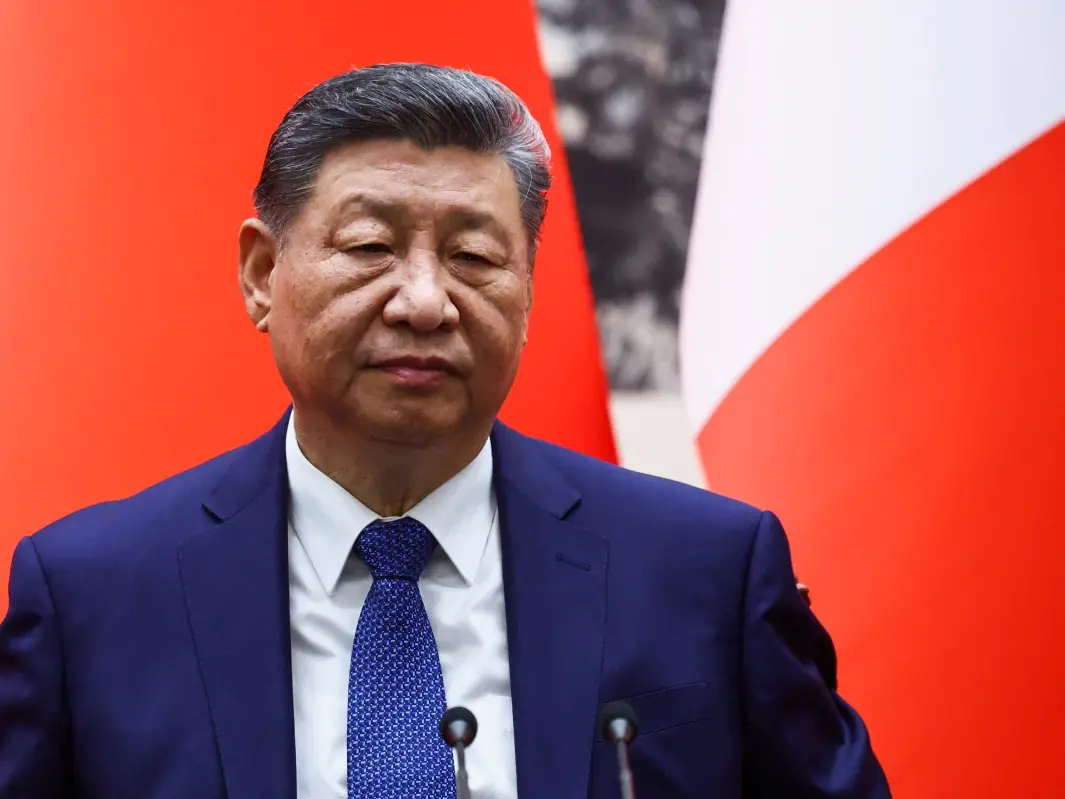
Chinese President Xi Jinping during an event in Beijing Photograph: (AFP)
China reported 5 per cent GDP growth in 2025, but analysts estimate real growth closer to 2.5–3 per cent, pointing to weak domestic demand, deflation, and a deep property crisis. Experts warn China’s economic model faces serious structural challenges.
The numbers coming out of Beijing tell one story. The reality unfolding inside China tells another. China's National Bureau of Statistics reported 5.0 percent GDP growth for 2025, neatly hitting the government's annual target. But headline figures in authoritarian states are political instruments as much as economic ones, and this one is doing a great deal of heavy lifting. Independent analysts at the Rhodium Group put real growth somewhere between 2.5 and 3.0 percent — roughly half the official reading — with fixed asset investment down 11 percent in nominal terms in the second half of the year compared to the same period in 2024. The divergence between what Beijing reports and what the data actually shows is not a rounding error. It is a portrait of an economy being propped up by narrative as much as by output.
Also Read: Trump raises doubts about Supreme Leader Mojtaba's wellbeing, rules out Iran war deal for now
What growth did materialize in 2025 came overwhelmingly from exports. China's trade surplus jumped 20 percent to a record $1.19 trillion, with exports accounting for a third of total economic growth — the highest share since 1997. An economy of China's size cannot sustain itself on the backs of foreign consumers indefinitely, and the IMF's December 2025 Article IV assessment said exactly that, warning that China's continued reliance on exports is politically unsustainable for its trading partners and structurally unviable for China itself. The current account surplus is projected to reach 3.3 percent of GDP for 2025. Meanwhile, retail sales grew just 3.7 percent in nominal terms across the year — far too slow to rebalance an economy that desperately needs domestic demand to carry more weight.
The property sector, now in its fifth year of contraction since the market peaked in 2021, remains the deepest wound. Roughly 80 million homes sit unsold or vacant. New housing starts are running at approximately 75 percent below their peak; property investment has fallen around 50 percent from its high. The downstream effects on local government finances have been brutal. Land lease revenues — once the fiscal lifeblood of Chinese municipalities — have cratered. Consolidated local government fiscal revenue managed just 0.2 percent year-on-year growth in the first ten months of 2025. Beijing launched a 10 trillion yuan debt-swap program in late 2024 to refinance local government financing vehicle liabilities at lower rates and longer maturities, but the scale of the structural hole means most municipalities will be in fiscal austerity for years — cutting precisely the infrastructure spending and social services that might otherwise help restore consumer confidence.
Deflation is now the defining condition of this economic era. An economy-wide price gauge shows China in deflation for three consecutive years — the longest such streak since the country's market transition in the late 1970s. Producer prices fell 3.6 percent year-on-year in June 2025, the ninth consecutive month of factory-gate deflation and the sharpest monthly drop in nearly two years. Consumer prices barely registered a pulse across 2025 as a whole, with core inflation remaining below 1 percent. These are not temporary fluctuations. They reflect a structural collapse in domestic demand that Xi Jinping's economic framework has not come close to addressing.
Trending Stories
)
)
)
)
)
)
)
)
)
)
)
)
)
)
)
)
)
)
)
)
)
)
)
)
)
)
)
)
)
)
)
)
)
)
&im=FitAndFill=(700,400))
)
)
)
)
Chinese households know this better than any statistic captures. Youth unemployment — even after the government's 2023 statistical revision stripped students from the calculation — hit 16.9 percent for the 16-to-24 cohort in February 2025. Household savings rates have stayed elevated as families brace for job insecurity, thin pension coverage, and the continued erosion of their biggest asset: their homes. The World Bank's December 2025 China Economic Update projected consumer spending growth to remain subdued well into 2026, constrained by a soft labor market and persistent property price adjustments.
The long-run picture is no more encouraging. China recorded 7.92 million births in 2025, the lowest figure since records began in 1949. The total population declined for a fourth consecutive year. Government subsidy programs have not reversed the trend. A shrinking workforce combined with a rapidly aging population puts mounting pressure on an already underfunded pension system — adding a slow-burn fiscal crisis to problems that are already acute.
External conditions are worsening too. US tariffs on Chinese goods surged above 100 percent in April 2025 before a partial truce brought them back to 30 percent in May. The European Union's anti-subsidy duties on Chinese electric vehicles, imposed in mid-2024, have since been followed by additional trade friction across multiple sectors. Fitch Ratings projected in January 2026 that Chinese growth would slow further to 4.1 percent this year. The World Bank sees 4.4 percent; the IMF, 4.5 percent. Every credible independent forecast sits well below Beijing's comfort zone.
And then there is Xi Jinping himself. Overseas Chinese media have reported that he sought treatment for a cerebral aneurysm as far back as late 2021. His notable absence from the BRICS Summit in Brazil in October 2025 and the cancellation of a planned APEC meeting with President Trump in South Korea — attributed by some analysts to internal political pressure rather than logistics — have intensified speculation about both his health and his authority within the Party. The 21st Party Congress is scheduled for 2027, and who leads China into that moment, with what mandate and in what condition, has become one of the most consequential open questions in global affairs. Xi's economic model was always a bet that the state could manufacture durable growth through investment, industrial policy, and export competitiveness. That bet has produced a real estate catastrophe, a deflation trap, hollowed-out local governments, and an increasingly isolated trading position. Without a genuine pivot toward household-level reform — stronger social safety nets, wealth redistribution, and policies that put money in ordinary people's pockets — the 5 percent headline will continue to be what it already is: a number designed to manage perceptions rather than reflect reality.