Budget 2026: Will India finally arm itself for tomorrow's wars?

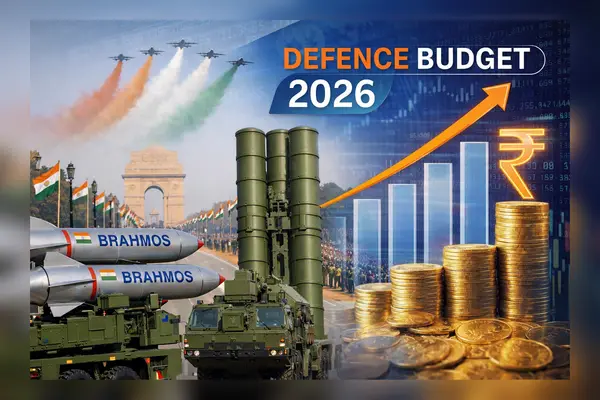
Budget 2026: Will India finally arm itself for tomorrow's wars? Photograph: (AI-generated image)
Our neighbourhood is not the friendliest place. We have tensions with China and Pakistan. The world is unpredictable. Can we afford outdated weapons or delay modern equipment? Recent events like Operation Sindoor show that being prepared is necessary.
Every time we sleep peacefully at night, someone is awake at the border watching over us in the freezing cold or scorching heat. When we go to school without fear, when our parents travel for work, or when we celebrate festivals with joy, this is possible because somewhere a soldier is standing guard. This is why the defence budget matters so much—it is not just numbers on paper but the safety net that allows us to live freely and dream big. As Finance Minister Sitharaman prepares to present the Union Budget for 2026-27 in February, the question is critical: will our armed forces get what they need?
Let us be honest and clear about numbers. The last budget allocated ₹6.81 lakh crore for defence, around thirteen per cent of central spending, increased nine and a half per cent from the previous year. But not all goes into new weapons or cutting-edge technology. Like a household budget, if most income covers old debts, rent, and groceries, little remains for future investment. That is what happens with defence spending.
Nearly one-fourth goes toward pensions for retired soldiers who absolutely deserve every rupee of support. Significant amounts cover salaries of serving personnel, uniforms, food, fuel, and maintenance of equipment. After essential expenses, little remains for modernising forces—buying fighter jets, submarines, or developing AI for warfare. India spends only one point nine per cent of its GDP on defence. Experts say we need at least two point five percent to match other powers.
Our neighbourhood is not the friendliest place. We have tensions with China and Pakistan. The world is unpredictable. Can we afford outdated weapons or delay modern equipment? Recent events like Operation Sindoor show that being prepared is necessary. When a jawan faces enemies with inferior equipment, it is not a fair fight.
This is where Atmanirbhar Bharat becomes absolutely crucial. For decades, we bought defence equipment from Russia, France, America, and Israel. But what if international relations change overnight, or they refuse spare parts during a crisis? That is a risk we cannot afford. So India decided to make its own weapons, planes, ships, and technology. Defence production has grown, and exports jumped to over ₹21,000 crore. Indian-made missiles, radars, and patrol boats are now bought globally.
The 2025-26 budget showed very promising signs. Capital expenditure increased to ₹1.8 lakh crore, with seventy-five per cent for Indian manufacturers. This means more jobs and economic benefits while our military strengthens. DRDO received nearly ₹27,000 crore. Programs like iDEX encourage innovators to create drones, cybersecurity tools, and AI defence systems.
Trending Stories
)
)
)
)
)
)
)
)
)
)
)
)
)
)
)
)
)
)
)
)
)
)
)
)
&im=FitAndFill=(700,400))
)
)
)
)
)
)
)
)
)
)
)
)
)
)
What should we expect from 2026-27? Analysts hope for an increase beyond ₹7.5 lakh crore. The Army needs new tanks, artillery, and armoured vehicles. The Navy wants submarines and another aircraft carrier. The Air Force needs advanced jets, including indigenous AMCA, Rafale aircraft, and drones. All services need artificial intelligence, cyber warfare capabilities, and unmanned systems.
However, money alone won't solve everything. Pensions and salaries keep increasing. Global supply chains are disrupted, making imported parts expensive. Building things at home is a practical necessity.
Experts suggest smart solutions. One idea is creating a non-lapsable defence fund. Currently, if the military doesn't spend allocated money by March 31st, it returns to the treasury. A non-lapsable fund ensures money stays available. Another suggestion is tax benefits and easier loans to private defence companies, encouraging competition.
For ordinary citizens, especially teenagers, a strong defence budget matters deeply. The defence sector is becoming a hub for technology and innovation. Whether interested in aerospace, robotics, or computer science, there is growing space here. Plus, a secure country is prosperous. When businesses feel safe, they invest more.
As we wait for February, the government needs courage and vision. Yes, education, healthcare, and infrastructure need funding. But defence cannot be just another expense. It is an investment in our survival. Viksit Bharat by 2047 cannot be achieved without a strong, modern defence force.
My opinion is clear: the 2026-27 budget should prioritise three things. First, significantly increase capital spending for modernisation. Second, expand support for Indian defence manufacturers with better incentives and a clear policy. Third, invest heavily in research and future technologies because tomorrow's wars will be fought with AI, drones, and cyber weapons. Defence is not about aggressive posturing. It is about being prepared, being self-reliant, and respecting those who protect us. The budget is coming soon, and whatever number is announced, we should ask: is it enough? Are we truly ready? Because our soldiers are ready to give everything for us. The least we can do is give them the tools to succeed.
