&imwidth=800&imheight=600&format=webp&quality=medium "Back to the future: The rise of technopolitics")
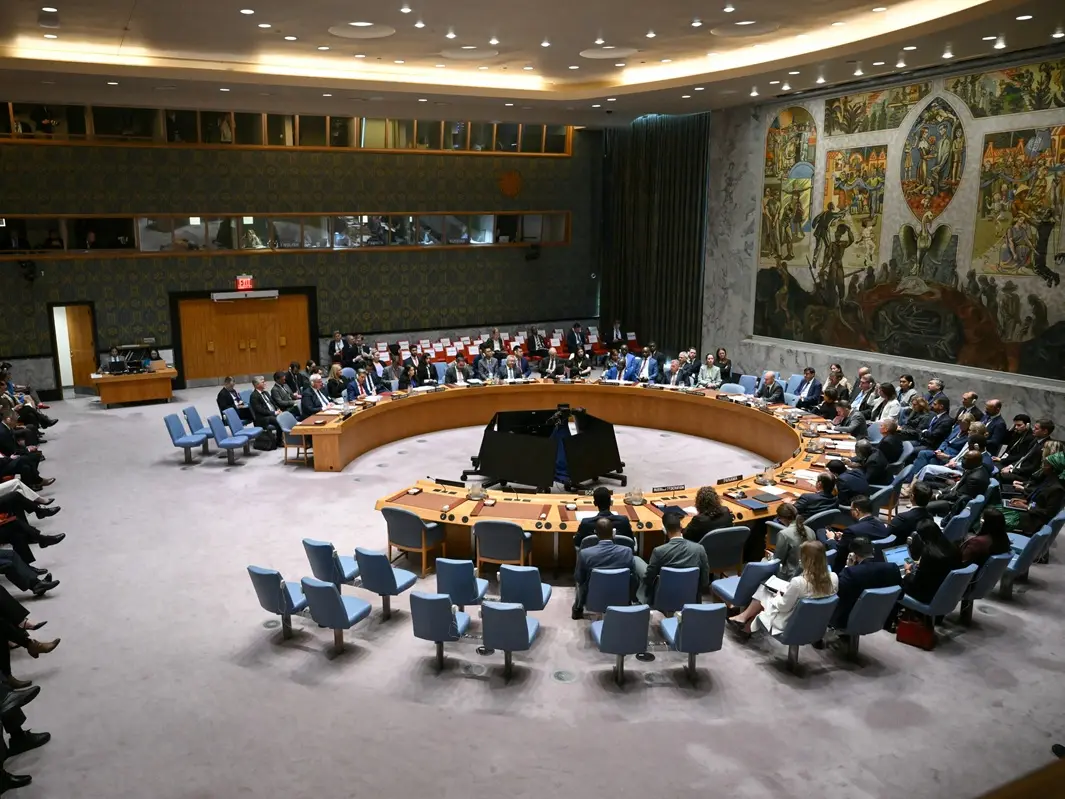
As world leaders gather in New York for the annual United Nations General Assembly, the proceedings offer an appropriate moment to consider a transformation that goes beyond the institution itself: the changing nature of power in international affairs.
The theme of this year’s General Assembly — “Restoring trust, managing transformation: A United Nations that delivers for all” — is particularly apt. The UN was created in 1945 as part of a new international architecture, alongside the Bretton Woods institutions, designed to replace the instability of an earlier era with rules, institutions and greater predictability.
Before 1945, however, international order rested principally on great-power diplomacy. Alliances shifted, treaties were negotiated, spheres of influence were contested, and crises were often managed through conferences and bargains among the major powers. The Concert of Europe after the Napoleonic Wars was an early example. The League of Nations subsequently attempted to institutionalise collective security, but failed to prevent the descent into the Second World War.

The post-1945 settlement was therefore more than the creation of new organisations. It represented a different conception of international order. Bretton Woods established the IMF and World Bank as pillars of international economic cooperation, while the UN became its principal political institution.
Today, that system is under pressure. But the deeper transformation may not be simply geopolitical.
We may be moving from a predominantly geopolitical world towards a world of technopolitics — a world in which technological capability itself becomes a principal source of geopolitical power.
Trending Stories
)
Trump-Xi Summit: Trade, Taiwan and the red lines shaping US-China talks | Race To Power
)
US citizen injured in Illinois after ICE agents mistook him for fugitive, hospitalised
)
US judge questions Trump’s decision to ban CNN, MS NOW and Politico from White House
)
Afghan woman cyclist who disguised herself as a boy to escape Taliban, wins Asian Games medal
)
'There will be elections': Venezuela's interim leader Delcy Rodriguez makes big announcement at UN
)
IIT Bombay CCTV footage emerges: Sahil Wakode seen looking at phone in examination hall
)
Cyclone Arnab: Landfall expected before midnight tomorrow as IMD issues orange alerts across six states
)
9 killed, several injured as tourist bus catches fire on Yamuna Expressway
)
NBA player Steven Adams shares hilarious GTA VI theory
)
WION Iconic Tourism Summit 2026: Union Minister Shekhawat on 'experiential travel', peace diplomacy
)
ICC plans T20I expansion and fewer ODIs in 2027–2031 FTP cycle: Report
)
'AI got into my speech': Prince Harry jokes after teleprompter failure at event in New York
)
Scientists detect first radio signals directly from faraway planet
)
China to test supersonic jet that moves at Mach 2, double the speed of sound
)
WION Iconic Tourism Summit: 'Hanuman Ansh' Director on blockbuster success
)
Open AI, Anthropic CEO urges caution over rapid AI development at UN Security Council, call for 'extreme care'
)
Bomb scare in New York amid UNGA: Suspicious suitcase found near UN headquarters
)
Hours before Xi-Trump meeting, US announces visa curbs targeting birth tourism: What is it?
)
'Partners rather than rivals': Xi Jinping's first message after landing in US for Trump summit
)
WION Iconic Tourism Summit: Is India's travel boom outrunning its airports, airlines and hotels?
)
WION Iconic Tourism Summit and Awards 2026: Key voices to discuss India’s tourism future
&im=FitAndFill=(700,400))
New OTT releases this week (September 21-27, 2026): Shaque: Trust No One, Hunkkaar, Don’t Be Shy- 5 new titles coming to Netflix, Prime Video and more
)
WATCH | China President Xi Jinping lands in US as Trump greets him ahead of high-stakes summit
)
Australian PM Anthony Albanese calls OpenAI AI incident 'unacceptable' after restricted data access
)
'What kind of confession is this?': Pakistan PM Shehbaz Sharif’s 'terrorists would be roaming New York' remark goes viral, raises alarm online. Watch
)
WION Iconic Tourism Summit: How local tourism MSMEs must upskill for AI integration
)
Eight USS Abraham Lincoln sailors attempted suicide, Acting Navy Secretary says
)
Pilot recreates Mona Lisa in sky over Oklahoma and Arkansas in four-hour flight: VIDEO
)
Elephants hide behind trees, stage surprise attack on poachers targeting rhinos in South Africa
)
'Putin is patient zero': Zelensky slams Russian president at UNGA, accuses him of using fighters from 47 countries
&im=FitAndFill=(700,400))
National Film Awards 2026: Kartik Aaryan, Mammootty, Yami Gautam, Randeep Hooda and other key winners
)
El Niño 2026 heats up to become strongest in 1,000 years
)
Israeli envoy to US Yechiel Leiter’s son critically injured in West Bank ramming attack
&im=FitAndFill=(700,400))
Trump welcomes Xi Jinping in rare airport gesture: Photos from Chinese President's arrival in US
)
Xi-Trump meeting: China’s human rights red line and past protests explained
Artificial intelligence is at the centre of this transformation, but it is only one part of it. Semiconductors, computing capacity, data, robotics and humanoids, quantum technologies, biotechnology, digital currencies, communications networks and the energy required to power them are becoming strategic assets.
For much of the twentieth century, territory, natural resources, industrial capacity and military power were among the principal currencies of national power. In the emerging order, control over technological ecosystems may become equally important.
This is more than technology influencing geopolitics. It is the emergence of technopolitics: the capacity to develop, control and deploy critical technologies becoming an integral component of national power.
Also Read: Russia will ‘consider’ Trump’s G20 invitation to Putin; EU vows to keep condemning Moscow
The change is also blurring the traditional distinction between states and corporations. A relatively small number of technology companies possess capital, data, computing infrastructure and scientific capabilities on a scale capable of influencing national power. Governments, meanwhile, increasingly regard critical technologies and the companies that develop them as instruments of economic and strategic security.
The emerging order could therefore be shaped not only by states, but by states, corporations and the technological ecosystems that connect them.
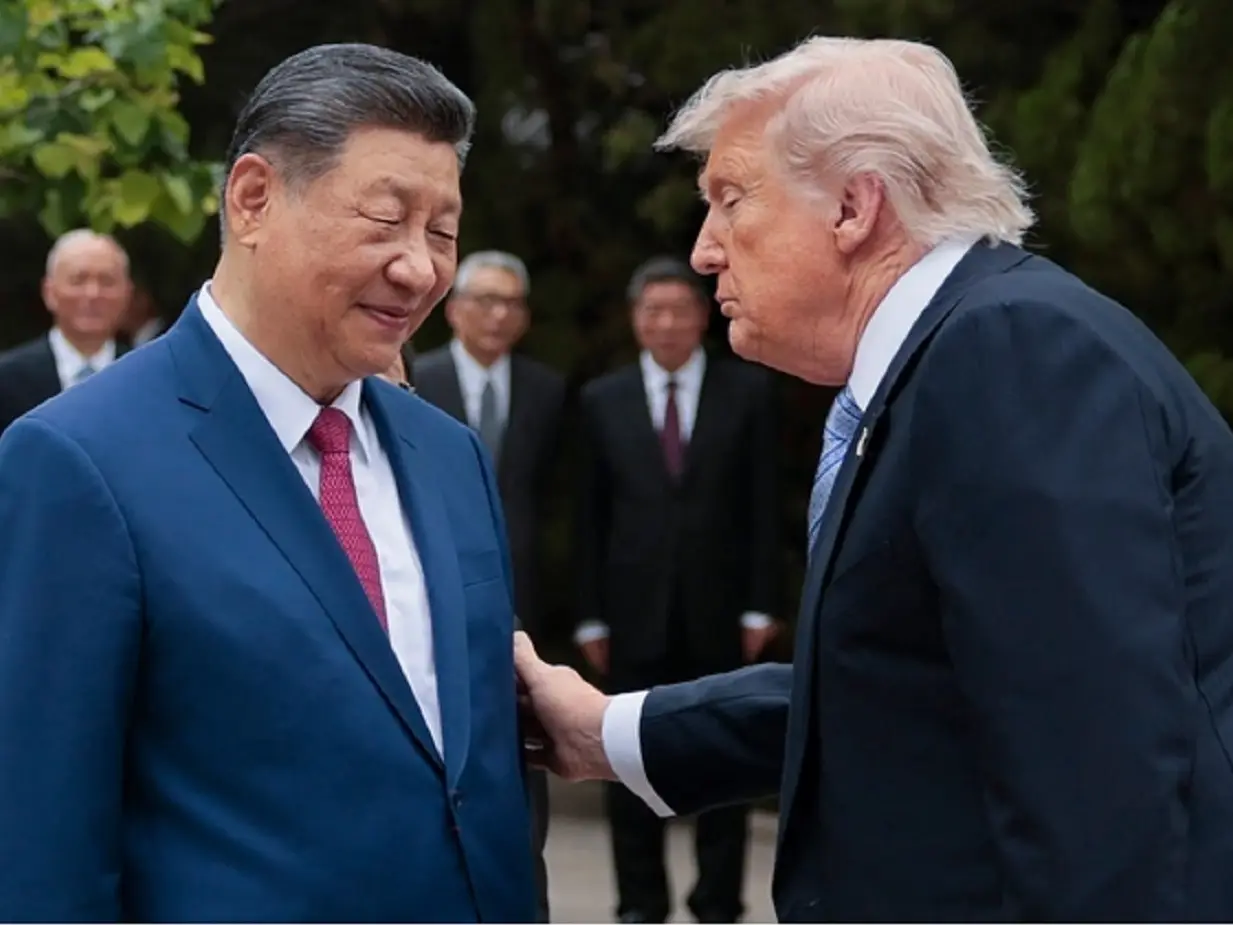
The United States and China are presently the two most consequential centres of this competition. Their rivalry increasingly encompasses artificial intelligence, advanced semiconductors, data centres and strategic supply chains, alongside conventional trade and military competition.
This does not necessarily mean the emergence of a rigid new Cold War. Economic interdependence remains substantial, and technological boundaries are unlikely to be completely sealed.
Nevertheless, a form of technological G2 could emerge: two broad ecosystems centred on the United States and China, with a considerable grey zone between them.
Other major powers will have to decide how they respond.
Europe, India, Japan, Russia and others may align substantially with one ecosystem, seek to build independent capabilities, or pursue a hybrid approach that allows them to work with both.
For India, the question is particularly consequential.
India has moved closer to the United States in critical and emerging technologies while simultaneously seeking to strengthen its own technological capabilities. Its scale, scientific base, digital economy and growing technological ambitions give it the possibility of pursuing something more sophisticated than simply choosing between Washington and Beijing.
The question for India is whether it can develop sufficient technological depth to become a pole in its own right while participating in both major ecosystems where its interests require it.
This is not merely an economic calculation. It is a question of strategic autonomy.
The implications extend beyond individual technologies. If technological capabilities become increasingly concentrated in a relatively small number of corporations and their associated states, institutions created after 1945 may increasingly struggle to reflect the actual distribution of power.
The United Nations, IMF, World Bank and wider multilateral economic system were designed for a world in which states were overwhelmingly the principal repositories of strategic power. The future may be different. Power may increasingly be distributed between states and technological networks that cross national borders.
This raises a difficult question for the international community now meeting in New York: will the existing multilateral order adapt to this new distribution of power, or will a period of great-power bargaining precede the creation of a new system?
There is an intriguing historical possibility.
The technologies transforming the twenty-first century could take us back towards a political pattern associated with an earlier age: a world in which a relatively small number of powerful actors negotiate directly over the rules of the international system.
It would not be a return to the nineteenth century. Technology has changed the nature of power too profoundly for that. But the underlying political pattern could become familiar: great powers, together with their associated economic and technological interests, making arrangements among themselves, sometimes through international institutions and sometimes outside them.
In that sense, the future could represent a return to the future.
Yet this may be only an interregnum. The post-1945 order itself emerged because the arrangements that preceded it had proved inadequate to the realities of their time. The technological revolution may eventually require a comparable institutional response.
Artificial intelligence, autonomous systems, data, digital currencies and other technologies will raise questions that existing institutions were never designed to answer. The challenge is to ensure that technological power does not outrun the institutions needed to govern it.
Whether the emerging order becomes more fragmented or eventually produces new forms of multilateralism remains uncertain.
What is becoming clearer is that technology is no longer merely an instrument of geopolitical power.
It is becoming one of its principal sources.
The great strategic question of the coming decades may therefore not simply be who controls territory, resources or military power, but who controls the technologies that increasingly determine how the world itself works.