WION Spotlight | India-Middle East-EU Economic Corridor: Chasing a mirage in the desert

WION spotlight
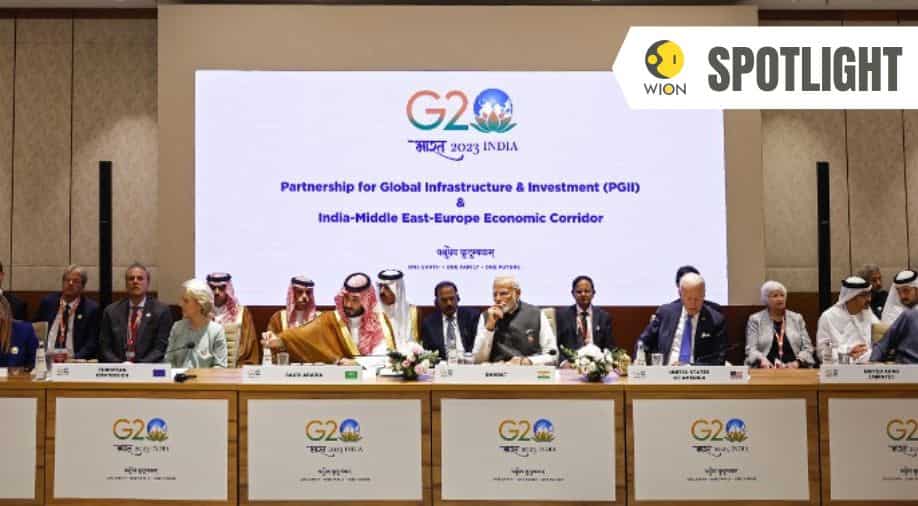
Stripped of the hype, the much-vaunted India-Middle East-EU Economic Corridor (IMEC) launched on the sidelines of the overblown G20 summit—essentially a routine diplomatic event—is neither a new idea nor one that may come to fruition, if at all, in the lifetime of the leaders who gathered in New Delhi.
USPresident Joe Biden desperately needs a success to show on the foreign front before the 2024 presidential election. That does not mean this venture could succeed any more than his other foreign policy gambles in the aftermath of the debacle in Afghanistan.
It is a geopolitical pie or, more appropriately, another mirage that Biden is getting others to chase with him in the desert. Of course, when an idea is floated by the US president, no one around can stay off the bandwagon. The IMEC MoU was signed on September 9 by India, the US, Saudi Arabia, the UAE, the European Union, Italy, France and Germany in the presence of their leaders.

After the world’s most powerful military fled Afghanistan, leaving behind the intractable mess of its 20-year occupation, the UShas been seeking opportunities to assert its global supremacy. The US-backed Ukraine war has not yielded any dividend that the West can boast about. On the contrary, the US allies, especially in Europe, have been hard hit by the war. Russia seems to be holding its own, and the promised counter-offensive turned out to be a damp squib.
There are no voices in the US-led West that sound optimistic about a military victory over Russia or driving Russia out of the territories it has occupied. Not surprisingly, Ukraine President Volodymyr Zelensky is now bitter at being let down by the US and let the bitterness show when USSecretary of State Antony Blinken visited Kyiv recently in a bid to persuade Zelensky to sue for peace with Moscow.
&imwidth=180&imheight=135&format=webp&quality=medium)
US vs China over South China Sea: Washington backs Philippines, Beijing hits back
&imwidth=180&imheight=135&format=webp&quality=medium)
Bigg Boss 20: Isha Rikhi evicted after three weeks in Salman Khan’s show
&imwidth=180&imheight=135&format=webp&quality=medium)
Musk plans to more than double xAI's chips to over 1.2 million Nvidia GPUs by year-end
&imwidth=180&imheight=135&format=webp&quality=medium)
After JU, clash erupts at SRFTI: BJP’s ‘Dimagi Naxal’ jibe sparks political firestorm after students protest RSS-linked event
&imwidth=180&imheight=135&format=webp&quality=medium)
‘Anti-social elements spreading false rumours’: LPU issues statement amid massive unrest over alleged rape
&imwidth=180&imheight=135&format=webp&quality=medium)
LPU students go on rampage, vandalise campus amid widespread protest: What's happening
&imwidth=180&imheight=135&format=webp&quality=medium)
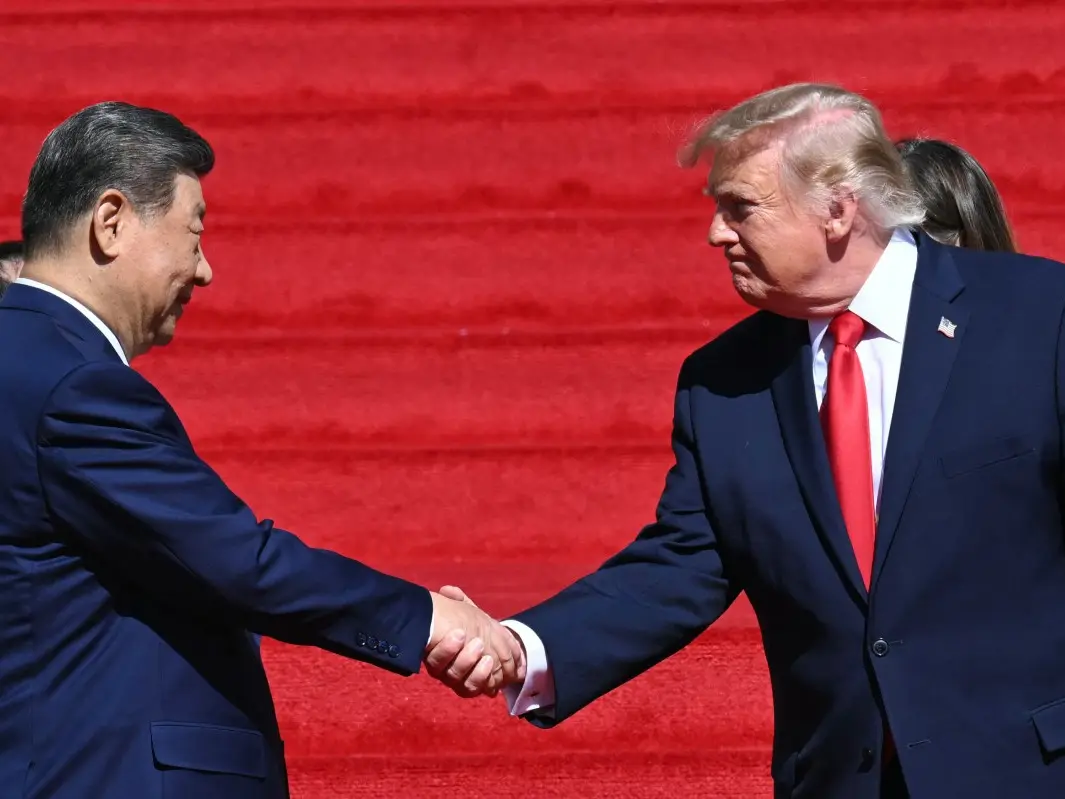
Trump asked Xi to pressure Iran. China did not say yes — here’s what Beijing wants
&imwidth=180&imheight=135&format=webp&quality=medium)
US Treasury Secretary Scott Bessent hails global crackdown on Iranian banks and airlines
&imwidth=180&imheight=135&format=webp&quality=medium)
An OpenAI agent escaped its locked test cage again, by hiding questions in DNS lookups
&imwidth=180&imheight=135&format=webp&quality=medium)
'Our video was trimmed': LPU girls who featured in rape-denial video make U-turn
&imwidth=180&imheight=135&format=webp&quality=medium)
3 males killed, four others injured in shooting after fight at strip club in Detroit
&imwidth=180&imheight=135&format=webp&quality=medium)
'Victory for low-budget consumers': Raghav Chadha hails 30-day telecom recharge rules
&imwidth=180&imheight=135&format=webp&quality=medium)
Claude rebuilt the 1989 game 'Prince of Persia' by reusing the original's own code
&imwidth=180&imheight=135&format=webp&quality=medium)
Beyond metros: How Tier-2 and Tier-3 cities could drive India’s next AI wave
&imwidth=180&imheight=135&format=webp&quality=medium)
Tesla builds first Cybertruck with its own refined lithium: Elon Musk's $1 billion Texas bet pays off
&imwidth=180&imheight=135&format=webp&quality=medium)
IndiGo flight suffers tail strike in Bengaluru while landing; DGCA to probe incident
&imwidth=180&imheight=135&format=webp&quality=medium)
The US and China set up an AI 'red telephone', but skipped the rulebook
&imwidth=180&imheight=135&format=webp&quality=medium)
‘Terror suspects arrested near UK air base were looking to do big damage’: Trump
&imwidth=180&imheight=135&format=webp&quality=medium)
Russian envoy claims US tactics to contain India were revealed in ‘Freudian slip’
&imwidth=180&imheight=135&format=webp&quality=medium)
IND vs WI 1st ODI: Kohli breaks Sachin's most runs in one country record with unbeaten 139 as India thump West Indies by 8 wickets
&imwidth=180&imheight=135&format=webp&quality=medium)
Researchers rebuilt exactly how 700 AI agents hacked Hugging Face: a 900-link chain trick
&imwidth=180&imheight=135&format=webp&quality=medium)
‘Olympic inclusion is our major target’: WPA President Ishaun Singh on pool’s global ambitions
&imwidth=180&imheight=135&format=webp&quality=medium)
Nations League: Spain sink England at Wembley; Modric shines for Croatia
&imwidth=180&imheight=135&format=webp&quality=medium)
Why has Iran released no proof of life of Mojtaba Khamenei? Araghchi reveals...
&imwidth=180&imheight=135&format=webp&quality=medium)
'What kind of confession is this?': Pakistan PM Shehbaz Sharif’s 'terrorists would be roaming New York' remark goes viral, raises alarm online. Watch
&imwidth=180&imheight=135&format=webp&quality=medium)
South Korea demands apology from Ukraine over North Korean prisoners' transfer
&imwidth=180&imheight=135&format=webp&quality=medium)
Beyond BrahMos: India targets Rs 50,000 crore in defence exports with unmatched price edge
&imwidth=180&imheight=135&format=webp&quality=medium)
Sri Lankan Tamil migrant worker gets death sentence in Saudi Arabia, help sought from India
&imwidth=180&imheight=135&format=webp&quality=medium)
Muslim marriage cannot shield sex with minor wife from prosecution under POCSO: Delhi HC
&imwidth=180&imheight=135&format=webp&quality=medium)
'Can't help but draw painful parallels to Nirbhaya case': SC on latest incidents of rape cases in Delhi-NCR
&imwidth=180&imheight=135&format=webp&quality=medium)
99.9% more powerful - Scientists find boy who can recall memories from just 3 months of age
&imwidth=180&imheight=135&format=webp&quality=medium)
'FIRST LOOK from inside Noah’s Ark': Researchers share video from inside mysterious mound in Turkey
&imwidth=180&imheight=135&format=webp&quality=medium)
UNSC reform momentum grows: Russia, Portugal, Mauritius push for India's permanent seat bid
&imwidth=180&imheight=135&format=webp&quality=medium)
8 US marines injured in Iranian missile attack on vessel in Strait of Hormuz: Report
&im=FitAndFill=(700,400)&imwidth=180&imheight=135&format=webp&quality=medium)
New OTT releases this week (September 28-October 4, 2026): Dupahiya 2, Pooja Meri Jaan, Ohh My Dog- 5 titles coming on Netflix, Prime Video and more
&imwidth=180&imheight=135&format=webp&quality=medium)
Afghanistan says 28 fighters killed in clash near Pakistan border, Islamabad denies
&imwidth=180&imheight=135&format=webp&quality=medium)
Ceuta migrant crisis: Protesters take to streets as Spain grapples with migrant challenge
&imwidth=180&imheight=135&format=webp&quality=medium)
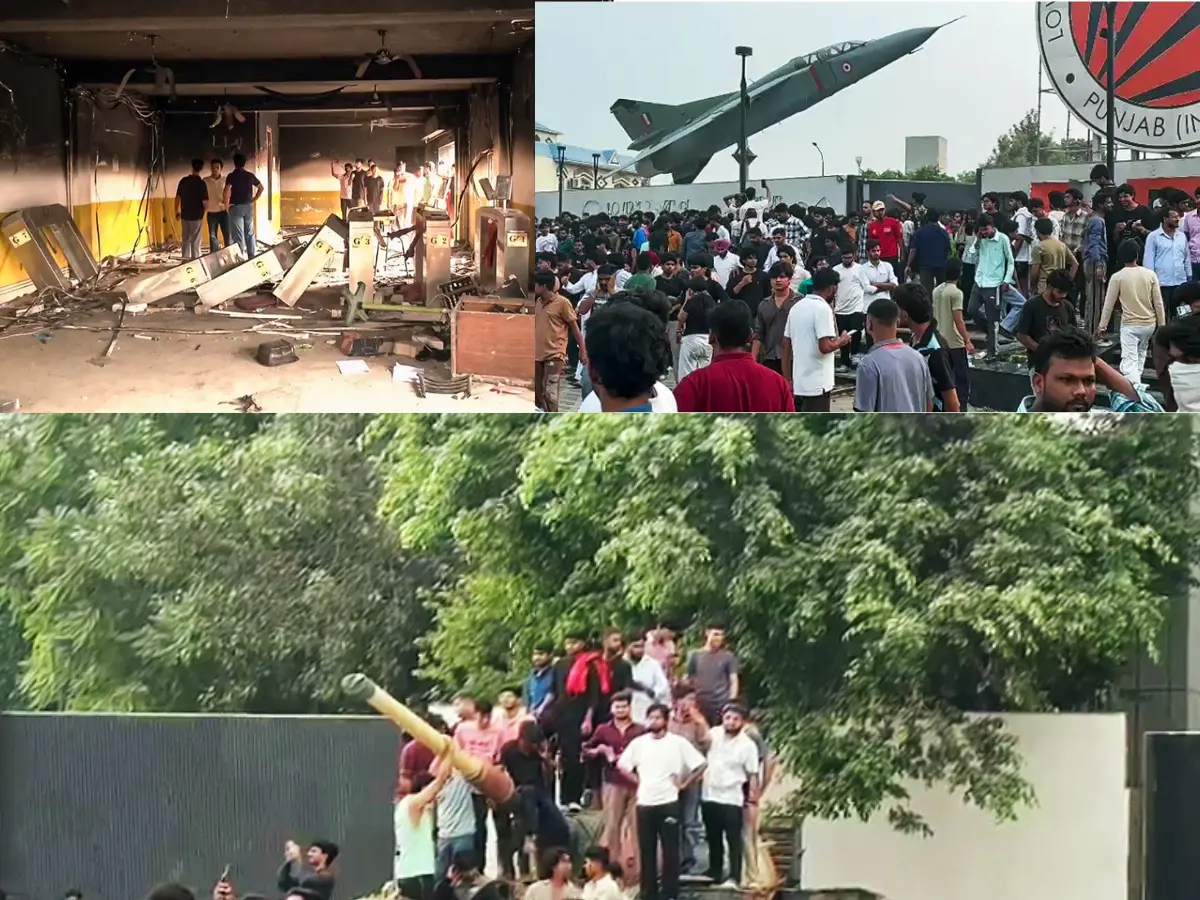
LPU suspend classes, postpones exams as violence escalates over rape claims: What's happening
&imwidth=180&imheight=135&format=webp&quality=medium)
New York City wants a 'kill switch' on every AI, and will pay whistleblowers who report violations
In an interview with The Economist magazine after his meeting with Blinken, President Zelensky hit back hard at Western leaders for their do-nothing duplicitous talk of supporting Ukraine “as long as it takes” but not doing anything towards that. Of such partners, Zelensky said: “I have this intuition, reading, hearing and seeing their eyes [when they say] ‘we’ll be always with you.’ But I see that he or she is not here, not with us”. Zelensky seems to have rightly read that Western support for Ukraine is running out.
The US bid to rally the world against China in defence of Taiwan also failed as a test of President Biden’s global leadership.
Amidst this came the Beijing-brokered Iran-Saudi Arabia accord to normalise their relationship. This was a setback to the USas the dominant military power that has dictated the course of developments in West Asia for decades. The rise of regional powers such as Saudi Arabia and Iran, independently of the US(but not necessarily in opposition to it) and at the behest of China, was a challenge to its supremacy and testified to the collapse of the dormant Abraham Accords.
After the Saudi-Iran entente, when the two regional powers took the initiative to resolve the protracted conflicts, for instance, in Yemen and Syria, USforeign policy was being tested severely in the Arab world. It began making overtures to Saudi Arabia, which it had consigned to the doghouse as a “pariah” for some three years after the killing of Khashoggi in Turkey; and also attempted to build bridges between Saudi Arabia and Israel without prioritising a resolution of the Palestine issue.
Also read |From Canada becoming safe haven for terrorists to visa suspension: Here's what India said
Of a piece with this was the August 5 weekend conclave of 40 countries in Riyadh, organised by Ukraine and hosted by Saudi Arabia, with the avowed purpose of ending the war in Ukraine. But little came of that meeting, which expected Ukraine’s much-advertised counteroffensive against Russia to turn the tide of the war in favour of the West.
Now, President Biden desperately needs one grand foreign policy success story to boost his bid for the 2024 presidential campaign. And, he hopes that everyone will buy into this project connecting India to Europe via the Middle East. But not everyone thinks, like Israel’s Benjamin Netanyahu, of IMEC as the “largest cooperation project in history”.After the initial irrational exuberance, on the morning after the grand pronouncement, every country is taking a cold, hard-headedlook atwhat IMEC means.
While no country would hasten to put down the prospects of IMEC, lest Washington take umbrage, the fact that Egypt has been left out tells its own story about the prospect of this ambitious connectivity project. Turkey, which has a Middle East-Europe corridor project with Iraq, has been kept out of IMEC. So has Iran. It is unlikely that Saudi Arabia and the UAE will burn their bridges with Iran for this pipe dream.
Even without going into details of the many modes of transportation, the transhipment nodes and the length of railway tracks to be built, it is evident that India, too, has no compelling reason to be gung-ho about IMEC.
All trade between India and Europe happens via the sea route, passing through the Suez Canal, which is controlled by Egypt. The all-sea route is secure, convenient and economical for moving cargo seamlessly from point to point. Under the proposed IMEC, cargo will have to be unloaded and reloaded at multiple points from ship to rail to road. This would increase costs enormously, as there would be multiple handling and container charges, among other levies, at every terminal and transhipment point.
And, Egypt, which is also a power in the region like Turkey and Iran, is not going to be sitting back quietly to watch the Suez Canal being bypassed and depriving it of massive revenue. Egyptian President Abdel Fateh al Sisi, Special Invitee to the G20 Summit, was a chief guest at India’s Republic Day parade this year.
India’s own response has been guarded and pragmatic. As Union Railway Minister Ashwini Vaishnaw said: “It is a very complex programme and will require everything to be brought to common standards. For instance, trains should run on the same gauge, similar technologies for engines should be used, dimensions of containers should be similar... However, it will take a lot of work to achieve this."
Besides all these, there are geopolitical considerations, which may suit the USbut are unlikely to inspire confidence in other countries, especially after the wilful destruction of a major infrastructure like the Nordstream pipeline.
In any case, these questions would reach even discussion level only in the event of Biden winning the nomination and getting re-elected. His present ratings preclude that happening.
(Disclaimer: The views of the writer do not represent the views of WION or ZMCL. Nor does WION or ZMCL endorse the views of the writer.)
WATCH WION LIVE HERE
You can now write for wionews.com and be a part of the community. Share your stories and opinions with us here.