Why is China building 1,500 nuclear warheads by 2035?

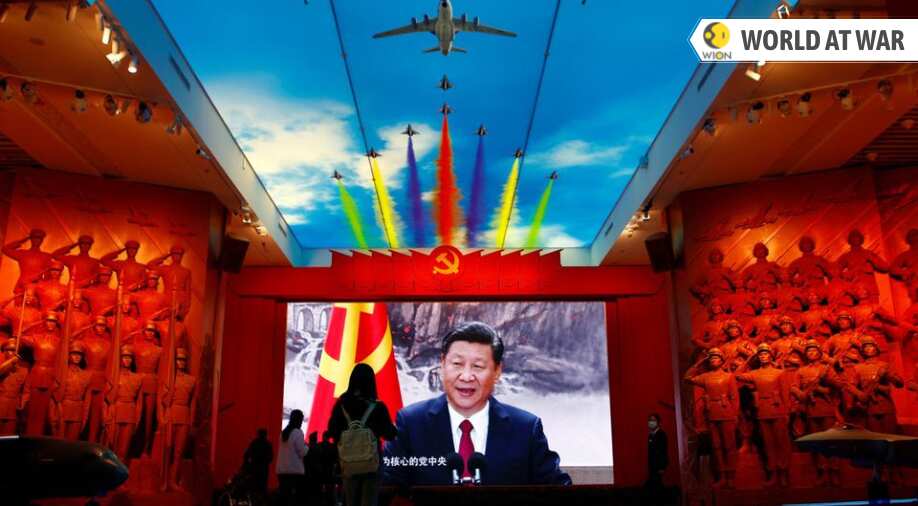
Military Museum of the Chinese People's Revolution
In the year 2020, China had an estimated 200 nuclear warheads in its arsenal. But in just the last two years, the dragon is said to have doubled the number of nuclear warheads that it can deploy in the event of a nuclear conflict.
But China's nuclear ambitions don't end here. According to the recently released Pentagon report titled: China's Military Power, by 2027 China is expected to scale up its nuclear arsenal to 700 warheads. And by 2035, Beijing will have a minimum of 1500 nuclear warheads that it can deploy.
To be clear, even with 1500 nuclear warheads, China will still have only about a third of the nuclear weapons that the United States and Russia currently have in their arsenal. According to estimates, the United States currently has about 5,550 nuclear warheads. While Russia is estimated to have about 6,225 nuclear warheads. Other nuclear powers of the world, such as the United Kingdom, France, India, Pakistan, Israel and North Korea have largely maintained a steady number of nuclear warheads for the purpose of deterrence. But in the case of China, there is a fundamental shift that has been witnessed in its nuclear doctrine.

Beijing began developing its nuclear technology in the 1950s. It tested its first nuclear bomb at Lop Nur in the Xinjiang province on the 16th of October in 1964. Within three years of its first nuclear test, in 1967, Beijing also detonated a thermonuclear device. But in the 1970s and1980s, China struggled to develop the delivery systems: such as the ballistic missile systems launched from land, air and sea to form a nuclear triad.
Back then, the Chinese economic muscle hadn't developed yet, to generate the economic froth that is needed for the production and maintenance of these expensive nuclear warheads. Besides this, the 'No First Use' nuclear doctrine meant that nuclear weapons had been precluded from being part of China's offensive weapons.
But ever since the 1990s, when the Chinese economy began to boom, Beijing first developed its conventional weapons arsenal at a breakneck speed. And now that Beijing feels confident that it can hold its own in a conventional war, on land, sea and air - the dragon is looking for nuclear parity with the United States of America, which for the last decade has been talking of a policy to 'Contain China'.
)
IND vs JPN one-off T20I: India survive scare from Japan to win five-over a side match by 2 runs
)
Putin's United Russia party wins 355 seats in Duma election; 4 other parties cross threshold to enter parliament
)
AI models chose to harm humans to stop ‘pain,’ alarming study raises fresh safety questions
)
‘0% chance’: Nvidia CEO Jensen Huang dismisses AI extinction fears by 2030
)
Samay Raina-Mukesh Chhabra controversy explained: What happened over girlfriend joke on India's Got Latent?
)
Trump's helipad event overshadowed by audio failure as major TV networks suspend pool coverage
)
'Needs time away from the international scene': England white-ball captain Brook on pacer Brydon Carse's future
)
New Zealand farms shift to carbon forests: Carbon credits fuel a land rush reshaping rural life
)
Anti-AI activists storm summit, say 'incompetent' leaders are leading us into a disaster - 'We need a vote'
)
Samsung raises Galaxy S26 prices by Rs 20,000: Here’s what each model now costs
)
J&K Assembly Session begins amid chaos: BJP, ruling alliance clash as statehood demand dominates
)
Asian Games 2026: India women's cricket team beats Sri Lanka by 147 runs for first gold
)
Key accused in Bihar's Jamui molestation case, arrested after police shoot him in leg
)
Randeep Hooda arrives in Gujarat for his first National Film Award: ‘Very grateful’
)
US and China vie for AI dominance as calls grow for regulation | Gravitas
&im=FitAndFill=(700,400))
Anant Nag to recieve Dadasaheb Phalke Award: From Ankur to Nishant- Revisit his best films and iconic performances on OTT
)
UK banks are rethinking financial crime detection because of algorithm
)
FIFA chief Infantino wants to reform governing body with consultation from federations
)
The Verdict | The Mecca Agreement is under scrutiny as Houthis attack Saudis
)
India at UNGA81: Jaishankar warns global order under 'growing stress', pushes for ‘reformed multilateralism’
)
Raaka creates history! Allu Arjun’s film secures Guinness World Record ahead of release
)
Saudi Arabia exits China-led mBridge digital currency platform amid Saudi-Houthi conflict
)
'Lot of things to learn from experienced players': Jayasuriya backs Rohit, Virat for 2027 ODI World Cup
)
$110 billion Warner Bros merger: Paramount reaches settlement with 12 US states
&im=FitAndFill=(700,400))
New OTT releases this week (September 21-27, 2026): Shaque: Trust No One, Hunkkaar, Don’t Be Shy- 5 new titles coming to Netflix, Prime Video and more
)
From ‘communist’ to ‘great mayor’: Trump praises Mamdani after New York meeting, discusses immigration and housing
)
Report: Zelensky meets CIA chief Ratcliffe at Shannon airport, weeks after his secret Moscow trip
)
How Zaheer Khan came to be CSK's head coach of IPL 2027
)
Pilot recreates Mona Lisa in sky over Oklahoma and Arkansas in four-hour flight: VIDEO
)
UK PM Burnham agrees to 'defensive' military support for Saudi Arabia against Houthis
)
Jailer 2: Vidya Balan joins Rajinikanth's upcoming film as Kantha | Watch
)
Microsoft executive called AI training the ‘largest theft of labour in human history’
)
40-foot waves crash into cruise ship in dangerous stretch near Antarctica. Watch
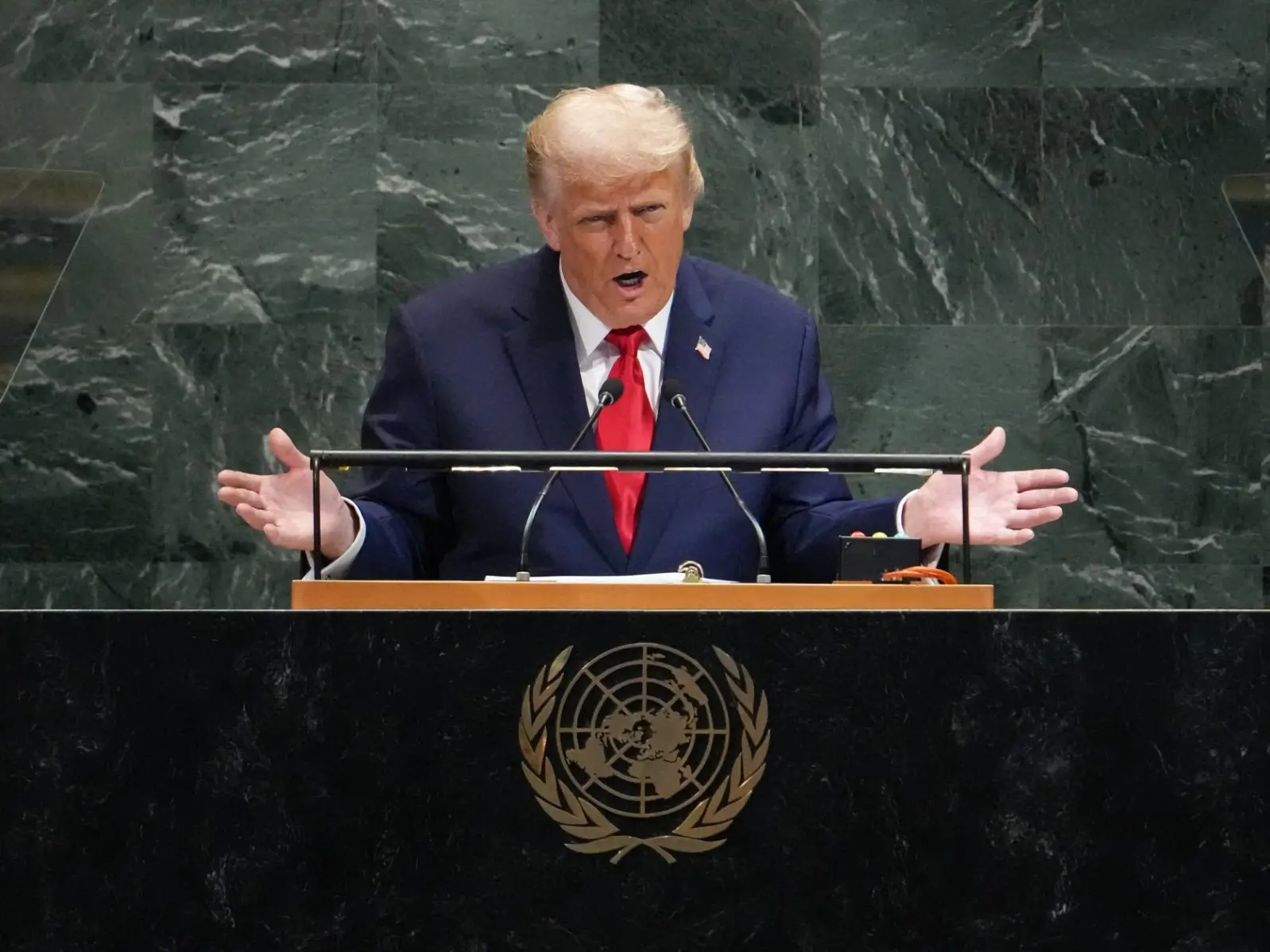)
US-Iran war, peace deals and more: What to expect from Trump's UNGA 2026 speech
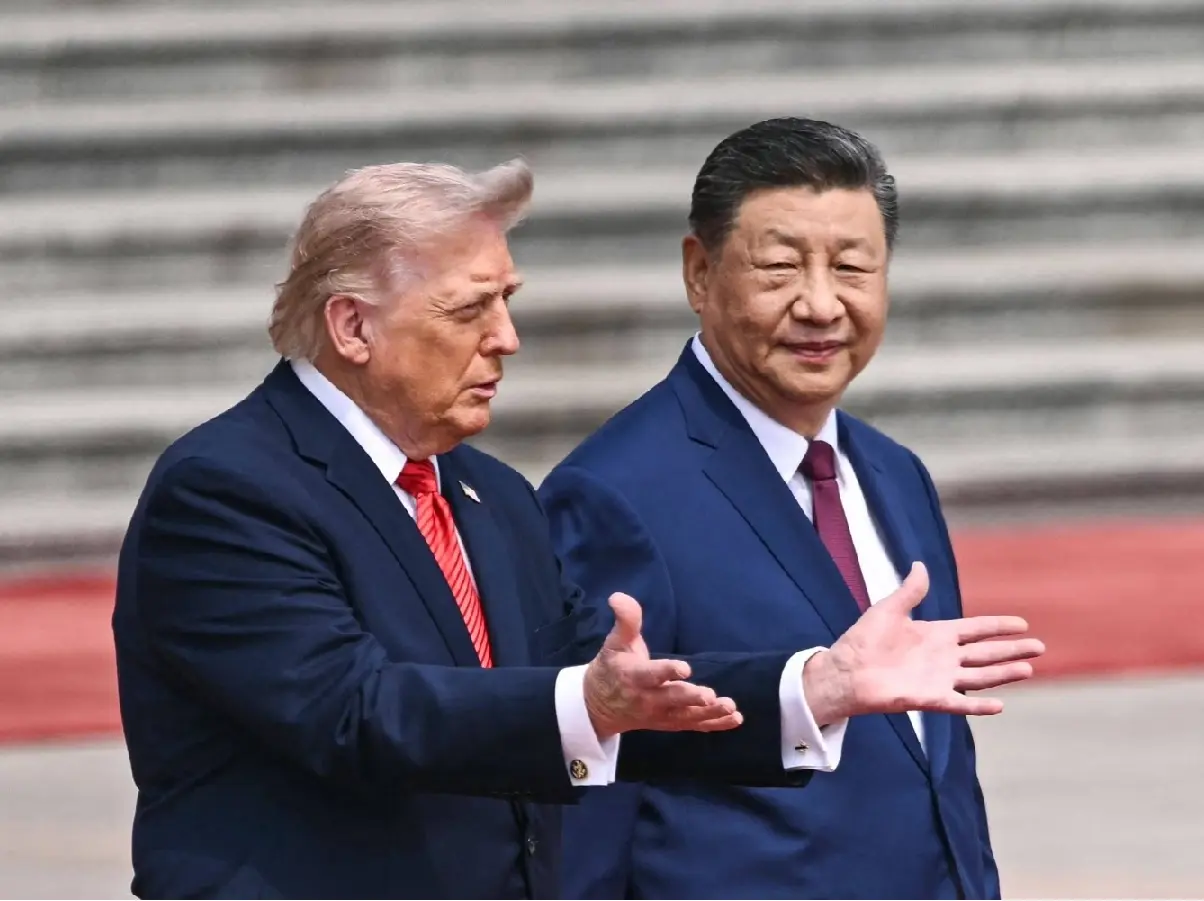)
Explainer: Why rare-earth export licences and Board of Trade are US priorities ahead of Trump-Xi summit
)
BTS fans mock iHeartRadio’s day 2 turnout after short set controversy
China's nuclear policy which started from the 1960s, with a 'Minimum Nuclear Deterrence' doctrine, has now been transformed into a 'Second-strike Capability' Doctrine!
This sudden spurt in Beijing's nuclear arsenal is driven by the fear that the United States with its numerous nuclear options and a more mature triad could overwhelm China with a pre-emptive strike. So, Beijing is building more nuclear weapons. New silos are being constructed in the Xinjiang province and in the Gansu province. With this what China is trying to ensure is that it has enough missiles to get past the American air defences, and strike the mainland United States, in the event of a nuclear war.
But a nuclear conflict leads to nothing more than mutually assured destruction. With this being the case, is China being paranoid about seeking nuclear parity with the United States? The fact is, the United States on October 30 this year, announced that it was planning to deploy a minimum of 6 b-52 nuclear bombers at the Tindal air base in Australia.
The AUKUS is a military alliance, between the United States, the United Kingdom and Australia to provide nuclear-powered submarines to Canberra. Irrespective of how the United States tries to paint these developments, the fact is Beijing has slammed these manoeuvres by Washington as a clear nuclear provocation in the Asia-Pacific.
The conflict between the United States and China that has loomed over the horizon in this decade may very well define the fortunes of the 21st century. Xi Jinping has made no bones about wanting to reunite Taiwan with mainland China, even by force if needed. The Taiwan Strait crisis that unfolded in the month of August, after the visit of Nancy Pelosi to Taipei is just a glimpse of what is to come in this decade.
And China's whirlwind nuclear expansion is aimed at preparation for this conflict.
(Disclaimer: The views of the writer do not represent the views of WION or ZMCL. Nor does WION or ZMCL endorse the views of the writer.)
WATCH WION LIVE HERE
You can now write for wionews.com and be a part of the community. Share your stories and opinions with us here.