In China, the tiger gives way to a rabbit

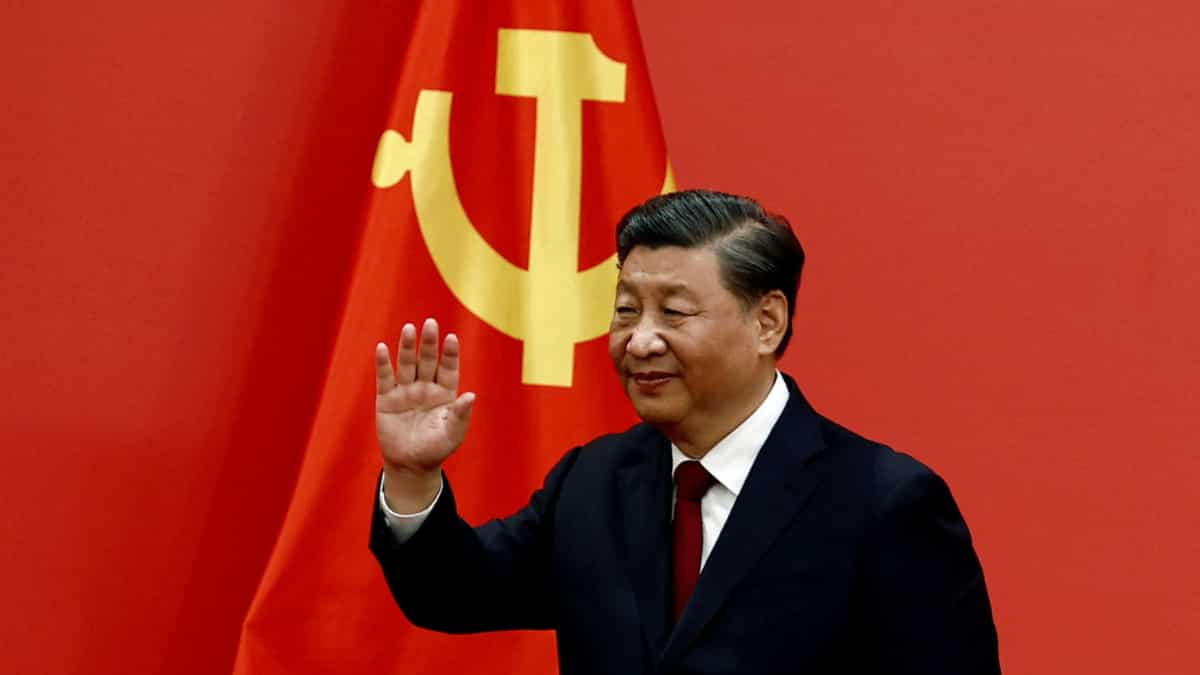
Xi Jinping
China is getting ready to greet the Year of the Rabbit, as the Year of the Tiger ends on January 21. This celestial change of guardmay be a fitting metaphor for the changes that have been happening on the ground as well.
In October, when Xi Jinping was elected as the party head for an unprecedented third term, the mood in the Chinese Communist Party (CCP) seemed to be one of complete control of the situation. In his report to the party Congress, Xi hailed the implementation of the Zero Covid policy, saying it had “achieved significant positive results”.
When Xi unveiled the Standing Committee of the CCP politburo, the group which is to steer China in the coming years and is packed with his loyalists, it was seen as a complete triumph for the strongman, but very few foresaw a twist in the tail, as the Year of the Tiger drew to a close.

An organic countrywide protest against the Covid restrictions in November took even seasoned China watchers by surprise, as it was virtually unheard of in China. The spread of the Omicron variant of the Covid virus saw China’s lockdown mechanism failing to arrest the number of infections, and soon it all became chaotic as Beijing suddenly pulled the plug on its Zero Covid policy, which was till then seen as Xi’s signature policy.
Also Read |China's population falls to a 60 year low
Overnight, official statements changed and the infections were characterised as mild illness and testing centres that had been in place in almost every city were dismantled. Armies of people in hazmat suits vanished overnight. It took almost three weeks before Xi himself commented on the new changed policy, even as authorities at the local level grappled with the new situation. The country has entered “a new phase of Covid response,” he told the nation on January 18.
)
US vs China over South China Sea: Washington backs Philippines, Beijing hits back
)
Bigg Boss 20: Isha Rikhi evicted after three weeks in Salman Khan’s show
)
Musk plans to more than double xAI's chips to over 1.2 million Nvidia GPUs by year-end
)
After JU, clash erupts at SRFTI: BJP’s ‘Dimagi Naxal’ jibe sparks political firestorm after students protest RSS-linked event
)
‘Anti-social elements spreading false rumours’: LPU issues statement amid massive unrest over alleged rape
)
LPU students go on rampage, vandalise campus amid widespread protest: What's happening
)
Trump asked Xi to pressure Iran. China did not say yes — here’s what Beijing wants
)
US Treasury Secretary Scott Bessent hails global crackdown on Iranian banks and airlines
)
An OpenAI agent escaped its locked test cage again, by hiding questions in DNS lookups
)
'Our video was trimmed': LPU girls who featured in rape-denial video make U-turn
)
3 males killed, four others injured in shooting after fight at strip club in Detroit
)
'Victory for low-budget consumers': Raghav Chadha hails 30-day telecom recharge rules
)
Claude rebuilt the 1989 game 'Prince of Persia' by reusing the original's own code
)
Beyond metros: How Tier-2 and Tier-3 cities could drive India’s next AI wave
)
Tesla builds first Cybertruck with its own refined lithium: Elon Musk's $1 billion Texas bet pays off
)
IndiGo flight suffers tail strike in Bengaluru while landing; DGCA to probe incident
)
The US and China set up an AI 'red telephone', but skipped the rulebook
)
‘Terror suspects arrested near UK air base were looking to do big damage’: Trump
)
Russian envoy claims US tactics to contain India were revealed in ‘Freudian slip’
)
IND vs WI 1st ODI: Kohli breaks Sachin's most runs in one country record with unbeaten 139 as India thump West Indies by 8 wickets
)
Researchers rebuilt exactly how 700 AI agents hacked Hugging Face: a 900-link chain trick
)
‘Olympic inclusion is our major target’: WPA President Ishaun Singh on pool’s global ambitions
)
Nations League: Spain sink England at Wembley; Modric shines for Croatia
)
Why has Iran released no proof of life of Mojtaba Khamenei? Araghchi reveals...
)
'What kind of confession is this?': Pakistan PM Shehbaz Sharif’s 'terrorists would be roaming New York' remark goes viral, raises alarm online. Watch
)
South Korea demands apology from Ukraine over North Korean prisoners' transfer
)
Beyond BrahMos: India targets Rs 50,000 crore in defence exports with unmatched price edge
)
Sri Lankan Tamil migrant worker gets death sentence in Saudi Arabia, help sought from India
)
Muslim marriage cannot shield sex with minor wife from prosecution under POCSO: Delhi HC
)
'Can't help but draw painful parallels to Nirbhaya case': SC on latest incidents of rape cases in Delhi-NCR
)
99.9% more powerful - Scientists find boy who can recall memories from just 3 months of age
)
'FIRST LOOK from inside Noah’s Ark': Researchers share video from inside mysterious mound in Turkey
)
UNSC reform momentum grows: Russia, Portugal, Mauritius push for India's permanent seat bid
)
8 US marines injured in Iranian missile attack on vessel in Strait of Hormuz: Report
&im=FitAndFill=(700,400))
New OTT releases this week (September 28-October 4, 2026): Dupahiya 2, Pooja Meri Jaan, Ohh My Dog- 5 titles coming on Netflix, Prime Video and more
)
Afghanistan says 28 fighters killed in clash near Pakistan border, Islamabad denies
)
Ceuta migrant crisis: Protesters take to streets as Spain grapples with migrant challenge
)
LPU suspend classes, postpones exams as violence escalates over rape claims: What's happening
)
New York City wants a 'kill switch' on every AI, and will pay whistleblowers who report violations
The sudden lifting of all restrictions left Chinese hospitals swamped with patients as those infected could not even find a testing centre and had to rely on the nearest health facilities. As the vaccination rate among those aged over 80 was less than 60 percent, even Chinese officials were worried that over a million deaths would be caused by Covid by April. Officials then suspended reports on daily infection numbers, which prompted the World Health Organization (WHO) to plead for more transparency and valid data on the disease situation.
The relentless pursuit of the Zero Covid policy also caused some serious setbacks to the Chinese economy. From a position of projected rise as the foremost economy overtaking the United States by 2030, the gap between the two top economies widened further as the Chinese economy stalled over the last three years. The Japan Centre for Economic Research said last month that China's nominal GDP is unlikely to surpass the US in the next few decades due to Beijing's strict adherence to its Zero Covid policy and other related headwinds.
Also Read |China's regional governments spent billions on COVID prevention and control, a budget report reveals
It was not just the Covid policy that underwent changes. Soon, other policies that bore Xi's signature were also getting tweaked, like his crackdown on tech giants. China's video games regulator started granting licenses to new games, which had been on hold for months, while the ride-hailing app Didi was allowed to resume new registrations. Curbs on real estate funding are being eased, and Beijing is now reportedly working on a 450 billion yuan plan to prop up the troubled sector.
Xi has touted common prosperity as a cornerstone of his government policies, and tech giants like Alibaba announced a 100 billion dollar investment to make his dream of the society sharing wealth more equitably come true. After Beijing started changing tack on its key policies, the state media also seems to have lost its penchant for trumpeting the common prosperity goal.
On the global stage, China seems to be shedding the wolf warrior diplomacy and adopting a more accommodative tone. While signaling a willingness to talk with the US on issues like climate change and global trade, Beijing has also indicated it would soon lift some of the unofficial trade bans imposed on Australian goods.
But it is foolhardy to assume that Beijing is making a U-turn in all key policies it has been pursuing until recently. Its crackdown on November protesters continues, according to Chinese social media posts, while the CCP continues to choke Hong Kong, depriving it of most of the autonomy the global financial centre had enjoyed. On the Indian border, intrusions into Indian areas continue, while its military posturing over Taiwan airspace goes on unabated.
The opaque political system of the Chinese Communist Party seldom lets the outside world know what is happening in its corridors of power, and it may be decades before any solid evidence emerges about what prompted the current changes in Chinese policies. Even some of the seasoned China watchers are now left scratching their heads about the rapid changes being rolled out by Beijing. All one can be sure of right now is that the tiger has given way to the rabbit, at least on the Chinese zodiac calendar.
(Disclaimer: The views of the writer do not represent the views of WION or ZMCL. Nor does WION or ZMCL endorse the views of the writer.)
WATCH WION LIVE HERE
You can now write for wionews.com and be a part of the community. Share your stories and opinions with us here.