Go Rishi! Kenya also treasures its connection, bonds with India!

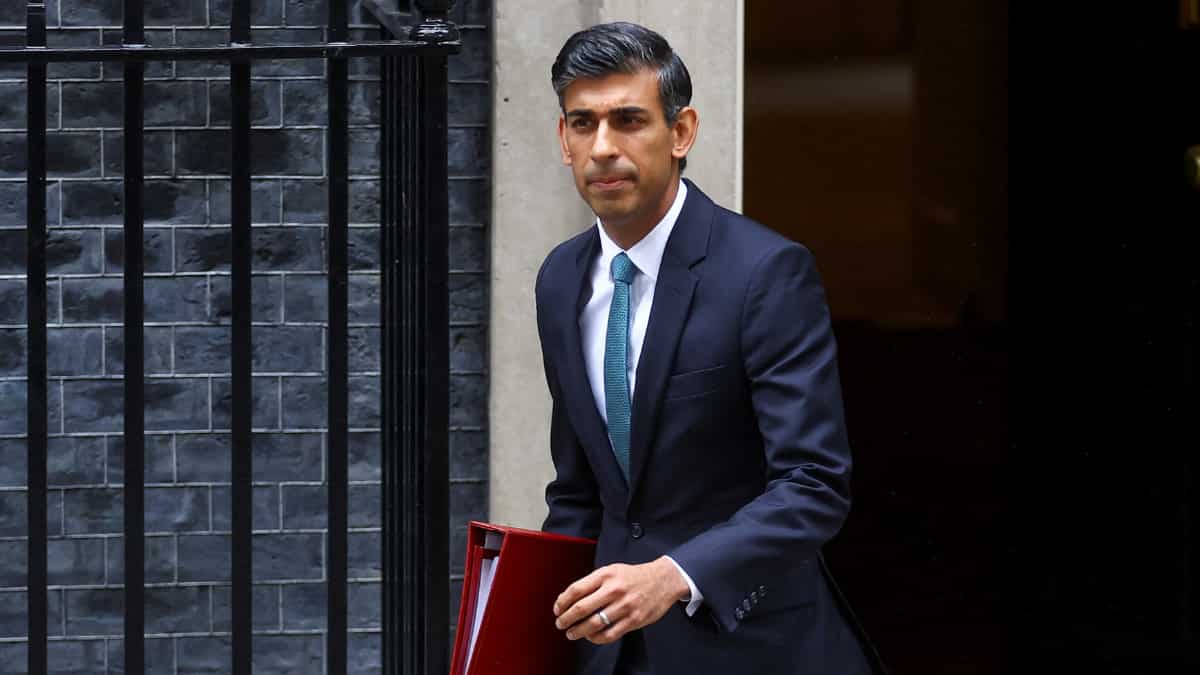
Britain's Prime Minister Rishi Sunak
The Hindus have made a notable socio-economic contribution to Kenya’s development for more than 30 years. The appointment of Rishi Sunak as the Prime Minister of UK shows that the world is morphing to become more accepting of our differences amidst a rising wave of ultra-nationalism.
A 2020 video of Rishi Sunak lighting candles outside a door on Downing Street was shared extensively on social media, and irked some.
Who saw this coming? David Cameron, the former UK Prime Minister did during his visit in 2010 to Bangalore, India. Need I say that 44th US President Barack Obama’s lineage threads its way back to Kenya.
On the flipside, as Kenya claims Rishi Sunak and India’s other sons and daughters of Kenyan heritage blazing the trail across the globe, it should also own up its mistakes. Kenyans of Asian origin, in this case Hindus, have a sharper understanding of xenophobia — a dislike or fear of strangers or foreigners. Despite their tremendous contributions in various disciplines like medicine, grammar, dance, mathematics, they are still predominantly associated with their “esoteric” spiritual practices.

Also Read |Rishi Sunak becomes UK's richest PM with more wealth than King Charles III
History is replete with the contribution of Hindus to the concept of zero, the modern numerical and decimal system, quadratic equation and trigonometry. In medicine, the Sushruta Samhita (600 B.C) is considered the first detailed text with decisive description of surgical procedures and instruments which, with modifications, are conceptually used today.
As Mr Cameron peered into the future, he also observed that at the height of the industrial revolution in the United States, they said, ‘Go west, young man, in order to find opportunity and fortune.’ “For today’s investors and entrepreneurs, they should go east,” he advised.
)
US vs China over South China Sea: Washington backs Philippines, Beijing hits back
)
Bigg Boss 20: Isha Rikhi evicted after three weeks in Salman Khan’s show
)
Musk plans to more than double xAI's chips to over 1.2 million Nvidia GPUs by year-end
)
After JU, clash erupts at SRFTI: BJP’s ‘Dimagi Naxal’ jibe sparks political firestorm after students protest RSS-linked event
)
‘Anti-social elements spreading false rumours’: LPU issues statement amid massive unrest over alleged rape
)
LPU students go on rampage, vandalise campus amid widespread protest: What's happening
)
Trump asked Xi to pressure Iran. China did not say yes — here’s what Beijing wants
)
US Treasury Secretary Scott Bessent hails global crackdown on Iranian banks and airlines
)
An OpenAI agent escaped its locked test cage again, by hiding questions in DNS lookups
)
'Our video was trimmed': LPU girls who featured in rape-denial video make U-turn
)
3 males killed, four others injured in shooting after fight at strip club in Detroit
)
'Victory for low-budget consumers': Raghav Chadha hails 30-day telecom recharge rules
)
Claude rebuilt the 1989 game 'Prince of Persia' by reusing the original's own code
)
Beyond metros: How Tier-2 and Tier-3 cities could drive India’s next AI wave
)
Tesla builds first Cybertruck with its own refined lithium: Elon Musk's $1 billion Texas bet pays off
)
IndiGo flight suffers tail strike in Bengaluru while landing; DGCA to probe incident
)
The US and China set up an AI 'red telephone', but skipped the rulebook
)
‘Terror suspects arrested near UK air base were looking to do big damage’: Trump
)
Russian envoy claims US tactics to contain India were revealed in ‘Freudian slip’
)
IND vs WI 1st ODI: Kohli breaks Sachin's most runs in one country record with unbeaten 139 as India thump West Indies by 8 wickets
)
Researchers rebuilt exactly how 700 AI agents hacked Hugging Face: a 900-link chain trick
)
‘Olympic inclusion is our major target’: WPA President Ishaun Singh on pool’s global ambitions
)
Nations League: Spain sink England at Wembley; Modric shines for Croatia
)
Why has Iran released no proof of life of Mojtaba Khamenei? Araghchi reveals...
)
'What kind of confession is this?': Pakistan PM Shehbaz Sharif’s 'terrorists would be roaming New York' remark goes viral, raises alarm online. Watch
)
South Korea demands apology from Ukraine over North Korean prisoners' transfer
)
Beyond BrahMos: India targets Rs 50,000 crore in defence exports with unmatched price edge
)
Sri Lankan Tamil migrant worker gets death sentence in Saudi Arabia, help sought from India
)
Muslim marriage cannot shield sex with minor wife from prosecution under POCSO: Delhi HC
)
'Can't help but draw painful parallels to Nirbhaya case': SC on latest incidents of rape cases in Delhi-NCR
)
99.9% more powerful - Scientists find boy who can recall memories from just 3 months of age
)
'FIRST LOOK from inside Noah’s Ark': Researchers share video from inside mysterious mound in Turkey
)
UNSC reform momentum grows: Russia, Portugal, Mauritius push for India's permanent seat bid
)
8 US marines injured in Iranian missile attack on vessel in Strait of Hormuz: Report
&im=FitAndFill=(700,400))
New OTT releases this week (September 28-October 4, 2026): Dupahiya 2, Pooja Meri Jaan, Ohh My Dog- 5 titles coming on Netflix, Prime Video and more
)
Afghanistan says 28 fighters killed in clash near Pakistan border, Islamabad denies
)
Ceuta migrant crisis: Protesters take to streets as Spain grapples with migrant challenge
)
LPU suspend classes, postpones exams as violence escalates over rape claims: What's happening
)
New York City wants a 'kill switch' on every AI, and will pay whistleblowers who report violations
The role of Hindus in Kenya’s economy cannot be overstated, but they gradually developed a siege-mentality which made them reclusive at times. Rishi Sunak’s family was one of the many that emigrated to UK shortly after Kenya’s independence.
The Hindu Council of Kenya (HCK) was formed shortly after the Ugandan-Asian crisis of 1973 when Asians were given an ultimatum by the Uganda’s third President Idi Amin Dada to leave Uganda. “We started the HCK because we didn’t have a collective voice to air our problems to the government,” said Vanraj Sarvaiya, the National Chairman of HCK.
Amin, considered a despot, perceived Hindu as ruthless exploiters and a drain to the economy of the East African state. The post-election violence in 2007 rekindled these memories of recrimination; Asian businesses lost an estimated KSh 0.5 billion in Kisumu. The violence this time did not target Hindus as a community; their economic success evoked envy. A section of indigenous Africans often links their business success to tightly guarded ethnic resources and community networks that lock out the rest.
The Hindu community businesses are critical to the Kenyan economy; they range from small shops to expansive multinationals in the manufacturing, retail and construction industry though popular perception about their hoarding money have made them tread cautiously in enterprise.
A renowned business columnist once lamented that Hindus are viewed as “strange people, with funny accents, penny-pinching ways and strange gods.” These misconceptions, said Sarvaiya, “inspired the creation of a body that would coordinate their social, religious and cultural activities in Kenya.”
Also Read |When Cameron did a Nostradamus. Rishi Sunak becoming UK prime minister was predicted long ago
The realisation that interaction with various indigenous communities and religious organisations would foster understanding, nudged them to initiate religious and cultural training programmes open even to non-Asians.
Hindus migrated from India, mostly at the turn of the century, primarily as construction workers on the Kenya Uganda Railways and as traders. Often, their success in entrepreneurship is traced to favourable social-economic position when they set foot in East Africa.
At the onset, Asians were able to produce account books in their own languages. Their ability to read and write and hence communicate gave them a head start over African traders. They were therefore used by Arabs and the British to avail credit and trading facilities in the East African region.
They participated in the Kenya independence struggle through involvement in the Mau Mau uprising against British colonialism. Despite being a predominately black-white struggle, India through its high commissioner, Appa Saheb Pant, and the Kenyan freedom fighter, Pio Gama Pinto, gave strategic and material support to the movement.
When they eventually settled down after independence, they formed social groups on ethnicity, geographical background and languages, built halls, temples and centres for performing arts for preserving Hindu ethos and made indispensable contributions in civil service, trade union movement, education, health, legal, construction, and political sectors.
At one time, the Asian population in Kenya was approximated to be 70,000; it has since dwindled as the younger generation continues to migrate to developed countries for education and in search of greater fortunes.
They have been lobbying for creating a good environment for their participation in governance. “Asians are good in trade; we would do well if we were in charge of the ministry of trade,” said Sarvaiya.
Besides working with NGOs, the Hindu community is one of the largest donor to charities through social and religious institutions of the council feeding programmes, medical camps, bursaries to students or distribution of learning material to the needy.
Jalaram Satsang Mandal and Hale Krishna Temple feed hundreds of poor people every day. Free eye and ENT camps held every year facilitate hundreds of operations, give out over 4,000 glasses and spend KSh 5 million each year.
Sarvaiya says HCK religious principles on nationalism are not just lip service. Indeed, HCK played a key role in alleviating the sufferings of internally displaced persons after the post-election violence.
Besides material support, HCK has also made modest contribution to the country’s knowledge base.
It has set up a public library with a unique collection of books on spirituality, philosophy, culture, astronomy, scriptures, mythology and yoga. The facility is open to any individual interested in these subjects for general reading or research. Yoga and meditation are perhaps the most widely recognised spiritual contributions of Hinduism to humanity.
Sarvaiya noted that apart from transcendental concepts of spiritual practice, Hinduism has been a wellspring for vast contributions to global civilisation spanning more than five millennia. As a religious practice aspiring to understand the eternal mysteries of existence, Hinduism has never been a regressive or closed dogma satisfied with history-centred interpretations of one holy book, he adds.
Perhaps, those irked by Rishi Sunak lighting candles outside a door on Downing Street could do with Sarvaiya’s honest take on religious and cultural diversity. Like David Cameron, we should have seen the coming of Sunak. The ascendancy of Asian origin CEOs in multinationals like Google, Microsoft, Adobe, Twitter and Starbucks among others, was enough of a harbinger.
The author is a strategic communications consultant based in Nairobi, Kenya.
(Disclaimer: The views of the writer do not represent the views of WION or ZMCL. Nor does WION or ZMCL endorse the views of the writer.)