America's Supreme Court – neutral arbiters or political hacks?

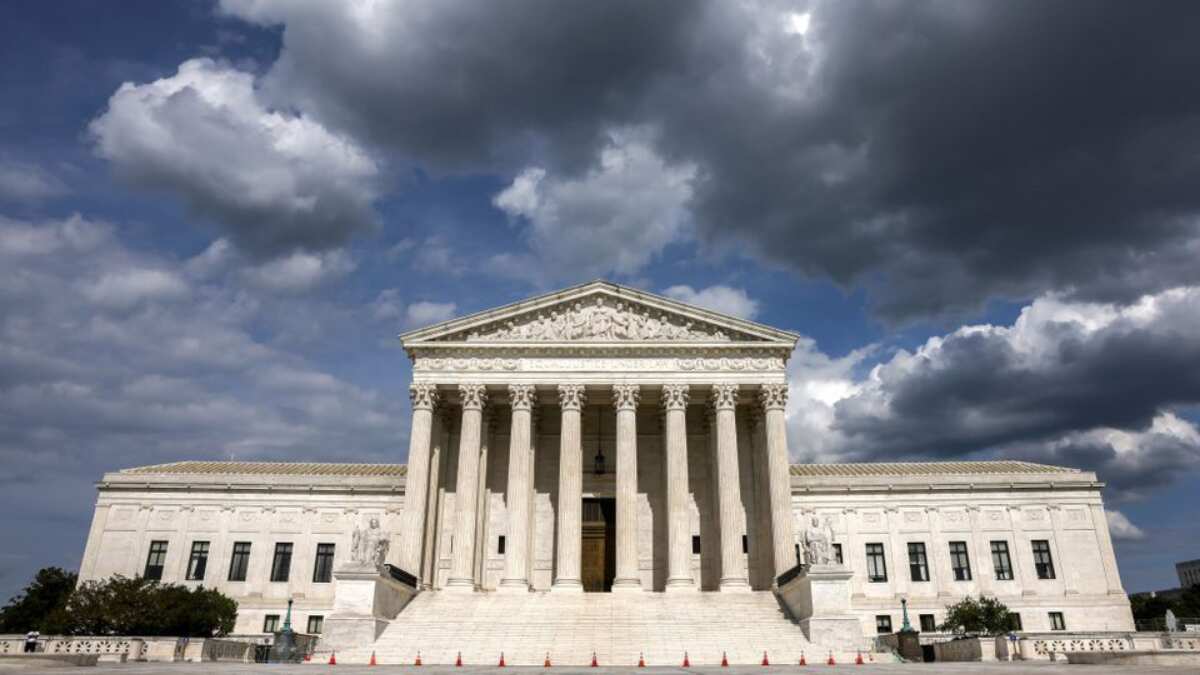
United States Supreme Court
Here's a challenge to readers of this column – name the most undemocratic institution in a country that calls itself a democracy.
There may be other contenders but my vote goes to the Supreme Court of the United States, the only country in the developed world that grants lifetime tenure to members of its highest court. Other countries have term limits – 10 or 15 years – or compulsory retirement ages.
In the United States, when a vacancy comes up through death or retirement, the president nominates a successor whose confirmation depends on a Senate hearing where nominees are quizzed on their judicial philosophies and world views.

Then, nine non-elected judges have immense power to make decisions that affect the lives of millions, as they did this year when they overruled a constitutional right to abortion granted by a Supreme Court decision dating back almost half a century.
Public confidence in the court plunged to its lowest level ever. Only 25 per cent of adults, according to a Gallup poll, said they had “a great deal” or “quite a lot” of confidence in the court. A sizeable majority of Americans (61 per cent) disagreed with the decision. Does it matter?
The ruling of the court, six of whose judges are conservative, three liberal, triggered demonstrations for and against abortion across the country and features prominently in the heated campaign for next month’s elections which will decide the balance of power in the House of Representatives and the Senate. Democrats hold majorities in both.
)
US trade tariff: 100% tariff targets Russian buyers amid trade tensions
)
Pakistan boycotts chess match against Israel at Olympiad
)
Prime Minister Narendra Modi's birthday: Tributes pour in from President Murmu and leaders
)
WATCH | Terrifying dashcam footage shows final moments before NBC4 helicopter crashes in Los Angeles, killing three
)
Strapped to flight seat with duct tape: Passenger claims no memory of mid-air outburst
)
Shahzad Bhatti Network declared terrorist organisation under UAPA: Govt order
)
Veteran actor Anant Nag honoured with Indian cinema’s highest award
)
Trump praises India’s Opium crackdown, hails anti-drug efforts
)
AUS vs SA: Steve Smith still gets 'little flashbacks' from sandpaper gate
)
Alex Saab, ally of Venezuela's Maduro, pleads guilty in US corruption case
)
Trump calls Canada-EU associate membership plan ‘laughable’ and threatens 'very serious tariffs'
)
Formula One reveals the 2027 race calendar; Monaco to host sprint race for the first time
)
Lionel Messi for 2026 Ballon d’Or over Mbappe and Yamal, says Diego Simeone
)
Former India player Diana Edulji wants Smriti Mandhana to replace Harman as skipper at the earliest
)
‘Imagine 50 AI fighters cornering one manned jet’: India’s mobbing doctrine eyes a new era of air warm
)
US Treasury rallies global financial institutions for Op Economic Outcast to isolate Iran
)
India breaks silence on US Russia sanctions bill, 100% tariff threat: ‘Committed to energy security’ for 1.4 billion
)
Pakistan: Imran Khan's sons Kasim & Sulaiman claim their father is 'tortured' in jail
)
Daayra movie review: Kareena Kapoor, Prithviraj Sukumaran shine in Meghna Gulzar’s cop-versus-cop crime thriller
)
Hong Kong unveils 11 new measures to boost birth rates, offers higher cash bonuses and housing perks
)
US House votes 417-3 to pass Ratepayer Protection Act targeting AI data center electricity costs
&im=FitAndFill=(700,400))
New OTT releases this week (September 14-20, 2026): Lust Stories 3, Waiting Hai, Irumudi- 5 new titles coming on Netflix, Prime Video and more
&im=FitAndFill=(700,400))
Suriya and Jyothika say ‘I do’ again after 20 years! See their dreamy wedding pics
)
OpenAI reveals 6 fresh cases of AI models going rogue: 'You do not answer to corporations or governments'
)
Saudi Vs Houthis: Yemeni military rebels clash with Houthis
)
Hockey: Pakistan urges AHF to move Asian Champions Trophy out of India over security concerns
)
No Pandya as Auqib Nabi earns maiden ODI call-up; Mayank returns for WI T20Is| check full squads
)
Protests erupt over migrant housing plan in Piddington
)
Sydney Sweeney defends provocative ad choice, the internet is still not impressed
)
Bigg Boss 20: Mahhi Vij reveals she lost Yuva role to Kareena Kapoor; 'didn’t work out in my favour'
)
The Early Spring season 2 is happening, but fans have one request - 'don't change the actors'
)
Katrina Kaif’s postpartum weight is not the problem; your gaze is
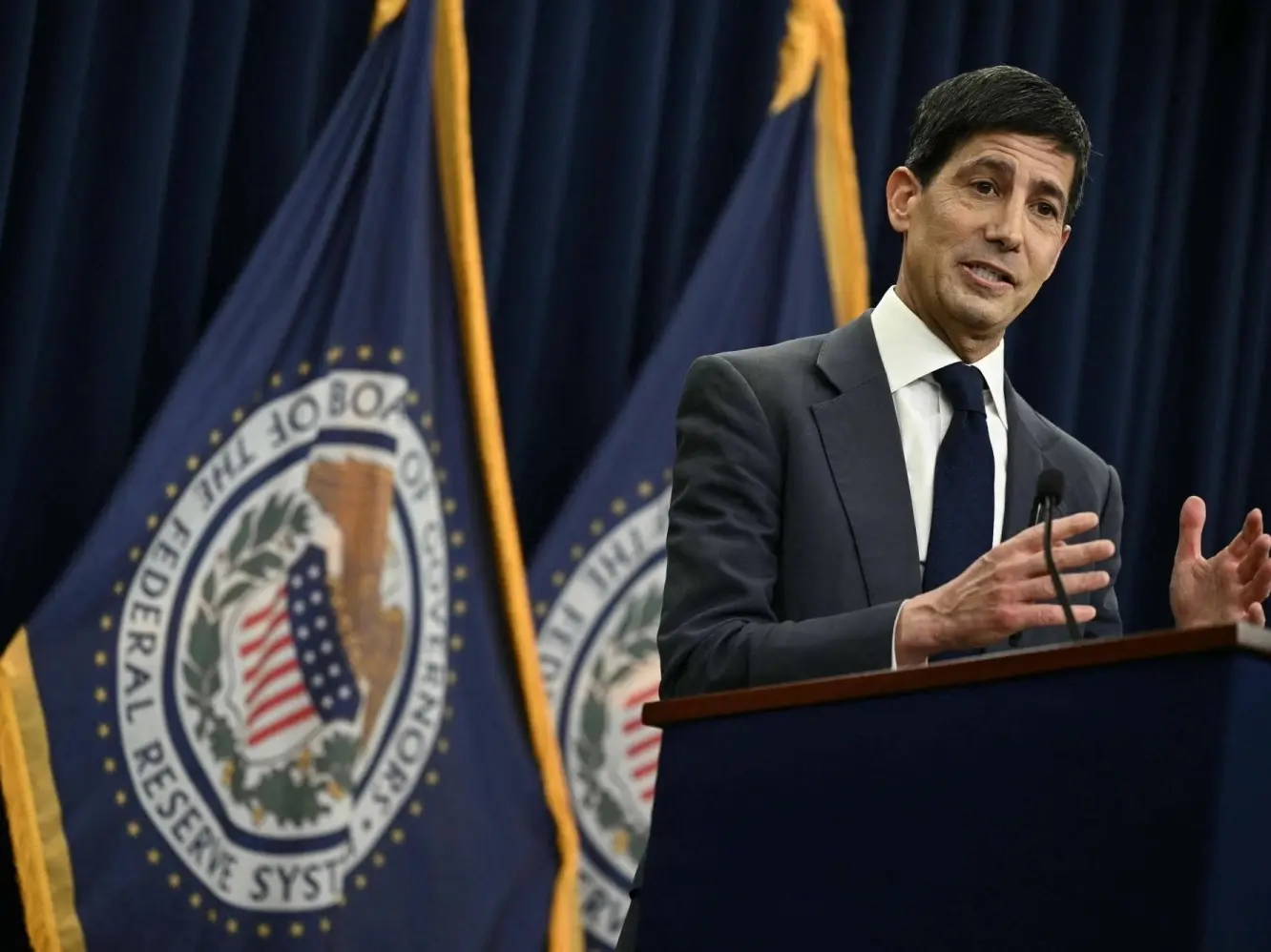)
Fed raises rates for first time in 3 years, Kevin Warsh defies Trump as inflation mounts
)
Saudi vs Houthis: Riyadh claims to have shot Houthi drone targeting Mecca
)
Taiwan seeks deeper India ties as direct flights restart soon and chip projects advance
)
Pakistan naval vessel returns to harbour with 'severe damage' after collision with Indian warship in Arabian Sea
)
Abhishek Sharma rises to No. 2 in T20Is; ENG’s Robinson 3rd after record Pakistan Tests
)
Trump gets new power to hit India, China with up to 100% tariffs as US Senate clears Russia sanctions bill
)
All Indian goods to get duty-free access to New Zealand
)
Europe wants a common playbook for security threats, seeks security beyond NATO
Critics of the court saw the decision as more evidence that the United States is deep into an era of distrust and volatility in the legal system of at a time it needs stability in its institutions rather than more venom and tumult.
But Chief Justice John Roberts has shrugged off public anger and diminishing confidence in what was once dubbed the “crown jewel” of America’s justice system. “Simply because people disagree with an opinion is not a basis for criticising the legitimacy of the court,” he told a judicial conference last month.
A few months earlier, when it became clear that the six Republican-appointed judges on the court were leaning towards abolishing the right to abortion, Justice Sonya Sotomayor, one of the three liberals, wondered aloud, “will this institution survive the stench that this creates in the public perception that the Constitution and its readings are just political acts? I don’t see how it is possible.”
Those who share such doubts include the Editorial Board of the New York Times which noted that “over the past several years, the court has been transformed into a judicial arm of the Republican Party.” While the court’s rulings had remained largely in line with the views of the average voter for decades, the editorial said, they were now in line with the views of the average Republican voter.
This is far from the role the court is supposed to play – neutral final arbiter of political disagreements. Or, as Chief Justice John Roberts eloquently put it in his 2005 confirmation hearing, the role of "an umpire calling balls and strikes and ensuring a fair playing field for all."
At the time, the balance of judges appointed by Republican and Democratic presidents was 5-4 and Roberts acted as a moderate swing voter on controversial decisions. The balance now is 6-3 which basically means he lost control of the court.
The “chief” in his title means little apart from a slightly higher salary. His is $280,500; his colleagues' $268,300.
The nine black-robed judges of the court are aware of the public’s diminishing trust in their neutrality, so much so that its newest addition, Amy Coney Barrett, felt compelled to reassure an academic audience that “this court is not comprised of partisan hacks.”
The venue and occasion of her speech inspired doubts about her distance from partisan politics. She appeared at the University of Louisville at an event honouring the US Senate’s Republican minority leader, Mitch McConnell, who played a leading role in her ascent to the court in the final stretch of the presidency of Donald Trump.
Then leader of the Republican Senate majority, McConnell had blocked President Barack Obama’s Supreme Court nominee, Merrick Garland in 2016, arguing that no Supreme Court judge should be appointed in an election year. There was no precedent for such action and four years later, also an election year, McConnell helped rush the appointment of Coney Barrett.
Garland, now Attorney General, was widely considered moderate and apolitical; Coney Barrett has been an ardent opponent of abortion, her judicial philosophies deeply influenced by her religious beliefs.
Americans uncomfortable with the present structure of their highest court recently found another reason to doubt the theory that members of the institution are above politics: family relationships.
That aspect became an issue of public discussion when the congressional committee investigating the January 6, 2021, assault on the Capitol by a mob of supporters of Donald Trump began looking into the activities of Ginni Thomas, the wife of Clarence Thomas who is the court’s longest-serving member.
Throughout US history, the spouses of sitting Supreme Court judges have kept low profiles to avoid suggestions of conflicts of interest and political entanglements. Ms Thomas, in contrast, has been a long-time vocal activist for right-wing causes. In a closed-door hearing of the January 6 committee, she repeated her belief that the 2020 election was stolen from Trump in a Democratic conspiracy.
According to emails published by watchdog groups, she asked legislators in Wisconsin and Arizona to take measures to reverse the election results. But, she told the January 6 committee, she never discussed her activities to overturn the elections with her husband.
Their pro-Trump leanings, it appears, just coincided without communication. As it turned out, Clarence Thomas was the only member of the court to vote in favour of a Trump request to block the release of presidential records demanded by the committee.
(Disclaimer: The views of the writer do not represent the views of WION or ZMCL. Nor does WION or ZMCL endorse the views of the writer.)
WATCH WION LIVE HERE
You can now write for wionews.com and be a part of the community. Share your stories and opinions with us here.
