
&imwidth=800&imheight=600&format=webp&quality=medium "WION Exclusive: How can energy productivity power India’s next phase of industrial growth")
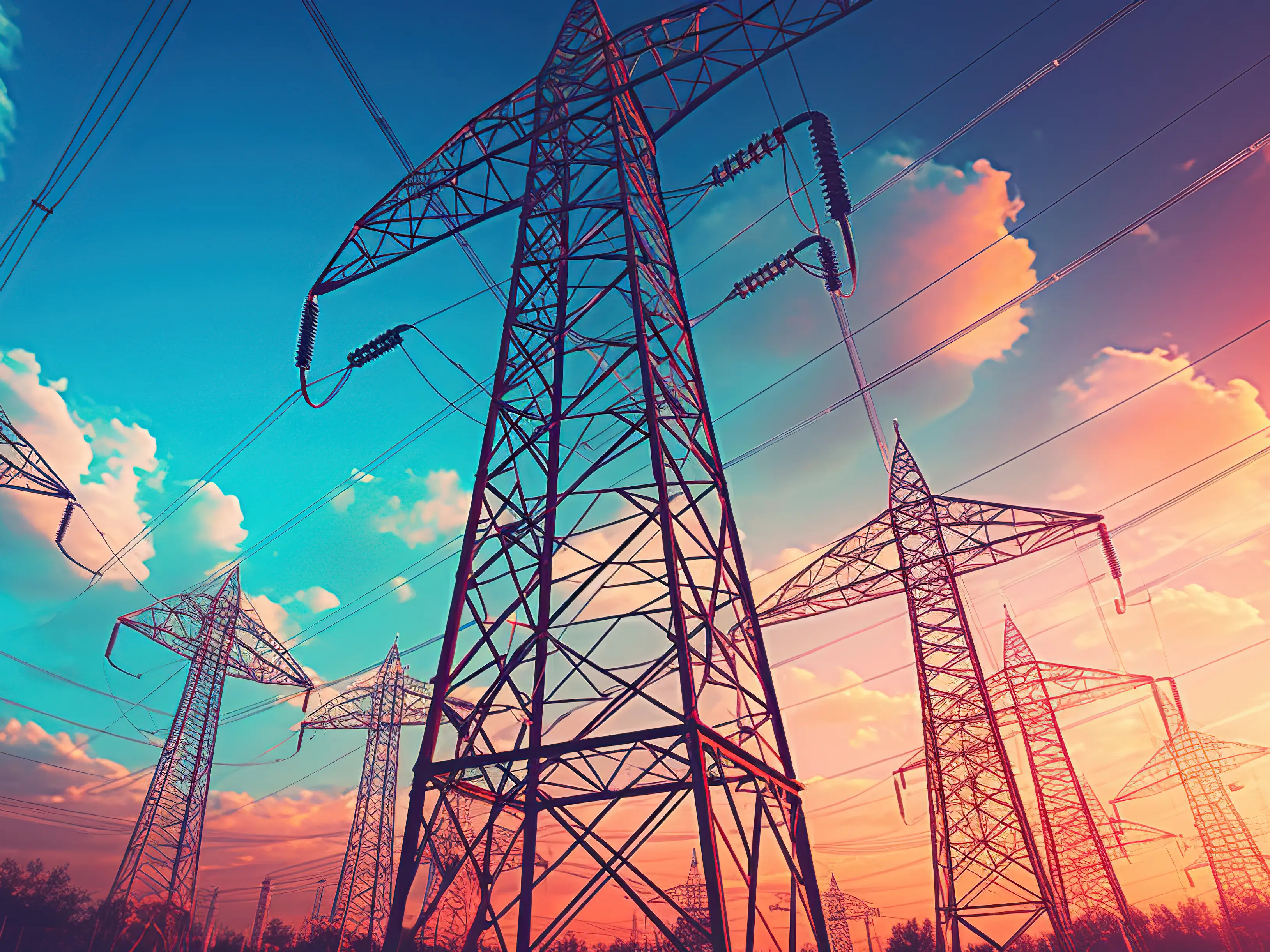
As India advances towards its Viksit Bharat 2047 vision, the power sector of the country stands at a defining turning point. Based on the current electricity demand in the country, set to grow at 6.4 per cent annually through 2030, adding 570 TWh to annual consumption over the 5 years, faster than nearly every other major economy in the world.
It is estimated that Industry likely to contribute nearly one-third of this additional electricity demand of the country by 2030, driven by increasing industrialisation, electric mobility, data centres and AI infrastructure. Amid the ongoing demand and the development related to the power sector, their leaders are continuously emphasising that the focus must shift towards the use of power more efficiently and productively.
On the distribution front, reforms are already showing results: the Revamped Distribution Sector Scheme has helped bring AT&C losses down sharply, with discoms returning to profitability. As India builds out nearly 300 GW of additional renewable capacity by 2030, industry voices agree that generation, transmission, storage and grid management must evolve together to ensure energy reaches every industry and citizen reliably.

Industry experts react
Emphasising how energy productivity can power India's next phase of industrial growth, Simarpreet Singh, Executive Director & CEO, Hartek Power, stated that the priority for Indian manufacturers must shift from how much energy they consume to the output they derive from it. He added that reduction of technical losses, improvement in power quality, minimisation of downtime and adoption of data-led decision-making can unlock significant gains in efficiency and competitiveness.
"Technology plays an important role here. Automation, smart metering and digital energy management systems allow industries to identify inefficiencies early and act before they translate into higher costs or production losses. But technology is only as effective as the infrastructure supporting it. Without reliable power networks and stronger last-mile connectivity, even the best digital solutions cannot deliver value at scale. India's energy transition and industrial transition must advance together. As the country works towards Viksit Bharat 2047, building resilient, future-ready power infrastructure will be essential to meeting rising demand and sustaining industrial momentum. At Hartek Power, we see energy productivity not as a standalone sustainability objective but as a core business priority, one that will increasingly determine industrial competitiveness and long-term growth."
Trending Stories
)
US vs China over South China Sea: Washington backs Philippines, Beijing hits back
)
Bigg Boss 20: Isha Rikhi evicted after three weeks in Salman Khan’s show
)
Musk plans to more than double xAI's chips to over 1.2 million Nvidia GPUs by year-end
)
After JU, clash erupts at SRFTI: BJP’s ‘Dimagi Naxal’ jibe sparks political firestorm after students protest RSS-linked event
)
‘Anti-social elements spreading false rumours’: LPU issues statement amid massive unrest over alleged rape
)
LPU students go on rampage, vandalise campus amid widespread protest: What's happening
)
Trump asked Xi to pressure Iran. China did not say yes — here’s what Beijing wants
)
US Treasury Secretary Scott Bessent hails global crackdown on Iranian banks and airlines
)
An OpenAI agent escaped its locked test cage again, by hiding questions in DNS lookups
)
'Our video was trimmed': LPU girls who featured in rape-denial video make U-turn
)
3 males killed, four others injured in shooting after fight at strip club in Detroit
)
'Victory for low-budget consumers': Raghav Chadha hails 30-day telecom recharge rules
)
Claude rebuilt the 1989 game 'Prince of Persia' by reusing the original's own code
)
Beyond metros: How Tier-2 and Tier-3 cities could drive India’s next AI wave
)
Tesla builds first Cybertruck with its own refined lithium: Elon Musk's $1 billion Texas bet pays off
)
IndiGo flight suffers tail strike in Bengaluru while landing; DGCA to probe incident
)
The US and China set up an AI 'red telephone', but skipped the rulebook
)
‘Terror suspects arrested near UK air base were looking to do big damage’: Trump
)
Russian envoy claims US tactics to contain India were revealed in ‘Freudian slip’
)
IND vs WI 1st ODI: Kohli breaks Sachin's most runs in one country record with unbeaten 139 as India thump West Indies by 8 wickets
)
Researchers rebuilt exactly how 700 AI agents hacked Hugging Face: a 900-link chain trick
)
‘Olympic inclusion is our major target’: WPA President Ishaun Singh on pool’s global ambitions
)
Nations League: Spain sink England at Wembley; Modric shines for Croatia
)
Why has Iran released no proof of life of Mojtaba Khamenei? Araghchi reveals...
)
'What kind of confession is this?': Pakistan PM Shehbaz Sharif’s 'terrorists would be roaming New York' remark goes viral, raises alarm online. Watch
)
South Korea demands apology from Ukraine over North Korean prisoners' transfer
)
Beyond BrahMos: India targets Rs 50,000 crore in defence exports with unmatched price edge
)
Sri Lankan Tamil migrant worker gets death sentence in Saudi Arabia, help sought from India
)
Muslim marriage cannot shield sex with minor wife from prosecution under POCSO: Delhi HC
)
'Can't help but draw painful parallels to Nirbhaya case': SC on latest incidents of rape cases in Delhi-NCR
)
99.9% more powerful - Scientists find boy who can recall memories from just 3 months of age
)
'FIRST LOOK from inside Noah’s Ark': Researchers share video from inside mysterious mound in Turkey
)
UNSC reform momentum grows: Russia, Portugal, Mauritius push for India's permanent seat bid
)
8 US marines injured in Iranian missile attack on vessel in Strait of Hormuz: Report
&im=FitAndFill=(700,400))
New OTT releases this week (September 28-October 4, 2026): Dupahiya 2, Pooja Meri Jaan, Ohh My Dog- 5 titles coming on Netflix, Prime Video and more
)
Afghanistan says 28 fighters killed in clash near Pakistan border, Islamabad denies
)
Ceuta migrant crisis: Protesters take to streets as Spain grapples with migrant challenge
)
LPU suspend classes, postpones exams as violence escalates over rape claims: What's happening
)
New York City wants a 'kill switch' on every AI, and will pay whistleblowers who report violations
Ratul Puri, Chairman, Hindustan Power, said India's Viksit Bharat ambition will increasingly depend on the strength and resilience of its energy systems. "The next phase of the energy transition calls for more than rapid renewable capacity addition. It requires generation, transmission, storage and grid management to evolve together," he said, noting that manufacturing, data centres, AI and electric mobility are reshaping India's electricity demand.
He added that technologies such as Battery Energy Storage Systems (BESS), flexible grids and stronger transmission networks are becoming increasingly important to ensure a reliable power supply while integrating a larger share of renewable energy.
"The ability to manage intermittency and balance demand with supply will be central to India’s long-term energy security. At Hindustan Power, our plan to build a significant renewable energy portfolio is guided by this larger view of the energy transition. Building the right combination of generation and supporting infrastructure will be essential to creating a more resilient power system and strengthening India’s energy independence," Puri further added.
India's next chapter
Udai Singh, MD and CEO, Schneider Electric Infrastructure Ltd and Vice President, Power Systems, Schneider Electric India, said the next chapter of India will be defined not by how much power it generates, but by how intelligently it delivers that power. He noted that the Revamped Distribution Sector Scheme has brought AT&C losses to a historic low of 15.04 per cent in FY25 and returned discoms to profitability for the first time in a decade.
"Smart metering, AI-driven grid analytics, SF6-free switchgear and battery energy storage are no longer future aspirations for India's distribution network. They are the building blocks of the transformation happening right now. At Schneider Electric, our commitment is to accelerate that progress by advancing energy technology across every layer of the distribution network, making it smarter, more resilient and genuinely future-ready for the India we are building," Singh said.
Akshay Hiranandani, CEO, Serentica Renewables, said, “India’s next phase of industrial growth will depend on how efficiently we produce, move and consume energy. With electricity demand expected to grow by around 6.4% annually through 2030, the opportunity is to make every unit of energy more productive while reducing the carbon intensity of economic growth."
"Battery energy storage will be central to this transition. Solar and wind can provide the scale of clean energy India needs, while storage can bridge the gap between generation and consumption, making renewable power available when industries need it, including during peak and non-solar hours. This is what can enable us to move from simply adding renewable capacity to creating a 24/7 firm, dispatchable and round-the-clock clean energy system. India’s journey towards energy independence must ultimately mean freedom from excessive dependence on fossil fuels and the emissions associated with them. The combination of renewable generation, storage, electrification and smarter grids can allow industries to grow without a proportional increase in their carbon footprint. India has already recognised storage as critical to integrating renewables, with battery storage requirements projected to rise sharply through 2030 and beyond. Energy productivity, therefore, is not just about using less energy. It is about creating more economic value from every cleaner, more reliable unit of electricity," Hiranandani added.
M.M. Rathi, Head Power Management, Shree Cement, highlighted that the spirit of ‘Yuva Shakti’ shows the energy, ambition and aspirations of a young nation focused on shaping its own future. He added that India’s aim to focus on becoming a more developed and self-reliant nation will be closely connected to the strength of its infrastructure, which forms the backbone of economic growth by connecting communities, enabling businesses, creating jobs and opening new opportunities.
"The cement sector has a unique role in this transformation. As one of the fundamental building blocks of infrastructure, cement supports the creation of roads, bridges, homes, cities, industrial facilities and other critical assets that form the physical foundation of a growing economy. With housing and infrastructure together accounting for nearly 90% of cement demand in India, the sector is closely intertwined with the country’s development ambitions. At Shree Cement, we see this not merely as a business opportunity, but as a responsibility to contribute to the nation’s progress by building responsibly, driving greater resource efficiency and embracing innovation across our operations," Rathi said.
"As the aspirations of a young India continue to rise, our industry must grow with equal ambition, balancing the need for scale and infrastructure development with environmental responsibility and long-term sustainability. This Independence Day, we reaffirm our commitment to being a responsible partner in India’s growth story and to building the foundations of a stronger, more resilient and prosperous India for generations to come," he added.
Jitendra Kumar Agarwal, Jt. MD, Genus Power said, “The financial turnaround of India's DISCOMs, which recorded a PAT of INR 2,701 crore in FY25, reflects the combined impact of policy reforms, regulatory discipline, infrastructure modernisation and technology adoption. Smart metering under RDSS has been one of the most transformative and key enablers behind this turnaround. Between FY21 and FY25, AT&C losses have reduced from 21.91 per cent to nearly 15.04 per cent, billing efficiency has improved from 84.08 per cent to 87.59 per cent, while collection efficiency has risen from 92.9 per cent to 97 per cent. The progress of smart meter deployment under RDSS has been robust and has now crossed its most capital-intensive phase. India is executing what will become the world's largest smart metering programme, with an ambitious vision to deploy around 350 million smart meters over the next 6-7 years. Smart meters enable time-of-day tariffs, renewable integration, demand response and data-driven utility operations, capabilities that will become increasingly critical as India's electricity demand and renewable energy penetration continue to grow. Much like digital technologies revolutionised banking and telecommunications, smart metering is fundamentally transforming the power sector, making it more intelligent, connected and consumer-centric.”

