

&imwidth=800&imheight=600&format=webp&quality=medium "Which parts of India are earthquake prone, fall in the most risky zone, and why? WION Decodes")
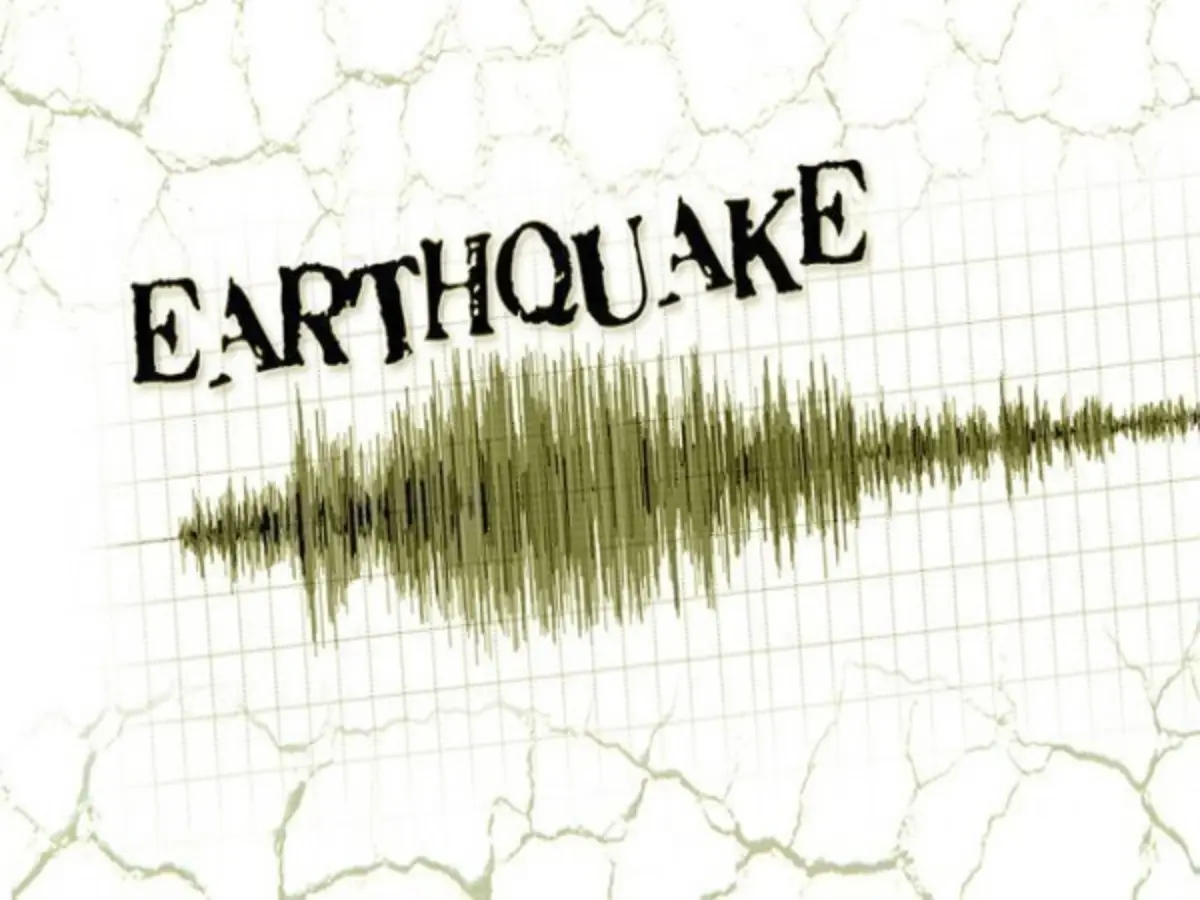
An earthquake measuring 6 on the Richter scale hit the Hindu Kush region of Afghanistan on Saturday. Mild tremors were also felt in India's Jammu and Kashmir and Delhi-NCR. While the quake did not cause major damage in India, the event has once again put the country's earthquake risk and preparedness in focus.
A moderate intensity earthquake is often felts in several parts of India due to various reasons.
Firstly, Afghanistan lies in an active tectonic collision zone and in the Hindu Kush region are often deep-focus quakes. Secondly, Seismic waves travel efficiently across the Indo-Gangetic Plain and lastly high intensity quakes release enormous amounts of energy, thus its impact is also felt in far off areas, including neighbouring India.
India is divided into four seismic (earthquake hazard) zones by the Bureau of Indian Standards. These zones indicate the expected level of earthquake hazard, with Zone V being the highest risk and Zone II the lowest.
Parts of Karnataka, Tamil Nadu, Telangana, Madhya Pradesh, Chhattisgarh fall in Zone II, while large parts of Kerala, Goa, Madhya Pradesh, Chhattisgarh, Odisha, Andhra Pradesh, Telangana, Karnataka, Tamil Nadu, Maharashtra and parts of northern and western India fall in Zone III, moderate damage risk zone.
Trending Stories
&im=FitAndFill=(700,400)&imwidth=180&imheight=135&format=webp&quality=medium)
What is the real meaning behind Pete Hegseth's tattoos?
&imwidth=180&imheight=135&format=webp&quality=medium)
Zohran Mamdani's Garba dance goes viral as he joins Indian community's Navratri celebrations | WATCH
&imwidth=180&imheight=135&format=webp&quality=medium)
Rafale Marine fighter begins flight trials in Goa ahead of Indian Navy induction
&imwidth=180&imheight=135&format=webp&quality=medium)
Explosions heard in Iran’s Hormozgan province near Strait of Hormuz: State media
&imwidth=180&imheight=135&format=webp&quality=medium)
Shock, anger and despair in Bangladesh over the executions
&imwidth=180&imheight=135&format=webp&quality=medium)
Meta slapped with $25 billion fine in New Mexico over Facebook data practices, company plans appeal
&imwidth=180&imheight=135&format=webp&quality=medium)
Man marries off wife of 17 years to her lover in Uttar Pradesh
&imwidth=180&imheight=135&format=webp&quality=medium)
Russia to send first tanker carrying 40,000 tonnes diesel to US after Trump-Putin deal – What we know
&imwidth=180&imheight=135&format=webp&quality=medium)
WATCH | Mysterious haze grips Ohio city as toxic chemical leak forces mass evacuation – What is happening?
&imwidth=180&imheight=135&format=webp&quality=medium)
Kim Jong Un death rumors explode | China accused of secretly sending troops to Pyongyang
&imwidth=180&imheight=135&format=webp&quality=medium)
Trump says end to Ukraine war is 'closer than ever'; Witkoff's Putin remarks spark criticism
&imwidth=180&imheight=135&format=webp&quality=medium)
James Bond auction: Own Daniel Craig's Skyfall suit, Ana de Armas' dress and 300+ rare 007 collectibles
&imwidth=180&imheight=135&format=webp&quality=medium)
Trump waves at 'empty space' in viral video,' critics claim 'mental decline getting worse' | WATCH
&imwidth=180&imheight=135&format=webp&quality=medium)
US Midterms 2026: Sugar Land, Plano, Irving: How Texas’s Indian-American belt could shape poll outcomes
&imwidth=180&imheight=135&format=webp&quality=medium)
Macron slams Trump and other foreign leaders' 'stupid comments' on France riots as fresh protests loom
&imwidth=180&imheight=135&format=webp&quality=medium)
US midterms: Democrats sue Trump administration over alleged 'threats and intimidation' ahead of election, Musk issues warning to Dems
&imwidth=180&imheight=135&format=webp&quality=medium)
‘Her heart and mind in good shape’: What Helen Haines’ husband said after MP loses both legs in ‘targeted’ attack
&imwidth=180&imheight=135&format=webp&quality=medium)
Israel election 2026: Three possible scenarios after October 27 polls
&imwidth=180&imheight=135&format=webp&quality=medium)
US midterms 2026: What polls and prediction markets indicate about Congress
&imwidth=180&imheight=135&format=webp&quality=medium)
'You are a dummy, you are a stupid person': Trump loses temper with CNN, ABC reporters after questions about Russia sanctions
&imwidth=180&imheight=135&format=webp&quality=medium)
US Midterms 2026 and money: From Bloomberg to Musk, corporate donors, super PACs and lobbies, it's all about the cash
&imwidth=180&imheight=135&format=webp&quality=medium)
Are the US and Israel preparing for another major attack on Iran? Here's what report claims
&imwidth=180&imheight=135&format=webp&quality=medium)
US orders embassy staff, families to leave Saudi Arabia amid Houthi attacks: Report
&imwidth=180&imheight=135&format=webp&quality=medium)
Ramayana promotion takes a funny turn after Ranbir Kapoor's verbal blunder, leaves fans in splits | Watch
&imwidth=180&imheight=135&format=webp&quality=medium)
Priyanka Chopra celebrates Dussehra 2026 with Nick Jonas and daughter Malti Marie | See pics
&im=FitAndFill=(700,400)&imwidth=180&imheight=135&format=webp&quality=medium)
New OTT releases this week (October 19-25, 2026): Gajab Raat to Chaar Yaar-8 titles to watch during Dussehra week on Netflix, Prime Video and more
&imwidth=180&imheight=135&format=webp&quality=medium)
US business activity grows in June, but tariffs and inflation cloud outlook
&imwidth=180&imheight=135&format=webp&quality=medium)
'I’m not saying it’s extraterrestrial' - 'Mutant' creature forces Mexicans to flee their homes
&imwidth=180&imheight=135&format=webp&quality=medium)
‘I caution the president...’: Trump’s ex-press secretary warns after Zacharia’s exit
&imwidth=180&imheight=135&format=webp&quality=medium)
Hunger makes alcohol more appealing, study finds
&imwidth=180&imheight=135&format=webp&quality=medium)
Finance influencer dies by suicide in Chennai; father accuses tech CEO, who denies charge
&imwidth=180&imheight=135&format=webp&quality=medium)
Kolkata airport: CISF detects ₹1.13 crore in US dollars hidden in bags of 2 Bangkok-bound passengers
&imwidth=180&imheight=135&format=webp&quality=medium)
Feds obtain DNA evidence that could prove Ilhan Omar married her brother: Report
&imwidth=180&imheight=135&format=webp&quality=medium)
US midterms 2026: Trump's approval rating hits record low as Democrats gain ground
While in the High Damage Risk zone (Zone IV) lies Parts of Delhi, Punjab, Haryana, Uttar Pradesh, Bihar, West Bengal, Sikkim, parts of Rajasthan, Gujarat, Maharashtra and Jharkhand.
The highest risk, Zone V regions are Assam, Arunachal Pradesh, Manipur, Meghalaya, Mizoram, Nagaland, Tripura, Andaman and Nicobar Islands, parts of Jammu and Kashmir, Ladakh, Himachal Pradesh, Uttarakhand, the Rann of Kutch, Gujarat region and parts of Bihar.
Why are these regions at the highest risk?
Collision of the Indian and Eurasian plates, active Himalayan faults, complex tectonics in Northeast India, Intraplate seismicity in Kutch
Subduction zone near the Andaman-Nicobar Islands result in frequent earthquakes in these regions and put them at high risk.
The movement of the Indian Plate is the primary reason for quakes in India, which is highly vulnerable. The ongoing northward movement of the Indian Plate creates stress along plate boundaries and faults, which is periodically released as earthquakes.
How does India monitor and report earthquakes?
The National Centre for Seismology (NCS), with its strong ground network is India’s official nodal agency for monitoring earthquakes. The 24/7 command centre, real-time data streaming via Satellite and the instant public and government alerting makes the agency trustworthy.
Can earthquakes be predicted, what are its limitations?
Scientists can not accurately predict earthquakes but can identify where earthquakes are more likely. They can also estimate long-term probabilities, and issue seconds-to-tens-of-seconds early warnings after an earthquake.
Is India prepared to deal with a major earthquake?
India’s readiness for a major earthquake, given the infrastructure it has is not up to the mark of world standards. Building codes are advance but poorly enforced. There are no early warning and monitoring system in place. Also public awareness and preparedness in this regard is scant.
The NDRF (National Disaster Response Force) is India strongest pillar if any such incident happens.
Other factors that puts India's preparedness in a tight spot is non-engineered and older buildings, inconsistent enforcement of seismic building codes and densely populated urban centres.
