
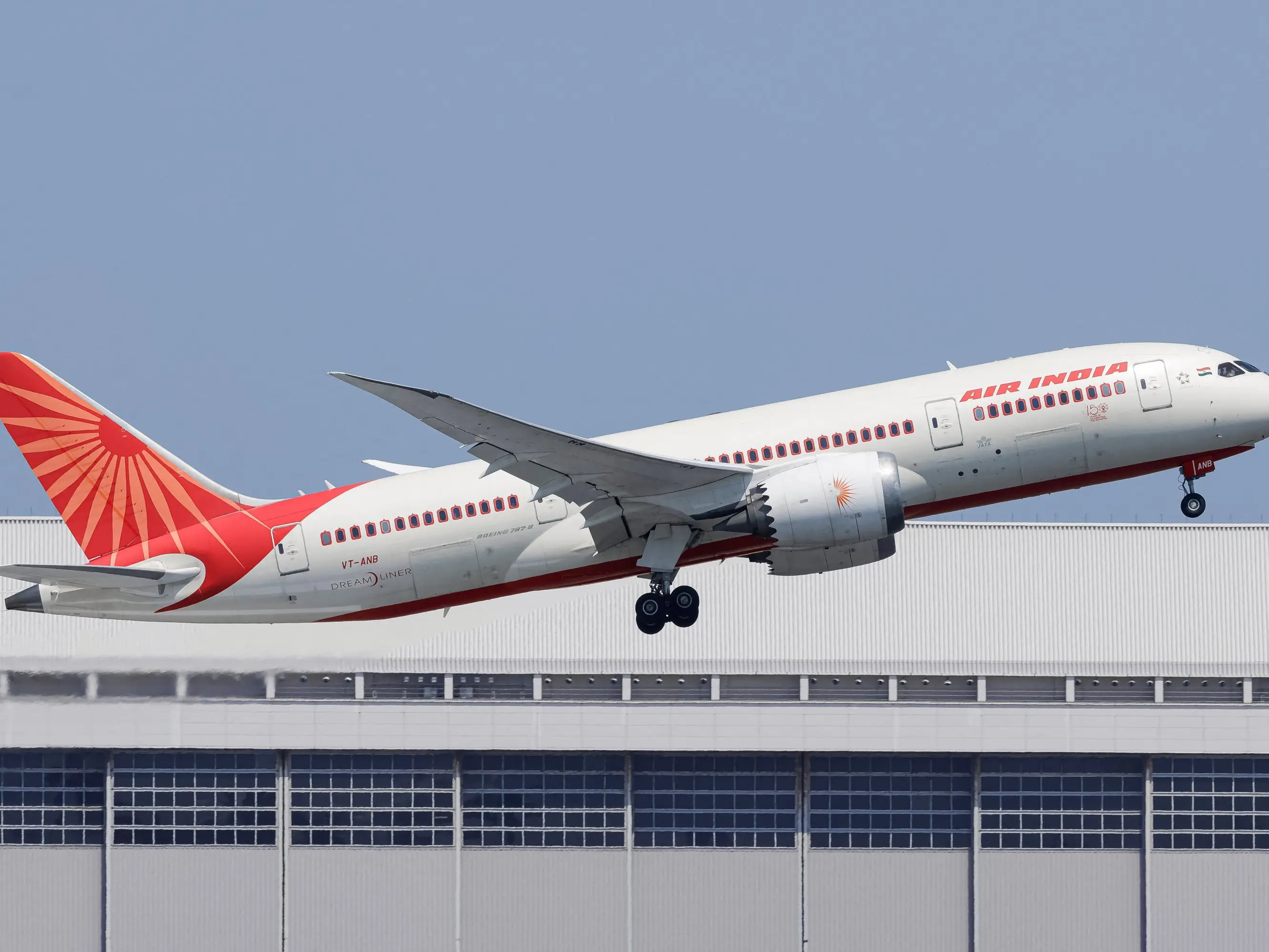
&imwidth=800&imheight=600&format=webp&quality=medium "When engines fail: The sabotage shadow over Air India 171")
Indian security agencies are conducting a comprehensive investigation into the Air India AI 171 crash in Ahmedabad, examining all possible causes, including potential sabotage, according to a report and other media sources. The probe follows a "prevention through elimination" approach, systematically checking all scenarios that could have caused the accident intentionally.
The investigation was triggered by the highly unusual dual engine failure - described by aviation experts as extremely rare. While no concrete evidence of sabotage has emerged, the scale of casualties (260 lives) and international significance have prompted authorities to examine all angles carefully.

Government Confirms Multi-Agency Probe
Minister of State for Civil Aviation Murlidhar Mohol confirmed that the Aircraft Accident Investigation Bureau (AAIB) is leading the investigation into the June 12, 2025, crash. Speaking to NDTV at the Pune Emerging Business Conclave, he outlined the comprehensive probe.
"The AAIB has launched a thorough investigation examining every possibility - sabotage is one of them. CCTV footage is being reviewed, and multiple agencies are working together," Mohol stated to NDTV, emphasising the unprecedented nature of simultaneous dual engine failure.
Trending Stories
&imwidth=280&imheight=210&format=webp&quality=medium)
US vs China over South China Sea: Washington backs Philippines, Beijing hits back
&imwidth=280&imheight=210&format=webp&quality=medium)
Bigg Boss 20: Isha Rikhi evicted after three weeks in Salman Khan’s show
&imwidth=280&imheight=210&format=webp&quality=medium)
Musk plans to more than double xAI's chips to over 1.2 million Nvidia GPUs by year-end
&imwidth=280&imheight=210&format=webp&quality=medium)
After JU, clash erupts at SRFTI: BJP’s ‘Dimagi Naxal’ jibe sparks political firestorm after students protest RSS-linked event
&imwidth=280&imheight=210&format=webp&quality=medium)
‘Anti-social elements spreading false rumours’: LPU issues statement amid massive unrest over alleged rape
&imwidth=280&imheight=210&format=webp&quality=medium)
LPU students go on rampage, vandalise campus amid widespread protest: What's happening
&imwidth=280&imheight=210&format=webp&quality=medium)
Trump asked Xi to pressure Iran. China did not say yes — here’s what Beijing wants
&imwidth=280&imheight=210&format=webp&quality=medium)
US Treasury Secretary Scott Bessent hails global crackdown on Iranian banks and airlines
&imwidth=280&imheight=210&format=webp&quality=medium)
An OpenAI agent escaped its locked test cage again, by hiding questions in DNS lookups
&imwidth=280&imheight=210&format=webp&quality=medium)
'Our video was trimmed': LPU girls who featured in rape-denial video make U-turn
&imwidth=280&imheight=210&format=webp&quality=medium)
3 males killed, four others injured in shooting after fight at strip club in Detroit
&imwidth=280&imheight=210&format=webp&quality=medium)
'Victory for low-budget consumers': Raghav Chadha hails 30-day telecom recharge rules
&imwidth=280&imheight=210&format=webp&quality=medium)
Claude rebuilt the 1989 game 'Prince of Persia' by reusing the original's own code
&imwidth=280&imheight=210&format=webp&quality=medium)
Beyond metros: How Tier-2 and Tier-3 cities could drive India’s next AI wave
&imwidth=280&imheight=210&format=webp&quality=medium)
Tesla builds first Cybertruck with its own refined lithium: Elon Musk's $1 billion Texas bet pays off
&imwidth=280&imheight=210&format=webp&quality=medium)
IndiGo flight suffers tail strike in Bengaluru while landing; DGCA to probe incident
&imwidth=280&imheight=210&format=webp&quality=medium)
The US and China set up an AI 'red telephone', but skipped the rulebook
&imwidth=280&imheight=210&format=webp&quality=medium)
‘Terror suspects arrested near UK air base were looking to do big damage’: Trump
&imwidth=280&imheight=210&format=webp&quality=medium)
Russian envoy claims US tactics to contain India were revealed in ‘Freudian slip’
&imwidth=280&imheight=210&format=webp&quality=medium)
IND vs WI 1st ODI: Kohli breaks Sachin's most runs in one country record with unbeaten 139 as India thump West Indies by 8 wickets
&imwidth=280&imheight=210&format=webp&quality=medium)
Researchers rebuilt exactly how 700 AI agents hacked Hugging Face: a 900-link chain trick
&imwidth=280&imheight=210&format=webp&quality=medium)
‘Olympic inclusion is our major target’: WPA President Ishaun Singh on pool’s global ambitions
&imwidth=280&imheight=210&format=webp&quality=medium)
Nations League: Spain sink England at Wembley; Modric shines for Croatia
&imwidth=280&imheight=210&format=webp&quality=medium)
Why has Iran released no proof of life of Mojtaba Khamenei? Araghchi reveals...
&imwidth=280&imheight=210&format=webp&quality=medium)
'What kind of confession is this?': Pakistan PM Shehbaz Sharif’s 'terrorists would be roaming New York' remark goes viral, raises alarm online. Watch
&imwidth=280&imheight=210&format=webp&quality=medium)
South Korea demands apology from Ukraine over North Korean prisoners' transfer
&imwidth=280&imheight=210&format=webp&quality=medium)
Beyond BrahMos: India targets Rs 50,000 crore in defence exports with unmatched price edge
&imwidth=280&imheight=210&format=webp&quality=medium)
Sri Lankan Tamil migrant worker gets death sentence in Saudi Arabia, help sought from India
&imwidth=280&imheight=210&format=webp&quality=medium)
Muslim marriage cannot shield sex with minor wife from prosecution under POCSO: Delhi HC
&imwidth=280&imheight=210&format=webp&quality=medium)
'Can't help but draw painful parallels to Nirbhaya case': SC on latest incidents of rape cases in Delhi-NCR
&imwidth=280&imheight=210&format=webp&quality=medium)
99.9% more powerful - Scientists find boy who can recall memories from just 3 months of age
&imwidth=280&imheight=210&format=webp&quality=medium)
'FIRST LOOK from inside Noah’s Ark': Researchers share video from inside mysterious mound in Turkey
&imwidth=280&imheight=210&format=webp&quality=medium)
UNSC reform momentum grows: Russia, Portugal, Mauritius push for India's permanent seat bid
&imwidth=280&imheight=210&format=webp&quality=medium)
8 US marines injured in Iranian missile attack on vessel in Strait of Hormuz: Report
&im=FitAndFill=(700,400)&imwidth=280&imheight=210&format=webp&quality=medium)
New OTT releases this week (September 28-October 4, 2026): Dupahiya 2, Pooja Meri Jaan, Ohh My Dog- 5 titles coming on Netflix, Prime Video and more
&imwidth=280&imheight=210&format=webp&quality=medium)
Afghanistan says 28 fighters killed in clash near Pakistan border, Islamabad denies
&imwidth=280&imheight=210&format=webp&quality=medium)
Ceuta migrant crisis: Protesters take to streets as Spain grapples with migrant challenge
&imwidth=280&imheight=210&format=webp&quality=medium)
LPU suspend classes, postpones exams as violence escalates over rape claims: What's happening
&imwidth=280&imheight=210&format=webp&quality=medium)
New York City wants a 'kill switch' on every AI, and will pay whistleblowers who report violations
Black Box Analysis Key
The investigation will intensify once experts decode the recovered black box recordings. The flight data recorder contains critical information and cockpit voice recordings from the aircraft's final moments.
Mohol explained that the Cockpit Voice Recorder captured the pilots' final conversation. "Everything will be made clear once the investigation report is complete, which should take about three months," he said, clarifying that all analysis will be conducted domestically without sending the black box abroad.
Technical Investigation
The probe will determine whether the cause was technical - engine malfunction or fuel supply problems. The Boeing 787-8 Dreamliner crashed 30 seconds after takeoff from Ahmedabad Airport, bound for London Gatwick, with 242 people aboard.
This marked the first fatal Boeing 787 accident since 2011 commercial service began, and Air India's first fatal crash since 1985.
Broader Aviation Issues
Minister Mohol also addressed sector challenges, noting 419 technical vacancies at the Directorate General of Civil Aviation that need filling, concerns about airlines overworking pilots, and efforts to make air travel more affordable.
Potential Sabotage Angles Under Investigation
As part of their comprehensive probe, security agencies are examining several potential sabotage scenarios to rule out foul play. These investigation angles include:
1. Fuel Supply Security Under Scrutiny
Intelligence officials have revealed to CNN News18 that investigators are conducting detailed examinations of the aircraft's fuel supply chain to determine if contamination played a role in the crash. This comprehensive review covers every stage of the fuel handling process.
The investigation focuses on three critical areas of fuel management. First, authorities are examining fuel sourcing - tracking where the aviation fuel originated and whether it met required quality standards before reaching the airport. Second, they're analysing fuel storage systems at Ahmedabad airport, checking storage tanks and facilities for any signs of contamination or unauthorised access that could have compromised fuel quality.
Third, investigators are scrutinising the hydrant fuel system - the network of underground pipes and equipment used to deliver fuel directly from storage tanks to aircraft. Any breach in this system could potentially allow contaminants to enter the fuel supply.
The probe extends beyond technical systems to human factors. Security agencies are conducting thorough background checks on all ground staff involved in fuel operations, including fuel truck operators, quality control personnel, and maintenance workers. Additionally, investigators are reviewing contracts with fuel suppliers and service providers to identify any potential security vulnerabilities or suspicious activities.
This angle of investigation stems from the understanding that contaminated or adulterated fuel could cause catastrophic engine failure. Aviation fuel must meet extremely strict quality standards, and even minor contamination with water, dirt, or chemicals could lead to engine malfunction or complete failure - potentially explaining the rare dual-engine shutdown that occurred during the AI 171 flight.
The forensic review involves laboratory analysis of fuel samples, examination of fuel handling equipment, and verification of fuel quality documentation to ensure no tampering occurred in the supply chain.
2. Aircraft Maintenance and Insider Threats
Investigation teams are closely examining the maintenance history of the crashed Boeing 787 Dreamliner, as these advanced aircraft require complex and frequent servicing to operate safely. Officials are particularly concerned about the possibility of deliberate sabotage by someone with inside access to the aircraft.
a.Complex Maintenance Requirements
The Boeing 787 Dreamliner is a sophisticated aircraft with advanced electronic systems, composite materials, and cutting-edge technology. This complexity means the plane needs regular, detailed maintenance checks by highly trained technicians. Investigators are reviewing whether all required maintenance was properly completed before the flight.
b. Insider Sabotage Concerns
Security agencies are investigating whether someone with authorized access to the aircraft - such as maintenance workers, ground crew, or airport personnel - may have intentionally caused damage. This type of threat is particularly dangerous because insiders have legitimate access to restricted areas and aircraft systems.
c.Key Areas Under Investigation
Investigators are examining several critical aspects of aircraft maintenance:
Overlooked Problems:Teams are checking whether any mechanical faults or warning signs were missed or ignored during routine inspections. Sometimes small issues can escalate into major failures if not addressed properly.
Unauthorised Changes:Officials are verifying that only approved, certified aircraft parts were used and that no unauthorised modifications or component replacements occurred. Using incorrect or substandard parts could lead to system failures.
Maintenance Records:All maintenance logs and service records are being scrutinised to ensure work was completed according to aviation safety standards and that nothing was falsified or omitted.
Tool and Equipment Tracking: Investigators are checking systems that track maintenance tools and equipment to ensure nothing was left inside the aircraft that could cause problems, and that all tools were accounted for after maintenance work.
Personnel Background Checks:The backgrounds, credentials, and recent activities of all maintenance technicians and support staff who worked on the aircraft are being thoroughly investigated to identify any potential security risks or suspicious behaviour.
This comprehensive approach helps determine whether human error, negligence, or intentional sabotage in the maintenance process contributed to the tragic accident.
3. Digital Attack on Aircraft Systems
Senior intelligence officials are investigating whether the crash could have been caused by a cyber attack - essentially hackers targeting the aircraft's computer systems. Modern planes like the Boeing 787 rely heavily on digital technology, making them potentially vulnerable to sophisticated cyber threats.
a. How Aircraft Can Be Hacked
Today's commercial aircraft are essentially flying computers with complex software controlling everything from engines to navigation. The Boeing 787 Dreamliner uses advanced computer systems to manage flight operations, which creates potential entry points for cybercriminals or hostile actors to interfere with the plane's normal functioning.
b.Types of Digital Interference Being Investigated
Malicious Software (Malware): Investigators are checking whether harmful computer programs were secretly installed on the aircraft's systems. This malware could have been designed to disrupt engine operations or other critical functions at a specific time, such as during takeoff.
Software Tampering:Experts are examining whether the aircraft's original software was altered or corrupted in ways that could cause system failures. Even small changes to flight control software could have catastrophic consequences.
Systems Under Digital Investigation: Cybersecurity experts are conducting detailed digital forensic examinations of several key aircraft systems:
Engine Control Units:These are the computers that manage engine performance, fuel flow, and power output. If compromised, they could cause engines to malfunction or shut down unexpectedly.
Flight Management Systems: These computer systems handle navigation, flight planning, and autopilot functions. Any interference could affect the aircraft's ability to maintain stable flight.
Ground Maintenance Computers: Investigators are also checking computer terminals used for aircraft maintenance and pre-flight checks, as these systems could be entry points for introducing malicious code into the aircraft's systems.
Command Spoofing: This involves sending false instructions to aircraft systems, essentially tricking the plane's computers into thinking they're receiving legitimate commands when they're actually being manipulated by an outside source.
This type of investigation represents a new frontier in aviation security, as planes become increasingly computerised and potentially vulnerable to the same types of cyber attacks that target other digital infrastructure.
4. Airport Security Breaches Under Investigation
Security officials are examining whether unauthorised individuals gained access to restricted airport areas or if trusted airport personnel may have been compromised. This investigation focuses on determining if someone without proper clearance reached the aircraft or if legitimate staff members acted inappropriately.
a.What Investigators Are Checking
Unauthorised Entry:Authorities are investigating whether people without proper security clearance somehow entered secure zones of the airport where they could access the aircraft. Airports have multiple security layers, and investigators want to ensure no one bypassed these protections.
Compromised Staff:Officials are also looking into whether airport employees, airline staff, or security personnel may have been bribed, threatened, or otherwise influenced to help carry out sabotage. This could include anyone from baggage handlers to maintenance crews to security guards.
b.Digital Evidence Being Reviewed
Access Control Records: Investigators are examining electronic logs that track who used keycards, badges, or other access devices to enter restricted areas. These digital records show exactly when and where each person entered secure zones.
Fingerprint and Biometric Data: Modern airports use fingerprint scanners, facial recognition, and other biometric systems to verify identity. Officials are reviewing all this biological identification data to confirm that only authorized personnel accessed sensitive areas.
Security Camera Footage: Teams are carefully studying hours of CCTV recordings from cameras throughout the airport, paying special attention to footage from the hours and days before the flight. This includes cameras monitoring aircraft parking areas, maintenance zones, fuel operations, and other critical locations.
Pre-Flight Period Focus:Investigators are particularly interested in activities during the time leading up to departure, when the aircraft was being prepared, fueled, loaded with baggage, and undergo final safety checks. Any suspicious activity during this vulnerable period could be significant.
This comprehensive security review helps determine whether the tragic accident resulted from a failure in airport security measures or involved individuals who exploited their trusted positions to cause harm.
5. Investigating Specific Targets on Board
Intelligence officials are examining whether the aircraft was deliberately targeted because of specific passengers or the cargo it was carrying. This line of investigation explores whether someone wanted to harm particular individuals or destroy certain items being transported on the flight.
a. Why This Aircraft May Have Been Chosen
According to CNN News18 sources, investigators are considering whether the AI 171 flight was selected as a target for specific reasons rather than being a random attack on aviation. The aircraft could have been chosen because it carried something or someone that made it a valuable target for those with malicious intent.
b. Passenger Background Investigations
Security agencies are conducting thorough background checks on all passengers aboard the flight, looking for individuals who might have been specifically targeted:
Political Figures: Investigators are checking if any passengers were politicians, government officials, or individuals involved in sensitive political activities who might have had enemies.
Intelligence Connections: Officials are examining whether any passengers had connections to intelligence agencies, either as operatives or sources, making them potential targets for foreign adversaries.
Legal Sensitivities:The probe includes reviewing if any passengers were involved in high-profile legal cases, such as witnesses in important trials, whistleblowers, or individuals facing legal proceedings who might have been targeted.
6. Cargo Manifest Review
Beyond passengers, investigators are also examining the aircraft's cargo manifest - the official list of all items being transported in the plane's cargo hold. This review aims to determine if valuable, sensitive, or strategically important cargo was being shipped that could have made the flight a target.
a. Strategic and Symbolic Significance
Intelligence sources suggest the investigation is considering whether destroying this particular flight served a broader strategic purpose or a symbolic goal. For example, the crash could have been intended to send a political message, disrupt specific operations, or eliminate multiple targets simultaneously.
This comprehensive approach helps investigators understand whether the tragedy was a random act of terrorism or a carefully planned operation targeting specific individuals or cargo on board the aircraft.
6. Foreign Involvement and Electronic Interference
a.International Threats Under Investigation
Security agencies are examining whether foreign countries or international terrorist groups may have been involved in the crash. Officials are treating this as a potential act of retaliation or a demonstration of hostile capabilities against India.
b.Foreign Government Involvement:
Investigators are checking if enemy nations or countries with strained relations with India orchestrated the attack as part of broader geopolitical conflicts.
Non-State Actors: Officials are also looking into whether international terrorist organisations or criminal groups with no official government backing carried out the sabotage to make a statement or seek revenge for previous actions.
7. Air Traffic Control System Attacks
Another major area of investigation involves potential interference with the airport's air traffic control and navigation systems. Modern aircraft rely heavily on electronic signals and communications that can be disrupted by sophisticated attackers.
GPS Signal Manipulation: Investigators are checking whether someone used technology to send false GPS signals to the aircraft, potentially causing it to receive incorrect location information that could lead to navigation errors.
Communication Jamming:Officials are examining if radio signals between the aircraft and air traffic control were blocked or disrupted, preventing pilots from receiving crucial instructions or emergency guidance.
False Control Tower Instructions: The probe includes checking whether attackers impersonated air traffic controllers and sent dangerous or misleading commands to the pilots, potentially causing them to make fatal decisions.
This multi-faceted investigation underscores the authorities' unwavering commitment to leaving no stone unturned in determining the true cause of the AI 171 tragedy. By meticulously examining every possibility, from intricate technical failures to sophisticated sabotage, India aims not only to provide closure for the victims' families but also to fortify its aviation security protocols against any future threats, ensuring the highest standards of safety in the skies.
