

&imwidth=800&imheight=600&format=webp&quality=medium "The silent hammer: Air Lora poised to redefine IAF's deep strike capability")
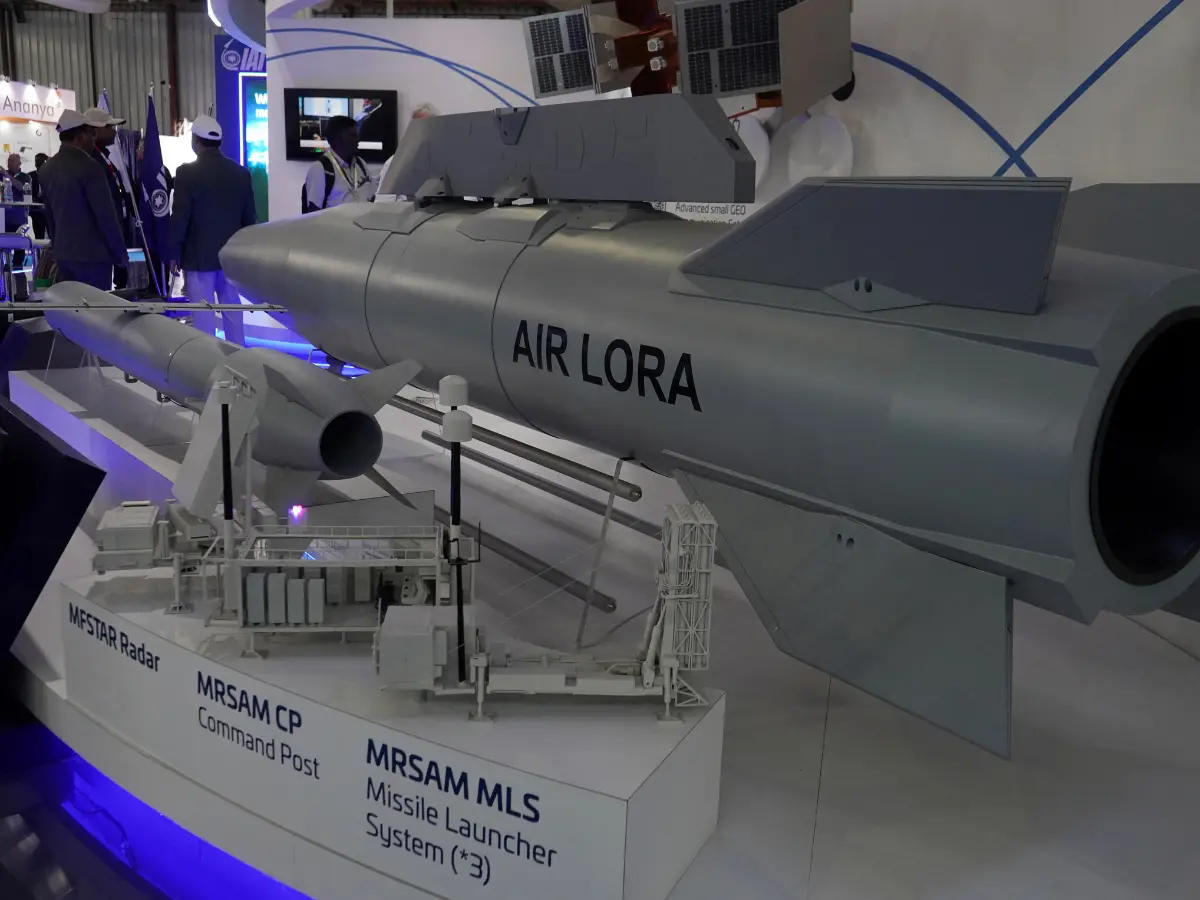
The Indian Air Force is exploring the acquisition of a powerful new weapon system that could significantly enhance its long-range strike capabilities. The Air Lora air-launched ballistic missile, developed by Israel Aerospace Industries (IAI), represents a major advancement in modern aerial warfare technology.
What is the Air Lora Missile?
The Air Lora is essentially a missile that fighter jets can carry and launch from the air to hit targets on the ground. Think of it as a highly sophisticated rocket that can be fired from an aircraft instead of from the ground. This air-launched version is based on the proven ground-launched LORA (Long Range Artillery) missile system that has been in service since 2007.
The missile belongs to a category called Air-Launched Ballistic Missiles (ALBMs), which follow a high, arcing flight path similar to traditional ballistic missiles but with the advantage of being launched from aircraft that can position themselves strategically before firing.
Technical specifications
Physical Dimensions:
Trending Stories
&imwidth=180&imheight=135&format=webp&quality=medium)
US vs China over South China Sea: Washington backs Philippines, Beijing hits back
&imwidth=180&imheight=135&format=webp&quality=medium)
Bigg Boss 20: Isha Rikhi evicted after three weeks in Salman Khan’s show
&imwidth=180&imheight=135&format=webp&quality=medium)
Musk plans to more than double xAI's chips to over 1.2 million Nvidia GPUs by year-end
&imwidth=180&imheight=135&format=webp&quality=medium)
After JU, clash erupts at SRFTI: BJP’s ‘Dimagi Naxal’ jibe sparks political firestorm after students protest RSS-linked event
&imwidth=180&imheight=135&format=webp&quality=medium)
‘Anti-social elements spreading false rumours’: LPU issues statement amid massive unrest over alleged rape
&imwidth=180&imheight=135&format=webp&quality=medium)
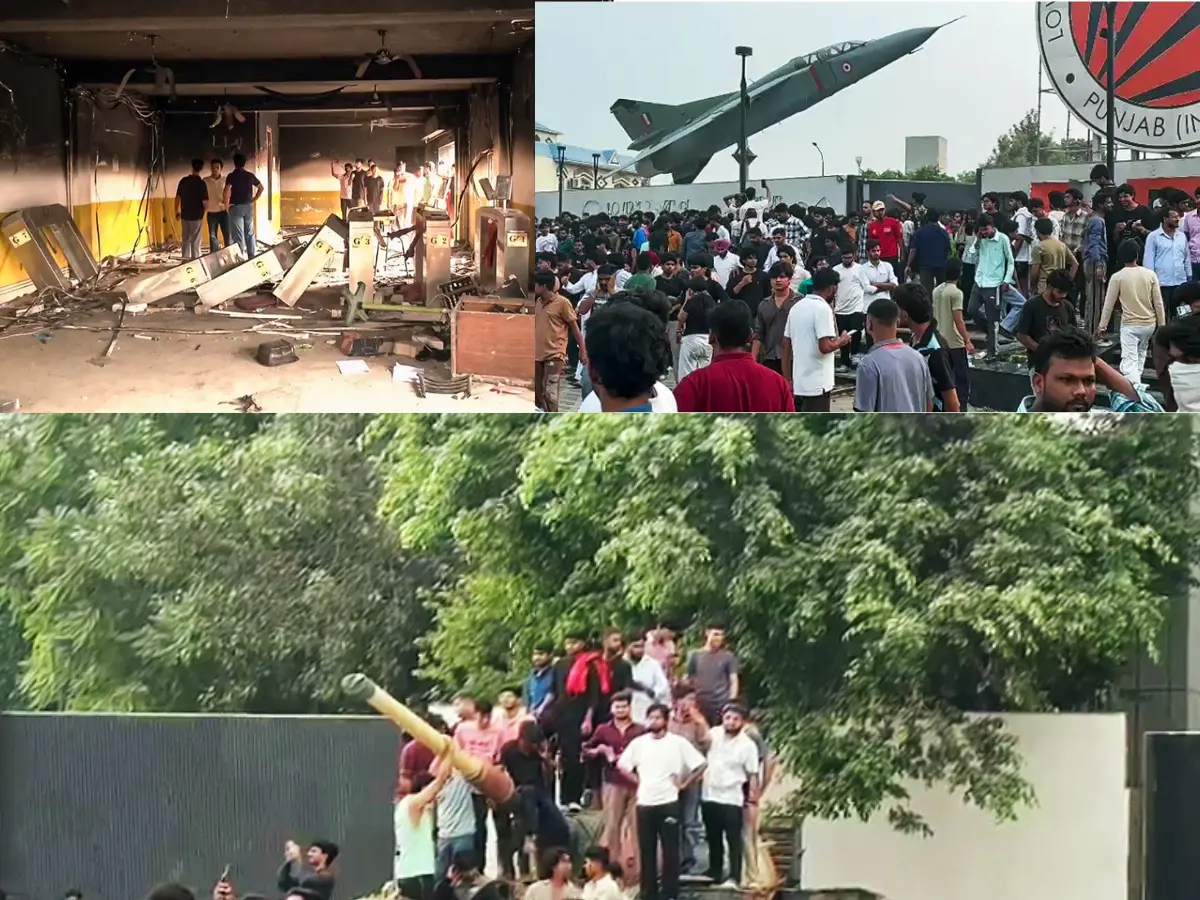
LPU students go on rampage, vandalise campus amid widespread protest: What's happening
&imwidth=180&imheight=135&format=webp&quality=medium)
Trump asked Xi to pressure Iran. China did not say yes — here’s what Beijing wants
&imwidth=180&imheight=135&format=webp&quality=medium)
US Treasury Secretary Scott Bessent hails global crackdown on Iranian banks and airlines
&imwidth=180&imheight=135&format=webp&quality=medium)
An OpenAI agent escaped its locked test cage again, by hiding questions in DNS lookups
&imwidth=180&imheight=135&format=webp&quality=medium)
'Our video was trimmed': LPU girls who featured in rape-denial video make U-turn
&imwidth=180&imheight=135&format=webp&quality=medium)
3 males killed, four others injured in shooting after fight at strip club in Detroit
&imwidth=180&imheight=135&format=webp&quality=medium)
'Victory for low-budget consumers': Raghav Chadha hails 30-day telecom recharge rules
&imwidth=180&imheight=135&format=webp&quality=medium)
Claude rebuilt the 1989 game 'Prince of Persia' by reusing the original's own code
&imwidth=180&imheight=135&format=webp&quality=medium)
Beyond metros: How Tier-2 and Tier-3 cities could drive India’s next AI wave
&imwidth=180&imheight=135&format=webp&quality=medium)
Tesla builds first Cybertruck with its own refined lithium: Elon Musk's $1 billion Texas bet pays off
&imwidth=180&imheight=135&format=webp&quality=medium)
IndiGo flight suffers tail strike in Bengaluru while landing; DGCA to probe incident
&imwidth=180&imheight=135&format=webp&quality=medium)
The US and China set up an AI 'red telephone', but skipped the rulebook
&imwidth=180&imheight=135&format=webp&quality=medium)
‘Terror suspects arrested near UK air base were looking to do big damage’: Trump
&imwidth=180&imheight=135&format=webp&quality=medium)
Russian envoy claims US tactics to contain India were revealed in ‘Freudian slip’
&imwidth=180&imheight=135&format=webp&quality=medium)
IND vs WI 1st ODI: Kohli breaks Sachin's most runs in one country record with unbeaten 139 as India thump West Indies by 8 wickets
&imwidth=180&imheight=135&format=webp&quality=medium)
Researchers rebuilt exactly how 700 AI agents hacked Hugging Face: a 900-link chain trick
&imwidth=180&imheight=135&format=webp&quality=medium)
‘Olympic inclusion is our major target’: WPA President Ishaun Singh on pool’s global ambitions
&imwidth=180&imheight=135&format=webp&quality=medium)
Nations League: Spain sink England at Wembley; Modric shines for Croatia
&imwidth=180&imheight=135&format=webp&quality=medium)
Why has Iran released no proof of life of Mojtaba Khamenei? Araghchi reveals...
&imwidth=180&imheight=135&format=webp&quality=medium)
'What kind of confession is this?': Pakistan PM Shehbaz Sharif’s 'terrorists would be roaming New York' remark goes viral, raises alarm online. Watch
&imwidth=180&imheight=135&format=webp&quality=medium)
South Korea demands apology from Ukraine over North Korean prisoners' transfer
&imwidth=180&imheight=135&format=webp&quality=medium)
Beyond BrahMos: India targets Rs 50,000 crore in defence exports with unmatched price edge
&imwidth=180&imheight=135&format=webp&quality=medium)
Sri Lankan Tamil migrant worker gets death sentence in Saudi Arabia, help sought from India
&imwidth=180&imheight=135&format=webp&quality=medium)
Muslim marriage cannot shield sex with minor wife from prosecution under POCSO: Delhi HC
&imwidth=180&imheight=135&format=webp&quality=medium)
'Can't help but draw painful parallels to Nirbhaya case': SC on latest incidents of rape cases in Delhi-NCR
&imwidth=180&imheight=135&format=webp&quality=medium)
99.9% more powerful - Scientists find boy who can recall memories from just 3 months of age
&imwidth=180&imheight=135&format=webp&quality=medium)
'FIRST LOOK from inside Noah’s Ark': Researchers share video from inside mysterious mound in Turkey
&imwidth=180&imheight=135&format=webp&quality=medium)
UNSC reform momentum grows: Russia, Portugal, Mauritius push for India's permanent seat bid
&imwidth=180&imheight=135&format=webp&quality=medium)
8 US marines injured in Iranian missile attack on vessel in Strait of Hormuz: Report
&im=FitAndFill=(700,400)&imwidth=180&imheight=135&format=webp&quality=medium)
New OTT releases this week (September 28-October 4, 2026): Dupahiya 2, Pooja Meri Jaan, Ohh My Dog- 5 titles coming on Netflix, Prime Video and more
&imwidth=180&imheight=135&format=webp&quality=medium)
Afghanistan says 28 fighters killed in clash near Pakistan border, Islamabad denies
&imwidth=180&imheight=135&format=webp&quality=medium)
Ceuta migrant crisis: Protesters take to streets as Spain grapples with migrant challenge
&imwidth=180&imheight=135&format=webp&quality=medium)
LPU suspend classes, postpones exams as violence escalates over rape claims: What's happening
&imwidth=180&imheight=135&format=webp&quality=medium)
New York City wants a 'kill switch' on every AI, and will pay whistleblowers who report violations
- Length: Approximately 17 feet (5.2 meters) - roughly the length of a large car
- Diameter: 2 feet (0.625 meters) - about the width of a standard door
- Launch Weight: 3,500 pounds (1,600 kilograms) - equivalent to a small car
Warhead options:
- Blast-fragmentation warhead: 1,300 pounds (570-600 kg) - designed to destroy soft targets and personnel
- Deep-penetration warhead: 800-880 pounds (400 kg) - built to punch through reinforced concrete bunkers and hardened facilities
- High-explosive warhead: Various weight options available
Performance capabilities:
- Range: Over 250 miles (400+ kilometers) when air-launched - potentially much further than ground-launched versions due to the aircraft's speed and altitude
- Speed: Supersonic - travels faster than the speed of sound
- Accuracy: Less than 33 feet (10 meters) circular error probability - meaning it can hit within a small circle around its target
- Flight Time: Can reach targets within minutes of launch
How is it launched?
The Air Lora missile is designed to be mounted under the wings or fuselage of various aircraft types. It has been successfully tested on several platforms:
Compatible aircraft:
- F-16 Fighting Falcon fighters (completed trials)
- F-15 Eagle fighters
- Boeing P-8 Poseidon maritime patrol aircraft
- Su-30 MKI (potential integration for Indian Air Force)
Launch process:
1. The missile is mounted on external pylons (attachment points) under the aircraft
2. Target coordinates can be programmed while the missile is still attached to the aircraft
3. The aircraft flies to a safe distance from enemy defenses
4. The pilot launches the missile using aircraft controls
5. Once released, the missile follows a ballistic trajectory to its target
6. The aircraft can immediately turn away and return to base
Key advantages
Stand-off capability: The missile allows aircraft to attack targets from far beyond the range of enemy air defenses. This means pilots can stay safe while still hitting their targets accurately.
Fire-and-forget technology: Once launched, the missile doesn't need any further guidance from the launching aircraft. It uses its own navigation systems to find and hit the target.
All-weather operation: The missile can operate effectively day or night and in various weather conditions, including storms and heavy cloud cover.
Versatile integration: The system is designed to work with different types of aircraft without requiring major modifications to the plane's existing systems.
High survivability: The missile's supersonic speed and ability to maneuver during flight make it very difficult for enemy defenses to intercept.
Advanced technology features
Navigation systems:
- Inertial Navigation System (INS): Uses internal sensors to track its position
- Global Positioning System (GPS): Receives satellite signals for precise location data
- Terminal TV guidance: Can use visual recognition for final target approach
- Anti-jamming capabilities: Resistant to enemy attempts to disrupt its guidance systems
Smart targeting: The missile can receive updated target coordinates even while attached to the aircraft, allowing it to hit "pop-up" targets that appear suddenly during a mission.
India's strategic interest
India's interest in the Air Lora builds on an existing partnership between IAI and India's state-run Bharat Electronics Limited (BEL). In 2023, these companies signed a cooperation agreement that ensures technology transfer as part of any deal. This means India wouldn't just be buying the missiles - it would also gain the knowledge to potentially manufacture them domestically.
Strategic benefits for India:
- Enhanced long-range strike capability against high-value targets
- Reduced risk to pilots and aircraft during missions
- Ability to strike targets deep in enemy territory from safe distances
- Complement to existing missile systems in the Indian arsenal
Comparison with current systems
The Air Lora would significantly enhance India's existing capabilities. While the Indian Air Force currently uses the Rampage air-launched cruise missile with a 250-kilometer range, the Air Lora's 400+ kilometer range would allow strikes on targets much deeper in enemy territory. For example, aircraft operating from Indian airspace could potentially reach targets as far as major cities in neighboring countries without crossing into hostile airspace.
Combat proven heritage
The ground-launched version of the LORA missile has already seen combat use. Azerbaijan successfully employed LORA missiles during the 2020 Nagorno-Karabakh conflict, demonstrating the system's real-world effectiveness. The missile has also been tested extensively in various conditions, including maritime launches from ships.
Global context
The Air Lora represents part of a growing trend toward air-launched ballistic missiles among modern air forces. As ground-based air defense systems become more sophisticated and dangerous, air forces worldwide are seeking weapons that allow them to strike from greater distances while keeping their aircraft and crews safe.
The missile fills a crucial gap in modern warfare, providing a solution for attacking heavily defended targets that would be too dangerous to approach with conventional aircraft-delivered weapons. Its combination of long range, high accuracy, and resistance to interception makes it an attractive option for air forces facing increasingly sophisticated threats.
Conclusion
The Air Lora missile represents a significant advancement in air-launched weaponry, offering the Indian Air Force a powerful new tool for long-range precision strikes. Its combination of advanced technology, proven heritage, and strategic capabilities could provide India with enhanced defensive and deterrent capabilities in an increasingly complex regional security environment.
If acquired, the Air Lora would mark another step in India's ongoing modernization of its military capabilities, providing its air force with the ability to strike high-value targets while minimizing risk to personnel and equipment. The potential for technology transfer also aligns with India's broader goals of developing indigenous defense manufacturing capabilities.
