Supreme Court seeks Centre, Delhi Police response on Jantar Mantar's de-notification as protest site

&imwidth=600&imheight=450&format=webp&quality=medium "Supreme Court seeks Centre, Delhi Police response on Jantar Mantar's de-notification as protest site")
Jantar Mantar protest row reaches Supreme Court: What the Centre told the bench Photograph: (ANI)
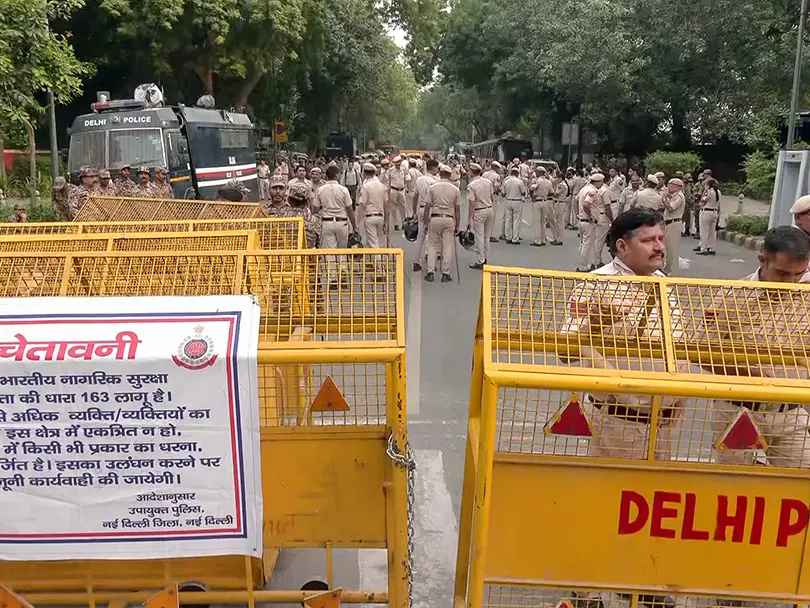
The Supreme Court has sought responses from the Centre and Delhi Police on a challenge to Jantar Mantar's de-notification as a protest site. The court also issued notice over the use of BNSS provisions during a protest.
The Supreme Court on Thursday (Oct 15) sought responses from the Centre and Delhi Police on a petition challenging the de-notification of Jantar Mantar as a designated protest site. The court questioned whether the government's decision was prompted by oral observations made by the judiciary or followed an independent review.
Solicitor General Tushar Mehta told the court that the decision was not based solely on the Supreme Court's observations. He said a committee had been constituted well in advance to examine the issue, had submitted a detailed report, and that the government had acted on the basis of its findings.
Petitioners seek Jantar Mantar be notified again
Appearing for the petitioners, Senior Advocate Gopal Sankaranarayan requested the court that “Jantar Mantar be notified again.” He noted that the denotification was purportedly done on the court's directive. “Apparently, on October 9, the Court directed that Jantar Mantar be denotified,” he said.
CJI Kant told the petitioners that the court will wait for the Centre and Delhi Police's reply. “You have challenged the denotification. We are issuing notice. Let them come and file their reply. We will see what the reasons are,” he said.
Trending Stories
&imwidth=280&imheight=210&format=webp&quality=medium)
&imwidth=280&imheight=210&format=webp&quality=medium)
&imwidth=280&imheight=210&format=webp&quality=medium)
&imwidth=280&imheight=210&format=webp&quality=medium)
&im=FitAndFill=(700,400)&imwidth=280&imheight=210&format=webp&quality=medium)
&imwidth=280&imheight=210&format=webp&quality=medium)
&imwidth=280&imheight=210&format=webp&quality=medium)
&imwidth=280&imheight=210&format=webp&quality=medium)
&imwidth=280&imheight=210&format=webp&quality=medium)
&imwidth=280&imheight=210&format=webp&quality=medium)
&im=FitAndFill=(700,400)&imwidth=280&imheight=210&format=webp&quality=medium)
&imwidth=280&imheight=210&format=webp&quality=medium)
&imwidth=280&imheight=210&format=webp&quality=medium)
&imwidth=280&imheight=210&format=webp&quality=medium)
&imwidth=280&imheight=210&format=webp&quality=medium)
&imwidth=280&imheight=210&format=webp&quality=medium)
&imwidth=280&imheight=210&format=webp&quality=medium)
&im=FitAndFill=(700,400)&imwidth=280&imheight=210&format=webp&quality=medium)
&imwidth=280&imheight=210&format=webp&quality=medium)
&imwidth=280&imheight=210&format=webp&quality=medium)
&imwidth=280&imheight=210&format=webp&quality=medium)
&imwidth=280&imheight=210&format=webp&quality=medium)
&imwidth=280&imheight=210&format=webp&quality=medium)
&imwidth=280&imheight=210&format=webp&quality=medium)
&imwidth=280&imheight=210&format=webp&quality=medium)
&imwidth=280&imheight=210&format=webp&quality=medium)
&imwidth=280&imheight=210&format=webp&quality=medium)
&imwidth=280&imheight=210&format=webp&quality=medium)
&imwidth=280&imheight=210&format=webp&quality=medium)
&imwidth=280&imheight=210&format=webp&quality=medium)
&imwidth=280&imheight=210&format=webp&quality=medium)
&imwidth=280&imheight=210&format=webp&quality=medium)
&imwidth=280&imheight=210&format=webp&quality=medium)
&imwidth=280&imheight=210&format=webp&quality=medium)
Mazdoor Kisan Shakti Sangathanjudgment invoked
Senior Advocate Mukta Gupta noted that “the fundamental right of a citizen to protest cannot be scuttled,” and said that the court has previously ruled in the “Mazdoor Kisan Shakti Sangathan (case) that the place must be near where protesters can be heard.”
“New Delhi is not meant for a select few,” she argued.
Supreme Court issues notice over use of BNSS provisions
In a separate but related matter, the Supreme Court issued notice to Delhi Police on a petition challenging the invocation of Sections 172 and 163 of the Bharatiya Nagarik Suraksha Sanhita (BNSS) during a protest.
The petitions raise questions about the restrictions governing demonstrations and the legal provisions used by authorities to regulate protest activity. Jantar Mantar has long been associated with public demonstrations in the national capital, making its status as a designated protest venue a significant issue for those seeking to organise protests in Delhi.
Also read | From Jantar Mantar to Lafayette Square: Where the world protests, and how close it gets to power

