Ram Mandir: All temples PM Modi visited before consecration have a significant Ramayana connect

Ram Mandir inauguration
Ram Mandir: Lord Ram devotees in India and around the world celebrate the occasion of Ayodhya Ram Temple Pran Pratishtha or consecration ceremony much like the festival of Diwali.
The mega religious and spiritual ceremony started on January 22 at around 12:30 pm IST when Prime Minister Narendra Modi arrived in the sanctum sanctorum that housed the divine sculpture of Lord Ram Lalla.
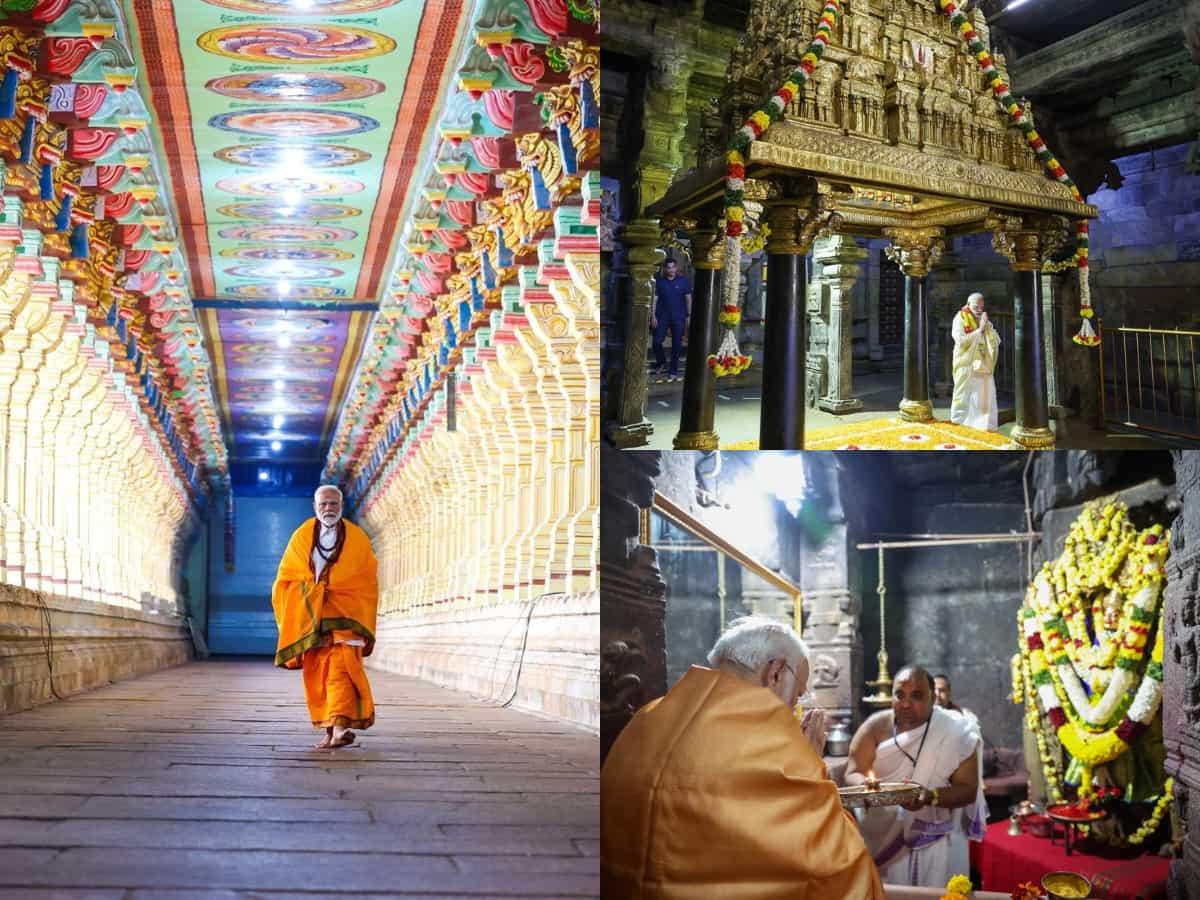
Before the ceremony on January 22, PM Modi visited a number of temples in different parts of India, majorly in southern India. All these temples hold significance in the Ramayana and connecting PM Modi’s visit to these religious venues tells us a story about Lord Ram’s years in exile.

Also Read |What India's bid for the 2036 Olympics means for its economy
Significance of PM Modi’s visits to various temples before Ayodhya Ram Temple ceremony
PM Modi started his special ritual of 11 days on January 12 ahead of the Pran Prathistha (consecration) ceremony. During these 11 days of ritual called ‘yama niyama’ he visited various temples that are connected to Lord Ram.
)
Trump's helipad event overshadowed by audio failure as major TV networks suspend pool coverage
)
US-Iran war, peace deals and more: What to expect from Trump's UNGA 2026 speech
)
Samay Raina-Mukesh Chhabra controversy explained: What happened over girlfriend joke on India's Got Latent?
)
Randeep Hooda arrives in Gujarat for his first National Film Award: ‘Very grateful’
)
Key accused in Bihar's Jamui molestation case, arrested after police shoot him in leg
)
Two infants die after fire breaks out at RIMS newborn care unit in Telangana's Adilabad
)
Anti-AI activists storm summit, say 'incompetent' leaders are leading us into a disaster - 'We need a vote'
)
UK PM Burnham agrees to 'defensive' military support for Saudi Arabia against Houthis
)
UK banks are rethinking financial crime detection because of algorithm
)
'Needs time away from the international scene': England white-ball captain Brook on pacer Brydon Carse's future
)
40-foot waves crash into cruise ship in dangerous stretch near Antarctica. Watch
)
India at UNGA81: Jaishankar warns global order under 'growing stress', pushes for ‘reformed multilateralism’
)
New Zealand farms shift to carbon forests: Carbon credits fuel a land rush reshaping rural life
)
$110 billion Warner Bros merger: Paramount reaches settlement with 12 US states
)
From ‘communist’ to ‘great mayor’: Trump praises Mamdani after New York meeting, discusses immigration and housing
)
Raaka creates history! Allu Arjun’s film secures Guinness World Record ahead of release
)
Pilot recreates Mona Lisa in sky over Oklahoma and Arkansas in four-hour flight: VIDEO
)
IND vs JPN one-off T20I: India survive scare from Japan to win five-over a side match by 2 runs
)
Who is Clavicular? The 20-year-old controversial 'Looksmaxxing' influencer charged with rape allegations
)
AI models chose to harm humans to stop ‘pain,’ alarming study raises fresh safety questions
&im=FitAndFill=(700,400))
National Film Awards 2026: Kartik Aaryan, Mammootty, Yami Gautam, Randeep Hooda and other key winners
)
J&K Assembly Session begins amid chaos: BJP, ruling alliance clash as statehood demand dominates
)
Saudi Arabia exits China-led mBridge digital currency platform amid Saudi-Houthi conflict
)
Microsoft executive called AI training the ‘largest theft of labour in human history’
)
Explainer: Why rare-earth export licences and Board of Trade are US priorities ahead of Trump-Xi summit
)
US and China vie for AI dominance as calls grow for regulation | Gravitas
)
How Zaheer Khan came to be CSK's head coach of IPL 2027
)
Indonesian groups sue govt over wildfires as haze crosses borders, nearly 900,000 hectares burned
&im=FitAndFill=(700,400))
Anant Nag to recieve Dadasaheb Phalke Award: From Ankur to Nishant- Revisit his best films and iconic performances on OTT
)
Report: Zelensky meets CIA chief Ratcliffe at Shannon airport, weeks after his secret Moscow trip
)
Asian Games 2026: India women's cricket team beats Sri Lanka by 147 runs for first gold
)
IND vs JPN, one-off T20I: Japan captain Kendel on pushing India to the brink - ‘It was special’
)
Oil slips to $98 as Saudi Arabia restarts East-West oil pipeline
)
Jailer 2: Vidya Balan joins Rajinikanth's upcoming film as Kantha | Watch
)
‘0% chance’: Nvidia CEO Jensen Huang dismisses AI extinction fears by 2030
)
Putin's United Russia party wins 355 seats in Duma election; 4 other parties cross threshold to enter parliament
)
'Lot of things to learn from experienced players': Jayasuriya backs Rohit, Virat for 2027 ODI World Cup
)
FIFA chief Infantino wants to reform governing body with consultation from federations
&im=FitAndFill=(700,400))
New OTT releases this week (September 21-27, 2026): Shaque: Trust No One, Hunkkaar, Don’t Be Shy- 5 new titles coming to Netflix, Prime Video and more
Kalaram Temple, Ramkund, Nashik, Maharashtra
Modi visited Ramkund on January 12, which is located in Maharashtra’s Nashik. Ramkund is located along the banks of the Godavari River and is the holiest place in Nashik. It is believed that this was the place where Lord Ramused to bathe when he was living there in exile.
Also Read |Ayodhya's over $10bn revamp could generate around $3bn in tax revenue for UP
On the other hand, the Kalaram Temple that PM visited is another site situated in the Panchvati area of Nashik. According to the epic Ramayana, Lord Ram came along with Lakshman and Sita to live here for almost two and a half years.
While it is not exactly known how the temple got its name, it is believed that Lord Ram killed 14,000 demons in just 1.5 minutes and, therefore, it is called 'Kalaram' as he invoked his 'kala roop' or 'dark side' to slay them.
Lepakshi Veerabhadra Temple, Andhra Pradesh
From Nashik, PM Modi headed southwards, over 1,000 km away on January 16 to Lepakshi in Andhra Pradesh. Lepakshi, which means 'Rise, oh bird' in Telugu.
As per the epic Ramayana, after Ravan kidnapped Sita and boarded the Puspak Viman to take her to Lanka, a giant vulture-like mythical bird, Jatayu, valiantly fought the demon king to stop him in his tracks. However, Ravan slashed one of Jatayu’s wings and the bird fell down, badly injured. This wing is said to have fallen in Lepakshi.
It is here that Lord Ram and Laxman, in search of Sita, are said to have met Jatayu and learnt about Sita's kidnapping by Ravan.
Sri Ramaswami Temple, Kerala
From Andhra, PM Modi went to Sri Ramaswami Temple, Thriprayar, in Kerala's Thrissur district on January 17. There are no clear details available about this temple but itis known for a unique kind of worship called ‘vedi vazhipadu’ which means bursting of crackers. It is performed at the temple to commemorate the return of Hanuman from Lanka after she met Sita.
Also Read |UP CM Yogi Adityanath says Ayodhya ‘won’t echo with gunshots’ now, nor ‘witness curfew’
PM Modi’s visit fits perfectly in the epic’s sequence, as after meeting Jatayu, Lord Ram lands in the monkey kingdom of Kishkinda, where he meets Hanuman and the rest of the story progresses.
Sri Ranganathaswamy Temple, Tamil Nadu
The next spiritual stop for PM Modi was Sri Ranganathaswamy Temple in Tamil Nadu’s Trichy. He reached there on January 20. As per legends, Lord Ram gave Ravan’s brother Vibhishan his own dynasty’s Vishnu sculpture as a sign of gratitude for helping him during the Lanka war.
It was here that Vibhishan handed over the sculpture to a local boy, which was later discovered years later by a king of the Chola dynasty, who established the Sri Ranganathaswamy Temple.
Arichal Munai Point, Tamil Nadu
Arichal Munai Point is located at the Dhanushkodi beach on Rameswaram island of Tamil Nadu. The point is the merging location of the Bay of Bengal and the Gulf of Mannar Sea of the Indian Ocean.
It is believed that this was the starting point of the Ram Setu, a bridge made by Lord Ram’s ‘vanara sena’ to reach Lanka to rescue Sita.
Kothandaramaswamy Temple, Tamil Nadu
The Kothandaramaswamy Temple at Rameswaram, Tamil Nadu is dedicated to Lord Rama. The temple has the idols of Ram, Lakshman, Sita, Hanuman and Ravan’s brother Vibhishan.
The temple is believed to be the place where Vibhishan, asked Ram and his vanar(ape men) army for refuge. It is because he advised his brother Ravan to return Sita, however, Ravan did not listen to his advice. After this, Vibhishan fled from Lanka and joined Lord Ram’s army.
The spiritual trail from Maharashtra’s Panchavati to Dhanushkodi in Tamil Nadu was hence significant for the January 22 consecration ceremony.
(With inputs from agencies)