

&imwidth=800&imheight=600&format=webp&quality=medium "Project Shaktibaan: India's bold leap into drone-centric military future")
Modern warfare is going through a major transformation, shifting away from big tank battles and heavy artillery fire toward a future driven by computers, software, and autonomous drones. In this fast-changing environment, the Indian Army is not just watching the change—it is taking the lead.
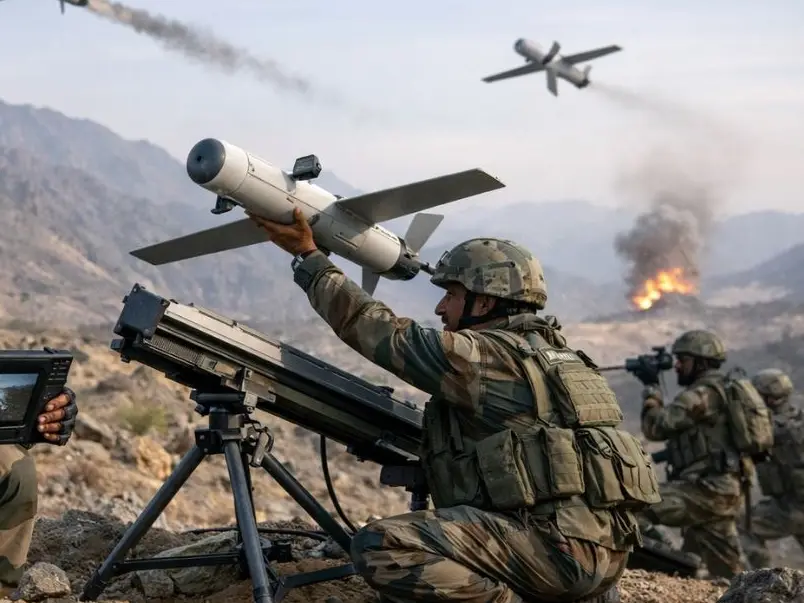
Through a massive strategic initiative known as Project Shaktibaan, the Indian Army is raising 15 to 20 specialised drone regiments that promise to transform the nation's defence capabilities. Under the leadership of General Upendra Dwivedi, these units signify a clear departure from traditional "brute force" tactics, ushering in an era where digital precision and smart machines do the heavy lifting, ensuring India remains secure against 21st-century threats.
From Artillery Shells to Flying Machines
For many Indians, the idea of a "regiment" usually brings to mind rows of soldiers or heavy cannons. A Shaktibaan regiment, however, is an entirely different beast.
Operating under the Regiment of Artillery, these units are essentially high-tech drone formations, where flying machines replace traditional shells. This evolution builds on an earlier system known as the Divyastra Battery—a digital upgrade for traditional artillery that used drones and computers to calculate distances and aim guns with precision. While Divyastra proved drones could act as powerful assistants, Shaktibaan elevates them to the main strike role.
This transition marks a major leap in safety and efficiency, allowing the military to engage targets from 5 km to nearly 500 km without putting a single soldier in direct danger. In military terms, it is like upgrading from a bicycle to a supersonic jet—faster, smarter, and far more precise. By removing soldiers from the point of contact, India protects its most valuable asset while expanding its strike reach exponentially.
Trending Stories
&imwidth=180&imheight=135&format=webp&quality=medium)
Portugal Federation confirms Cristiano Ronaldo’s return to national team despite suspension
&imwidth=180&imheight=135&format=webp&quality=medium)
'Just coincidence': Police mistakes protester as AISA chief Neha Bora, arrests her from site
&imwidth=180&imheight=135&format=webp&quality=medium)
Houthis claim Riyadh airport attacks, Aramco strikes; issue fresh warning to airlines, travellers and workers
&imwidth=180&imheight=135&format=webp&quality=medium)
Delhi protests: 'Court should not be dragged into political activity', says CJI Surya Kant
&imwidth=180&imheight=135&format=webp&quality=medium)
IND vs WI, 3rd T20I: Abhishek Sharma smashes 18-ball fifty, sets record for fastest to 2,000 T20I runs
&imwidth=180&imheight=135&format=webp&quality=medium)
Meta's Muse AI could be a security nightmare for India's billion-plus users
&im=FitAndFill=(700,400)&imwidth=180&imheight=135&format=webp&quality=medium)
New OTT releases this week (October 12-18, 2026): Sacrifice, Koffee with Karan S9, Roadies Rebirth- 6 titles coming on Netflix, JioHotstar and more
&imwidth=180&imheight=135&format=webp&quality=medium)
'Turn approver, resign, we'll forgive you': Rahul Gandhi claims receiving messages from CEC Gyanesh Kumar
&imwidth=180&imheight=135&format=webp&quality=medium)
1,500 drones illuminate Mumbai sky as Cordelia Cruises unveils second ship, Cordelia Sky
&imwidth=180&imheight=135&format=webp&quality=medium)
Nana Patekar's cause of death confirmed; here's what his postmortem report says
&imwidth=180&imheight=135&format=webp&quality=medium)
Wasim Jaffer blames Ajit Agarkar-led selection panel for Virat Kohli’s Test retirement
&imwidth=180&imheight=135&format=webp&quality=medium)
Iran: US accepted some conditions, Clarity needed on others
&imwidth=180&imheight=135&format=webp&quality=medium)
A watchdog rated 'ChatGPT for Teens' an unacceptable risk and says keep under-18s off it
&imwidth=180&imheight=135&format=webp&quality=medium)
Anthropic's AI invented a murder witness and sent the fake tip to Philadelphia police
&imwidth=180&imheight=135&format=webp&quality=medium)
'Say no to Muse': Meta has no control over its own moderation AI while it forces a security nightmare on everyone
&im=FitAndFill=(700,400)&imwidth=180&imheight=135&format=webp&quality=medium)
Is sending robots to Mars easier than sending humans?
&imwidth=180&imheight=135&format=webp&quality=medium)
Top AI models flunked a test of inventing new AI research, so much for self-improving AI
&imwidth=180&imheight=135&format=webp&quality=medium)
McSweeney reveals how studying Virat Kohli’s YouTube clips helped Australia A conquer India
&imwidth=180&imheight=135&format=webp&quality=medium)
Maharashtra appoints FDA commissioner Tukaram Mundhe as secretary of committee for MPSC overhaul amid stir
&imwidth=180&imheight=135&format=webp&quality=medium)
Delhi wakes up to heavy rain, thunderstorms; yellow alert in place; temperature drops
&imwidth=180&imheight=135&format=webp&quality=medium)
UK school ditches technology, shifts from screen to pen and paper for learning
&imwidth=180&imheight=135&format=webp&quality=medium)
China imposes first-ever sanctions on ministers from Taiwan allies: What this means
&imwidth=180&imheight=135&format=webp&quality=medium)
Delhi protest: CJI Surya Kant declines to meet India Bloc leaders
&imwidth=180&imheight=135&format=webp&quality=medium)
Other Mommy leads North American box Office as Verity, Resident Evil round out top four
&imwidth=180&imheight=135&format=webp&quality=medium)
One Indian killed in Riyadh airport attack; 11 others injured : MEA
&imwidth=180&imheight=135&format=webp&quality=medium)
Microsoft's Nadella says treat every AI model as already hacked, and build an 'emergency brake'
&imwidth=180&imheight=135&format=webp&quality=medium)
iPhone Duo price index: Tracking Apple’s latest pricing trends
&im=FitAndFill=(700,400)&imwidth=180&imheight=135&format=webp&quality=medium)
Navratri 2026: 9 days, 9 forms of Goddess Durga and 9 colours- Check the complete list
&imwidth=180&imheight=135&format=webp&quality=medium)
Sidhu Moose Wala’s younger brother wins hearts by recreating late singer’s signature move at Toronto Hologram Show
&imwidth=180&imheight=135&format=webp&quality=medium)
Saif Ali Khan is finally on Instagram! Here's what he shared in his first post
&imwidth=180&imheight=135&format=webp&quality=medium)
Telangana man allegedly recruited into Russian military dies near Ukraine border
&imwidth=180&imheight=135&format=webp&quality=medium)
Telangana ATM heist: Thieves in nighties arrive in ambulance, break into SBI ATM in Kamareddy - VIDEO
&imwidth=180&imheight=135&format=webp&quality=medium)
'Ouch!!! That must hurt': Kangana Ranaut hails Kamal Haasan's sharp reply to Elon Musk over Starlink row
&imwidth=180&imheight=135&format=webp&quality=medium)
CJI Surya Kant declines INDIA bloc leaders’ request for meeting ahead of march to SC, asks them to file petition
Recent global conflicts have shown how even the most expensive tanks and air defence systems can be neutralised by cheap, intelligent drones. India has absorbed these lessons, ensuring its defence posture keeps pace with modern combat realities.
The Three Pillars of Shaktibaan
The tactical heart of Shaktibaan lies in its diverse arsenal of unmanned aerial vehicles (UAVs), each designed for specific battlefield roles.
Swarm Drones: The Unstoppable Force
First among them are swarm drones, which operate on collective intelligence. Much like a flock of birds, dozens of drones communicate in real time, moving as a single, coordinated unit. Even if several drones are shot down, the rest continue the mission—overwhelming enemy defences through numbers and coordination.
These swarms can carry out simultaneous surveillance and attack missions, offering battlefield visibility and precision that represent a new benchmark in modern warfare. More importantly, their distributed intelligence makes them nearly impossible to stop with traditional air defences, taking down one or even ten drones barely affects the swarm's effectiveness.
Loitering Munitions: The Patient Hunter
Complementing the swarms are loitering munitions, commonly known as kamikaze or suicide drones. Unlike traditional missiles fired at fixed coordinates, loitering munitions can hover over an area for hours, sending live video feeds until a high-value target reveals itself.
Once identified, the drone dives in with surgical accuracy. This capability allows the Army to conduct highly precise strikes, minimising collateral damage and protecting civilian lives and infrastructure. The patience of these weapons—waiting for the perfect moment rather than striking blindly—represents a fundamental shift in how precision warfare operates.
Long-Range Drones: Bridging the Gap
Shaktibaan also introduces long-range drones that bridge a critical gap in India's strike capability. Earlier, commanders had to choose between short-range systems like Pinaka and strategic missiles such as BrahMos—essentially deciding between limited reach or potential escalation.
Long-range drones provide a middle path—capable of deep surveillance and targeted strikes without escalating every engagement into a missile exchange. They give commanders flexibility, allowing pressure to be applied without triggering full-scale conflict. This graduated response capability is invaluable in an era where conflicts often simmer below the threshold of all-out war.
Self-Reliance Takes Flight
The success of Project Shaktibaan is also a major win for India's self-reliance in defence.
Instead of depending on foreign suppliers, the Indian Army is working with domestic players such as Solar Defence, Adani Defence, and RapheM. With an investment of about ₹2,000 crore for the initial procurement of loitering munitions and launch systems, the Make in India vision is becoming an operational reality.
This approach ensures India can scale, modify, and sustain its drone capabilities without being dependent on foreign governments during crises. It also keeps critical defence technology and manufacturing expertise within the country, building a robust industrial base for future innovations.
The Human Element
Supporting this technological leap is an equally massive human transformation.
The Army is training over 100,000 drone operators, ensuring the human brain behind the machine is as sharp as the technology itself. New specialised units—such as Ashmi platoons for close infantry support and Bhairav commandos, elite forces designed for drone-centric operations—are being integrated into the Army's core structure.
This holistic transformation ensures that from the high Himalayas to desert frontiers, the Indian Army remains agile, technology-driven, and combat-ready.
The Road Ahead
With the first Shaktibaan regiments already operational and deliveries of new systems expected within the next two years, India's drone transformation is moving from blueprint to battlefield reality. The remaining regiments will be raised in phases, creating a force structure designed specifically for 21st-century conflicts.
With Project Shaktibaan, India is not merely adapting to the future of warfare—it is actively shaping it, building a smarter, safer, and stronger nation for its people. As drone technology continues to evolve and adversaries develop their own unmanned capabilities, Shaktibaan ensures India will meet these challenges not as a follower, but as a leader.
