Opinion: Why you shouldn't expect the portrait of Jinnah to be taken down from AMU

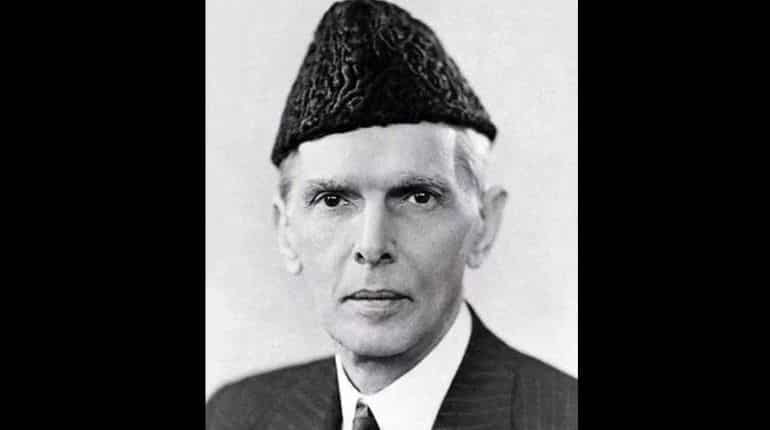
Jinnah
Jinnah was a free spirit caged within a Muslim body.
Each portrait tells a story. A portrait, behind its contours, contains a persona that inspires, stimulates and motivates the beholders to emulate the ideals and ideologies that the former represents. The portrait of Muhammad Ali Jinnah hanging on the walls of the Students Union office in the Aligarh Muslim University, similarly, hides many stories behind the dust of time gathered around it that contains different message to different people.
Muhammad Ali Jinnah is not just another figure lying in the debris of the history, but one who caused the dismemberment of India in order to create a separate nation on religious line. He gave political expression to a dangerous and dysfunctional "two-nation theory", which was long being propagated in-principle by the likes of Md Iqbal and Sir Syyid Ahmad Khan. Finally, through his unfathomable obstinacy and persistence he became successful in creating the theocratic state of Pakistan but not before programming a madness in which nearly 2 millions were killed and 14 millions were displaced permanently for no fault of their own. Those who lived behind, untouched with the ravages of death or displacement, got a permanent scar on their psyche and a pathological divide in their hearts.
While to the Hindus, Jinnah is a villain who divided India, to the Muslims he comes across as the greatest leader, the undisputed Quaid-i-azam who pulled off a valiant coup on the belligerent Hindus led by an 'obstructionist' Gandhi to create Pakistan for the ummah, an act of valiance comparable to none other than the Rashidun caliphs, who expanded the reach of Islam immediately after the Prophet's death.
But Jinnah was not like that, and at least till 1936 he wasn't a Muslim bigot. Jinnah was a free spirit caged within a Muslim body. Born an Ismaili Shia, Jinnah was as much a Muslim as Jawaharlal Nehru was a Hindu. With cigar, wine, western clothes and British mannerism he wasn't someone who fits the bill of a jihadi fighter struggling in the way of Allah for establishing an Islamic state for his followers. He never entertained the obscurantism of Islam or its fanatic traditions.

So, how suddenly Jinnah becomes fanatic? What makes him fall to the notion of partition of a country, in which he lived all through his life, on religious line? The answer lies in two factors.
The first factor that drew him to a separate Muslim state was the fear that the western democracy, as being adopted gradually in India, would be detrimental for the Muslims because of their small population. Constituting less than one third of the total population, Jinnah believed the Muslims would ever remain outnumbered by Hindus in all policy decisions.
Though the idea of a separate Islamic state within India was incubating slowly since the days of ideologues like Sir Saiyyad Ahmad Khan, this idea didn't resonate well with Jinnah, who at best looked for extracting concessions for Muslims from the Congress leaders as well as the British for a bigger pie in the governance within a united India. However, the Government of India Act, 1935, providing 'separate electorates' for Muslims and the subsequent elections of the 1937 proved disastrous for the political ambitions of Jinnah. Whereas the Congress was successful in making governments in eight provinces across India, the Jinnah-led All India Muslim League (AIML) couldn't form government anywhere including Punjab and Bengal, which were Muslim majority states. This exposed him to the realisation that the provision of 'separate electorate' was not working to the benefit of Muslims.
)
‘Kill all in the name of...’: FBI arrests 21-year-old over alleged ISIS-inspired mass-casualty attack plot
)
Space mines, lasers & robotic arms: Lt Gen Pannu decodes US disclosure of weapons in space
)
Bitter Zelensky snubs Trump for playing politics with Ukraine war | Gravitas
)
US fires up to 70 interceptors against Iran attack on Jordan, putting supplies under pressure
)
India’s imports from Russia jump 57% in five months; China remains top import source
)
‘US military task force aiding Saudi Arabia forces with intel, planning support’: Official
)
OpenAI boss Sam Altman repeats AI 'slow down' call, says world 'right to be afraid'
)
Top military commanders from US, Israel, and 7 Arab nations held secret meeting on Iran War
)
Sydney Sweeney defends provocative ad choice, the internet is still not impressed
)
India to host IPL 2027 auction; WPL 2027 auction set for late October in Kochi
)
Shahzad Bhatti Network declared terrorist organisation under UAPA: Govt order
)
'Definitely feel bad for yourself': Kuldeep Yadav opens up on India Test snubs
)
US, China dominate global economy: Where does India rank among the world's biggest economies?
)
Ex-India all-rounder Yuvraj Singh wants India to avoid 'massive changes' before ODI World Cup 2027
)
Ed Sheeran’s US tour loses all support acts after Macklemore’s removal | Controversy explained
)
Ex-England footballer Raheem Sterling pleads guilty in reckless driving and crashing his Lamborghini
)
China's property crisis deepens as investment plunges nearly 20%
)
Messi set to play in farewell match on October 6 in Argentina vs Benin friendly
)
Who was Eliana Moreno? NBC LA aerial reporter killed in Chatsworth crash
)
Putin-linked Russian oligarch, Melania links: Why Trump skipped his son’s Bahamas wedding bash?
)
800 million years old - Scientists discover 'fingerprints' of supercontinent Gondwana in ancient rocks
)
Trump's name cannot return to Kennedy Center, US judge rules
)
Pakistan naval vessel returns to harbour with 'severe damage' after collision with Indian warship in Arabian Sea
)
Water equivalent to two Pacific Oceans could be stashed 2,900 km inside Earth
)
Ex-CIA officer caught with gold bars worth $40 million seeks plea deal | Gravitas
&im=FitAndFill=(700,400))
New OTT releases this week (September 14-20, 2026): Lust Stories 3, Waiting Hai, Irumudi- 5 new titles coming on Netflix, Prime Video and more
)
Trump's Iran war faces fresh House rebuke; 7 Republicans join Democrats in push to end conflict ahead of midterms
)
US Treasury yields cross 5% as Scott Bessent warns of ‘global issues’ impacting bonds
)
Pakistan: Imran Khan's sons Kasim & Sulaiman claim their father is 'tortured' in jail
)
Who is Kalyan Bainsla, accused in the Gurugram hit-and-run case involving woman biker?
)
Saudi Arabia discovers 110 million tonnes of Uranium-rich ore in Madinah region
)
Los Angeles helicopter crash: At least three dead, several injured; NTSB to investigate
)
West Bengal IPS officer Bushra Bano transferred after objections to ‘Assalamualaikum’, ‘Inshallah’
)
India summons top Pakistan diplomat after Pak Navy ship collides with Indian warship at high seas
)
Saudi Arabia accuses Houthis of drone attack on Mecca, first-ever red alert in Islam's holiest site sparks panic
)
'Like a thug you are using agency to go after..': Kash Patel grilled by Senate Democrats over FBI firings, journalist investigations and hiring policy
)
Abhishek Sharma rises to No. 2 in T20Is; ENG’s Robinson 3rd after record Pakistan Tests
)
Canada to become EU’s first ‘associate member’? Von der Leyen proposes move amid US tensions
Thus, the developments convinced him that electoral democracy would result into the permanent subjugation of Muslims by the Hindus - a hypothesis that has since been thoroughly and comprehensively defeated in India, which has largely remained successful in ensuring rights and dignity for the minorities over its 70 years of post-Independence existence. The conclusion convinced him on the need and necessity of pitching a political demand for Pakistan.
The second factor was his close association with Muhammad Iqbal, the poet, politician and ideologue who is considered as the "spiritual father of Pakistan" in the 1930s till the latter's death. Through his series of speeches and writings, Iqbal established that Islam had a "legal concept" which was anachronistic with the principles of nationalism or democracy as neither of the two can operate without dividing the community (ummah).
During the period of political vacuum in the IUML, mainly due to the self-imposed exile of Jinnah from India in the first half of 1930s, Iqbal theorised and successfully articulated, what was to be known later as the "Two-Nation Theory" - a political principle of religious exclusivism that holds Muslims as a distinct nation unable to co-exist with any other religious group or community, hence deserving political independence from the Hindus.
Having theorised such a blatant communalist principle, Iqbal set himself on the task of convincing Jinnah to come back to India and take up the leadership of the IUML, as he believed that the latter was the only Muslim in India who possessed the ability to lead the community and to make them join the League. With a series of intense and fruitful correspondences with Jinnah, Iqbal was successful in bringing the former back from London in 1936 to lead the IUML. Thus, appears Jinnah 2.0, thoroughly transformed and wholly steeped into the ideologies of Iqbal, whom he declared as his political mentor.
From the 1937 through the World War II, Jinnah still looked hesitant to ask for partition and wanted to have some kind of rapprochement with the Indian National Congress. However, the subsequent political developments dashed all hopes of Jinnah and he got more and more drawn to the visions of Iqbal. Finally, convinced of the need of Pakistan, Jinnah formally brought up "Pakistan Resolution" for creation of a Muslim state of Pakistan in its Lahore session of 1940 and the IUML adopted the same as its political goal henceforth.
The AMU had become the hotspot of Pakistan movement during this period as Jinnah made multiple visits to the institution all through this period. He was was given a lifetime membership of its student union in 1938.
Thus, the vagaries of electoral democracy and the machinations of Muhammad Iqbal were the two factors that completed the transformation of a secular-liberal Jinnah 1.0 to his 2.0 avatar, which saw a communal and obstinate politician spewing venom against Gandhi and Congress leaders while talking of Pakistan in an uncompromising manner. That's why the Indians, including a majority of Muslims who stayed behind rejecting his flawed theory, loathe him and find his portrait on an Indian university campus shocking.
However, from the Muslim perspective, Jinnah was a savior of Muslims from the 'oppressive' democracy that would have put them under the permanent subjugation of Hindus in an undivided India. He fought the British authorities as well as with the Hindu majority tooth and nail to carve out Pakistan. That's why he is still the hero of a section of Indian Muslims who treat him as an Islamic victor conquering over the Hindu majoritarianism. The portrait hanging in the Students Union office of the AMU is the portrait of Jinnah 2.0 which still finds space in the current Indian political environment.
Thus, Jinnah is a moral leader of those Indian Muslims who look for a dominant political space for themselves in the 21st century India. The Jinnah portrait gives them the inspiration and assures them that it's possible. The chant, 'lad ke lenge azadi' (we'll achieve independence by force) reverberating from the walls of the AMU, has its source in that portrait.
Just because the Berlin wall was there since the 1960s didn't mean it couldn't be demolished. Many such mistakes of the history have been rectified in course of time hence the argument that the portrait is there since 1938 is not the raison d'etre for its existence in the university. The portrait of Muhammad Ali Jinnah in the AMU's Students Union office is nothing but the moral elixir of the aspirational Muslim youths looking for an Islamic icon in India through the leadership vacuum of modern times.
Thus, don't expect the portrait to be taken down from AMU. No wonder, if you find it creeping up many other university walls in India in days to come.
(Disclaimer: The opinions expressed above are the personal views of the author and do not reflect the views of ZMCL)