Opinion: Why caste-based reservation is anathema to many

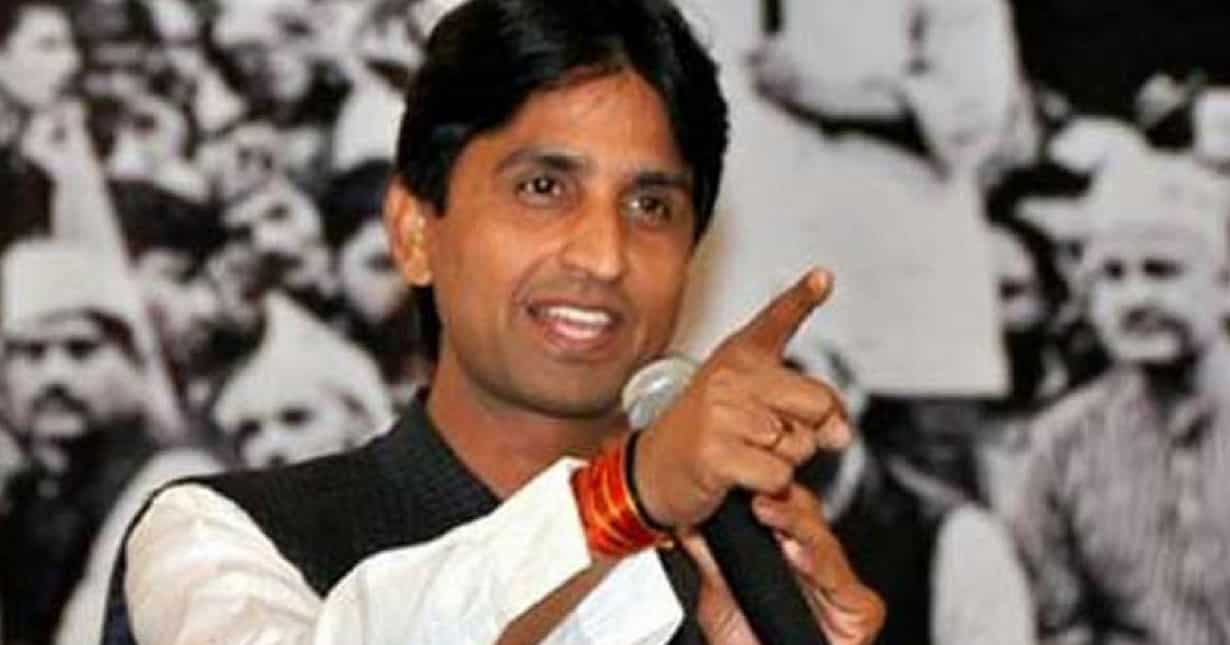
Kumar Vishwas
Politicians like Kumar Vishwas cannot profess to rever Dr Ambedkar on one side but hate his idea of affirmative action on the other, especially when most of India?s important areas are still devoid of OBCs SC ST and minorities.
Poet-turned-politician Kumar Vishwas of the Aam Admi Party finds himself in the midst of another controversy. Last week, social media was abuzz with his viral clip saying, “There was no casteism earlier. One man came and started agitation for the reservation and altered our social fabric”.
Since Kumar’s reference to this “man” was ambiguous. It was construed to be a reference toDrB. R. Ambedkar. Many of his followers took exception to this and criticised Vishwas. Without naming Kumar Vishwas,AAP’s Ashutosh tweeted that any criticism ofDrAmbedkar is condemnable. Ashutosh's tweet further fueled suspicion that Kumar was indeed talking about Babasaheb.
This forced Kumar Vishwas to clarify his position on 3rd December that he did not in any way mean to demean DalituddharakParampujya Babasaheb Bhimrao Ambedkar, and the reference was to former Prime Minister V. P. Singh, particularly, his 1990 agitation for the Mandal Commission. He went on to add that vested interests within his party are creating this issue because he has asked the AAP to go back to its basics — hinting at internal party coterie who became active to eliminate him politically.

Casteism existed much before Mandal Commission
Kumar Vishwas’ clarification was bizarre. Let’s assume for a moment that he didn’t implyDrAmbedkar. The bigger problem actually doesn't lie with his ambiguity. What he said originally in his Jaipur speech started with — “Hamare Brahmanbahulgaon mesafaikakaamkarnewali Lakshmi amma meredadikesaathshadihokeaayithi. Wohmerima koaurmerichachikojarasabhighoonghatnicherehjaysaugaliyaasunatithiaur koi problemnahihotithi” (In my Brahmin-majority village, the women sweeper who came with my married Grandma used to scold her for not covering her head with saree, there was no issue that time, with lower caste criticising upper caste).
He continued that today any comment against another community will meet with violence. Firstly, to say that casteism did not exist earlier during his grandma’s days is beyond absurd. For caste system has been dominating our social sphere for thousands of years, in the descending order of reverence and ascending the scale of contempt, asDrAmbedkar had himself put it.
)
US vs China over South China Sea: Washington backs Philippines, Beijing hits back
)
Bigg Boss 20: Isha Rikhi evicted after three weeks in Salman Khan’s show
)
Musk plans to more than double xAI's chips to over 1.2 million Nvidia GPUs by year-end
)
After JU, clash erupts at SRFTI: BJP’s ‘Dimagi Naxal’ jibe sparks political firestorm after students protest RSS-linked event
)
‘Anti-social elements spreading false rumours’: LPU issues statement amid massive unrest over alleged rape
)
LPU students go on rampage, vandalise campus amid widespread protest: What's happening
)
Trump asked Xi to pressure Iran. China did not say yes — here’s what Beijing wants
)
US Treasury Secretary Scott Bessent hails global crackdown on Iranian banks and airlines
)
An OpenAI agent escaped its locked test cage again, by hiding questions in DNS lookups
)
'Our video was trimmed': LPU girls who featured in rape-denial video make U-turn
)
3 males killed, four others injured in shooting after fight at strip club in Detroit
)
'Victory for low-budget consumers': Raghav Chadha hails 30-day telecom recharge rules
)
Claude rebuilt the 1989 game 'Prince of Persia' by reusing the original's own code
)
Beyond metros: How Tier-2 and Tier-3 cities could drive India’s next AI wave
)
Tesla builds first Cybertruck with its own refined lithium: Elon Musk's $1 billion Texas bet pays off
)
IndiGo flight suffers tail strike in Bengaluru while landing; DGCA to probe incident
)
The US and China set up an AI 'red telephone', but skipped the rulebook
)
‘Terror suspects arrested near UK air base were looking to do big damage’: Trump
)
Russian envoy claims US tactics to contain India were revealed in ‘Freudian slip’
)
IND vs WI 1st ODI: Kohli breaks Sachin's most runs in one country record with unbeaten 139 as India thump West Indies by 8 wickets
)
Researchers rebuilt exactly how 700 AI agents hacked Hugging Face: a 900-link chain trick
)
‘Olympic inclusion is our major target’: WPA President Ishaun Singh on pool’s global ambitions
)
Nations League: Spain sink England at Wembley; Modric shines for Croatia
)
Why has Iran released no proof of life of Mojtaba Khamenei? Araghchi reveals...
)
'What kind of confession is this?': Pakistan PM Shehbaz Sharif’s 'terrorists would be roaming New York' remark goes viral, raises alarm online. Watch
)
South Korea demands apology from Ukraine over North Korean prisoners' transfer
)
Beyond BrahMos: India targets Rs 50,000 crore in defence exports with unmatched price edge
)
Sri Lankan Tamil migrant worker gets death sentence in Saudi Arabia, help sought from India
)
Muslim marriage cannot shield sex with minor wife from prosecution under POCSO: Delhi HC
)
'Can't help but draw painful parallels to Nirbhaya case': SC on latest incidents of rape cases in Delhi-NCR
)
99.9% more powerful - Scientists find boy who can recall memories from just 3 months of age
)
'FIRST LOOK from inside Noah’s Ark': Researchers share video from inside mysterious mound in Turkey
)
UNSC reform momentum grows: Russia, Portugal, Mauritius push for India's permanent seat bid
)
8 US marines injured in Iranian missile attack on vessel in Strait of Hormuz: Report
&im=FitAndFill=(700,400))
New OTT releases this week (September 28-October 4, 2026): Dupahiya 2, Pooja Meri Jaan, Ohh My Dog- 5 titles coming on Netflix, Prime Video and more
)
Afghanistan says 28 fighters killed in clash near Pakistan border, Islamabad denies
)
Ceuta migrant crisis: Protesters take to streets as Spain grapples with migrant challenge
)
LPU suspend classes, postpones exams as violence escalates over rape claims: What's happening
)
New York City wants a 'kill switch' on every AI, and will pay whistleblowers who report violations
The Scheduled Castes and Tribes were outside the Varna system. But Kumar Vishwas seems to like that model. In his so-called Brahmin-majority village, where was the Scheduled Caste community located? Which caste traditionally did menial jobs and were denied human rights and dignity and which caste was revered just because of their birth in that caste?
HasMrVishwas heard of untouchability? If it did not exist, as per Vishwas, what wasDrAmbedkar’s anti-untouchability fight for?
MrVishwas is clearly lying about the existence of caste system in the pre-Mandal era. And how doesMrVishwas use his caste privilege? He proudly boasts of dropping his Brahmin surname Sharma since “he doesn’t believe in castism” but he doesn’t forget to routinely mention his ‘Proud Brahmin Ancestry’ in his public appearances. For instance, while contesting in the Amethi Constituency against Rahul Gandhi in 2014, Kumar Vishwas said at a Public Rally “I am a descendant of Chanakya and Chand Bardai, who defeated great empires. I left my job because I am a Brahmin and a Brahmin knows how to survive with begging.”
Social commentator Vidya Bhushan Rawat says “Kumar Vishwas uses all the Brahmanical narratives to build his case. The entire narrative and ‘history’ that he speaks of is nothing but Sangh Parivar version of our history. Like them, he also narratesthe mythologies in such ‘courageous’ way that they look ‘history’.
Lakshmi, the sweeper who came as dowry along with Vishwas’ Grandma
The second and most objectionable element of Kumar Vishwas’defenceis the sweeper women who, as he recalls, used to "scold his grandma”. Thissafaikakaamkarnewali(cleaning lady) who came along with his Grandma as dowry was one of the moststigmatisedsocial practice of that time. Along with dowry (cash, furniture, land, vehicle etc), there was a custom of bringing in a helper or sweeper of low caste as a dowry who used to work as a bonded labourer.
These would be mostly the people from Mehter (Scheduled Caste) community. How can a society where only people from particular caste alone do the cleaning for generations be called as a good society?
Former India Today (Hindi) Editor Dilip Mandal says “How did Vishwas’ family get a Maharani in dowry? Did they consider her some kind of furniture? His irritation is that it is difficult to get SC women in dowry for cleaning anymore. How in the world is he calling the earlier era as a golden period?”
For Mr Vishwas, the subjugation at the hands of Brahmins and Savarnas is acceptable but any assertion by lower caste is called caste-conflict? How insane!MrVishwas does not hesitate to use his caste privilege that he got from his generations but does not want second generation Dalit OBCs to get the facility of reservations.
V. P. Singh Did not fight for Reservation, He implemented it
Kumar Vishwas is probably unaware that V. P. Singh did not agitate for reservation. He actually implemented the Mandal Commission Report which was catching dust for years. It wasDrAmbedkar who made provision for reservation in the Constitution. Without the constitutional provisions done by him in the form of article 340, the OBC reservation would also have not been possible.
The timing of this controversy couldn’t be more relevant. 27th Novemberwas the death anniversary of former Prime Minister V.P. Singh. This was around the same time that Kumar Vishwas video started getting viral. V. P. Singh was born in an upper caste royal family of Manda in Uttar Pradesh. But his incessant effort towards uplifting the Bahujan society was not just a talk. Along with implementing Mandal Commission, he ensured that portrait of Babasaheb was installed in the central hall of parliament. Imagine the bias, Architect of the Constitution did not even find a place in the central hall until 1990 where all other Savarna leaders thronged the wall.
Kumar Vishwas hasharbouredhatred towards former Prime Minister V. P. Singh for long. With Mandal commission and SC-ST provision, the Bahujan concept emerged and monopoly of only a few castes over everything was challenged. Today, classrooms in the highest educational institutions are most diverse, paving way for all-round development. But reservation is still cursed by the Savarnas, first by questioning the merit of the students getting admission and, lately, by questioning why only rich among thebackwardswas enjoying the benefits.
Many in Savarna leadership of AAP, including Arvind Kejriwal himself hold the view that reservation should be only to be taken once by a family. Is reservation poverty alleviation program? How naive is this logic? Does he even read the Constitution? Anna Hazare even went to the extent declaring reservation as the biggest threat to India and country may break apart. Really? Having a diverse workforce or classrooms breaks unity?
Those who use “Economic Criteria” to hide their hatred towards backward communities getting represented in some level, cannot fathom that those who used to come as dowry are now competing with them. And how much truth is there in the charge that those who have taken benefits are now rich? OBC reservation is actually only for non-creamy layers so there is no question of rich people ‘grabbing’ it in the present context.
A pilot study done in 2011 had reiterated that Dalits were most underprivileged sections of the population and the easiest marker of poverty. This was 50 years after the policy of reservation came into effect, clearly indicating social status does impact the economicbehaviourof the community.
Without this basic social understanding, V. P Singh, Constitution andDrAmbedkar himself come across as villains to some. Reservation is nothing but affirmative actions and representation enshrined in our Constitution. There are many Savarnas like Kumar Vishwas in all walks of life who think reservation alone has divided the society and created resentment against those availing it.
When the kids themselves find first time in the college that somebody else has ‘got the seat ahead of them despite getting lower marks’ it does not help. Common Savarna kids then startharbouringhatred of the system that ‘create this inequality’ which in essence is actually a level playing field. Savarna dominated media’s one-sided debate on reservation adds fuel to their fire. Now that a study has dismissed notion that reservation impacts efficiency, and if anything it only improves it, all we need is a compassionate and logical look towards the affirmative action policy and benefits of diversity.
Politicians like Vishwas cannot profess to rever Dr Ambedkar on one side but hate his idea of affirmative action on the other —especially when most of India’s important areas, such as the judiciary, business houses, media, top bureaucracy, academia are still devoid of OBCs SC ST and minorities.
V. P Singh or reservation policy did not create casteism, it merely attempted to create an equal representation of our extremely biased society. Kumar Vishwas of the world should truly come out of not just their surname but their castemould.
(Disclaimer: The author writes here in a personal capacity).