Opinion: Fixing industrial accidents should be the first priority, not economic interests

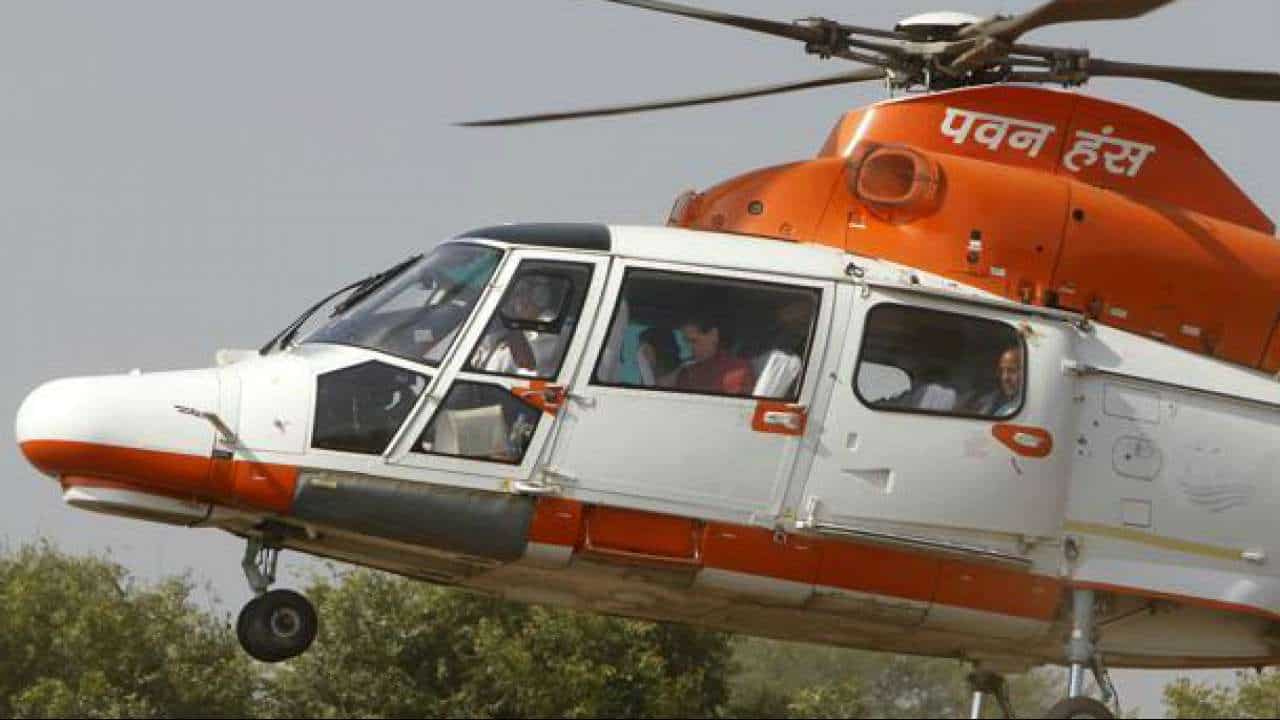
ONGC chopper crashed
The way people jump the traffic signal believing that challan by a traffic cop is the only reason to put seat belt while driving, defines the very essence of our attitude towards safety. These industrial accidents need to be fixed first before economic growth concerns.
Look at these horrible pieces of news in recent times involving country’s flagship oil explorer ONGC. Five people died and many others were left injured after a blast at under-repair drilling ship of ONGC on 13th February at the Cochin Shipyard in Kerala. A month back in January 2018, a Pawan Hans chopper carrying five senior ONGC officials crashed off the Mumbai coast. All of them and pilots were killed.
Now go back a little in November 2017, there was a massive explosion in NTPC’s boiler in UP. More than 30 perished and most of them in the most gruesome manner.
Dig little further, in September 2017 there was a stampede at Elphinston Railway Station and more than 20 were crushed to death.

What are the common aspects of all these disasters? All these were not the natural calamity. They were disaster made by us and only to annihilate us.
These accidents amply reflect our abysmal industrial and safety record. Our attitude towards safety and procedures has been extremely callous across all verticals, industries and each part of the nation. Along with our dismal attitude toward cleanliness at public places, it is the worst menace.
I believe that our safety culture is not only a serious concern but it is also one of the most underrated national issues which nation is facing today.
)
Trump-Xi Summit: Trade, Taiwan and the red lines shaping US-China talks | Race To Power
)
Afghan woman cyclist who disguised herself as a boy to escape Taliban, wins Asian Games medal
)
Trump signs Greenland security deal with Denmark, paving way for two new US military bases
)
IND vs JPN T20I: How an overturned wide became point of difference between India's win and a tie
)
IIT Bombay CCTV footage emerges: Sahil Wakode seen looking at phone in examination hall
)
Cyclone Arnab: Landfall expected before midnight tomorrow as IMD issues orange alerts across six states
)
NBA player Steven Adams shares hilarious GTA VI theory
)
TMC revives impeachment push against CEC Gyanesh Kumar after report of internal dissent
)
WION Iconic Tourism Summit 2026: Union Minister Shekhawat on 'experiential travel', peace diplomacy
)
ICC plans T20I expansion and fewer ODIs in 2027–2031 FTP cycle: Report
)
WION Iconic Tourism Summit: Minister Kapil Mishra shares Delhi tourism future, invites industry to be partners
)
'AI got into my speech': Prince Harry jokes after teleprompter failure at event in New York
)
WION Iconic Tourism Summit: Seychelles envoy says India partnership is important for Seychelles
)
Scientists detect first radio signals directly from faraway planet
)
China to test supersonic jet that moves at Mach 2, double the speed of sound
)
Xi-Trump meeting: China’s human rights red line and past protests explained
)
Open AI, Anthropic CEO urges caution over rapid AI development at UN Security Council, call for 'extreme care'
)
Bomb scare in New York amid UNGA: Suspicious suitcase found near UN headquarters
)
WION Iconic Tourism Summit: Is India's travel boom outrunning its airports, airlines and hotels?
)
WION Iconic Tourism Summit and Awards 2026: Key voices to discuss India’s tourism future
)
Trump-Xi state dinner 2026: Who is invited? Full guest list of tech CEOs, business leaders and officials
)
American manufacturing is reshoring faster than its factory floors can absorb
&im=FitAndFill=(700,400))
New OTT releases this week (September 21-27, 2026): Shaque: Trust No One, Hunkkaar, Don’t Be Shy- 5 new titles coming to Netflix, Prime Video and more
)
WATCH | China President Xi Jinping lands in US as Trump greets him ahead of high-stakes summit
)
'What kind of confession is this?': Pakistan PM Shehbaz Sharif’s 'terrorists would be roaming New York' remark goes viral, raises alarm online. Watch
)
WION Iconic Tourism Summit: How local tourism MSMEs must upskill for AI integration
)
Elephants hide behind trees, stage surprise attack on poachers targeting rhinos in South Africa
)
'Putin is patient zero': Zelensky slams Russian president at UNGA, accuses him of using fighters from 47 countries
&im=FitAndFill=(700,400))
National Film Awards 2026: Kartik Aaryan, Mammootty, Yami Gautam, Randeep Hooda and other key winners
)
El Niño 2026 heats up to become strongest in 1,000 years
)
Israeli envoy to US Yechiel Leiter’s son critically injured in West Bank ramming attack
)
Anne Hathaway to run in supporting race for Nolan's epic
&im=FitAndFill=(700,400))
Trump welcomes Xi Jinping in rare airport gesture: Photos from Chinese President's arrival in US
)
From Gaddafi tearing up UN Charter to Trump’s ‘escalatorgate’: Most unforgettable UNGA moments
In this aspect, we are way behind from the real matured societies. Take the example of Shinkansen - Japan’s high-speed rail network, wherein trains ply with a speed of 320 km/hour. In the history of more than 50 years and having ferried 10 billion passengers, till date there has not been a single casualty due to derailment or collision. Compare this with our 100-120 km/hour trains, wherein in 2016-17 alone, 193 people lost their lives due to various derailments. Here is one more jaw-dropping fact: in Mumbai alone, eight people lose their lives daily on the railway tracks.
Every loss of life is an irreparable loss and the top of it look at these losses - In Pawan Hans crash all five dead ONGC’s employees were of deputy general manager rank and there were valuable members of ONGC’s management. In the NTPC accident as well, there were many senior level managers among who got killed.
The problem persists at every level. Those who need to firm up policies and standard operating procedures to make operations safe are at fault but those who need to implement them on the ground are the real culprit. Across all industries, all procedures exist on papers only and there is a huge gap in what we should do and what actually we do.
Filling safety checklists and compliance records without actually carrying them out and bypassing procedures is ubiquitous in our country. Take the case of fatal Khatauli rail accident last year. This tragedy could have been avoided had people working on ground prepared a proper work permit and informed all stakeholders regarding the on-going maintenance activity.
It is not rocket-science and all we need is determination and discipline. The top guys in any industry/department need to study their operations, identify risks and devise procedures and barriers to mitigate risks. Those who need to implement should adhere to the set system. The main problem is the second part of it - the execution of plans and implementation.
There are various government watchdogs, which are equipped with various lawsto ensure safety and to ensure related compliances. But these bodies have become white elephants and instead of compliance, they have become the hub of red-tapism and corruption. Over the years, each government has failed to bring any improvement in their functioning.
But overall, it is the attitude of each one of us which needs a complete overhaul. The way people jump the traffic signal with impunity or our belief that challan by a traffic cop is the only reason to put seat belt while driving, define the very essence of our attitude towards safety. This very attitude is omnipresent at the all levels.
The government needs to take three actions on this front. First, to make its statutory bodies more efficient and to rid them of red-tapism. Second, to take stern action against all defaulters. Third, and the most important of all, we need a comprehensive and a long-term sensitisation programme across the country (something like Swachh Bharat campaign).
We are one of the world’s fastest-growing economy; there is huge influx of FDI; our people are spread over the world and sitting on top of the prestigious organisations; our prime minister goes to Davos and addresses World Economy Forum and makes huge claims – but all these things are of little meaning if our people are losing their lives consistently and in the most freak and bizarre manner.
(Disclaimer: The opinions expressed above are the personal views of the author and do not reflect the views of ZMCL)