
&imwidth=800&imheight=600&format=webp&quality=medium "Operational dimensions of theater commands: ISR, fires, mobility, and decision loops")
At its core, theatre commands are sold as an operational correction. Not a philosophical shift, not an institutional rebranding, but a practical answer to an old military problem: too many sensors, too many shooters, too many decision-makers, and not enough time to connect them when it matters. Modern conflict does not wait for files to move or chains of command to align. It rewards those who can see first, decide faster, and act with coherence across domains that no longer respect service boundaries.
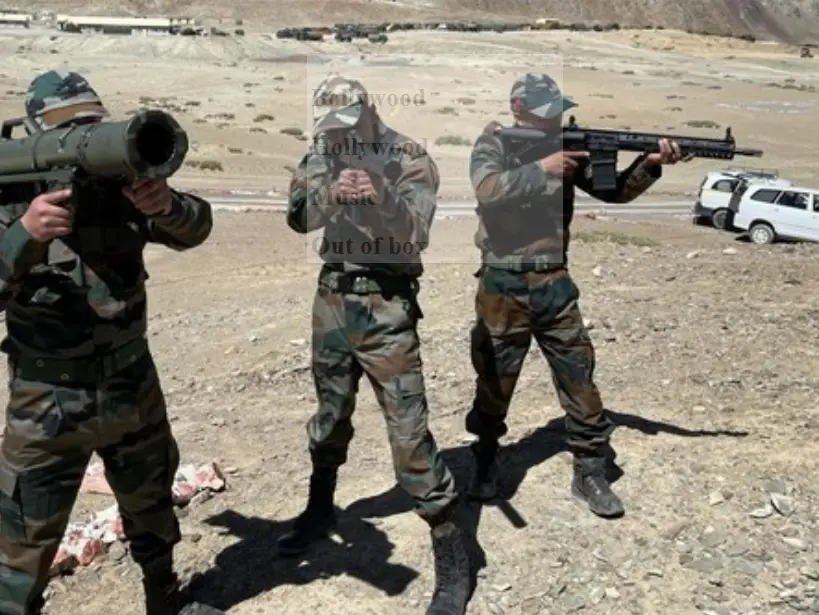
Yet, it is worth stating at the outset that for India, this operational correction is ultimately anchored on land warfare. India’s primary security challenges remain territorial, persistent, and manpower-intensive. Theatre commands, whatever their final structure, will succeed or fail based on how effectively they support the land battle, where wars are physically decided, populations are controlled, and political outcomes are enforced.
This is where the operational argument for theaterisation is most often made. Not at the level of flags and headquarters, but in how intelligence flows, how firepower is coordinated, how forces move, and how quickly decisions travel from detection to effect.

Modern warfare begins with sensing. Satellites, UAVs, ground radars, electronic surveillance, cyber indicators, and human intelligence feeds now generate volumes of data that no single service can process in isolation. India already operates a wide array of such assets across its services; each developed for specific operational needs. What theaterisation proposes is not more sensors, but a single operational picture that allows commanders to see the battlespace as a whole rather than through service-specific windows.
For land forces in particular, this integration is decisive. Ground formations operate under conditions of friction, terrain constraint, and constant contact. Fragmented ISR directly translates into tactical surprise, delayed reactions, and higher attrition. Integrated ISR under a theatre commander is therefore less about technological sophistication and more about ensuring that the soldier at the edge is never operating blind because information is trapped in another service’s pipeline.
In theory, integrated ISR under a theatre commander reduces friction. Instead of parallel intelligence chains feeding different headquarters, information converges into a shared operational understanding. The intent is straightforward: eliminate duplication, reduce blind spots, and prevent the same data from being interpreted differently by different commands. In
Trending Stories
)
US vs China over South China Sea: Washington backs Philippines, Beijing hits back
)
Bigg Boss 20: Isha Rikhi evicted after three weeks in Salman Khan’s show
)
Musk plans to more than double xAI's chips to over 1.2 million Nvidia GPUs by year-end
)
After JU, clash erupts at SRFTI: BJP’s ‘Dimagi Naxal’ jibe sparks political firestorm after students protest RSS-linked event
)
‘Anti-social elements spreading false rumours’: LPU issues statement amid massive unrest over alleged rape
)
LPU students go on rampage, vandalise campus amid widespread protest: What's happening
)
Trump asked Xi to pressure Iran. China did not say yes — here’s what Beijing wants
)
US Treasury Secretary Scott Bessent hails global crackdown on Iranian banks and airlines
)
An OpenAI agent escaped its locked test cage again, by hiding questions in DNS lookups
)
'Our video was trimmed': LPU girls who featured in rape-denial video make U-turn
)
3 males killed, four others injured in shooting after fight at strip club in Detroit
)
'Victory for low-budget consumers': Raghav Chadha hails 30-day telecom recharge rules
)
Claude rebuilt the 1989 game 'Prince of Persia' by reusing the original's own code
)
Beyond metros: How Tier-2 and Tier-3 cities could drive India’s next AI wave
)
Tesla builds first Cybertruck with its own refined lithium: Elon Musk's $1 billion Texas bet pays off
)
IndiGo flight suffers tail strike in Bengaluru while landing; DGCA to probe incident
)
The US and China set up an AI 'red telephone', but skipped the rulebook
)
‘Terror suspects arrested near UK air base were looking to do big damage’: Trump
)
Russian envoy claims US tactics to contain India were revealed in ‘Freudian slip’
)
IND vs WI 1st ODI: Kohli breaks Sachin's most runs in one country record with unbeaten 139 as India thump West Indies by 8 wickets
)
Researchers rebuilt exactly how 700 AI agents hacked Hugging Face: a 900-link chain trick
)
‘Olympic inclusion is our major target’: WPA President Ishaun Singh on pool’s global ambitions
)
Nations League: Spain sink England at Wembley; Modric shines for Croatia
)
Why has Iran released no proof of life of Mojtaba Khamenei? Araghchi reveals...
)
'What kind of confession is this?': Pakistan PM Shehbaz Sharif’s 'terrorists would be roaming New York' remark goes viral, raises alarm online. Watch
)
South Korea demands apology from Ukraine over North Korean prisoners' transfer
)
Beyond BrahMos: India targets Rs 50,000 crore in defence exports with unmatched price edge
)
Sri Lankan Tamil migrant worker gets death sentence in Saudi Arabia, help sought from India
)
Muslim marriage cannot shield sex with minor wife from prosecution under POCSO: Delhi HC
)
'Can't help but draw painful parallels to Nirbhaya case': SC on latest incidents of rape cases in Delhi-NCR
)
99.9% more powerful - Scientists find boy who can recall memories from just 3 months of age
)
'FIRST LOOK from inside Noah’s Ark': Researchers share video from inside mysterious mound in Turkey
)
UNSC reform momentum grows: Russia, Portugal, Mauritius push for India's permanent seat bid
)
8 US marines injured in Iranian missile attack on vessel in Strait of Hormuz: Report
&im=FitAndFill=(700,400))
New OTT releases this week (September 28-October 4, 2026): Dupahiya 2, Pooja Meri Jaan, Ohh My Dog- 5 titles coming on Netflix, Prime Video and more
)
Afghanistan says 28 fighters killed in clash near Pakistan border, Islamabad denies
)
Ceuta migrant crisis: Protesters take to streets as Spain grapples with migrant challenge
)
LPU suspend classes, postpones exams as violence escalates over rape claims: What's happening
)
New York City wants a 'kill switch' on every AI, and will pay whistleblowers who report violations
high-tempo environments along the northern borders, where land forces carry the weight of deterrence and escalation control, this convergence becomes operationally non-negotiable.
Firepower, too, has outgrown neat service silos. Precision strikes today rarely belong to one domain. A target detected by an aerial platform may be engaged by ground-based missiles, long-range artillery, attack helicopters, or airpower. Theaterisation aims to place all shooters under a unified operational authority so that the question is no longer which service owns the asset, but which effect is required in support of the land campaign, and how quickly it can be delivered.
This distinction matters. In Indian conditions, fires are rarely ends in themselves. They are enablers of manoeuvre, protection, and dominance for forces operating on the ground. Theatre commands, if structured correctly, allow air and maritime firepower to be employed not as parallel efforts, but as extensions of the land commander’s operational design.
Joint fire coordination is therefore central to the theatre concept. By collapsing service-specific clearance chains, theatre commands seek to shorten the time between detection and engagement. This matters in an era where targets are mobile, fleeting, and often protected by layered defences. For ground forces engaged in contact or poised for manoeuvre, speed of fires is not just tactical advantage; it is the difference between seizing initiative and absorbing losses.
Mobility is the third pillar often cited. India’s geography presents a demanding operational canvas, from high-altitude land borders to vast maritime spaces. Theatre commands are designed to synchronise airlift, sealift, ground movement, and logistics so that forces can be repositioned without the delays that come from negotiating inter-service boundaries.
Here again, the land battle is the fulcrum. Airlift and sealift derive meaning only when they translate into combat power where troops are deployed, sustained, and reinforced. Theatre-level mobility seeks to ensure that land commanders can shift forces, concentrate strength, and sustain operations without being constrained by service ownership of lift and logistics.
Underlying all of this is the concept of the decision loop. Modern military thinking places enormous emphasis on shortening the Observe–Orient–Decide–Act cycle. The side that processes information faster and acts decisively can impose tempo on the adversary. Theatre commands are structured to compress these loops by placing authority, information, and resources within the same operational framework.
For India, decision-speed at the theatre level is especially critical for land-centric contingencies, where escalation windows are narrow and political signalling is tightly coupled to ground posture. A dispersed or ambiguous command structure risks hesitation at precisely the moment when clarity is required.
In theory, this architecture promises coherence. One commander with one operational picture, supported by integrated staffs, directing assets across domains. The intent is to reduce latency, eliminate redundancy, and align effort across land, air, sea, cyber, and space. Yet, as with all structural reforms, the operational elegance on paper must contend with organisational reality.
Integration at this scale demands more than reassigning assets. It requires interoperability of systems, harmonisation of procedures, and a shared professional language across services that have evolved distinct cultures, doctrines, and operational instincts over decades.
ISR integration, for instance, is not merely about data sharing. It is about trust in interpretation, clarity in prioritisation, and agreement on thresholds for action. When multiple services rely on the same intelligence feed, the question of who validates, who authorises, and who acts becomes central. Theatre commands promise resolution through unified authority, but authority itself must be exercised in a manner that recognises the primacy of ground realities and the consequences borne by troops in contact.
Similarly, joint fires demand more than technical connectivity. They require shared doctrines, common training standards, and mutual confidence in each other’s systems and crews. Precision does not forgive misalignment, and integrated firepower magnifies both effectiveness and error—especially when fires are supporting manoeuvre at close quarters.
Mobility and logistics, often described as the backbone of theatre operations, bring their own complexities. Unified logistics promise efficiency, but also require deep reengineering of supply chains, maintenance practices, and inventory management. In sustained land campaigns, logistics is not a background function; it is an operational determinant.
Decision loops, too, carry their own tensions. Speed is valuable, but clarity is essential. Compressing decision cycles without ensuring robustness of judgement can introduce risk. Theatre commands aim to balance speed with deliberation, but this balance is not static. It must be learned, practiced, and constantly adjusted through exercises and real-world contingencies.
None of this negates the operational logic of theaterisation. Rather, it underscores the scale of what is being attempted. Integrating ISR, fires, mobility, and command into a single operational machine is not a cosmetic change. It is a redefinition of how military power is organised and applied.
The promise is clear: fewer seams, faster responses, and a force that operates as one. The test, however, lies in whether this integration consistently strengthens the land battle—the arena where India’s wars will be fought, controlled, and concluded.
Operational effectiveness is not produced by structures alone. It emerges from how those structures are inhabited, understood, and exercised under pressure. In the end, theaterisation at the operational level is a wager on coherence: a belief that unity of command can translate into unity of action across increasingly complex battlefields, without losing sight of where military outcomes are ultimately decided—on the ground.