
&imwidth=800&imheight=600&format=webp&quality=medium "New seismic map shifts Himalayan region into high-risk earthquake zone")
India has released a revised seismic hazard map as part of an updated Earthquake Design Code, marking a major overhaul in earthquake risk assessment. For the first time, the entire Himalayan region has been classified into the newly introduced highest-risk Zone VI, reflecting the region’s increasing vulnerability. This update, one of the most substantial shifts in seismic policy in decades, now places more than 60% of the country under moderate to high earthquake risk zones. Previously, the Himalayan arc was split between Zones IV and V, but the new approach offers a unified risk profile for the region, which had previously been underestimated due to the long absence of major earthquakes along fault lines, especially in the central Himalayas.
Why the Himalayas are a danger zone?
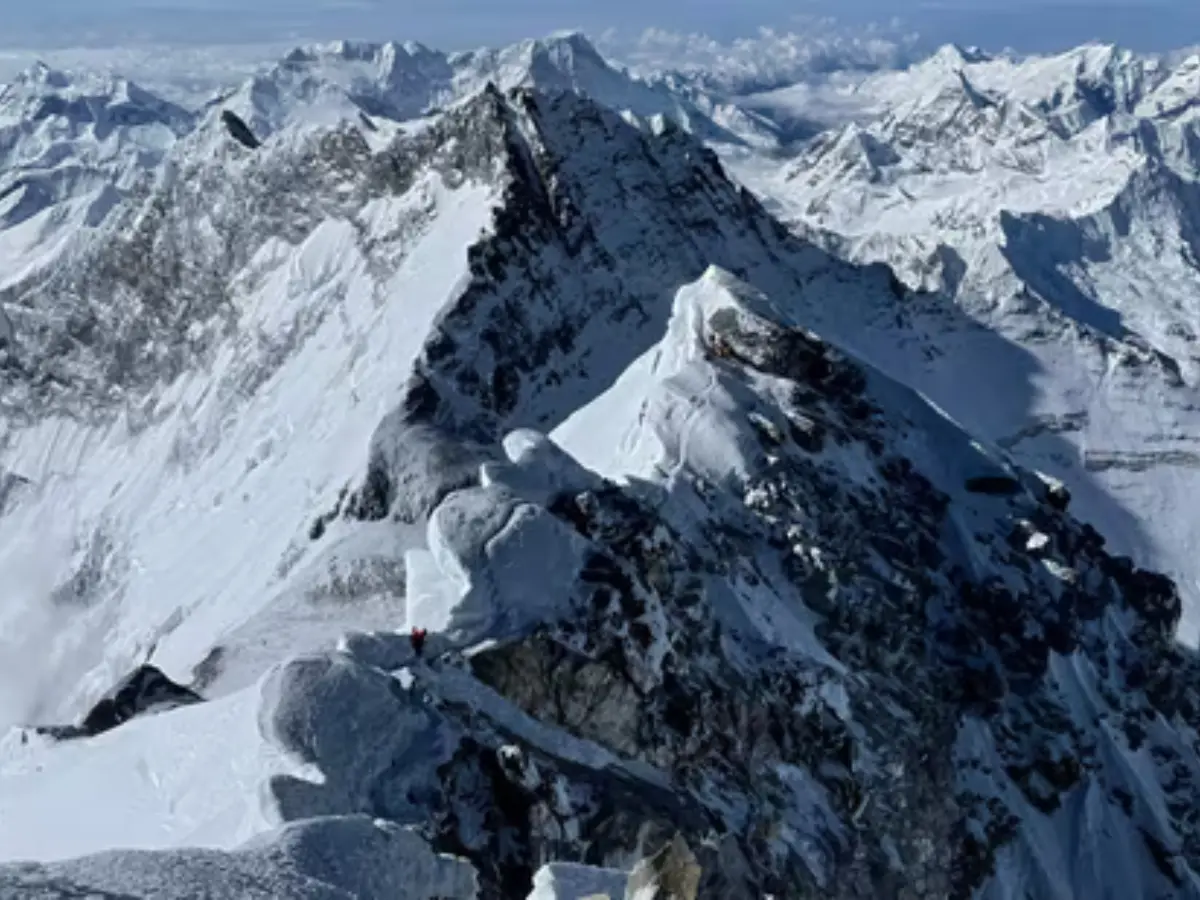
The Himalayas are classified as the highest seismic risk zone due to their position on one of the most active tectonic plate boundaries in the world. The Indian Plate is slowly moving northward at a rate of approximately 5 cm per year, colliding with the Eurasian Plate. This ongoing collision not only formed the Himalayas but continues to push the mountain range upward, causing significant stress beneath the Earth’s surface. When this stress is released, it results in powerful earthquakes.

Also Read: Cyclone Ditwah claims 56 lives in Sri Lanka; PM Modi announces dispatch of relief material
Additionally, the geological youth of the region means the rocks are still adjusting, with frequent folding and breaking, which contributes to the instability of the area. Several large fault systems, including the Main Frontal Thrust and Main Central Thrust, are found beneath the Himalayas and are capable of producing devastating earthquakes. The region also has several seismic gaps, areas where major earthquakes have not occurred for centuries—indicating that significant energy has accumulated and is due for release.
What's new in the revised zonation?
Trending Stories
)
Lady Gaga is a mom! Oscar-winning singer welcomes first child with fiance Michael Polansky
)
BRICS Summit 2026: Iran's Pezeshkian praises PM Modi at BRICS
)
Karthik Subbaraj’s Dorothy gets a standing ovation at TIFF world premiere
)
Harry Potter TV show vs films: Gary Oldman explains why HBO’s reboot could be better
)
North Korea fires missiles after US, South Korea and Japan military drills but America says 'does not pose immediate threat'
)
Delhi's top luxury hotels turn into high-security fortress hubs for BRICS 2026 delegations
)
BRICS Summit 2026: 30+ countries seek BRICS membership
)
Frustrated man demolishes his kitchen after thousands flock to see Mother Mary his wife spotted on the wall
)
BRICS summit: India faces delicate Iran-UAE diplomatic test
)
From drones to KAAN fighters: Turkey outlines 229% surge in defence spending amid regional shifts
)
Odisha gets investment proposals worth Rs 2.42 trillion from UAE with 6.18 lakh potential jobs
)
After praising Modi, Pezeshkian meets Indian religious leaders, Hurriyat's Mirwaiz Umar Farooq
)
Houthis vs Saudi Arabia: East-west oil pipeline shut after drone attacks from Iraq
)
South Africa batter Jordan Hermann hits highest individual score on ODI debut
)
800 million years old - Scientists discover 'fingerprints' of supercontinent Gondwana in ancient rocks
)
Osama Bin Laden's son ALIVE? Al-Qaeda releases video 7 years after US declared him dead
)
BRICS Summit 2026: South Africa says it will use the summit to advance its economic priorities
)
Israel spent nearly $470,000 on PM's hair, makeup since 2019, data shows
)
BRICS Summit 2026: Rivals in West Asia, partners in BRICS, UAE, Iran, and Saudi delegations in Delhi
)
BRICS Summit 2026: PM Modi meets Malaysia, Ethiopia leaders; defence ties, trade in focus
)
From India, Putin warns Europe against sending troops to Ukraine, Zelensky expresses willingness to meet him at G20 Summit
)
BRICS Summit 2026: Special BRICS session on 'inclusive global governance'
)
Satellite images show construction surge at Iran’s Pickaxe nuclear site amid US war
)
9/11 attack anniversary: The day that changed America forever
)
9-year-old Chennai prodigy clears Cambridge IGCSE grade 10 exams
)
Satya Niketan horror: Who is responsible?
)
BRICS Summit 2026: Top world leaders in New Delhi; West Asia war casts shadow on BRICS Summit
&im=FitAndFill=(700,400))
New Friday OTT releases (September 11, 2026): The Revolutionaries, Vishwanath & Sons, Ghamasaan- 6 new titles coming on Netflix, Prime Video and more
)
Years before 9/11, CIA warned Clinton, Bush of 'explosive-packed airplane attack': What newly released files reveal
)
In first of its kind, Trump admin deports Afghan woman via Alien Terrorist Court
)
Saudi Arabia shuts East-West oil pipeline, key Hormuz bypass, after attacks
)
IND vs AFG, 1st T20I: When and where to watch live streaming in India?
)
WION Expertspeak: Understanding India's BRICS presidency amid wars, trade tensions and global turmoil
)
BRICS Summit: China resumes Guangzhou-New Delhi flight, issues 'good-neighbourliness' remark ahead of Xi-Modi meet
The updated seismic map takes into account new data about earthquake risk, including the potential for rupture propagation along the Himalayan Frontal Thrust, which extends the danger zones into areas like Dehradun. Key changes also involve reclassifying regions in the outer Himalayas, where fault lines could trigger earthquakes that impact populated foothill areas.
In this new map, boundary towns between seismic zones are now automatically classified into the higher-risk zone, ensuring that geological realities are prioritized over administrative borders. This shift ensures that cities, towns, and infrastructure in vulnerable regions are designed with stricter engineering standards to minimize earthquake damage.
The updated map reflects the ongoing tectonic activity between the Indian and Eurasian plates, particularly in densely populated regions like Uttarakhand, Himachal Pradesh, and parts of Uttar Pradesh. As a result, the map calls for urgent retrofitting of existing infrastructure, halting urban development on soft sediments or near active faults, and heightened awareness for earthquake preparedness. Experts praise this uniform approach as a critical step toward improving disaster resilience, especially as urbanisation continues to expand in these seismic hotspots. The new map, based on advanced modeling techniques, is a call to action for recalibrating India’s preparedness for seismic events across the nation.

