

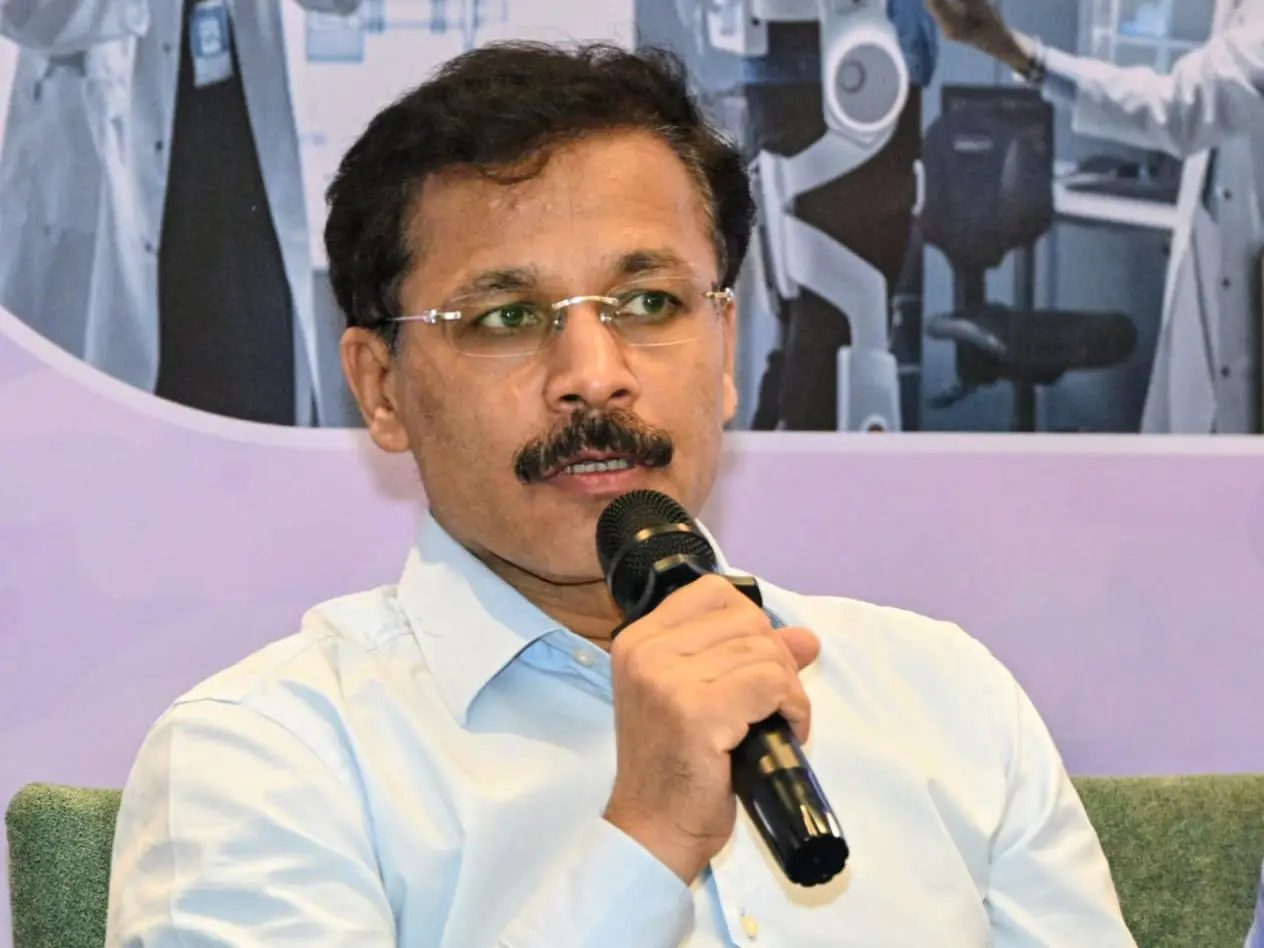
&imwidth=800&imheight=600&format=webp&quality=medium "‘My expectation is that I should not be required to take any crackdown’: Maharashtra FDA chief Tukaram Mundhe to WION")
Maharashtra Food and Drug Administration (FDA) Commissioner Tukaram Mundhe has said the state’s intensified food-safety enforcement drive is ultimately aimed at creating a system where businesses comply voluntarily, and routine crackdowns are no longer required.
In an exclusive interview with WION's Disha Yadav, Mundhe said the FDA’s responsibility is to ensure that food-safety regulations are implemented effectively, stressing that the department’s objective is public health and not to claim credit for the ongoing crackdown.
“My expectation is that I should not be required to take any crackdown,” Mundhe said, describing voluntary compliance as the ultimate measure of success.
Over 3,000 establishments inspected in two months
Explaining the scale of the ongoing enforcement drive, Mundhe said that the FDA has inspected more than 3,000 establishments in the last two months.
More than 700 establishments were issued improvement notices, while around 160 licences were suspended.
Trending Stories
However, Mundhe cautioned against interpreting these figures as evidence that the entire food industry is operating in violation of the law.
The commissioner said that after taking charge, the department went deeper into the food-safety system and concluded that enforcement needed to be undertaken in “mission mode”, with different sectors and categories being addressed systematically.
Why did food safety become a priority now?
Asked why food safety had not received the same level of administrative attention earlier, Mundhe rejected attributing the situation to one particular factor, such as a lack of resources or political will.
He pointed to the transformation of India’s food-regulation framework after the implementation of the Food Safety and Standards Act and the subsequent regulatory framework, which shifted the focus from merely preventing adulteration towards comprehensive food-safety standards.
According to Mundhe, the regulatory architecture, laboratories and manpower are now in place. The bigger challenge, he said, is implementation and compliance.
Which foods are under the biggest scanner?
Mundhe said the FDA's enforcement strategy is also based on the risk associated with particular food categories.
High-risk categories identified under the food-safety framework include milk and milk products, meat and edible oils, among other widely consumed products.
Enforcement is also adjusted according to consumption patterns and seasons.
During festival periods, for instance, milk products and fried foods can come under greater scrutiny, while seasonal products such as mangoes can become a focus during summer.
The approach, he said, is therefore not simply about conducting random raids but identifying where the potential risk to consumers is greatest.
Repeat offenders could face stronger action
Mundhe also made it clear that a licence suspension should not necessarily be viewed as the final punishment.
For establishments that repeatedly violate food-safety regulations, the action can escalate to licence cancellation and closure.
His message to businesses was straightforward: compliance is the only sustainable way to remain operational.
“If they are complying, they have nothing to fear,” Mundhe said.
‘Ex-FDA officer, lawyer or anyone else will not help’
One of the sharper moments of the WION interview came when Mundhe was asked about establishments hiring former FDA officials or consultants to understand regulations or potentially avoid enforcement.
Mundhe said establishments are free to seek professional advice to understand the law, but such connections will not protect from regulatory action.
“Whether they hire an ex-FDA officer, a lawyer or anyone else, it is not going to help them,” he said.
If a business follows the applicable regulations, he said, it has nothing to worry about. But if it violates the law, hiring a former official, lawyer or consultant will not shield it from action.
The message was clear: compliance, not connections, will determine who survives the crackdown.
‘System and institution are much more important than an individual’
Mundhe also addressed a bigger question: can the current enforcement drive continue after the present leadership changes?
His answer was that it must.
“System and institution are much more important than an individual,” Mundhe said.
He said his priority is to institutionalise food-safety enforcement so that the system does not become dependent on one officer.
The FDA is therefore moving towards automation and digital systems, including digitising grievance mechanisms so that citizens can raise complaints and track their progress through their phones.
Regular reviews, periodic inspections and greater citizen participation are also being built into the enforcement framework.
The aim is to ensure that the mechanisms created during the current drive continue functioning regardless of which officer is heading the department in the future.
What is the most dangerous form of adulteration?
Asked to identify the single most dangerous chemical or form of adulteration, Mundhe refused to single out one substance.
Instead, he stressed that any food that is adulterated, unsafe or substandard poses a public-health risk and can attract regulatory action.
His concern, he said, extends beyond immediate illnesses.
“Nobody has got any right to spoil the life of an individual, society or a nation,” Mundhe said, warning that unsafe food could have consequences not only for individuals today but potentially for future generations.
Zero tolerance on bribery
Mundhe also spoke about corruption and attempts to influence food-safety officials.
He said there is zero tolerance for unsafe, substandard or adulterated food and equally strong action against attempts to compromise the regulatory process.
“The person who offers a bribe and the person who accepts it — both are criminals,” he said.
Mundhe urged anyone who encounters an attempt to offer or solicit a bribe to report the matter to the commissioner or the Anti-Corruption Bureau.
Consumers also have a role
Mundhe said enforcement cannot be the sole responsibility of the regulator.
Consumers, he argued, need to become more vigilant about what they purchase and consume.
He urged people not to limit their checks to the expiry date and price of a product, but to also read its ingredients and constituents and make informed choices.
The commissioner said consumer awareness and citizen participation would be an important part of creating a sustainable food-safety ecosystem.
The larger message: crackdown is only the beginning
For Mundhe, the current raids and inspections are only one part of a much larger objective.
The immediate focus is to identify violations, take action against non-compliant establishments and protect consumers. But the long-term goal is to create a regulatory system in which businesses understand the rules, comply with them and do not wait for an inspection to take corrective action.
That is why his most striking statement from the interview may also be his simplest:
“My expectation is that I should not be required to take any crackdown.”
For the Maharashtra FDA chief, the success of the campaign will ultimately not be measured by how many establishments are raided or how many licences are suspended — but by whether the food-safety culture changes enough that such crackdowns are no longer routinely necessary.
