

&imwidth=800&imheight=600&format=webp&quality=medium "‘Millions will join protests,’ warns CPJ; Sonam Wanchuk sets condition to end fast | Gravitas")
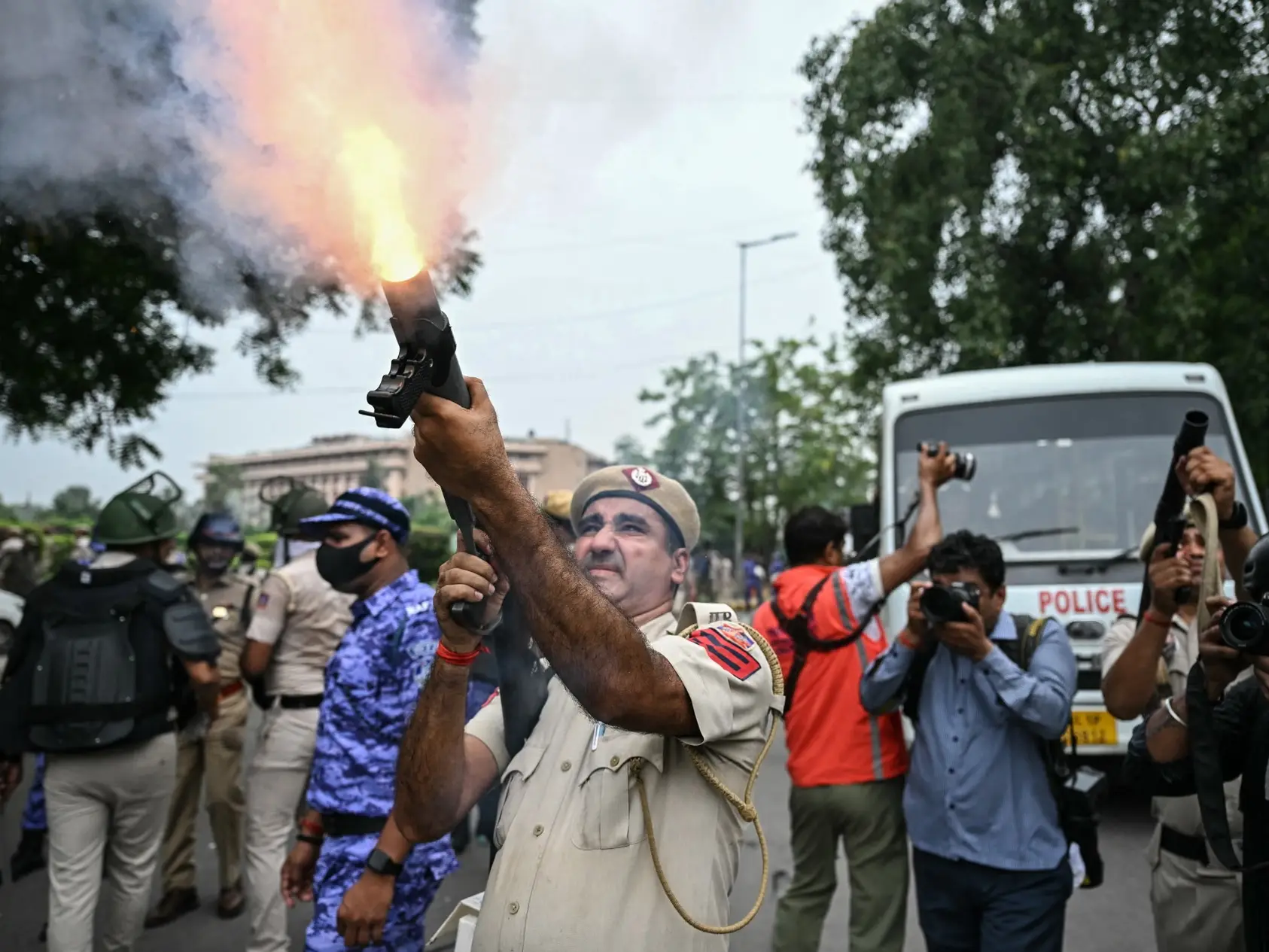
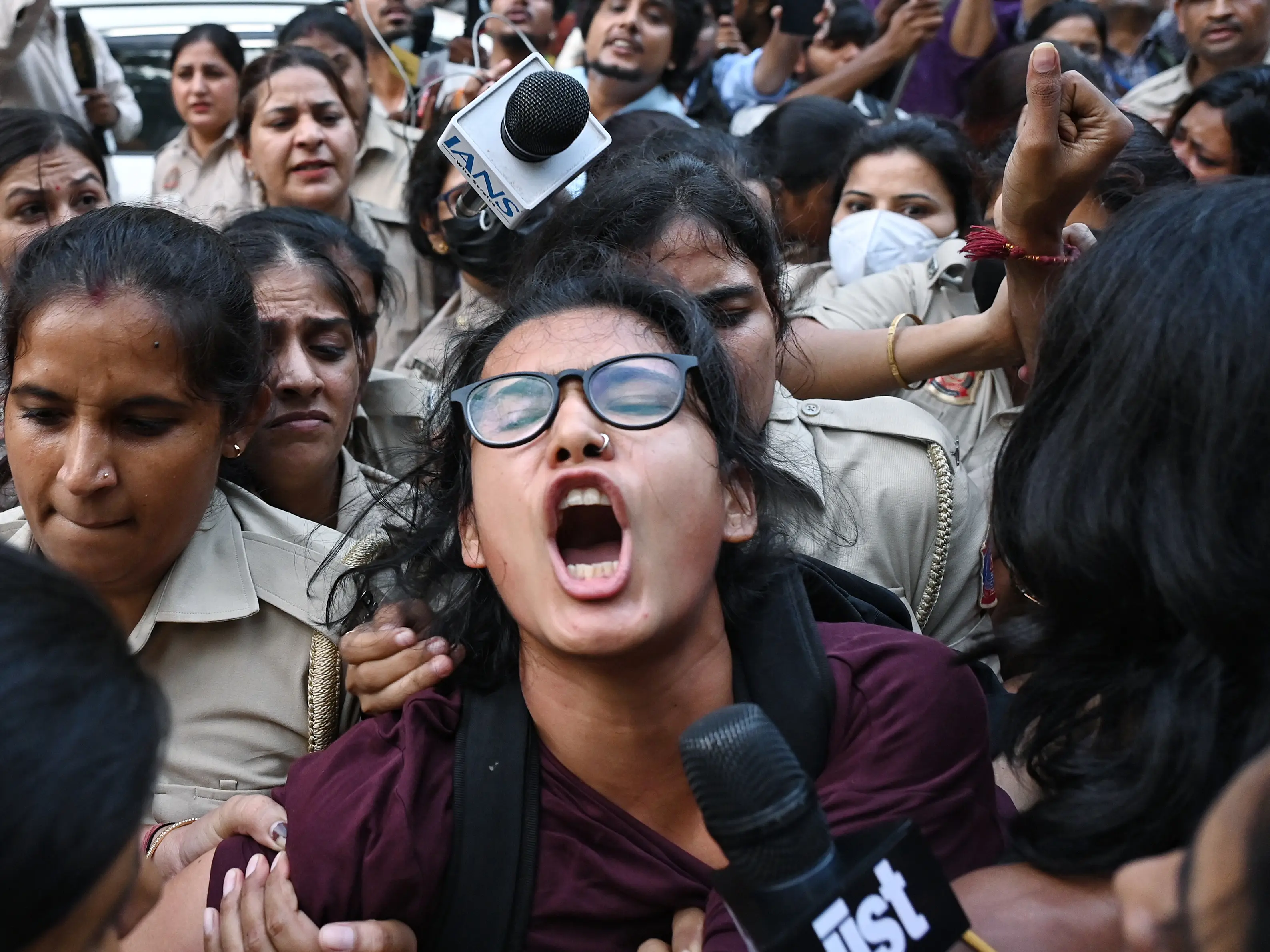
Protests at Delhi’s Jantar Mantar continue to rage amid rising public anger over lack of accountability. While the Cockroach Janta Party has issued a fresh warning to the Narendra Modi-led government, activist Sonam Wangchuk has put forth a condition for ending his hunger strike, which has entered day 25.
A few hours earlier, CJP claimed that it had turned down Union health minister JP Nadda’s invitation for fresh talks at his residence.
While it proposed a meeting at the protest site or a neutral venue near Jantar Mantar, the government is yet to respond. CJP also warned that millions more will join the protests if their demands are not accepted.
Cockroach Janta Party (CJP) national spokesperson Ashutosh Ranka said, “We have said this very clearly, what happened on the 20th was a trailer. If the government doesn’t agree, millions more will come to Delhi because this time we will not hold back and stay silent.”
The CJP has been seeking Union education minister Dharmendra Pradhan’s resignation over students ending their lives allegedly due to the cancellation of the NEET-UG exam conducted on May 3 due to a large-scale paper leak.
They have also sought a compensation of one crore rupees for the kin of these deceased students.
Trending Stories
&imwidth=180&imheight=135&format=webp&quality=medium)
BCCI’s CoE cautious over Hardik Pandya’s fitness, sets expected comeback timeline
&imwidth=180&imheight=135&format=webp&quality=medium)
India-China face-off continues near Arunachal’s Taksing, reveals ITBP chief in first official confirmation of tensions
&imwidth=180&imheight=135&format=webp&quality=medium)
Horrific video shows the moment 18-year-old fell to her death from Mexico amusement park ride
&imwidth=180&imheight=135&format=webp&quality=medium)
IND-W vs ZIM-W, 1st ODI: Rawal, Charani star in India’s nine-wicket win over Zimbabwe
&imwidth=180&imheight=135&format=webp&quality=medium)
Netanyahu dials PM Modi, invites him and Capt Smit Machchhar to light torch on Israel’s Independence Day
&imwidth=180&imheight=135&format=webp&quality=medium)
Putin says Russia is ready to resume Ukraine-US peace talks but rejects 'short ceasefire' amid deadly attacks
&imwidth=180&imheight=135&format=webp&quality=medium)
Ilhan Omar breaks silence over alleged marriage to her brother; Trump thinks it's 'really good answer'
&imwidth=180&imheight=135&format=webp&quality=medium)
Finance influencer dies by suicide in Chennai; father accuses tech CEO, who denies charge
&imwidth=180&imheight=135&format=webp&quality=medium)
Meghan Markle’s father Thomas under investigation over alleged child abuse images: Report
&imwidth=180&imheight=135&format=webp&quality=medium)
'It's a crime not to see this scene': Tehran puts Trump 'behind bars'
&imwidth=180&imheight=135&format=webp&quality=medium)
WATCH: Trump demands Ilhan Omar removal from Congress for 'using fake name to be sworn in'. So what is her real name?
&imwidth=180&imheight=135&format=webp&quality=medium)
GRAVITAS | Putin fires nuclear-capable hypersonic missiles, Zelensky ready to surrender 25% territory
&imwidth=180&imheight=135&format=webp&quality=medium)
Watch: India rejects ‘imprecise and unsupported’ references in UN migrant rights report
&im=FitAndFill=(700,400)&imwidth=180&imheight=135&format=webp&quality=medium)
Serbia elections: Nearly 150,000 people take to streets in massive rally against Aleksandar Vucic | In pics
&imwidth=180&imheight=135&format=webp&quality=medium)
Pakistan airline PIA unveils new crew uniforms, faces online criticism
&imwidth=180&imheight=135&format=webp&quality=medium)
First Lady Melania Trump secures ceasefire between Russia, Ukraine in Oleshky: White House
&imwidth=180&imheight=135&format=webp&quality=medium)
India’s 2022 CWG silver medallist Sabbhineni Meghana announces international retirement
&imwidth=180&imheight=135&format=webp&quality=medium)
US midterms 2026: Elon Musk’s political spending hits $445 million as Republicans battle to retain Senate control
&imwidth=180&imheight=135&format=webp&quality=medium)
Did Neha Bora call for Bangladesh-like GenZ protest, 'anarchy' in India? WION Fact-checks viral claim
&imwidth=180&imheight=135&format=webp&quality=medium)
AI slop or smart strategy? South African author Coral Hart defends Her 370 AI- assisted books in 20 months
&imwidth=180&imheight=135&format=webp&quality=medium)
'Vivek should keep it up': Trump defends Ramaswamy's controversial campaign ad targeting Amy Acton
&imwidth=180&imheight=135&format=webp&quality=medium)
Shikhar Mohan earns maiden India A call-up, replaces KL Rahul
&imwidth=180&imheight=135&format=webp&quality=medium)
Trump ordered to answer questions under oath in BBC defamation lawsuit by December 11
&imwidth=180&imheight=135&format=webp&quality=medium)
SA vs AUS 2nd Test: Temba Bavuma reveals 'Tendulkar inspiration' behind career-best 179
&imwidth=180&imheight=135&format=webp&quality=medium)
ENG vs SL: Harry Brook breaks Shubman Gill’s record for fastest ODI double century
&imwidth=180&imheight=135&format=webp&quality=medium)
450 villagers in UP rush to take anti-rabies shots after consuming 'charnamrit'
&imwidth=180&imheight=135&format=webp&quality=medium)
US midterms 2026: US Supreme Court allows New Hampshire to restrict student IDs for voting
&imwidth=180&imheight=135&format=webp&quality=medium)
One man, 8 months of work, and a river dirty again: Why Bittu Tabahi may quit
&imwidth=180&imheight=135&format=webp&quality=medium)
'This is humiliation': Vijay Deverakonda under fire over controversial marriage proposal remark on Koffee With Karan 9
&im=FitAndFill=(700,400)&imwidth=180&imheight=135&format=webp&quality=medium)
New Friday OTT releases (October 23, 2026): Gajab Raat, Dorothy, Chaar Yaar- Watch these 6 new movies and TV shows on Netflix, Prime Video and more
&imwidth=180&imheight=135&format=webp&quality=medium)
Two BrahMos missiles on Tejas, triple the range and 100% indigenisation, says former BrahMos CEO
&imwidth=180&imheight=135&format=webp&quality=medium)
A secret code, a midnight escape and 300 deaths: The Russian officer who turned on Putin
&imwidth=180&imheight=135&format=webp&quality=medium)
Christa Pike's failed execution: Tennessee team struggled to insert IV lines, lawyer says
&imwidth=180&imheight=135&format=webp&quality=medium)
US to get 850 F-35 stealth fighter jets under 10-year Pentagon-Lockheed deal
&imwidth=180&imheight=135&format=webp&quality=medium)
China's dancing robot turns violent bodyguard, lifts cars and fights intruders - Watch
What started as a students’ protest, though, has now gained a political dimension.
A day earlier, leader of the opposition Rahul Gandhi and other Congress leaders were forcibly removed and detained by the police after they staged a dharna outside PM Narendra Modi’s residence.
The Congress leader followed it up with a press conference today, claiming that 152 paper leaks have taken place over the last years with no convictions. Gandhi stated that 7.5 crore students and their families have been affected by this. On this occasion, he also reiterated the key demands of the protesters.
Meanwhile, activist Sonam Wangchuk, who was admitted to Gurugram’s Medanta Hospital last evening, revealed that he lost 11 kilogrammes so far.
He agreed to call off his fast today itself if the government provides an unequivocal assurance that none of the young protesters will face any legal action for participating in this movement.
In a letter addressed to Union ministers JP Nadda and Jitendra Singh, who visited him at the hospital, the activist claimed that the government was considering paying adequate compensation for the deceased NEET applicants and holding a meaningful discussion in parliament.
More drama unfolded, though, as the police prevented a delegation of MPs from opposition parties, including AAP and Samajwadi Party, from meeting Wangchuk at the Medanta Hospital.
Earlier in the day, Union parliamentary affairs minister Kiren Rijiju reiterated the government’s willingness to have a discussion on the issue.
While opposition parties upped the ante, with many leaders arriving at the parliament dressed in black to protest the injuries inflicted upon protesters, Union defence minister Rajnath Singh accused them of misleading the youth.
In retaliation for Rahul Gandhi’s dharna outside PM Modi’s residence, BJP workers demonstrated in front of state Congress headquarters.
During one such protest in Patna, workers of BJP and Congress came to blows.
Congress also protested over Rahul Gandhi’s brief detention, but the controversy over the alleged use of brute force by the Delhi police against protesters during the July 20 march to parliament refuses to die down.
Hearing a bunch of public interest litigations regarding this, the Delhi High Court ordered Delhi Police to preserve the relevant CCTV footage and videos.
It also issued a notice to the police and the centre, and asked them to file their counter-affidavits within a period of four weeks. The matter will be heard next on September 11.
With some people raising questions over the nature of the ongoing protests, it raises a fundamental question - What is the constitutional position on protests in India?
As per Article 19, citizens have the right to assemble peacefully without carrying arms. There is a caveat though.
The government can impose ‘reasonable restrictions’ on protests under the garb of sovereignty, public order, decency or morality.
To undertake any protest, the organisers need to obtain a no-objection certificate from the police station.
While the authorities closed 17 Delhi Metro stations owing to the security situation, it appears that the clampdown is fuelling more support for CJP’s agitation.
For instance, strangers from across the country sent so many meals to protesters at Jantar Mantar on Tuesday that the organisers eventually issued an appeal asking them to stop ordering more.
While the BJP has accused the opposition of politicising the protests, another question arises: Can politics and governance be really separated?
At the same time, it is also incumbent on the opposition to go beyond protests and insist on a fruitful debate on this issue on the floor of the parliament, as constructive solutions are the need of the hour.