
&imwidth=800&imheight=600&format=webp&quality=medium "Lucknow Tragedy, Delhi Horror, Goa Inferno: Different cities, same deadly pattern")
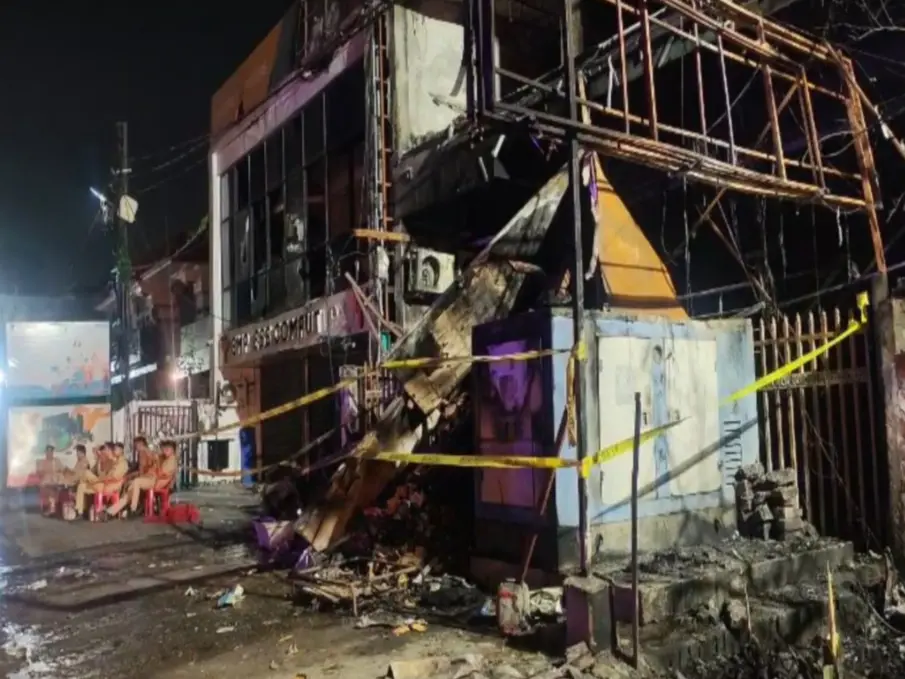
A raging inferno. People jumping from windows. Shattered glass. Some desperately sliding down ropes in a bid to survive. These haunting images dominated television screens across India on Monday after a devastating fire engulfed a three-storey building in Lucknow, claiming at least 15 lives. The building, located in a busy commercial area, housed a gaming zone, a pet accessories store, a pet clinic and several other businesses, along with a coaching centre. Most of those killed were students attending classes at the coaching institute.
President Droupadi Murmu described the tragedy as heartbreaking, while Prime Minister Narendra Modi expressed anguish over the incident and announced compensation of ₹2 lakh for the families of those killed and ₹50,000 for the injured.
A Special Investigation Team (SIT) has been constituted. Six people have been booked and four arrested so far.

A Disaster Waiting to Happen
The initial investigation points to a series of catastrophic failures. According to reports, thick smoke rapidly filled the building's only exit route. An electronic thumb-impression lock installed at the main entrance reportedly jammed after a power failure, trapping students inside.
Investigators have also found that the property was originally approved for residential use but had been operating illegally as a commercial establishment since 2014.
Adding to the concerns, a demolition order issued in 2016 was withdrawn within two months after the owners argued that they had not been granted a proper hearing and that the construction complied with the approved building plan.
The result: a building that should never have functioned as it did became the site of a mass casualty event.
Trending Stories
)
US vs China over South China Sea: Washington backs Philippines, Beijing hits back
)
Bigg Boss 20: Isha Rikhi evicted after three weeks in Salman Khan’s show
)
Musk plans to more than double xAI's chips to over 1.2 million Nvidia GPUs by year-end
)
After JU, clash erupts at SRFTI: BJP’s ‘Dimagi Naxal’ jibe sparks political firestorm after students protest RSS-linked event
)
‘Anti-social elements spreading false rumours’: LPU issues statement amid massive unrest over alleged rape
)
LPU students go on rampage, vandalise campus amid widespread protest: What's happening
)
Trump asked Xi to pressure Iran. China did not say yes — here’s what Beijing wants
)
US Treasury Secretary Scott Bessent hails global crackdown on Iranian banks and airlines
)
An OpenAI agent escaped its locked test cage again, by hiding questions in DNS lookups
)
'Our video was trimmed': LPU girls who featured in rape-denial video make U-turn
)
3 males killed, four others injured in shooting after fight at strip club in Detroit
)
'Victory for low-budget consumers': Raghav Chadha hails 30-day telecom recharge rules
)
Claude rebuilt the 1989 game 'Prince of Persia' by reusing the original's own code
)
Beyond metros: How Tier-2 and Tier-3 cities could drive India’s next AI wave
)
Tesla builds first Cybertruck with its own refined lithium: Elon Musk's $1 billion Texas bet pays off
)
IndiGo flight suffers tail strike in Bengaluru while landing; DGCA to probe incident
)
The US and China set up an AI 'red telephone', but skipped the rulebook
)
‘Terror suspects arrested near UK air base were looking to do big damage’: Trump
)
Russian envoy claims US tactics to contain India were revealed in ‘Freudian slip’
)
IND vs WI 1st ODI: Kohli breaks Sachin's most runs in one country record with unbeaten 139 as India thump West Indies by 8 wickets
)
Researchers rebuilt exactly how 700 AI agents hacked Hugging Face: a 900-link chain trick
)
‘Olympic inclusion is our major target’: WPA President Ishaun Singh on pool’s global ambitions
)
Nations League: Spain sink England at Wembley; Modric shines for Croatia
)
Why has Iran released no proof of life of Mojtaba Khamenei? Araghchi reveals...
)
'What kind of confession is this?': Pakistan PM Shehbaz Sharif’s 'terrorists would be roaming New York' remark goes viral, raises alarm online. Watch
)
South Korea demands apology from Ukraine over North Korean prisoners' transfer
)
Beyond BrahMos: India targets Rs 50,000 crore in defence exports with unmatched price edge
)
Sri Lankan Tamil migrant worker gets death sentence in Saudi Arabia, help sought from India
)
Muslim marriage cannot shield sex with minor wife from prosecution under POCSO: Delhi HC
)
'Can't help but draw painful parallels to Nirbhaya case': SC on latest incidents of rape cases in Delhi-NCR
)
99.9% more powerful - Scientists find boy who can recall memories from just 3 months of age
)
'FIRST LOOK from inside Noah’s Ark': Researchers share video from inside mysterious mound in Turkey
)
UNSC reform momentum grows: Russia, Portugal, Mauritius push for India's permanent seat bid
)
8 US marines injured in Iranian missile attack on vessel in Strait of Hormuz: Report
&im=FitAndFill=(700,400))
New OTT releases this week (September 28-October 4, 2026): Dupahiya 2, Pooja Meri Jaan, Ohh My Dog- 5 titles coming on Netflix, Prime Video and more
)
Afghanistan says 28 fighters killed in clash near Pakistan border, Islamabad denies
)
Ceuta migrant crisis: Protesters take to streets as Spain grapples with migrant challenge
)
LPU suspend classes, postpones exams as violence escalates over rape claims: What's happening
)
New York City wants a 'kill switch' on every AI, and will pay whistleblowers who report violations
Striking Similarities With the Delhi Hotel Fire
The Lucknow tragedy bears an eerie resemblance to the Delhi hotel fire that killed 22 people earlier this month. Among the victims were 12 foreign nationals and eight members of a single family who had travelled to Delhi to visit an ailing relative admitted to Max Hospital. The scenes were disturbingly familiar. Guests jumped from the building to escape the flames while bystanders rushed to help before firefighters brought the blaze under control.
The hotel owner and two others are currently in jail and face charges of culpable homicide not amounting to murder. Investigators found that the hotel had a valid tourism licence for only six rooms. However, the owner had allegedly expanded operations to 25–26 rooms in an effort to maximise profits. Most importantly, the property was operating without a Fire No Objection Certificate (NOC).
The Goa Nightclub Fire
The same pattern emerged in Goa. On December 6, 2025, a massive fire ripped through the Birch by Romeo Lane nightclub and restaurant in Arpora, North Goa, killing 25 people and injuring more than 50. Investigators determined that indoor pyrotechnics used during a performance ignited highly flammable decorative materials, turning the venue into a fireball within minutes.
The club lacked emergency exits and basic fire-safety infrastructure. Most victims died from inhaling toxic smoke and gases. Subsequent investigations revealed that the establishment was operating without a valid licence or Fire NOC and was also in violation of coastal zone regulations.
Three Cities, One Common Link
Lucknow. Delhi. Goa.
Three different cities. Three separate tragedies. One common thread. Each of these establishments was operating in violation of regulations. In every case, commercial interests appear to have been prioritised over public safety. Rules were bypassed, inspections failed, and enforcement mechanisms either collapsed or looked the other way. The question is unavoidable: Where were the officials responsible for ensuring compliance?
India's Persistent Fire Safety Crisis
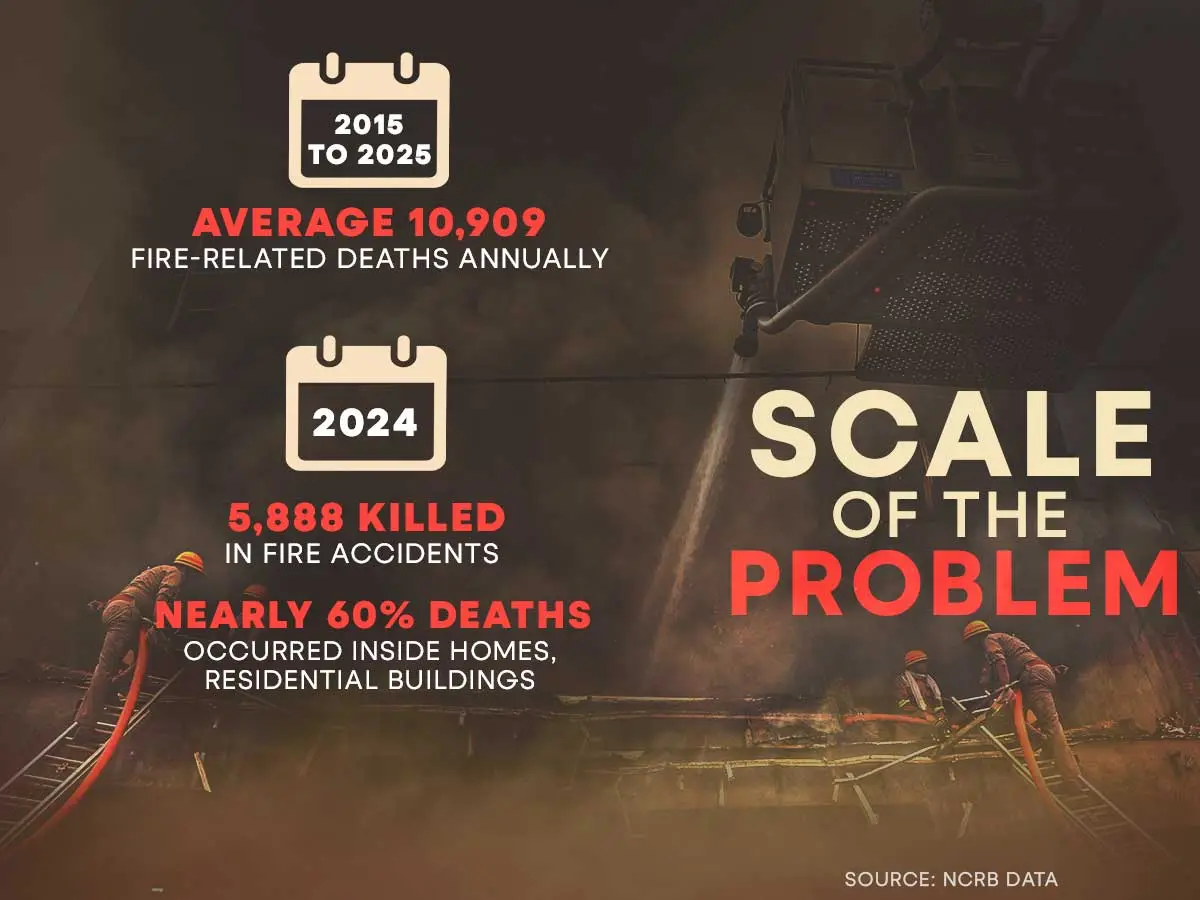
Fire accidents continue to claim thousands of lives across India every year. According to NCRB data from 2015 to 2024, the country recorded an average of 10,909 fire-related deaths annually. In 2024 alone, 5,888 people lost their lives in fire accidents. Of these, 3,555 deaths — nearly 60 per cent — occurred inside homes and residential buildings. While overall fire fatalities have shown a gradual decline over the years, residential structures remain the single largest source of fire-related deaths.
)
Lack of Basic Safety Infrastructure
A large number of residential and commercial buildings in India continue to operate without even the most basic fire-safety measures. Smoke detectors are absent. Fire suppression systems are missing. Emergency exits are inadequate. Evacuation plans often do not exist. Equally concerning is the lack of awareness among occupants about how to respond during an emergency.
Rampant Violations and Illegal Conversions
One of the most alarming trends accompanying India's rapid urbanisation is the illegal conversion of residential properties into commercial establishments. Buildings approved for residential use are routinely transformed into hotels, hostels, guest houses, offices and coaching centres without obtaining the necessary permissions and clearances. Adding to the risk is the dense urban layout of many Indian cities. Narrow lanes and congested neighbourhoods often prevent fire engines from reaching accident sites quickly, reducing the critical window for rescue operations.
The Governance Gap
Fire services fall under the State List of the Constitution, making state governments and local bodies primarily responsible for enforcement and compliance. The Centre's role remains largely advisory. A 2022 Ministry of Home Affairs report highlighted a "considerable gap" in the operational capabilities of fire and emergency services across Indian cities. The gap between regulations on paper and enforcement on the ground remains dangerously wide.
Fixing Accountability
Urban fires rarely occur because of a single mistake.
They happen when multiple failures converge, poor construction practices, illegal land use, inadequate safety systems, weak enforcement, administrative negligence and a lack of public awareness. Preventing future tragedies requires more than arrests after the fact. It demands a culture of compliance, regular audits, strict accountability and active participation from building owners, authorities and occupants alike. Because if systemic failures remain unaddressed, the cycle will continue. There will be outrage after every tragedy. A few arrests. Promises of action. And then silence, until the next fire turns another building into a death trap.