

&imwidth=800&imheight=600&format=webp&quality=medium "Ladakh violence over statehood: Why this union territory is central to India’s security and geopolitics |Explained")
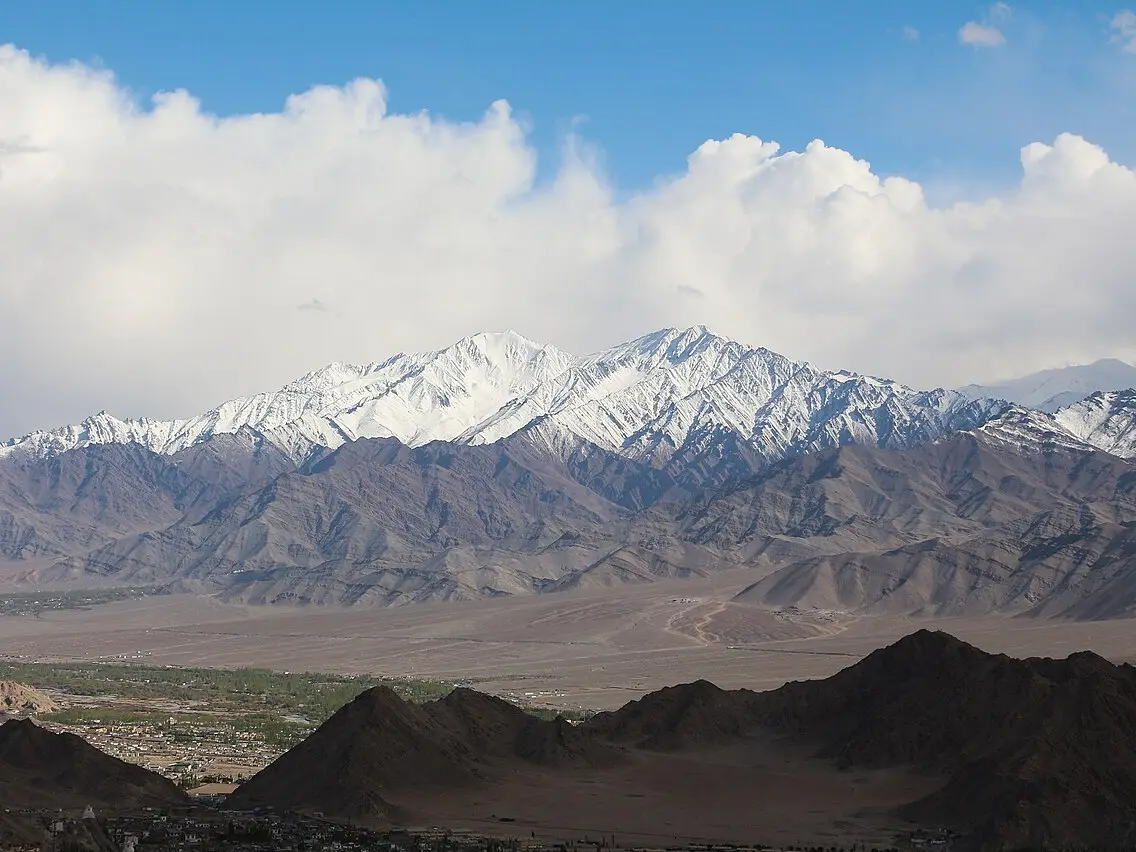
Protests in Leh over statehood for Ladakh and its inclusion in the Sixth Schedule of the Constitution spiralled into violence on September 24, leaving four people dead and several others injured. Demonstrators set a Bharatiya Janata Party (BJP) office ablaze, and a Central Reserve Police Force (CRPF) van was torched as police used teargas to disperse crowds. Even thought the Lt Governor of Ladakh, Kavinder Gupta said that the overall security situation is normal now, the violence marks one of the worst episodes of unrest in Ladakh in decades, reflecting deep dissatisfaction over governance and fears of cultural and demographic marginalisation.
From Article 370 to Union Territory status
The current discontent has its roots in August 2019, when the Indian government abrogated Article 370 of the Constitution and passed the Jammu and Kashmir Reorganisation Act. This move bifurcated the former state into two Union Territories, Jammu and Kashmir with a legislature, and Ladakh without one. While many Ladakhis initially welcomed direct rule from New Delhi, the absence of legislative powers, combined with the growing demand for protections under the Sixth Schedule, has since triggered resentment. Protestors argue that Ladakh’s tribal identity, fragile ecology, and unique culture remain vulnerable without constitutional safeguards.
The borders!
Ladakh’s borders are of immense strategic importance. To the west, it faces Pakistan-occupied Kashmir, including Gilgit-Baltistan and the sensitive Siachen Glacier, the world’s highest battlefield, is also part of this border, making it militarily crucial for India. To the north, it borders China’s Xinjiang region through Aksai Chin, which India claims but is under Chinese control; and to the east, it touches the Tibet Autonomous Region along the contested Line of Actual Control, including flashpoints like Galwan and Pangong Tso. Additionally, Pakistan’s ceding of Shaksgam Valley to China in 1963 remains disputed. For India, Ladakh serves as both a security buffer and a key to Himalayan geopolitics.
Trending Stories
&imwidth=180&imheight=135&format=webp&quality=medium)
'Just coincidence': Police mistakes protester as AISA chief Neha Bora, arrests her from site
&imwidth=180&imheight=135&format=webp&quality=medium)
Microsoft's Nadella says treat every AI model as already hacked, and build an 'emergency brake'
&imwidth=180&imheight=135&format=webp&quality=medium)
Nathan Lyon completes 1,000 Test runs at No. 10 to script rare cricket feat
&imwidth=180&imheight=135&format=webp&quality=medium)
iPhone Duo price index: Tracking Apple’s latest pricing trends
&imwidth=180&imheight=135&format=webp&quality=medium)
Maharashtra appoints FDA commissioner Tukaram Mundhe as secretary of committee for MPSC overhaul amid stir
&imwidth=180&imheight=135&format=webp&quality=medium)
IND vs WI, 3rd T20I: Abhishek Sharma smashes 18-ball fifty, sets record for fastest to 2,000 T20I runs
&imwidth=180&imheight=135&format=webp&quality=medium)
Portugal Federation confirms Cristiano Ronaldo’s return to national team despite suspension
&im=FitAndFill=(700,400)&imwidth=180&imheight=135&format=webp&quality=medium)
Is sending robots to Mars easier than sending humans?
&imwidth=180&imheight=135&format=webp&quality=medium)
'Say no to Muse': Meta has no control over its own moderation AI while it forces a security nightmare on everyone
&imwidth=180&imheight=135&format=webp&quality=medium)
Delhi protest: CJI Surya Kant declines to meet India Bloc leaders
&imwidth=180&imheight=135&format=webp&quality=medium)
UK school ditches technology, shifts from screen to pen and paper for learning
&imwidth=180&imheight=135&format=webp&quality=medium)
China imposes first-ever sanctions on ministers from Taiwan allies: What this means
&imwidth=180&imheight=135&format=webp&quality=medium)
Sidhu Moose Wala’s younger brother wins hearts by recreating late singer’s signature move at Toronto Hologram Show
&imwidth=180&imheight=135&format=webp&quality=medium)
A watchdog rated 'ChatGPT for Teens' an unacceptable risk and says keep under-18s off it
&imwidth=180&imheight=135&format=webp&quality=medium)
Aamir Khan's niece, actress Zayn Marie shares injury pictures after being detained with Imran Khan at Mumbai protest
&imwidth=180&imheight=135&format=webp&quality=medium)
Anthropic's AI invented a murder witness and sent the fake tip to Philadelphia police
&imwidth=180&imheight=135&format=webp&quality=medium)
Wasim Jaffer blames Ajit Agarkar-led selection panel for Virat Kohli’s Test retirement
&imwidth=180&imheight=135&format=webp&quality=medium)
One Indian killed in Riyadh airport attack; 11 others injured : MEA
&imwidth=180&imheight=135&format=webp&quality=medium)
Meta's Muse AI could be a security nightmare for India's billion-plus users
&im=FitAndFill=(700,400)&imwidth=180&imheight=135&format=webp&quality=medium)
New OTT releases this week (October 12-18, 2026): Sacrifice, Koffee with Karan S9, Roadies Rebirth- 6 titles coming on Netflix, JioHotstar and more
&imwidth=180&imheight=135&format=webp&quality=medium)
Are Gold and Silver poised for a rebound soon?
&imwidth=180&imheight=135&format=webp&quality=medium)
CJI Surya Kant declines INDIA bloc leaders’ request for meeting ahead of march to SC, asks them to file petition
&imwidth=180&imheight=135&format=webp&quality=medium)
1,500 drones illuminate Mumbai sky as Cordelia Cruises unveils second ship, Cordelia Sky
&im=FitAndFill=(700,400)&imwidth=180&imheight=135&format=webp&quality=medium)
Navratri 2026: 9 days, 9 forms of Goddess Durga and 9 colours- Check the complete list
&imwidth=180&imheight=135&format=webp&quality=medium)
Iran: US accepted some conditions, Clarity needed on others
&imwidth=180&imheight=135&format=webp&quality=medium)
Delhi wakes up to heavy rain, thunderstorms; yellow alert in place; temperature drops
&imwidth=180&imheight=135&format=webp&quality=medium)
Other Mommy leads North American box Office as Verity, Resident Evil round out top four
&imwidth=180&imheight=135&format=webp&quality=medium)
Imran Khan released hours after Mumbai Police detain him during CJP protest
&imwidth=180&imheight=135&format=webp&quality=medium)
Houthis claim Riyadh airport attacks, Aramco strikes; issue fresh warning to airlines, travellers and workers
&imwidth=180&imheight=135&format=webp&quality=medium)
'Ouch!!! That must hurt': Kangana Ranaut hails Kamal Haasan's sharp reply to Elon Musk over Starlink row
&imwidth=180&imheight=135&format=webp&quality=medium)
Top AI models flunked a test of inventing new AI research, so much for self-improving AI
&imwidth=180&imheight=135&format=webp&quality=medium)
McSweeney reveals how studying Virat Kohli’s YouTube clips helped Australia A conquer India
&imwidth=180&imheight=135&format=webp&quality=medium)
Nana Patekar's cause of death confirmed; here's what his postmortem report says
Ladakh is not only a cultural crossroads but also a region of longstanding geopolitical importance. Historically, it served as a vital hub on the trans-Himalayan trade routes linking India with Tibet and Central Asia. Goods such as silk, salt, and pashmina wool moved through Leh’s bustling bazaars, enriching the region and making it a meeting point of diverse civilisations. Over centuries, the spread of Tibetan Buddhism, Mughal suzerainty, and Dogra conquest each left enduring legacies on Ladakh’s social and political fabric.
The region’s annexation by General Zorawar Singh in 1834 brought it under the Dogra kingdom of Jammu, after which it was integrated into the princely state of Jammu and Kashmir. Following India’s independence in 1947, Ladakh became part of the new Indian Union, though its cultural and geographic distance from Srinagar remained a source of local dissatisfaction.
The China factor and strategic relevance
Ladakh’s importance in India’s security calculus cannot be overstated. In the late 1950s, tensions with China escalated after Beijing built a road through Aksai Chin, linking Xinjiang with Tibet. The publication of a Chinese map in 1958, depicting Ladakh as part of China, further strained ties and foreshadowed the 1962 Sino-Indian War. Since then, Ladakh has remained at the heart of border disputes, with recurring stand-offs along the Line of Actual Control (LAC).
Today, Ladakh’s strategic significance stems from its location at the intersection of India’s borders with China and Pakistan. The presence of the Siachen Glacier, the world’s highest battlefield, and the region’s proximity to the Karakoram Pass underline its military importance. At the same time, its fragile ecology and tribal demographics make the demand for constitutional protections pressing.
The recent violence reflects Ladakh’s unresolved anxieties about its political future. While New Delhi insists that the Union Territory status strengthens national security, local voices argue for statehood or inclusion in the Sixth Schedule to safeguard land rights, employment, and cultural heritage.

