

&imwidth=800&imheight=600&format=webp&quality=medium "KPK emergency becomes symbol of Pakistan's hybrid power structure")
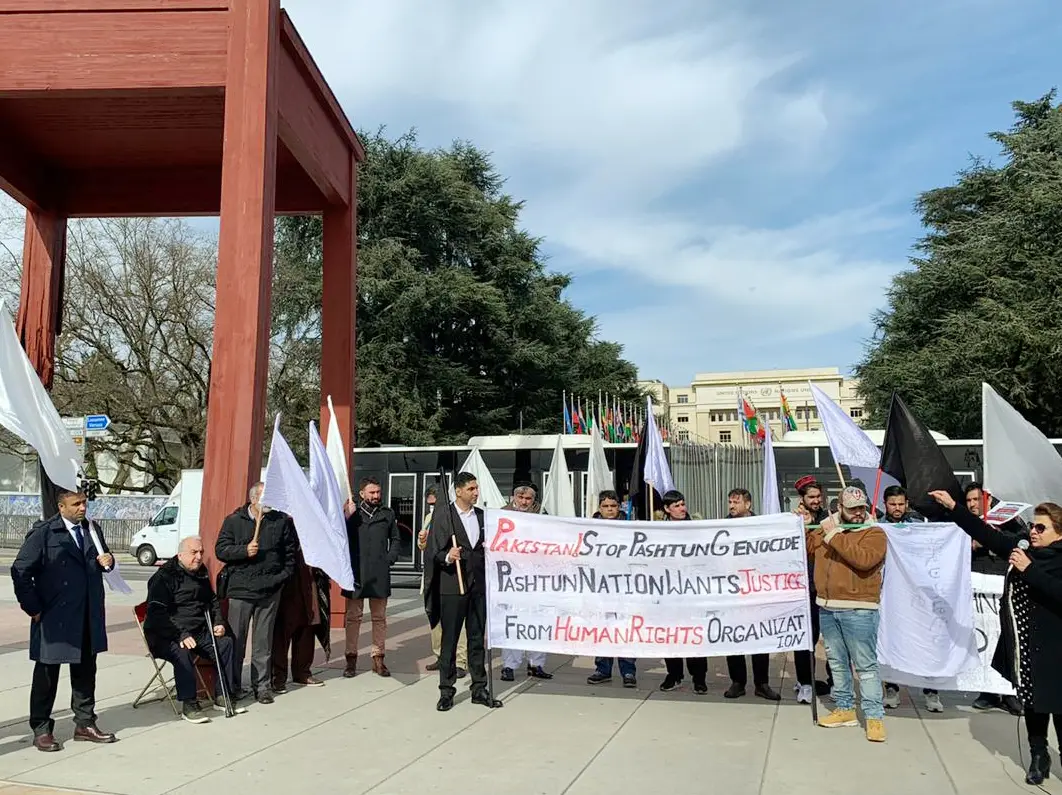
Pakistan’s federal government has suspended the elected provincial administration in Khyber Pakhtunkhwa, imposing a state of emergency and governor’s rule in the northwestern province that borders Afghanistan. The move, formalised by President Asif Ali Zardari on 11 October on the advice of Prime Minister Shehbaz Sharif, places Governor Faisal Karim Kundi, in charge of the province’s affairs, deploys the army to support civil administration under Article 245 of the Constitution, and creates a special federal-supervised secretariat for 12 districts, most of them in the former tribal areas.
The federal cabinet cited a sharp deterioration in security. Officials told parliament and the public of a 195 per cent rise in terrorist incidents in the province between March 2024 and September 2026, with a majority of attacks directed at police and security forces, increased use of drones and improvised explosive devices, and alleged failure by the provincial government to co-operate fully with counter-terrorism efforts. But it is well known that terrorism is Pakistan's own making - Frankenstein & its neighbours, all 3 of them-Iran, Afghanistan & India can vouch for that.
The decision effectively removes the last provincial government controlled by the Pakistan Tehreek-e-Insaf (PTI), the party of jailed former prime minister Imran Khan. PTI has governed Khyber Pakhtunkhwa for more than a decade, and the province remains its principal political base. The timing coincides with PTI plans for a protest march to Islamabad demanding Khan’s release. Khan has been in prison since 2023 on corruption and other charges that he and his party maintain are politically motivated. A media blackout has limited independent reporting from the province.
Critics, including PTI leaders and some analysts, portray the measures as the latest step in a broader concentration of power by the military establishment under field marshal Munir. They point to constitutional amendments that have constrained judicial independence, the prolonged incarceration of a former prime minister, and the displacement of an elected provincial government.
In the former tribal districts, already scarred by successive military operations such as Zarb-e-Azb and Radd-ul-Fasaad, the imposition of direct federal control and the blending of executive and judicial functions under emergency provisions have revived longstanding grievances about displacement, civilian casualties and limited rehabilitation.
Trending Stories
&imwidth=180&imheight=135&format=webp&quality=medium)
Brendan Taylor overtakes Andy Flower to become Zimbabwe’s leading ODI run-scorer
&imwidth=180&imheight=135&format=webp&quality=medium)
Pakistan to head IMF, World Bank boards after 74 years amid persistent economic crisis
&imwidth=180&imheight=135&format=webp&quality=medium)
"The scariest thing was"... flydubai Captain Smit Machchhar recalls cockpit fight and how he thought of his son and daughter
&imwidth=180&imheight=135&format=webp&quality=medium)
'We are not sitting in ivory towers, we are aware': SC issues notice to Rahul Gandhi, Akhilesh Yadav
&imwidth=180&imheight=135&format=webp&quality=medium)
Flying car race: Alef Aeronautics welcomes Tesla Roadster '11 years' later, but are the two models the same?
&imwidth=180&imheight=135&format=webp&quality=medium)
6-year-old among 2 killed as vehicle crashes into youth soccer game in US
&imwidth=180&imheight=135&format=webp&quality=medium)
‘I have very severe problems’: Trump fuels health speculation during address to firefighters
&imwidth=180&imheight=135&format=webp&quality=medium)
US midterm elections 2026: Postal ballots and voter disenfranchisement — A key battle for Donald Trump
&imwidth=180&imheight=135&format=webp&quality=medium)
Lizard people? Ex-US Army sniper claims soldier killed by 'reptilian beings' in battle near Area 51
&imwidth=180&imheight=135&format=webp&quality=medium)
‘I don’t know how my family escaped': Congressman Raja Krishnamoorthi chokes while revealing he was inside US temple during foiled attack
&imwidth=180&imheight=135&format=webp&quality=medium)
At least 19 killed in stampede-like situation after part of Kolkata Durga Puja pandal collapses
&imwidth=180&imheight=135&format=webp&quality=medium)
Rain washes out 5th T20I as India-West Indies share honours 2-2
&imwidth=180&imheight=135&format=webp&quality=medium)
'Reason UN has lost credibility': Amid SIR protests India hits out at report alleging 'youth repression'
&imwidth=180&imheight=135&format=webp&quality=medium)
‘My president, I mean my husband’: Trump's new press secretary Katie Zacharia's first briefing goes off the rails in 14 minutes
&imwidth=180&imheight=135&format=webp&quality=medium)
China responds to Trump's Press Secretary Katie Zacharia after toilet remark: 'Visit China more often'
&imwidth=180&imheight=135&format=webp&quality=medium)
UAE agrees with Saudi Arabia to rejoin Yemen fight as Houthi strikes rattle Riyadh
&imwidth=180&imheight=135&format=webp&quality=medium)
PCB omits Atherton, Hussain from tri-series commentary panel over Imran Khan interview row
&imwidth=180&imheight=135&format=webp&quality=medium)
SA vs AUS 2nd Test: Rain delays start as Rabada returns; Boland replaces Lyon for Australia
&imwidth=180&imheight=135&format=webp&quality=medium)
At least 400 arrested as protests turn violent in France; PM blames far left
&imwidth=180&imheight=135&format=webp&quality=medium)
WATCH | iPhones, luxury perfumes floating in Hormuz? Iranian fishermen make bizarre discovery
&imwidth=180&imheight=135&format=webp&quality=medium)
Two students die, 14 injured at Dandiya event in Hyderabad: Know what happened? VIDEO
&imwidth=180&imheight=135&format=webp&quality=medium)
'keep telling him you will get your opportunities': Iyer opens up on conversations with Sooryavanshi
&imwidth=180&imheight=135&format=webp&quality=medium)
‘Be back in few weeks’: Emi Martinez shares first update after head clash in Premier League match
&imwidth=180&imheight=135&format=webp&quality=medium)
No Ravindra Jadeja, Yashasvi Jaiswal in India’s 2027 ODI World Cup plans: Report
&imwidth=180&imheight=135&format=webp&quality=medium)
Kolkata Durga Puja stampede: PM Modi announces Rs 2 lakh ex-gratia for kin of dead, Amit Shah to visit injured
&imwidth=180&imheight=135&format=webp&quality=medium)
Taylor Swift performs at star-studded Academy Museum Gala 2026 in stunning Dior ensemble
&imwidth=180&imheight=135&format=webp&quality=medium)
Anirudh Ravichander-Kavya Maran wedding: Telangana CM reveals Chennai reception date
&im=FitAndFill=(700,400)&imwidth=180&imheight=135&format=webp&quality=medium)
Inside Tesla's Roadster: 10 features of Elon Musk's 'flying car' that push the limits of electric vehicles | In Pics
&imwidth=180&imheight=135&format=webp&quality=medium)
One species, two lineages: Why Sri Lanka’s spectacled cobra differs genetically from Indian variant
&imwidth=180&imheight=135&format=webp&quality=medium)
Oil tanker carrying over 2M barrels of crude hits mine in Strait of Hormuz, catches fire, says Iran
&imwidth=180&imheight=135&format=webp&quality=medium)
2 injured in plane crash on busy California highway
&imwidth=180&imheight=135&format=webp&quality=medium)
'We feel like Mr India': Gujarat’s undercover SHE team guard garba nights at Navratri
&imwidth=180&imheight=135&format=webp&quality=medium)
'It's a joy to see the makers bring it on such a grand scale': SS Rajamouli on Ramayana
&imwidth=180&imheight=135&format=webp&quality=medium)
13 dead after truck mows down devotees, crashes into temple gate in Madhya Pradesh's Gwalior
&imwidth=180&imheight=135&format=webp&quality=medium)
IND-W vs ZIM-W, 2nd T20I: When and where to watch live streaming in India?
Pakistan’s security establishment has historically pursued a policy of “strategic depth” in Afghanistan, supporting certain terror groups while combating others. Former US Secretary of State Hillary Clinton’s well-known warning that “you can’t keep snakes in your backyard and expect them only to bite your neighbours” is frequently invoked by Pakistani and foreign commentators as a description of the blowback that followed.
Periods of engagement and crackdown on the TTP have alternated; under previous army leadership, some TTP cadres were allowed to relocate into former tribal areas. The current surge suggests that earlier distinctions between “good” and “bad” terrorists have not produced lasting stability.
The federal government maintains that the emergency is a temporary, constitutional response to an internal disturbance beyond the capacity of the provincial administration, and that an 11-member advisory council of technocrats will help restore order and development.
Whether the measures will reduce the militant threat or further alienate Pashtun communities and deepen perceptions of democratic backsliding remains the central question. For now, the displacement of an elected government by unelected military authority in Pakistan’s most conflict-affected province has made the security establishment’s role in civilian governance more visible than at any point in recent years.
