India at UNGA81: Jaishankar warns global order under 'growing stress', pushes for ‘reformed multilateralism’

&imwidth=600&imheight=450&format=webp&quality=medium "India at UNGA81: Jaishankar warns global order under 'growing stress', pushes for ‘reformed multilateralism’")
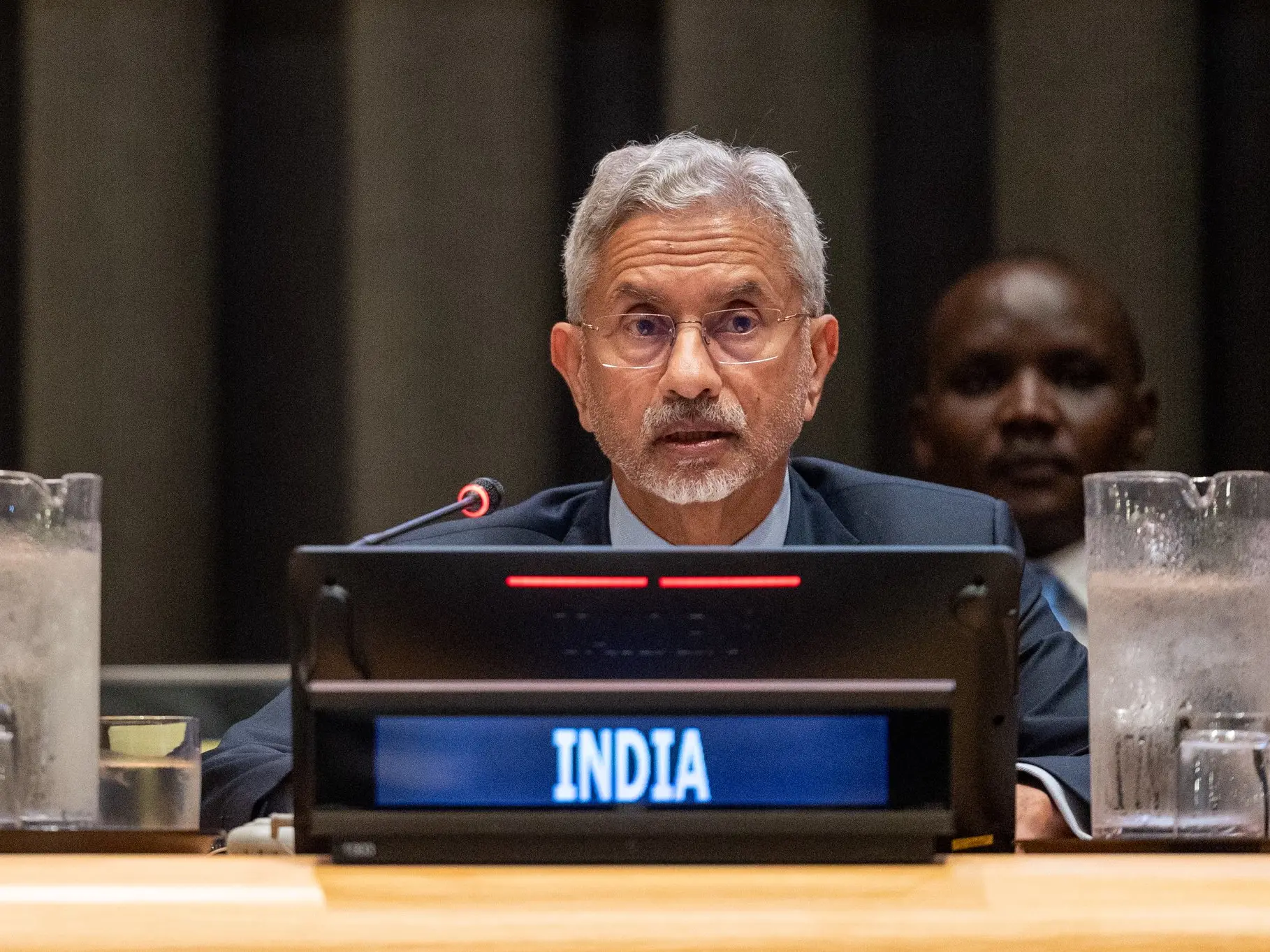
Jaishankar at UNGA: ‘Global order under stress’, India calls for reformed multilateralism Photograph: (X/DrSJaishankar)
External Affairs Minister S Jaishankar has warned that the global order is under growing stress, calling for stronger multilateralism and reforms to international institutions. He also flagged the “four F” crisis of fuel, food, fertiliser and finance.
Indian External Affairs Minister S Jaishankar, who is leading the Indian delegation at the ongoing United Nations General Assembly Summit in New York on Monday (Sep 21), issued a clarion call for multilateralism. Addressing the inaugural Partners for Multilateralism Summit on the sidelines of the 81st United Nations General Assembly, Jaishankar said the global order was under growing strain and called for a stronger, more effective multilateral system as geopolitical competition, conflicts and economic disruptions reshape international relations.
Global order under stress: Jaishankar
Jaishankar said the world was going through a period of major structural change, marked by heightened competition and geopolitical tensions. “We meet at a time when the global order is under stress,” Jaishankar said. He warned that if the current trends continued unchecked, they could undermine the principle of international cooperation.
“That is why it is so essential that multilateralism asserts itself strongly at this juncture,” he said. The summit brought together countries seeking to strengthen cooperation and support reform of international institutions.
Jaishankar flags ‘four F’ crisis
Trending Stories
)
)
)
)
)
)
)
&im=FitAndFill=(700,400))
)
)
)
)
)
)
)
)
)
)
)
)
)
)
)
)
)
)
)
)
)
)
)
)
)
)
)
)
)
)
)
The External Affairs Minister said the challenges facing the global community were not limited to diplomatic disagreements but directly affected peace, security and development. He listed climate action and climate justice, emerging technologies, development finance, counterterrorism, resilient supply chains and pandemic preparedness among the areas where international cooperation was needed.
“The four ‘F crisis’ of Fuel, food, fertiliser and finance cannot be left to itself,” Jaishankar said. He argued that countries should pursue practical measures even while broader disputes and conflicts remain unresolved.
“That objective can be realised through a range of efforts, through a combination of initiatives,” he said, adding that specific issues could be addressed even as countries continued working towards wider peace.
India pushes for ‘reformed multilateralism’
Jaishankar also called for new international frameworks to address emerging technologies and vulnerabilities in global supply chains.
“Where new capabilities and concerns arise, there is a very powerful case for frameworks and guardrails,” he said. “Where there is a threat of choke points, dominance and disruptions, de-risking and diversifying must be encouraged.”
He said international law, rules and norms must remain central to the functioning of the global system.
“Multilateralism will be best served when international law, rules and norms are scrupulously observed,” he said.
For India, he argued, strengthening multilateralism also requires reforming the institutions through which it operates. “For Multilateralism to forge ahead its advocacy and its practice must both be strengthened. Reformed Multilateralism is therefore essential,” Jaishankar said.
He called for more participative discussions and greater transparency in international decision-making, saying both were overdue and necessary to restore confidence in the UN system. “More participative deliberations and more transparent decision-making are both overdue,” he said.
Jaishankar meets Swiss, Nauru leaders
Jaishankar's UNGA schedule also included bilateral meetings. He met Swiss Foreign Minister Ignazio Cassis and discussed economic ties following the entry into force of the India-EFTA Trade and Economic Partnership Agreement.
“A warm meeting with Swiss FM @ignaziocassis #UNHighLevelWeek. Took stock of our strengthening economic ties with the entry into force of the India-EFTA Trade and Economic Partnership Agreement. Also discussed global issues and closer multilateral cooperation,” Jaishankar said in a post on X.
He separately met Nauru President David Adeang and highlighted India's development partnership with the Pacific island nation. Jaishankar said the two countries valued their bilateral and multilateral cooperation.
First V4-India foreign ministers’ meeting
Earlier, Jaishankar attended the first Visegrád Group, or V4, and India Foreign Ministers’ Meeting, involving Poland, Hungary, Slovakia and the Czech Republic.
The countries agreed to deepen cooperation across politics, trade, technology, defence, education and people-to-people exchanges. They also discussed technology and innovation, space, connectivity and mobility, along with international developments including the Ukraine conflict and the situation in the Gulf.
The sides agreed to hold annual foreign ministers' meetings and establish an annual business forum. Slovak Foreign Minister Juraj Blanár said the V4 countries supported India's permanent membership of the UN Security Council.

