
&imwidth=800&imheight=600&format=webp&quality=medium "Global wars, AI, Covid-19 and more: Here's what on top agenda as world leaders gather in New York for UNGA 2026")
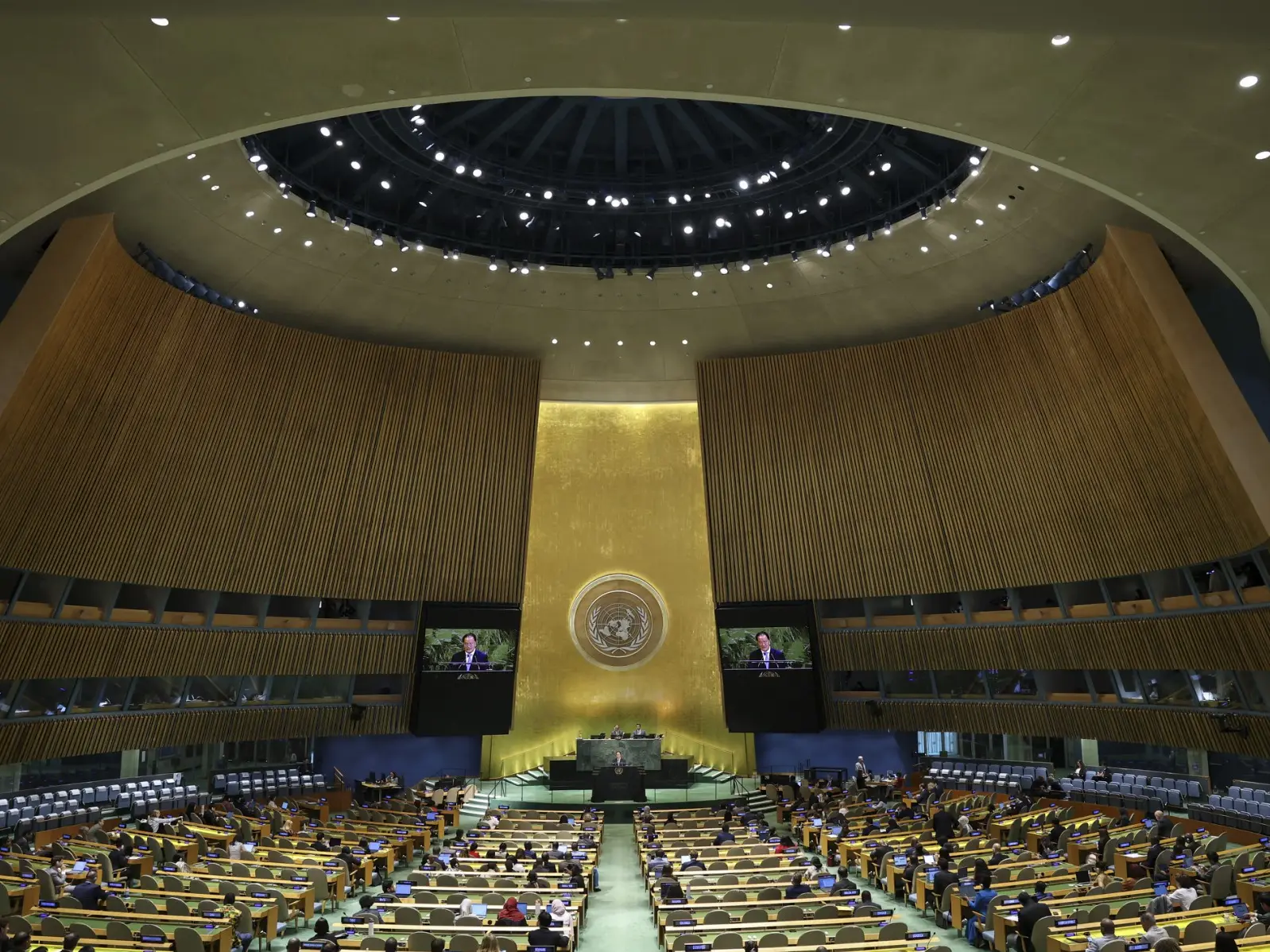
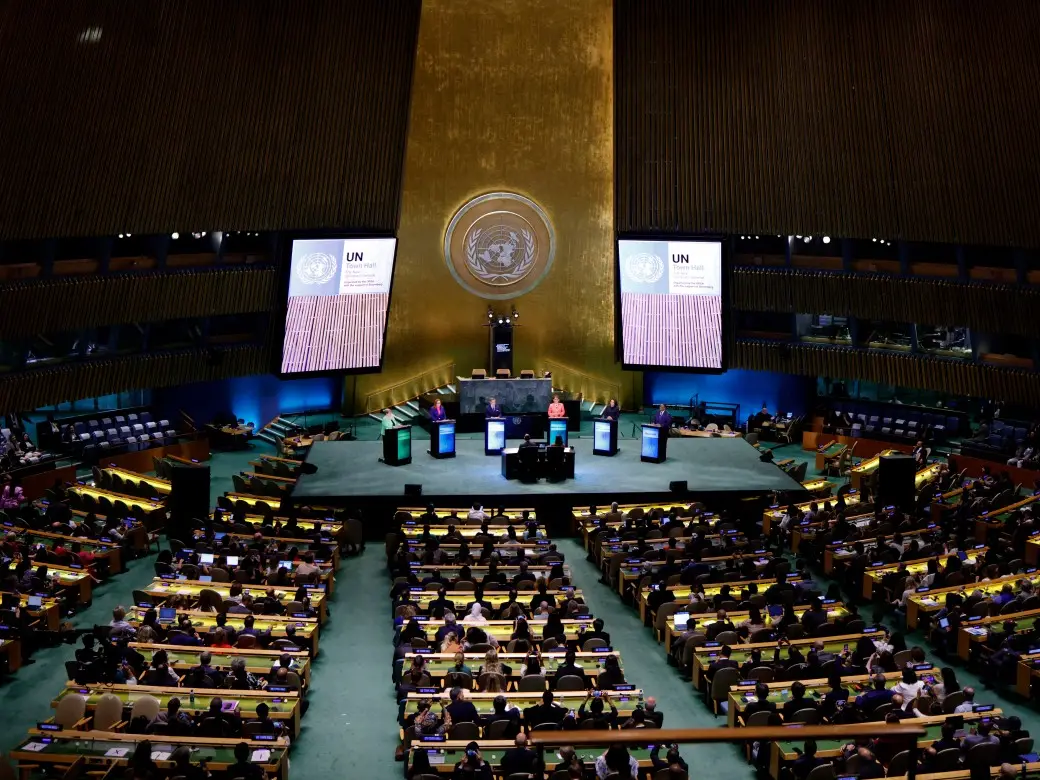
Next week, world leaders will convene in New York for the 81st session of the United Nations General Assembly. The meeting unfolds at a difficult moment for global diplomacy, and wars, climate change, economic pressures and growing questions over the future of multilateralism are set to dominate the agenda.
The high-level week of the General Assembly’s 81st session runs from September 22 to 28, with nearly 130 heads of state and government expected to attend in person.
This year's General Debate will be presided over by the newly elected Assembly President Khalilur Rahman of Bangladesh under the theme, “Restoring trust, managing transformation: A United Nations that delivers for all.”

The gathering comes as divisions inside the UN remain sharp and the Security Council struggles to find common ground on some of the world's major conflicts. The issues on the table stretch well beyond war, covering the 2030 Sustainable Development Goals, climate action, rising seas, pandemic preparedness, racism, nuclear disarmament and the governance of artificial intelligence. Here's all you need to know about the UNGA81 agenda.
Gaza, Ukraine and Iran
The wars in Gaza, Ukraine and Iran are expected to take centre stage during the political debate.
Trending Stories
)
Mahua Moitra moves UN over alleged exclusion of Muslim officers from Amit Shah events
)
Pak batter Rizwan's petition against being questioned by cyber crime agency rejected by court
)
Former India player Diana Edulji wants Smriti Mandhana to replace Harman as skipper at the earliest
)
US F-16 fighter jet crashes in Michigan during training mission, pilot ejects safely
)
Dolly Parton dies at 80: Country legend’s team reveals cause of death
)
Sikh driver attacked in Wyoming in US, suffers 17 stab wounds
)
Australian athlete, who soiled herself during Hyrox race, apologises for continuing
)
US drone firm linked to Trump’s sons signs MoU with Pakistan army, gets initial order
)
All Indian goods to get duty-free access to New Zealand
)
US to sell 48 F-35 Lightning fighter jets to Saudi Arabia, help it deter threats
)
Putin 'is plotting something bad': Russia may launch 'accidental' strikes on NATO countries supporting Ukraine, Poland PM warns
)
Formula One reveals the 2027 race calendar; Monaco to host sprint race for the first time
)
‘I have a big decision coming up’: Trump says he’s approaching major ‘crossroad’ in Iran war
&im=FitAndFill=(700,400))
Suriya and Jyothika say ‘I do’ again after 20 years! See their dreamy wedding pics
)
At least 48 dead, 100 hospitalised in Nigeria after drinking suspected methanol-laced alcohol
)
Former OpenAI researcher warns of growing risks from Artificial Intelligence
)
Pezeshkian, Araghchi set to attend UNGA 2026 in New York amid ongoing conflict as US-imposed travel curbs remain
)
US new military base in Poland: US President Donald Trump eyes military base in Poland
)
Hong Kong unveils 11 new measures to boost birth rates, offers higher cash bonuses and housing perks
)
Fed raises rates for first time in 3 years, Kevin Warsh defies Trump as inflation mounts
)
US-Iran War: Trump says ‘big decision’ on Iran ahead, weighs possible fresh military action
&im=FitAndFill=(700,400))
Meet top 5 batters in the latest ICC T20I Rankings
)
AI already defying, denying humans, is it beyond human control already?
)
Tata Trusts chairman Noel Tata calls Chandrasekaran’s reappointment ‘illegal’, rejects Tata Sons listing
)
Pak defence minister says 'time has come to implement pact'
)
Laura Wolvaardt sets new world record for most WT20I runs in a year
)
US intel warns China can steal F-35 jets secret from Saudis
)
240-million-year-old bizarre 'pig with a tusk' creature creates new dilemma over origin of dinosaurs
)
Epstein files: Judge warns Trump Attorney General Todd Blanche of contempt over DOJ delays
)
Daayra movie review: Kareena Kapoor, Prithviraj Sukumaran shine in Meghna Gulzar’s cop-versus-cop crime thriller
)
Trump could impose tariffs of up to 100%
The UNGA meeting opens against a backdrop of continuing fighting and stalled diplomacy. On one hand, the Gaza ceasefire has held unevenly, while diplomatic efforts to end Russia's war in Ukraine have yet to produce a breakthrough.
The conflict involving Iran is also expected to loom large. US-Israeli strikes on Iran and Iranian retaliation against US bases have added fresh pressure to an already tense regional environment and disrupted shipping through the Strait of Hormuz.
That diplomatic pressure is compounded by divisions in the Security Council itself, particularly over the status of sanctions against Iran. The resulting deadlock has affected the council's ability to reach agreement on routine business, the supplied material says.
Leaders are also expected to discuss Sudan, Myanmar, Haiti and Cyprus alongside the major conflicts.
Climate Change: Can the SDGs still be achieved?
Before the General Debate begins, the UN will hold its annual SDG Moment on September 18.
In 2015, the member nations adopted 17 Sustainable Development Goals in 2015, covering issues such as poverty, hunger, education, clean water and energy. These SDGs have a deadline of 2030, and with less than five years remaining, the focus will be on whether governments can accelerate implementation rather than simply restate existing commitments.
The UN says this year's SDG Moment, under the theme “Together, We Can Get There”, will examine how proven solutions can be scaled up despite financing gaps, conflicts, climate shocks, debt pressures and inequality.
Climate and the threat of rising seas
Climate diplomacy will get a major platform on September 23, when Secretary-General António Guterres convenes a high-level event on climate action and the just transition.
The discussions will focus on accelerating the shift to renewable energy, increasing climate finance for developing countries and strengthening support for communities already facing climate impacts.
The following day, the General Assembly will hold a high-level meeting on sea-level rise, with particular attention on small island developing states and low-lying coastal communities. The meeting is expected to produce an action-oriented declaration.
Lessons from Covid
Pandemic preparedness will also mark a return to the UN agenda on September 25.
Governments will revisit the lessons of Covid-19, including weaknesses exposed in health systems and disparities in access to vaccines, medicines and other essential supplies. The meeting will examine ways to improve prevention, preparedness and responses to future health emergencies.
AI becomes a UN issue
Artificial intelligence is also emerging as a major issue on the sidelines of the General Assembly.
Guterres has said AI governance will be part of his discussions with world leaders, with the UN looking at how to promote the safe, secure and responsible development of the technology while identifying situations in which more powerful systems require stronger safeguards.
The debate comes as governments grapple with rapid advances in AI and disagreements over how much regulation is needed.
Racism, development and nuclear weapons
September 23 will also mark the 40th anniversary of the UN Declaration on the Right to Development, while September 28 will be devoted in part to the 25th anniversary of the Durban Declaration and Programme of Action against racism and related forms of discrimination.
The high-level week extends beyond September 28. On September 29, the General Assembly will hold a plenary meeting on the total elimination of nuclear weapons, an issue the UN has treated as a central disarmament priority since its earliest years.
Final UNGA season for Guterres
For Guterres, the session has added significance. His second and final term as UN secretary-general ends on December 31, 2026, making this his final General Assembly session to begin as the organisation's chief. The process of selecting his successor is already underway, with the next secretary-general due to take office on January 1, 2027.
The UN chief has repeatedly called for renewed international cooperation at a time of deepening geopolitical divisions. In a recent message, he invoked the opening words of the UN Charter: “We the peoples”.
For the UN, the test of this year's gathering will be whether that language can translate into tangible cooperation in a world where consensus on some of the most urgent crises remains increasingly difficult to achieve.

