J&K Govt strengthens weather surveillance, disaster response ahead of Amarnath Yatra

&imwidth=600&imheight=450&format=webp&quality=medium "J&K Govt strengthens weather surveillance, disaster response ahead of Amarnath Yatra")
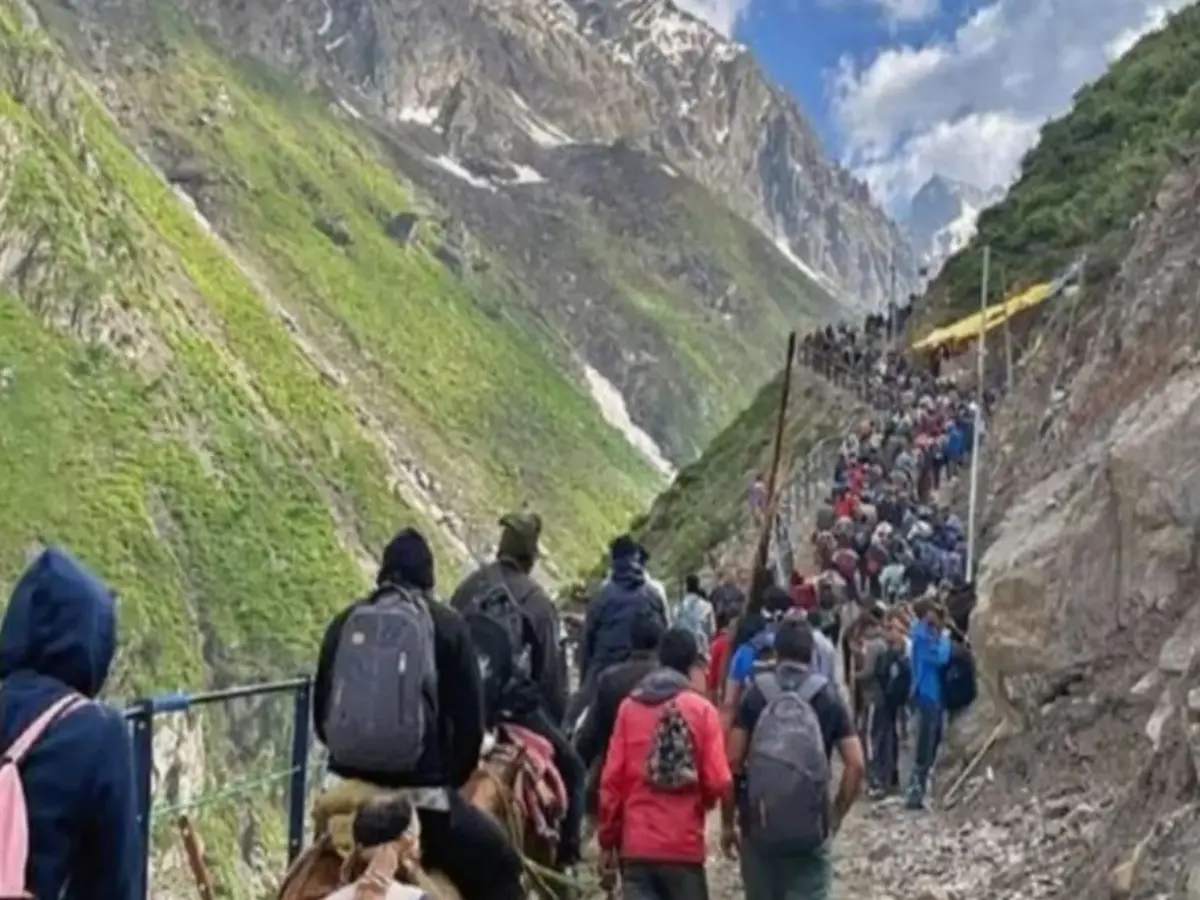
Representative Image Photograph: (ANI)
The move comes in the wake of the devastating flash floods near the Amarnath Holy Cave in 2022, which highlighted the need for a robust early warning system.
The Government of Jammu and Kashmir is working round the clock to ensure the smooth and successful conduct of the annual Amarnath Yatra, which is scheduled to begin on July 3. The safety and security of the pilgrims remain the highest priority for both the government and the security agencies.
This year, the government has operationalised Doppler Weather Radars (DWRs) at Srinagar, Banihal Top, Jammu, and Leh to provide continuous, real-time monitoring of weather conditions along both routes of the Amarnath Yatra. These advanced radar systems enable meteorologists to closely track weather developments and issue timely alerts whenever necessary.
Helpful in detecting highly localised severe weather events
The move comes in the wake of the devastating flash floods near the Amarnath Holy Cave in 2022, which highlighted the need for a robust early warning system. Since then, strengthening weather monitoring infrastructure has been a key priority for the administration.
The Doppler Weather Radar plays a crucial role in detecting highly localised severe weather events such as cloudbursts, heavy rainfall, sudden thunderstorms, hailstorms, and strong gusty winds. It provides continuous surveillance of weather conditions along the Jammu-Srinagar National Highway and both pilgrimage routes, from the base camps to the Holy Cave, helping authorities respond swiftly to any adverse weather situation and ensuring the safety of pilgrims.
"The IMD's Doppler radars at Banihal and Srinagar form the backbone of our weather monitoring and advisory system. It is an integrated mechanism that generates weather alerts and SMS notifications, which are shared with all stakeholders, including camp commanders deployed along the Yatra route and our Integrated Command and Control Centre in Srinagar. Display boards have been installed at every base camp, including Baltal and Nunwan, to provide real-time weather updates. Based on this comprehensive information, we take informed decisions on whether pilgrims can safely proceed with the Yatra, and all weather advisories are communicated promptly to the concerned authorities and pilgrims." said Anshul Garg, Divisional Commissioner Kashmir.
Trending Stories
)
)
)
)
)
)
)
)
&im=FitAndFill=(700,400))
)
)
)
)
)
)
)
)
)
)
)
)
)
)
)
)
)
)
)
)
)
)
)
)
&im=FitAndFill=(700,400))
)
Specialised Mountain Rescue teams deployed
The government has deployed 45 specialised Mountain Rescue Teams at 25 strategic locations along the Amarnath Yatra route, including the Holy Cave area.These specialised teams have been equipped with upgraded rescue gear and provided advanced training to enhance their operational capabilities. The objective is to ensure a swift and effective response in the event of natural disasters, accidents, or any other emergency during the annual pilgrimage.The teams will be stationed at vulnerable and landslide-prone locations along both the Baltal and Pahalgam routes of the Yatra.
''The Meteorological Department keeps us continuously updated with real-time weather inputs. Based on those forecasts, we plan, prepare, and implement our response measures accordingly. The National Disaster Management Authority (NDMA) has identified and mapped all vulnerable locations along the Yatra route. Teams from the NDRF, SDRF, Jammu and Kashmir Police, and paramilitary forces have been strategically deployed at these sensitive points to ensure a swift response and provide immediate assistance whenever any emergency arises." said V K Birdi, IG Kashmir Police.
Alongside the multi-layered security grid established for the Yatra, disaster management and rescue teams will remain deployed throughout the pilgrimage route to ensure the safety, security, and well-being of devotees undertaking the annual pilgrimage.
