
&imwidth=800&imheight=600&format=webp&quality=medium "ISRO performed 18 manoeuvres to avert collisions of its 53 satellites")
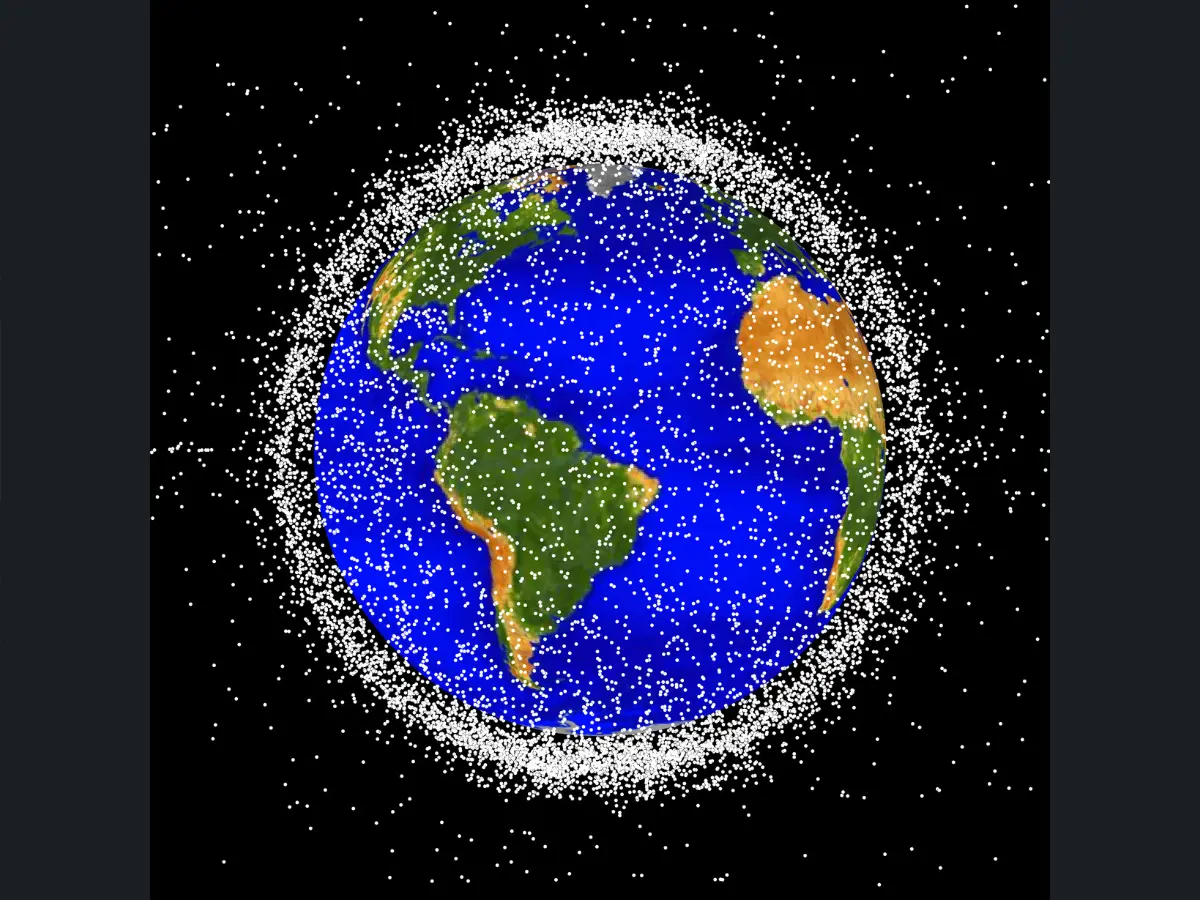
The Government-run Indian space agency ISRO has a total of 53 operational satellites circling the Earth. This includes 22 satellites in Low Earth Orbit (about 500-1000kms above the earth) and 31 satellites in Geosynchronous Earth Orbit(about 36,000kms above the Earth, ISRO has revealed. Typically, the satellites placed in Low Earth orbit are meant for Earth-imaging or experiments, while the satellites placed in Geosynchronous orbit are meant for weather observation, communication, navigation.
ISRO'sIndian Space Situational Awareness Report (ISSAR) for 2025 mentions that there is a growing congestion in Low Earth Orbit, owing to the exponential growth in the number of satellites being placed there and the mounting threat of space debris. The report mentions that the Combined Space Operations Center (CSpOC) of America's USSPACECOM had issued 1,50,000 close approach alerts, which warn operators when satellites and debris pass within a dangerously close distance. Such constant monitoring of space objects is vital for avoiding collisions that could create more debris, which could heighten the risk for safe operations in space. Space debris and satellites in Low earth orbit travel at speeds of 28,000kmph, which means even the smallest pieces of debris colliding with a large object can generate more debris.

Based on these alerts, ISRO performed a total of 18 collision avoidance manoeuvres: 4 for satellites placed in Geosynchronous Earth Orbit, while 14 collision avoidance manoeuvres were performed for satellites in Low Earth orbit. The $1.2bn NASA-ISRO Synthetic Aperture Radar(NISAR) satellite was also among those that had to perform a collission avoidance manoeuvre, ISRO said.
As the name suggests, a collision avoidance manoeuvre is a planned trajectory adjustment, where the satellite fires its thrusters to adjust its orbit. Such manoeuvres are done when the probability of collision with debris or another satellite exceeds a safe threshold.
Trending Stories
&im=FitAndFill=(700,400))
National Handloom Day 2026: From Alia Bhatt to Samantha Ruth Prabhu; Actresses who celebrated India's textile heritage as brides
)
The Royals enter the Doctor Who universe: King Charles and Queen Camilla beam into Commonwealth Games in TARDIS
)
Unitree Robotics targets $9 billion valuation in landmark IPO backed by DeepSeek and Tencent
)
India names 27 sites in Arunachal Pradesh
)
Bharat Bhhagya Viddhaata OTT: When will Kangana Ranaut's film stream online?
&im=FitAndFill=(700,400))
How many soldiers operate one S-400 battery?
)
Shakib Al Hasan ready to return to Bangladesh—under one condition
)
‘Fake news’: MEA rejects report claiming India sought defence pact with Israel after Pakistan, Saudi Arabia, Turkey deal
)
Rockstar to unveil GTA 6 extended look ahead of November launch
)
Russia forms Ukrainian Volunteer Spetsnaz Brigade to fight Ukraine
)
Drug-resistant fungus that hides in hair and enters bloodstream reported in 23 US states
)
Technology transfer deal boosts India's defence manufacturing ambitions
)
Border row erupts in Europe after Ceuta crossings, Spain imposes border controls on Italy
)
Morale plummets on USS Abraham Lincoln: Are US sailors reaching a breaking point? | GRAVITAS
)
'Security can't be bought with Pakistan, Turkey deal': Iran tells Saudi Arabia
)
Baba Vanga's 2026 prophecy: 2 predictions 'already came true', 3 terrifying ones remain. Details inside
)
Colombia’s new president Abelardo de la Espriella vows to ‘defeat narco-terrorists’, signals hardline shift
&im=FitAndFill=(700,400))
New Friday OTT releases (August 7, 2026): Operation Safed Sagar, Vadhandhi, Main Vaapis Aaunga- 6 movies and TV shows on Netflix, Prime Video and more
)
Squadron Leader Bhawana Kanth scripts history as Indian Air Force gets its first woman ‘Top Gun’ pilot
)
RSS says Gen Z protests reflect genuine distress
)
Trump says Iranian school bombing photos could be AI-generated - 'I don’t think...'
)
IAF officer held for sharing sensitive information in 'honey trap' case, booked under Official Secrets Act
)
Stray Kids under scrutiny? Fans react to Grammy submission silence after BTS boycott
&im=FitAndFill=(700,400))
Why the Su-30MKI doesn't need external fuel tanks to fly vast distances
)
Jugal Hansraj reunites with Shekhar Kapur after 40 years for Masoom: The Next Generation
)
New speed limits, automatic challans: Big traffic change coming to Delhi-Meerut Expressway. All you need to know
)
India officially names 27 places in Arunachal to counter China's renaming claims
)
Trump calls White House ballroom ruling a 'national disgrace' as court says Congress approval needed
)
US sanctions Iran’s crypto network after Strait of Hormuz attacks, offers $15m bounty for intel on IRGC finance
&im=FitAndFill=(700,400))
Why the Su-30MKI is one of the heaviest fighters ever built
)
Uttarakhand young innovator builds India's own flying vehicle, conducts first test flight: WATCH
)
Chilling video shows students take cover as teen opens fire at Thai school
)
Reese Witherspoon's father hospitalised after poolside incident in Nashville: Report
Satellite operators also routinely perform orbit maintenance manoeuvres to counter the minor changes in a satellite's orbital path caused by natural factors such as atmospheric drag, gravity, among others. Wherever feasible, collision avoidance requirements were met by adjusting orbit maintenance manoeuvres to avoid exclusive collision avoidance manoeuvres, ISRO said. Manoeuvring satellites in space is a task that consumes the onboard fuel of the satellite. Given that satellites depend on the limited quantity of fuel in their onboard tanks, every manoeuvre proves costly and reduces the life of the satellite. This is because, satellites go defunct when they deplete their onboard fuel and lose manoeuvrability.
ISRO's report noted that the projected deployment of multiple large constellations indicates a scenario where active satellites may outnumber space debris within the current decade, and a consequent increase in the burden of space traffic coordination.
"Out of the 10,749 Starlink satellites(belonging to Elon Musk's firm), 9396 satellites were still in orbit and 1,353 satellites re-entered the Earth’s atmosphere by the end of 2025. In addition, constellations like HulianwangDigui, Kuiper, USA-NRO (National Reconnaissance Office) launched 136, 180, and 99 satellites in 2025, respectively," it was added.
