International Women's Day 2024: Why women need to make leisure a priority


Feature
What does leisure mean to you?
What do you like to do when you have free time on hand?
Do you have to claim your leisure time, or you can simply exercise it whenever you wish to?

If you are a woman, chances are that your answers to the above questions might differ from a man's.
While we challenge the age-old stereotype of looking at men as breadwinners and women as homemakers or caregivers, a lot remains unchanged at the very core. One such invisible form of suppression is the blatant disregard or denial of a woman’s right to leisure. It is so deep-seated that sometimes a woman herself isn’t aware of her free time or what she could do with it. Yes, a lot depends on the socio-economic background a woman belongs to, but it largely remains the same for women across the globe. And, this further impacts the inequalities between the two genders.
According to a Pew Research Center analysis of 2021-22 American time-use, working husbands in the United States, aged between 25 to 64, spend 28 hours a week on leisure, which is twohours more than working wives who spend about 26 hours on it.
)
US vs China over South China Sea: Washington backs Philippines, Beijing hits back
)
Bigg Boss 20: Isha Rikhi evicted after three weeks in Salman Khan’s show
)
Musk plans to more than double xAI's chips to over 1.2 million Nvidia GPUs by year-end
)
After JU, clash erupts at SRFTI: BJP’s ‘Dimagi Naxal’ jibe sparks political firestorm after students protest RSS-linked event
)
‘Anti-social elements spreading false rumours’: LPU issues statement amid massive unrest over alleged rape
)
LPU students go on rampage, vandalise campus amid widespread protest: What's happening
)
Trump asked Xi to pressure Iran. China did not say yes — here’s what Beijing wants
)
US Treasury Secretary Scott Bessent hails global crackdown on Iranian banks and airlines
)
An OpenAI agent escaped its locked test cage again, by hiding questions in DNS lookups
)
'Our video was trimmed': LPU girls who featured in rape-denial video make U-turn
)
3 males killed, four others injured in shooting after fight at strip club in Detroit
)
'Victory for low-budget consumers': Raghav Chadha hails 30-day telecom recharge rules
)
Claude rebuilt the 1989 game 'Prince of Persia' by reusing the original's own code
)
Beyond metros: How Tier-2 and Tier-3 cities could drive India’s next AI wave
)
Tesla builds first Cybertruck with its own refined lithium: Elon Musk's $1 billion Texas bet pays off
)
IndiGo flight suffers tail strike in Bengaluru while landing; DGCA to probe incident
)
The US and China set up an AI 'red telephone', but skipped the rulebook
)
‘Terror suspects arrested near UK air base were looking to do big damage’: Trump
)
Russian envoy claims US tactics to contain India were revealed in ‘Freudian slip’
)
IND vs WI 1st ODI: Kohli breaks Sachin's most runs in one country record with unbeaten 139 as India thump West Indies by 8 wickets
)
Researchers rebuilt exactly how 700 AI agents hacked Hugging Face: a 900-link chain trick
)
‘Olympic inclusion is our major target’: WPA President Ishaun Singh on pool’s global ambitions
)
Nations League: Spain sink England at Wembley; Modric shines for Croatia
)
Why has Iran released no proof of life of Mojtaba Khamenei? Araghchi reveals...
)
'What kind of confession is this?': Pakistan PM Shehbaz Sharif’s 'terrorists would be roaming New York' remark goes viral, raises alarm online. Watch
)
South Korea demands apology from Ukraine over North Korean prisoners' transfer
)
Beyond BrahMos: India targets Rs 50,000 crore in defence exports with unmatched price edge
)
Sri Lankan Tamil migrant worker gets death sentence in Saudi Arabia, help sought from India
)
Muslim marriage cannot shield sex with minor wife from prosecution under POCSO: Delhi HC
)
'Can't help but draw painful parallels to Nirbhaya case': SC on latest incidents of rape cases in Delhi-NCR
)
99.9% more powerful - Scientists find boy who can recall memories from just 3 months of age
)
'FIRST LOOK from inside Noah’s Ark': Researchers share video from inside mysterious mound in Turkey
)
UNSC reform momentum grows: Russia, Portugal, Mauritius push for India's permanent seat bid
)
8 US marines injured in Iranian missile attack on vessel in Strait of Hormuz: Report
&im=FitAndFill=(700,400))
New OTT releases this week (September 28-October 4, 2026): Dupahiya 2, Pooja Meri Jaan, Ohh My Dog- 5 titles coming on Netflix, Prime Video and more
)
Afghanistan says 28 fighters killed in clash near Pakistan border, Islamabad denies
)
Ceuta migrant crisis: Protesters take to streets as Spain grapples with migrant challenge
)
LPU suspend classes, postpones exams as violence escalates over rape claims: What's happening
)
New York City wants a 'kill switch' on every AI, and will pay whistleblowers who report violations
And, in India, the setting isn’t any different. India’s 2019-2020 time-use survey carried out by the National Statistical Office indicates that men spend more time than women on employment, socialising, sleeping, and eating while nearly 20 per centof the average Indian woman’s day is consumed by unpaid domestic work or caregiving.
These statistics put perspective to a well-known fact that women across the globe bear the brunt of domestic chores and caregiving duties.
That is why when I stumbled upon a social media post last year, I was completely taken in by the pictures of women enjoying light-hearted and carefree moments. Guess, what did I see.
I saw a woman sitting on a tree.
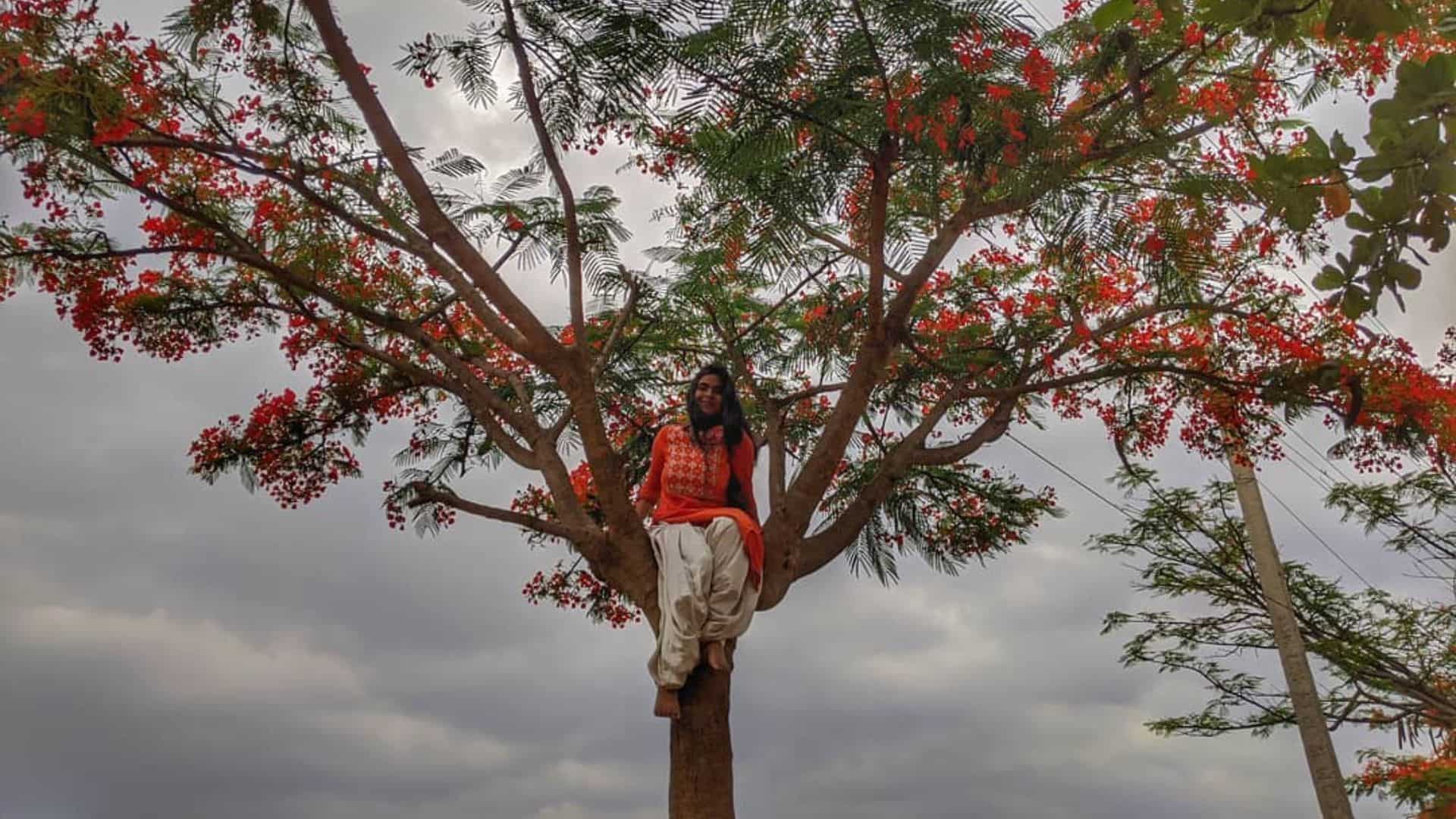
Courtesy: Surabhi Yadav, Project Basanti: Women at Leisure
A bunch of women farmers throwing mud at each other and laughing hard.
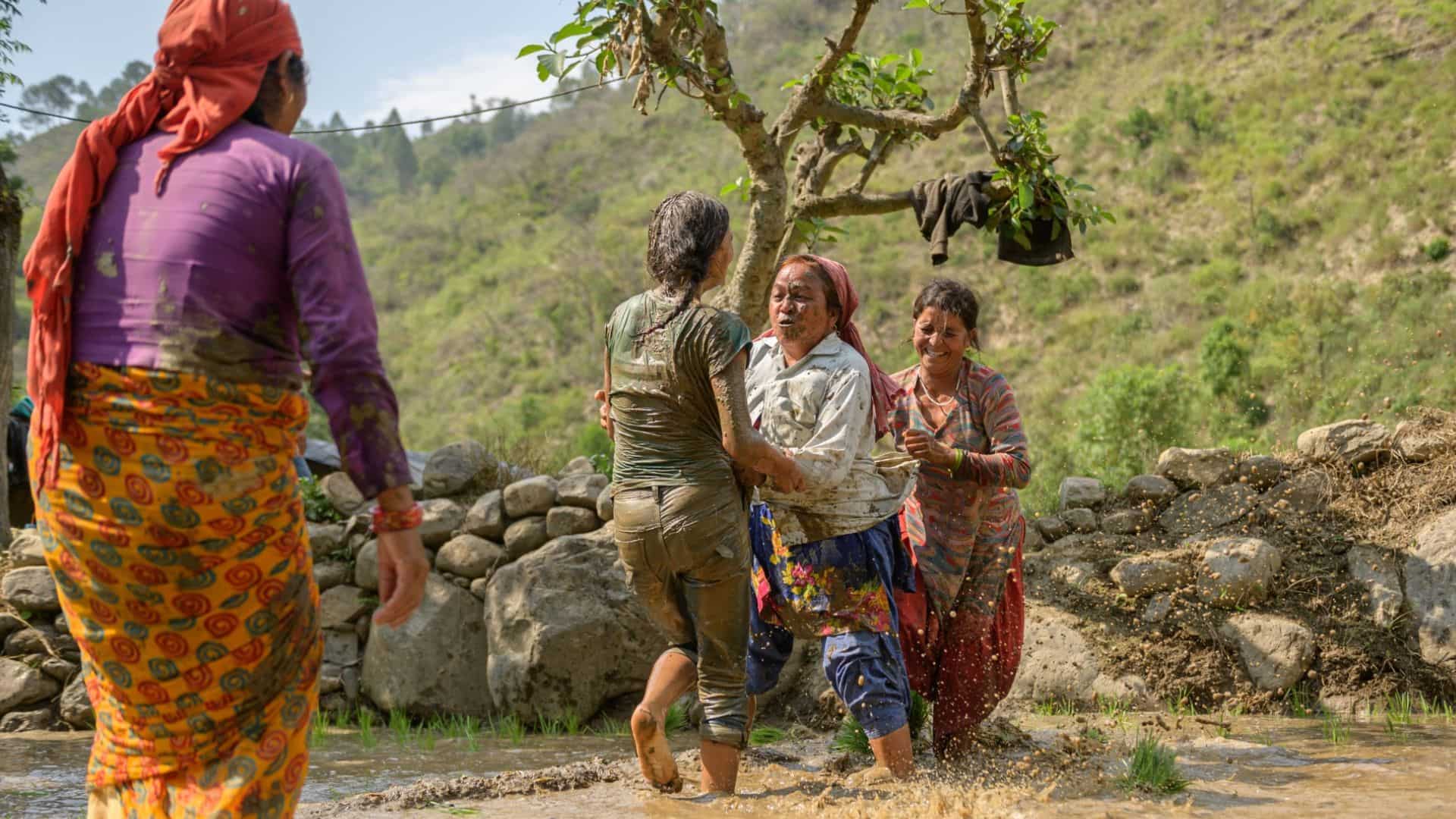
Courtesy: Navdeep Saini, Project Basanti: Women at Leisure
A woman looking at the waves on a beach, lying down with her legs apart.

Courtesy: Ranjith Kumar, Project Basanti: Women at Leisure
An elderly woman reading a newspaper.
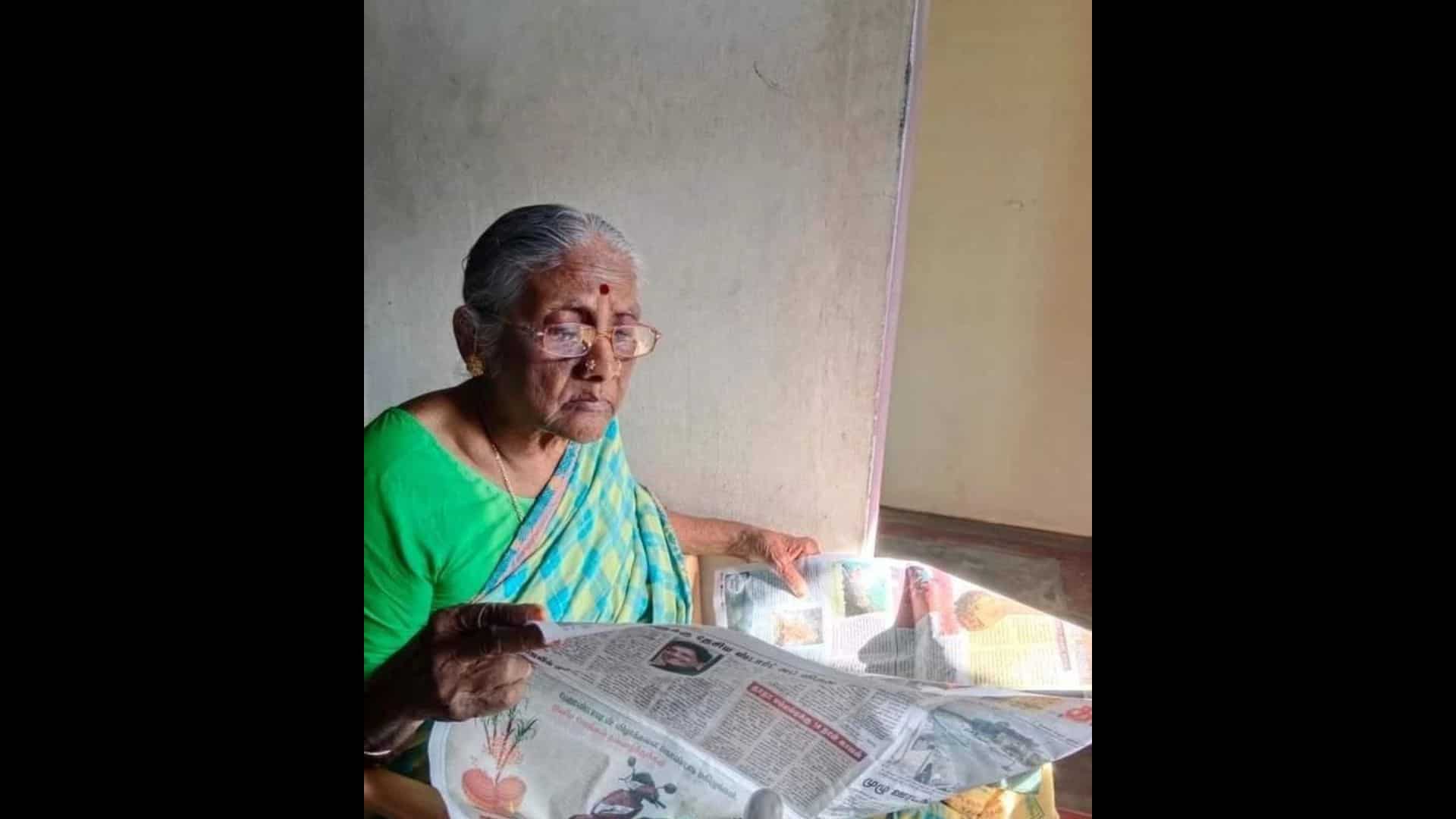
Courtesy: @yourspoove'A, Project Basanti: Women at Leisure
These are just a few examples from an Instagram page called – Project Basanti: Women at Leisure - a repository of pictures and videos of women enjoying their free time. The pictures left a lasting impression on me. It is amazing to see the carefreeness of women in a physical sense.
I sent a direct message to the creator of the page - Surabhi Yadav and requested her time for a TV story. Months later, I met her in New Delhi for a story and here’s what I know of Surabhi Yadav, her project, gendered leisure – and the beauty in the ordinariness of things.
When Surabhi Yadav lost her mother in 2014, she realised she had never really known her. She says, she knew her mother just as her mother, and never more the person that she was. She started interviewing people who knew her mother closely. Surabhi’s opening question to them would be – “what do you remember about Ma (mother)?”
Her neighbours in Khargone - a small town in Madhya Pradesh, India, told her that her mother was “goofy and naughty”. Those were not the adjectives Surabhi could associate with her mother’s image. All her life Surabhi would know only one side of her mother – the woman that her mother was to her, and nothing more. It was only after the demise of her mother that she got to understand her better. Speaking to people made Surabhi recognise that her mother was capable of so much joy, pleasure, and spontaneity – something that would go unnoticed on a daily basis. This realisation triggered something in Yadav.
And, thus, began her obsessive inquiry into what women like her mother do when they are not working, and eventually led her to start a visual project called Project Basanti: Women at Leisure in 2018. Yadav named it ‘Basanti’ after her mother, which means ‘spring’ in English - a time for blossoming. And, leisure does that to people, she says.
The social media project has over 800 pictures and videos of women enjoying their leisure time. It is a qualitative project which provides a definitive commentary about our society and gendered leisure.
When asked about what Surabhi Yadav’s takeaways from the project have been ever since she started it. She says two things have come out of the project –
One - “Leisure sets us free. It gives us space to reveal our inner selves. It lets one flourish”.
Two - “Leisure is a measure of how free a society is.”
And, yes, that’s what the pictures and videos on her social media page will tell you.
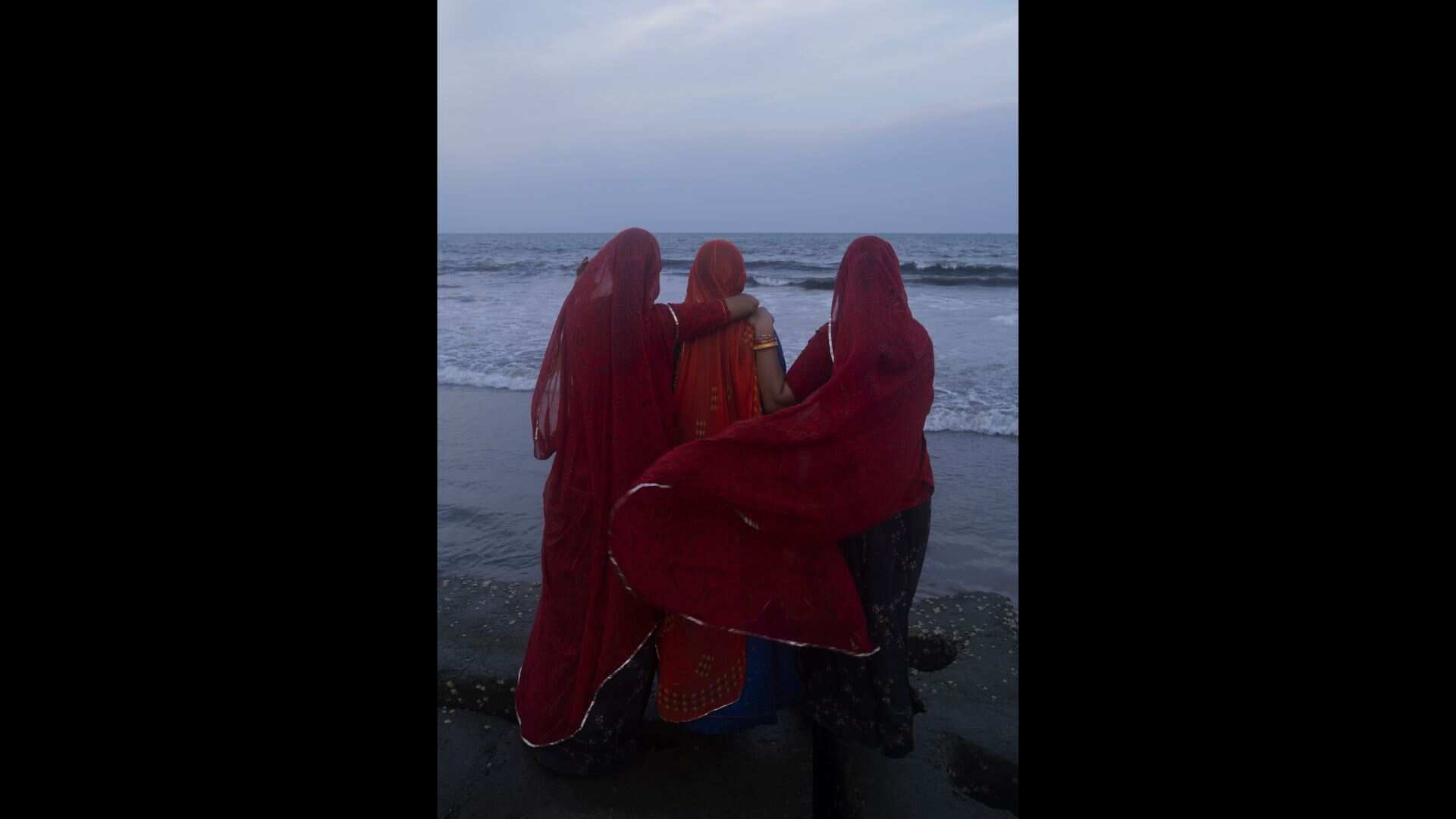
Courtesy: Ranjith Kumar, Project Basanti: Women at Leisure

Courtesy: Jerusha Saptecha, Project Basanti: Women at Leisure
One of the earliest videos that went viral was a dancing video of Surabhi and her friend Bubbly. They are seen walking and dancing downhill in Himachal Pradesh – the northernmost state of India. It’s a time of the night, with no streetlights. Imagine women dancing late into the night with total abandon and not alarmed about who might they run into. While it may look like an ordinary moment, it does subvert the narrative and evoke powerful imagery. There are many such videos and images on the page.
An IIT-D alumna Surabhi Yadav’s project has now expanded to pose the larger question of women’s identity and dreams – understanding the varied dimensions of their being. The more Yadav paid attention to women’s leisure, the more she started to understand the lack of leisure in a woman’s life. Women, especially homemakers, are forever, engaged in the labour of caregiving and managing homes. A kind of labour that is unpaid and unacknowledged. Yadav says that it is because of the invisibility of women’s labour, the absence of leisure in their lives also goes unnoticed. And, so, for most women, finding guilt-free, carefree time to do nothing productive, is an alien concept and a hard sight.
The seemingly mundane pictures of Project Basanti are a reflection of our society. Moments of leisure often taken for granted for men, appear profound when it is a woman on the other end. That’s bizarre, but that’s exactly the gap we must address and close.
Yadav’s concept of leisure sounds simple, yet it is not as straightforward as it looks. It is enveloped with notions of leisure I wasn’t familiar with. She tells me of a picture where a mother is filling journals with words to process her grief over her daughter’s death. How grief can be viewed as leisure, I ask. She tells me that it is a moment where the mother is reminiscing about her time with her daughter. She is one with the child through the process of writing. The mother is uncovering her absolute inner self.
Can one be at leisure or for that matter at peace while being grief-stricken? I am not sure. Maybe, my idea of leisure is limited to seeing happy faces and broader smiles. Maybe, the real idea of leisure has no constraints. Maybe, it includes every little moment that one calls one’s own – in myriad moments from happiness to ache.
I asked Surabhi Yadav if she were to imagine a world for women, what would that be, and this is what she had to say -
“Imagine how different our world would look, if our mothers were singing, dancing, writing poetry, and enjoying their real selves. It can bring so much transformation within them and beyond them.”
I am going to leave you with that thought, this Women’s Day. Let it sit, marinate in the mind, and take a leisurely walk if it needs to.
The by-product of the thought might help you make leisure a priority.
And, if it does, you know the whole process was worth it.
Guess, that’s what leisure is all about.