Indian stock market loses 8th straight week, wiped out ₹9.5 lakh crore in a day

&imwidth=600&imheight=450&format=webp&quality=medium "Indian stock market loses 8th straight week, wiped out ₹9.5 lakh crore in a day")
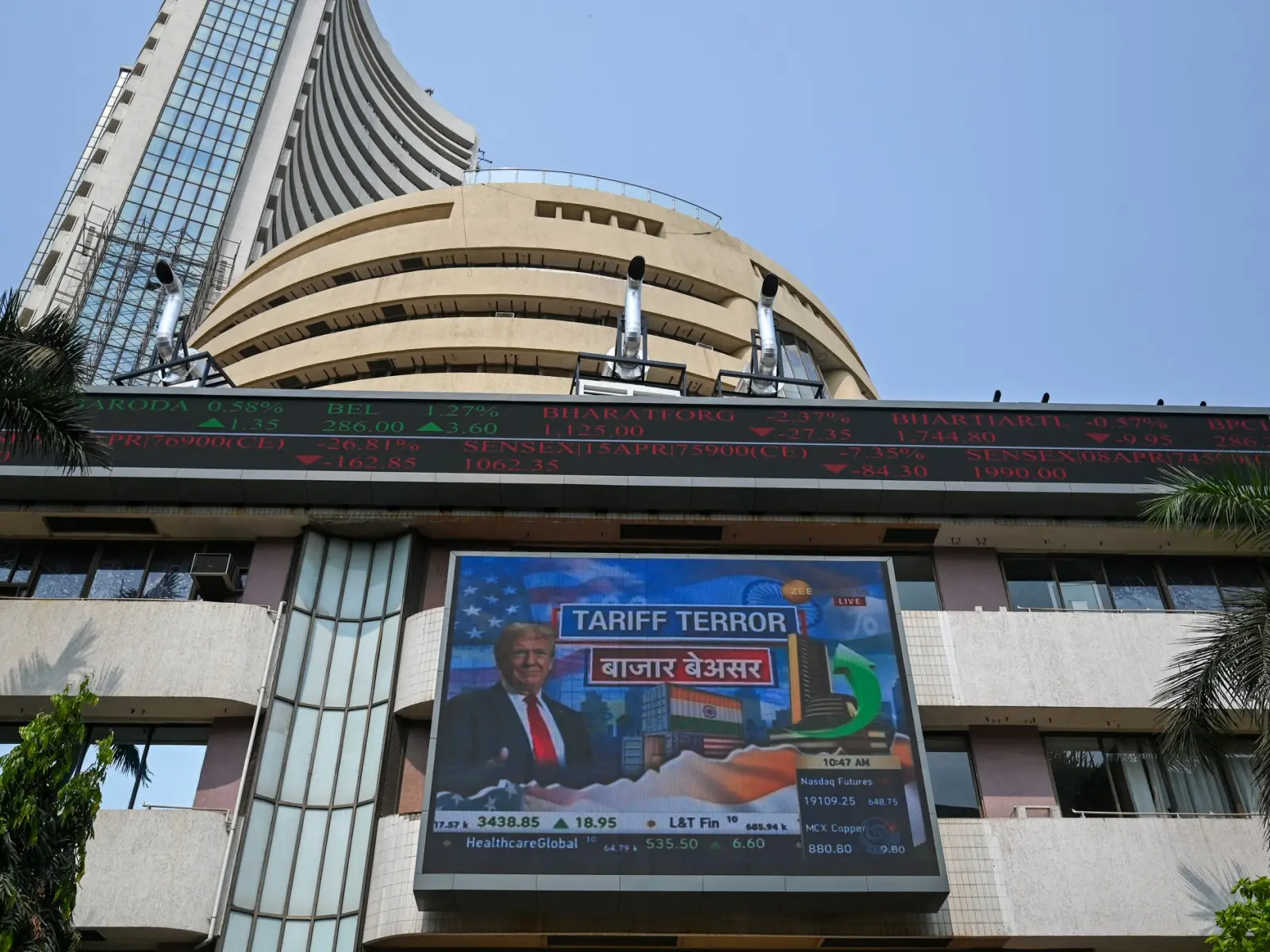
Bombay Stock Exchange Photograph: (AFP)
Indian stocks suffered another sharp sell-off as Sensex and Nifty extended losses, with FPI outflows, rupee weakness and high US yields weighing on markets.
Indian stock market crashed again on Thursday, October 1; the single-day sell-off wiped out roughly ₹9.5 lakh crore in market cap. BSE Sensex shed 570.59 points or 0.79%. During the day, it plunged by as much as 1,187.41 points to hit a fresh 52-week low of 71,292.88. The NSE Nifty 50 dropped 198.50 points or 0.88% to settle at 22,421.95, recovering partially from an intraday low of 22,217.30.
The biggest losers were the Nifty Auto Index, falling 3.46%; the FMCG index and the Nifty Metal fell 2.35%; Nifty Consumer Durables declined 1.91%; and Nifty Oil & Gas dropped 1.32%. The biggest red flags were Auto and Consumer Durables, which fell by 5.9% and 6.2%, respectively, this week as weak monsoon data added to demand concerns.
Eight consecutive weeks of loss
Over the week, the Sensex declined 2.6%, while the Nifty fell more than 3%, wiping out more than ₹25 lakh crore. The markets will remain closed on Friday, October 2, on account of Gandhi Jayanti. This marks the eighth consecutive week of losses, the worst streak since 2001. It kicked off with a crash on Monday, losing ₹7.4 lakh crore, and concluded with another crash, losing ₹9.5 lakh crore.
The current multi-week meltdown is the third-largest decline in the history of the Indian stock market. The longest streak was 10 weeks in 1993, the aftermath of the bubble burst in the Harshad Mehta scam; the BSE Sensex crashed by over 40% to 50%, a drop from the previous year's peak wiping out roughly ₹1lakh crore in market capitalisation.
Also Read: SIR: BLOs pressured to sign Form-7 applications seeking Muslim voter deletions in Karnataka
Trending Stories
)
)
)
)
)
)
)
)
)
)
)
)
)
)
)
)
)
)
)
)
)
)
)
)
)
)
)
)
)
)
)
)
)
)
&im=FitAndFill=(700,400))
)
)
)
)
Why is the market losing persistently?
Unlike the previous historic streaks, this is not a scam or an asset bubble. It is rather a case of external shock as well as a combination of poor macroeconomic fundamentals. The headline GDP growth number is failing to wow the outgoing foreign investors.
Foreign Portfolio Investors pulled over ₹35,861 crore out of Indian equities in September 2026 alone, driving total net outflows to over ₹129,187 crore for the first half of the ongoing financial year. The Indian Rupee has fallen to 96.31/$ by 37 paise, or roughly 0.5%. It is more and more inching closer to its historic low of ₹96.79 per dollar earlier in May 2026.
The persistent driver has been US bond yields; the 10-year Treasury yield breached a level last seen in April 2002, before easing more than 4 basis points to 5.251%, while the 30-year Treasury bond also hit its highest in 24 years before pulling back to 5.61%. US stocks are also at record highs, and bonds are at multi-decade highs, so FPIs are flowing out of emerging economies.
The Foreign Portfolio Investor outflows and the Indian Rupee are compounding each other's pain. FPI outflows mean they convert their rupee sale proceeds into US dollars, which in turn puts pressure on the rupee, and it depreciates. Again, loss in rupee value creates capital loss and pushes import costs higher. So it's a classic reflexivity feedback loop.
It is easier to point to the ongoing oil shock, which is pushing crude oil prices to $100/bl, though it would be quite a simplistic explanation and does not account for 2025, when there was no war or oil shock; India was purchasing cheap Russian crude, refining it and selling it to European and other Asian markets, but the Rupee still fell by 4.9%. Weak corporate earnings, expanding CADs, FPI reluctance and the lack of a strong investment story are domestic problems. The rupee fell from about 84 to about 96 in under two years, with the RBI selling dollars to slow it; that is a lot of pressure.
Indian Finance Minister Nirmala Sitharaman has suggested that FPIs will come and go, but domestic retail investors act as a "counterfoil" or "shock absorber" to foreign capital flight. She is not entirely right or wrong. The mechanics are correct, but the scale is not; domestic retail investors can not replace the scale of the capital of FPIs. However, most of the FPIs a flying towards US tech stocks, specifically the AI growth story. India can hope that the AI bubble pops and capital will rotate back to Indian markets.