India’s renewable-energy push hits a RoW roadblock — why Centre & states need to act together

&imwidth=600&imheight=450&format=webp&quality=medium "India’s renewable-energy push hits a RoW roadblock — why Centre & states need to act together")
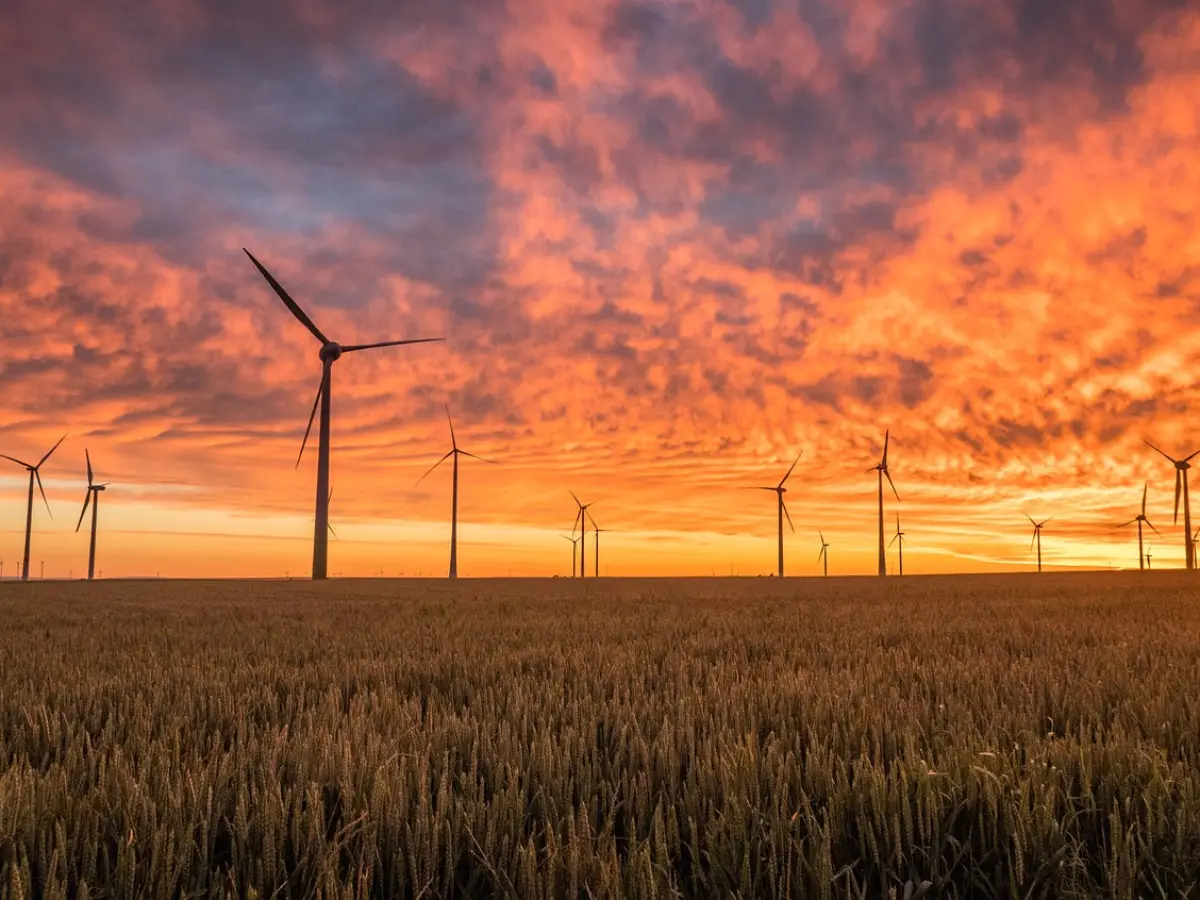
India’s renewable-energy push hits a RoW roadblock Photograph: (Pixabay | representative image)
India has crossed 300 GW of non-fossil electricity capacity, but its renewable-energy push now faces a new challenge: transmission. The article examines how Right of Way, land access, compensation, local concerns and Centre-State coordination could affect the country’s 500-GW goal.
India’s renewable-energy story has entered a new phase. The country is no longer debating whether it can build clean-energy capacity at scale; the more pressing question is whether the power generated can be evacuated and delivered where it is needed. With India’s non-fossil fuel-based installed electricity generation capacity crossing 300 GW as on July 31, 2026 — more than 60% of the 500 GW target for 2030 — transmission infrastructure, particularly Right of Way (RoW), is emerging as a critical governance and stakeholder-management challenge.
The numbers underline the speed of the transition. Solar capacity has reached 164.59 GW, while wind stands at 58.14 GW. Large and small hydro together account for 57.24 GW, bio-power 11.75 GW and nuclear 8.78 GW. India now ranks third globally in renewable energy installed capacity. Solar, the principal growth engine, has risen from just 2.8 GW in 2014 to around 165 GW, while wind has grown from 21 GW to more than 58 GW during the same period.
The acceleration is equally visible in annual additions. During 2025-26, India added a record 55.29 GW of non-fossil fuel-based electricity capacity, including 44.6 GW of solar and 6 GW of wind. Renewable-energy generation, meanwhile, rose from 190.96 billion units in 2014-15 to 477.79 billion units in 2025-26. The challenge now is to ensure that this impressive generation capacity does not run ahead of the transmission network required to carry it.
The issue is not uniquely Indian. Globally, renewable power is expanding rapidly while grid infrastructure is struggling to keep pace. The IEA forecasts global renewable electricity generation to cross 17,000 TWh by 2030, almost 90% higher than in 2023. IRENA estimates that renewables could account for 90% of global electricity by 2050. The growing electricity requirements of AI and data centres are adding another layer of urgency. The global grid challenge has become so significant that UN Secretary-General António Guterres launched the Global Grids Accelerator, describing grids as the “arteries of the energy transition”. The message is clear: building generation without simultaneously strengthening grids can leave clean power stranded.
India is already seeing the early signs of this mismatch. According to ICRA data, of the 54.8 GW of recently commissioned renewable-energy capacity, around 33% was evacuating power through the Temporary General Network Access (T-GNA) route as of May 2026. Power Secretary Pankaj Agarwal has also identified grid management and transmission expansion as key challenges following the crossing of the 300-GW non-fossil capacity milestone.
Trending Stories
)
)
)
)
)
)
)
)
&im=FitAndFill=(700,400))
)
)
)
)
)
)
)
)
)
)
)
)
)
)
)
)
)
)
)
)
)
)
)
)
When Grid Meets Ground Reality of RoW
This brings Right of Way into sharp focus. A transmission line is not simply an engineering project involving towers, conductors and substations. It is a physical corridor cutting across farms, villages and private and community land. Every tower location, access route and line corridor can affect landowners and farmers. For communities dependent on agriculture, even when the land itself is not permanently acquired, the presence of transmission infrastructure can trigger concerns about crop damage, future land use, property valuation and the perceived impact on livelihoods. This is where technical planning meets the realities of local governance.
Compensation and valuation can become particularly sensitive. A landowner may look at the issue not merely through the statutory compensation offered, but through the future economic value of the land, agricultural income and the inconvenience caused during construction. Where expectations and official assessments diverge, disputes can quickly emerge. Delayed payments, unclear communication or the involvement of multiple agencies can further deepen mistrust.
Local opposition can consequently become a serious source of project delay. A transmission project may have received approvals at one level, yet face objections when implementation reaches the village. Administrative processes can also vary across states, creating different approaches to RoW permissions, compensation, land access and grievance handling. For developers operating across multiple states, this lack of uniformity can add complexity to project execution.
The challenge is already playing out across several renewable-energy corridors. From Ananthapuramu, Kadapa and Kurnool in Andhra Pradesh to Davangere, Chitradurga, Gadag and Koppal in Karnataka, and from Dharashiv and Solapur in Maharashtra to Khavda and Bhuj in Gujarat and Jaisalmer, Jodhpur, Barmer and Bikaner in Rajasthan, India’s renewable-energy map is increasingly intersecting with its transmission map. Each new corridor, however, also brings the realities of land access, farmers’ concerns, compensation and local consent into the project’s path. The transmission challenge, therefore, is not confined to substations and power lines; it increasingly begins at the village level.
Road to Resolution: Centre-State Coordination
The answer, therefore, cannot be left entirely to transmission developers or district administrations. RoW needs to be treated as a coordinated Centre-State governance priority. The Ministry of Power, state governments, district administrations, transmission developers and local communities need to work from a common framework. The Centre can help establish broad and transparent principles, while states can ensure that local procedures are predictable and efficiently implemented. District administrations, meanwhile, are best placed to bridge the gap between policy and the ground.
There is also a strong case for engaging communities much earlier. Instead of approaching landowners only when construction is imminent, project developers should establish communication channels during the planning stage. Information on routes, compensation principles, construction schedules and grievance mechanisms should be available in simple language. A clearly identified local contact point can prevent routine questions from turning into larger disputes.
Most importantly, grievance redressal must be visible, accessible and time-bound. Farmers should know where to raise concerns, whom to approach and when they can expect a response. Transparent documentation of compensation and damage assessment can reduce ambiguity and create greater confidence.
India’s clean-energy ambition is now large enough to require a corresponding institutional ambition. The country has demonstrated that renewable capacity can be added at remarkable speed. The next test is whether transmission infrastructure can move at the same pace.
The 500-GW non-fossil capacity target is not merely a capacity milestone. It is part of a larger national ambition for energy security and Viksit Bharat 2047. That ambition requires electricity to travel efficiently from resource-rich regions to centres of demand.
The transition, therefore, needs more than turbines, solar modules and transmission towers. It needs trust on the ground, predictable governance and a shared Centre-State approach. India has shown it can build clean power fast. Now, it must ensure that the power has a clear, timely and socially workable route to reach every part of the country.