In landmark move, India gives nod to LIGO observatory in Maharashtra to study gravitational waves

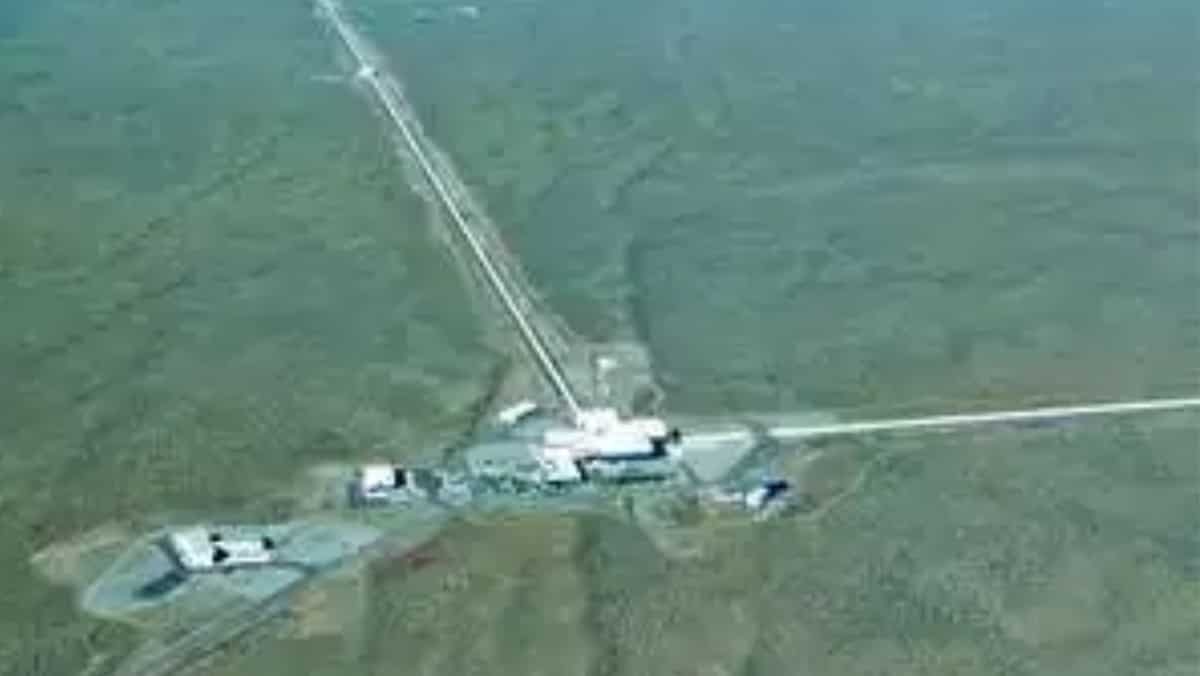
In a landmark moment, India gives nod to LIGO observatory in Maharashtra to study gravitational waves
The Indian government gave a go-ahead to Rs 2,600-crore project on Thursday for setting up a Laser Interferometer Gravitational Wave Observatory-India (LIGO-India) in the Aundha area of Hingol district in Maharashtra.
The observatory is being designed to detect gravitational waves, which are ripples in the fabric of spacetime caused by the acceleration of massive objects, such as plants and stars.
The first detection of gravitational waves was made by US-based LIGO on September 14, 2015. LIGO has detected numerous other gravitational waves. These detections have confirmed some of the predictions of Einstein's theory of general relativity and provided a new way to study the universe.

Also Read | India, Korea natural partners, held substantive talks with Jaishankar: South Korean FM Park Jin to WION
LIGO-India will be located about 450km east of Mumbai. The set-up is expected to be completed by 2030.
Union Space and Technology Minister Jitendra Singh said LIGO-Indiawillaid in a more thorough knowledge of gravitational waves as well as other celestial phenomena like neutron stars and black holes.
&imwidth=180&imheight=135&format=webp&quality=medium)
IND vs NZ 2nd T20I: Shreyas Iyer on brink of breaking Rohit Sharma’s record
&imwidth=180&imheight=135&format=webp&quality=medium)
AI deepfakes are spreading online: Why is removing them so difficult?
&im=FitAndFill=(700,400)&imwidth=180&imheight=135&format=webp&quality=medium)
New Friday OTT releases (October 23, 2026): Gajab Raat, Dorothy, Chaar Yaar- Watch these 6 new movies and TV shows on Netflix, Prime Video and more
&imwidth=180&imheight=135&format=webp&quality=medium)
Google Fitbit Air’s new health guardian feature tracks trends: How it works
&imwidth=180&imheight=135&format=webp&quality=medium)
'You’re a horrible little reporter, aren’t you?': Trump snaps at NBC reporter questioning his support for Ramaswamy's campaign ad
&imwidth=180&imheight=135&format=webp&quality=medium)
Tu Hai Meri Kiran film review: Sonakshi Sinha and Zaheer Iqbal's thriller gets tangled in its own twists
&imwidth=180&imheight=135&format=webp&quality=medium)
Fauzi teaser out: Prabhas takes on the British Empire in patriotic avatar | Watch
&imwidth=180&imheight=135&format=webp&quality=medium)
Pakistan airline PIA unveils new crew uniforms, faces online criticism
&imwidth=180&imheight=135&format=webp&quality=medium)
Anthropic security chief issues grim cyberattack warning: ‘It’s going to get a lot worse’
&imwidth=180&imheight=135&format=webp&quality=medium)
Will the US attack Iran this weekend? Trump's envoy says, 'absolutely'
&imwidth=180&imheight=135&format=webp&quality=medium)
Microsoft AI diagnoses complex medical cases more than twice as accurately as doctors, study finds
&imwidth=180&imheight=135&format=webp&quality=medium)
'My name has always been Ilhan Omar': Congresswoman hits back at Trump, calls him a 'creep'
&imwidth=180&imheight=135&format=webp&quality=medium)
IND-W vs ZIM-W, 1st ODI: Rawal, Charani star in India’s nine-wicket win over Zimbabwe
&imwidth=180&imheight=135&format=webp&quality=medium)
Global cybersecurity alert: PHP flaws trigger website shutdowns as hack attempts surge into millions
&imwidth=180&imheight=135&format=webp&quality=medium)
Did Neha Bora call for Bangladesh-like GenZ protest, 'anarchy' in India? WION Fact-checks viral claim
&imwidth=180&imheight=135&format=webp&quality=medium)
US midterms 2026: Trump revises Canada tariffs as Susan Collins faces tight re-election race in Maine
&imwidth=180&imheight=135&format=webp&quality=medium)
Massive 7.2 magnitude quake off Vanuatu triggers tsunami warning for coasts within 300 km
&imwidth=180&imheight=135&format=webp&quality=medium)
Scientists make digital nose that can sniff and send scents over the internet
&imwidth=180&imheight=135&format=webp&quality=medium)
'Black triangle' UFO flying at 1,800mph spotted over sensitive US site: Latest Trump admin UFO file dump
&imwidth=180&imheight=135&format=webp&quality=medium)
US Navy, Marine Corps boards defy Trump's transgender military ban, vote to retain troops
&imwidth=180&imheight=135&format=webp&quality=medium)
Chemical warehouse explosion in Mexico: Several injured in multiple blasts, 1,000 evacuated in León
&imwidth=180&imheight=135&format=webp&quality=medium)
US midterms 2026: Viral video claims Lindsey Graham paid underage men for sex; clip released weeks before his sister's Senate race
&imwidth=180&imheight=135&format=webp&quality=medium)
Horrific video shows the moment 18-year-old fell to her death from Mexico amusement park ride
&imwidth=180&imheight=135&format=webp&quality=medium)
Gravitas | US attack could trigger WW III: Russian planes in Tehran, Israeli jets, US warships in action
&imwidth=180&imheight=135&format=webp&quality=medium)
Viral video shows cross falling on Colombia priest, no official confirmation | WATCH
&imwidth=180&imheight=135&format=webp&quality=medium)
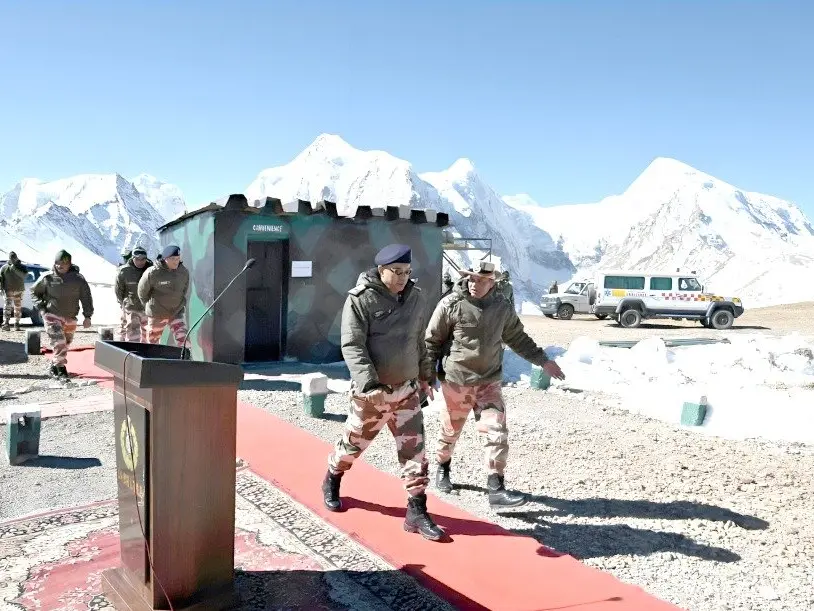
India-China face-off continues near Arunachal’s Taksing, reveals ITBP chief in first official confirmation of tensions
&imwidth=180&imheight=135&format=webp&quality=medium)
Emmanuel Macron calls Paris suburb shooting a 'racist terrorist attack' after one killed, several injured
&imwidth=180&imheight=135&format=webp&quality=medium)
Nairobi building collapse: Several feared trapped after 16-storey structure crumbles; rescue operation underway
&imwidth=180&imheight=135&format=webp&quality=medium)
Five killed, several injured after explosion in Bihar's Siwan as firecrackers catch fire
&imwidth=180&imheight=135&format=webp&quality=medium)
First Lady Melania Trump secures ceasefire between Russia, Ukraine in Oleshky: White House
&imwidth=180&imheight=135&format=webp&quality=medium)
China's dancing robot turns violent bodyguard, lifts cars and fights intruders - Watch
&imwidth=180&imheight=135&format=webp&quality=medium)
US charges two former FBI officials with lying to Congress about Hunter Biden probes. 'Politically motivated' Trump grievance or something else?
&imwidth=180&imheight=135&format=webp&quality=medium)
'Already tired of his 9-to-5': Baby born with a moustache becomes internet sensation, video goes viral | Watch
174 acres of land have been been acquiredfor LIGO-India. Theproject has alsoreceived environmental approval, and a geotechnical survey has been completed. An empowered board will be established to oversee the project.
A landmark moment for India
This is the first-ever cutting-edge facility of this size beingconstructed in India.One such facility that has been planned in India, the Neutrino Observatory, has had difficulties. So, LIGO-Indiais essential for proving India's mightto takedifficult scientific initiatives independently.
Also Read | Trump asks aides to hire Laura Loomer, an anti-Muslim, for campaign role
Collaboration with US LIGO observatories
In the US, there are already two such LIGO observatories. The third such cutting-edge gravitational-wave observatory will be LIGO-India. A group of Indian research institutes and the LIGO Laboratory in the United States, together with its worldwide collaborators, are planning to work together on the project. Key lab components worth $80 million, or Rs 560 crore, would be supplied by the US.
In February 2016, the government granted in-principle clearance to LIGO-India. Since then, the project has accomplished a number of significant milestones on the way to choosing andacquiring the land for theobservatory.
Watch | Pakistan: National Security Committee to launch new military operation against militants
The Department of Atomic Energy and the Department of Science and Technology will construct the LIGO-India project with the help of a memorandum of understanding (MoU) with the National Science Foundation, US, as well as other national and international research and academic institutes. A UGC independent body will assist with the project as well. Components for the project will be provided by Indian businesses. In order to maximise the scientific yield, LIGO-India will be controlled and maintained scientifically in conjunction with the US LIGO detectors once it is operational.