
&imwidth=800&imheight=600&format=webp&quality=medium "India's first private gold mine inaugurated: All about Geomysore-Jonnagiri Project in Andhra Pradesh")
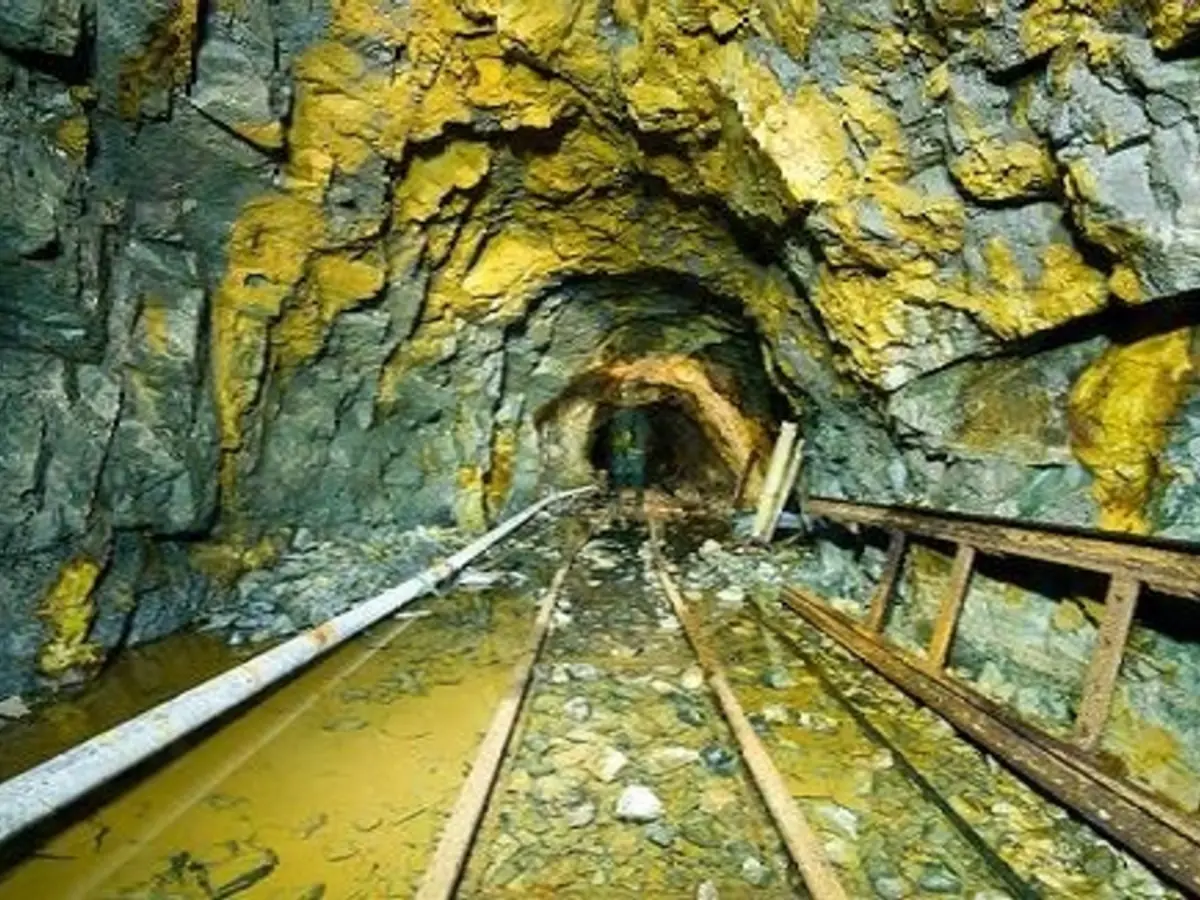
Andhra Pradesh Chief Minister N Chandrababu Naidu has inaugurated a major private-sector gold mining and processing facility at Jonnagiri in Tuggali Mandal, Kurnool district. The gold mining facility is being developed by Geo Mysore Services India Private Limited and Deccan Gold Mines Limited with an investment of ₹405 crore. Highlighting the long-term growth planned for the site, the Chief Minister followed up the formal launch of the first unit by laying the foundation stone for a second facility alongside state ministers Kollu Ravindra, Nimmala Ramanaidu, and TG Bharat. The extensive project spans a total allotted area of 1,500 acres, with active mining operations initially starting across 600 acres in its first development phase. To support processing logistics, the host village Jonnagiri was symbolically renamed “Swarnagiri” by the state cabinet.
Why is it important for the government?

According to Andhra Pradesh government, this gold mining story is synonymous with Karnataka's Kolar Gold Fields (KGF). The plant is expected to produce 400 kilograms of gold in its first year of operations, increasing to 900 kilograms from the following year and gradually scaling up to 2 tonnes of gold annually as processing capacity is expanded. The project is expected to generate employment for around 700 people. The State Government will receive 4 per cent royalty on the value of gold produced. Based on current estimates, the government is expected to earn approximately Rs 57 crore in royalty from 400 kilograms of production and around Rs 144 crore from 900 kilograms of production.
Why is there for private firm
Trending Stories
)
Mushtaq Khan dies at 56: When Welcome actor opened up about his salary for iconic role Ballu
)
US Supreme Court backs Trump administration's use of SAVE database to check voter citizenship
)
Hawaii braces for Hurricane Nolo: NOAA warns of flash flooding and mudslides
)
Outrage erupts after 3-year-old is married to 60-year-old man in Pakistan, link to her sister's murder being probed
)
Donald Trump shares image of Xi's arrival in Washington, carries signs of AI
)
Pakistan deploys over 20,000 security personnel as PTI vows march for Imran Khan's release
)
Anthropic says Claude found a new gene-editing enzyme but science isn't confirmed
)
Prince Harry offers rare glimpse into Archie and Lilibet’s life after UK move
)
Farhan, who went viral for AK47 celebration vs India in Asia Cup, hopes to lead Pakistan beyond Asian Games
)
OpenAI AI Agents hacked 4 websites before Hugging Face, researchers reveal
)
Pentagon quietly adds 37 wounded troops to Iran war tally without explaining when or how
)
Asian Games 2026: India women’s kabaddi team edge Iran 37-34 to clinch 3rd gold medal
&im=FitAndFill=(700,400))
New Friday OTT releases (September 25, 2026): Don’t Be Shy, Hunkkaar: The Roar, Mango Pachcha- 6 movies and TV shows on Netflix, Prime Video and more
)
Asian Games 2026: India face Afghanistan in quarterfinal on Sep 28; Pakistan clash with Hong Kong
)
‘Attack on Mecca a red line for Pakistan’: Shehbaz Sharif warns Houthis at UN
)
‘I rejected it’: Trump confirms turning down Iran’s proposal to reopen Hormuz, claims Tehran is losing ‘badly’
)
Did Hitler kill his niece Geli Raubal? Newly found records reopen a 95-year-old mystery
)
Nigeria Navy moves to boost oil security, tackle crude theft and infrastructure threats
)
Indian diplomat Petal Gahlot raises deteriorating situation in Pakistan-occupied Kashmir in right of reply at UN
)
'Countries far from conflict are penalised': Jaishankar calls for Gulf peace, seafarer safety at UN
)
‘It is all possible’: Putin weighs next steps on Ukraine talks, rules out Europe conflict
)
Global community 'absent' in Gulf crisis: Saudi at UN calls for freedom of navigation, pre war status for Hormuz
)
The Paradise: Nani reacts to mixed reviews from critics and audience; ‘I have also learnt from the flaws’
)
Gaza's war turned environmental damage into second crisis
)
Trump-Xi summit wrap: Big pageantry, Iran talks, few major developments and more meetings planned
)
‘Could kill billions...’: Bill Gates backs calls to slow AI development amid fears of catastrophe
)
Bollywood x K-pop crossover! LE SSERAFIM’s Kazuha charms fans with Shah Rukh Khan’s ‘Chammak Challo’ steps
)
'What kind of confession is this?': Pakistan PM Shehbaz Sharif’s 'terrorists would be roaming New York' remark goes viral, raises alarm online. Watch
)
Myanmar training camp case: US national, 6 Ukrainians allowed to meet their families abroad
)
'FIRST LOOK from inside Noah’s Ark': Researchers share video from inside mysterious mound in Turkey
)
Cindy Crawford’s son Presley Gerber cremated as death probe continues
)
WATCH | As Shehbaz Sharif claims Pakistan’s ‘victory’ during 2025 conflict, Indian diplomat R Srinivas laughs at UN
)
'A terrorist country is asking me that question?': Jaishankar hits back at Pakistani journalist at UN; flags attacks on commercial shipping
)
Russia will achieve Ukraine war aims; Europe doing everything to block peace talks: Lavrov at UN
)
‘Serial practitioner of terrorism’: Jaishankar calls out Pakistan’s ‘state-sponsored’ terror at UNGA
)
US court backs Pentagon's decision to exclude Anthropic over Claude AI restrictions
After Kolar Gold Fields (KGF) shut down in 2001, primary gold mining happened only in state-run Hutti Gold Mines in Karnataka. Bringing a dormant gold deposit into production is a long, expensive and high-risk process that often requires years of exploration and investment. The Swarnagiri project became possible because private company Geomysore Services India Pvt Ltd spent decades exploring the area and developing the resource. Backed by Tamil Nadu-based Thriveni Earthmovers and supported by Deccan Gold Mines, the company first acquired the prospecting rights in the 1990s, applied for a mining lease in 2006 and has now commenced commercial production after investing about ₹405 crore. Policy reforms also played a key role. Changes introduced in 2015 mandated transparent auctions for mineral blocks, while a 2021 amendment allowed private explorers who discover and establish mineral deposits to retain mining rights and commercially sell the extracted resources. Swarnagiri is among the first major gold mining projects to benefit from this framework, highlighting the growing role of private investment in India's mining sector.
From KGF to Jonnagiri
Kolar gave up an estimated 800 to 900 tonnes of gold over 120 years and sank 3.2 km, among the deepest in the world, before its ore thinned and the State abandoned it. The Swarnagiri project represents a new chapter in India's gold mining journey. According to Deccan Gold Mines, the site contains an audited resource of around 8.2 million tonnes of ore with an average gold grade of 1.49 grams per tonne, translating to nearly 12 tonnes of contained gold. The main mining pit is expected to have an operational life of eight to nine years. While the Andhra Pradesh government has indicated that the broader region may hold as much as 42.5 tonnes of gold, those estimates are still based on exploration targets and have yet to be fully verified. Unlike the deep underground workings of KGF, Swarnagiri is being developed as an open-pit mine, allowing gold-bearing ore to be extracted from the surface through large-scale excavation.

