

&imwidth=800&imheight=600&format=webp&quality=medium "Why PM Modi asked Indians not to buy gold for a year? WION explains")
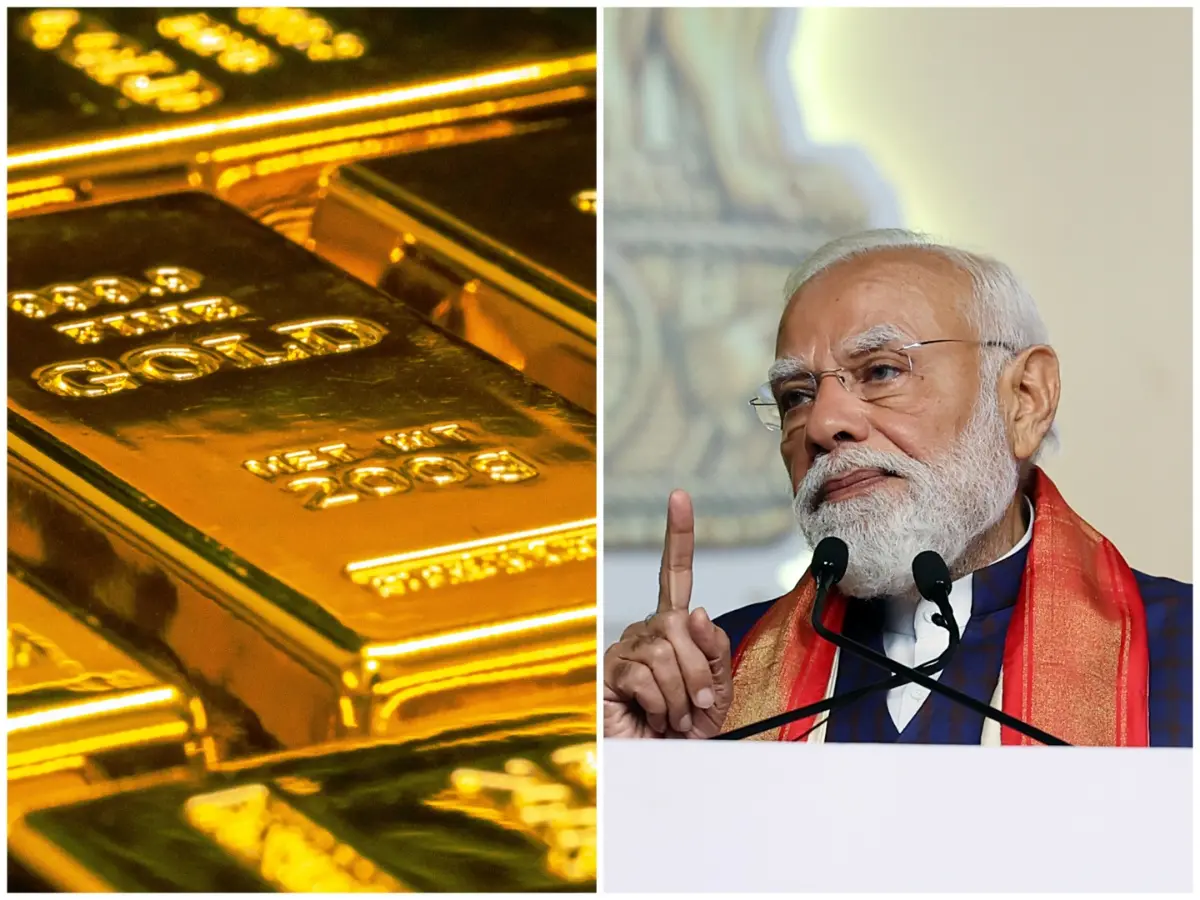
Prime Minister Narendra Modi on Sunday directed people to help the nation conserve petrol, diesel and foreign exchange reserves by using public transport, avoiding unnecessary foreign travel and the use of non-essential gold purchases. PM Modi's appeal came while addressing a BJP rally in Hyderabad as US President Donald Trump rejected the latest peace proposals of Iran, resulting in rise of a global crude oil prices to more than $105 a barrel and intensifying concerns over inflation and energy security worldwide. The escalating tension in West Asia has kept the Strait of Hormuz, one of the world’s most critical oil shipping routes, disrupted for weeks, prompting fears of a prolonged crisis in the supply chain.
Why does PM Modi appeals citizens to avoid buying gold?
PM Modi on Sunday also appealed to citizens to avoid buying gold for at least one year, claiming that gold imports put additional pressure on India’s foreign exchange reserves amid a global crisis. India is one of the largest importers of gold in the world, where its demand rises exponentially during weddings and festive seasons.
India consumes an estimated 700 to 800 tonnes of gold annually, accounting for nearly 9 per cent of its total import bill, after crude oil. The rise in gold demand led to the import of the item in large amounts, which put pressure on India's currency as it increased dollar outflow and widened the country’s import bill.
How does gold affect India's economy?
As we know, gold influences the strength of a currency. When a large amount of gold is imported, it increases dollar demand and weakens the Indian currency, as gold shapes money in more ways than most people think of it. Gold in India is considered a cultural symbol, a store of value and a silent indicator of economic stability.
Trending Stories
&imwidth=180&imheight=135&format=webp&quality=medium)
Apple HomeView smart home hub may launch soon with A18 chip, display and Siri controls: What to expect
&imwidth=180&imheight=135&format=webp&quality=medium)
Use AI as your ‘second brain’: Meta AI chief Alexandr Wang’s message to young people
&im=FitAndFill=(700,400)&imwidth=180&imheight=135&format=webp&quality=medium)
How does a robot decide what to do next?
&imwidth=180&imheight=135&format=webp&quality=medium)
India's Ajit Doval, Iran's Mohsen Rezaei hold talks amid escalating West Asia tensions, discuss 'issues of mutual interest'
&im=FitAndFill=(700,400)&imwidth=180&imheight=135&format=webp&quality=medium)
Navratri 2026: 9 days, 9 forms of Goddess Durga and 9 colours- Check the complete list
&imwidth=180&imheight=135&format=webp&quality=medium)
Opposition’s 10 demands in Supreme Court petition range from stay on SIR to audit of voter rolls
&imwidth=180&imheight=135&format=webp&quality=medium)
Trump weighs firing Kimberly Guilfoyle as US ambassador to Greece amid misconduct allegations: Report
&imwidth=180&imheight=135&format=webp&quality=medium)
BCCI rejects venue shift reports, India vs Sri Lanka 1st ODI to remain in Delhi
&imwidth=180&imheight=135&format=webp&quality=medium)
Portugal Federation confirms Cristiano Ronaldo’s return to national team despite suspension
&imwidth=180&imheight=135&format=webp&quality=medium)
Rishabh Pant ruled out of India A squad for New Zealand tour, Kumar Kushagra named replacement
&imwidth=180&imheight=135&format=webp&quality=medium)
‘This is just the start’: Maaya Rajeshwaran on historic ITF title, confidence boost and future goals
&imwidth=180&imheight=135&format=webp&quality=medium)
'Absolutely disgusting': Australia slams US plan to livestream Nidal Hasan's execution; Mike Johnson raises concerns, warns of terrorist propaganda
&imwidth=180&imheight=135&format=webp&quality=medium)
Pakistan's government blames PTI for rise of terrorism in Khyber Pakhtunkhwa
&imwidth=180&imheight=135&format=webp&quality=medium)
'Almost certainly': UK Prime Minister Andy Burnham says Iran's IRGC behind RAF Fairford threat
&imwidth=180&imheight=135&format=webp&quality=medium)
Trump says he 'may' meet North Korean leader Kim Jong Un during upcoming Asia trip
&imwidth=180&imheight=135&format=webp&quality=medium)
Anti-SIR protest in Mumbai: Protestors wear black masks & ribbons in Mumbai
&imwidth=180&imheight=135&format=webp&quality=medium)
1,500 drones illuminate Mumbai sky as Cordelia Cruises unveils second ship, Cordelia Sky
&imwidth=180&imheight=135&format=webp&quality=medium)
Korean peninsula tensions escalate as North Korea launches multiple ballistic missiles, PACOM says 'no threat to US personnel'
&imwidth=180&imheight=135&format=webp&quality=medium)
Houthis warns US of 'painful response' if Washington joins Saudi war in Yemen as airlines suspend flights to Saudi Arabia
&imwidth=180&imheight=135&format=webp&quality=medium)
Congress demands action against chief election commissioner
&imwidth=180&imheight=135&format=webp&quality=medium)
'I will not be silenced': Ilhan Omar alleges political intimidation after federal officers search her Washington home
&imwidth=180&imheight=135&format=webp&quality=medium)
Elon Musk pumps $276 million into Republican campaigns ahead of US midterm elections
&imwidth=180&imheight=135&format=webp&quality=medium)
'Ouch!!! That must hurt': Kangana Ranaut hails Kamal Haasan's sharp reply to Elon Musk over Starlink row
&imwidth=180&imheight=135&format=webp&quality=medium)
India Rejects Pakistan-China Boundary Commission, Tells Islamabad to Drop 'Theatrics' | GRAVITAS
&imwidth=180&imheight=135&format=webp&quality=medium)
Robotic surgery, advanced treatment: What is coming to this small Gujarat town?
&imwidth=180&imheight=135&format=webp&quality=medium)
'I am thoroughly unamused': Judge slams Trump administration after 400 trees cut at Washington golf course
&imwidth=180&imheight=135&format=webp&quality=medium)
UK school ditches technology, shifts from screen to pen and paper for learning
&im=FitAndFill=(700,400)&imwidth=180&imheight=135&format=webp&quality=medium)
New OTT releases this week (October 12-18, 2026): Sacrifice, Koffee with Karan S9, Roadies Rebirth- 6 titles coming on Netflix, JioHotstar and more
&imwidth=180&imheight=135&format=webp&quality=medium)
Sidhu Moose Wala’s younger brother wins hearts by recreating late singer’s signature move at Toronto Hologram Show
&imwidth=180&imheight=135&format=webp&quality=medium)
UK PM Andy Birnham renews claims of Russian meddling in Brexit vote
&imwidth=180&imheight=135&format=webp&quality=medium)
'Turn approver, resign, we'll forgive you': Rahul Gandhi claims receiving messages from CEC Gyanesh Kumar
The best part of the item is that, despite modern economies which run on digital systems and complex policies, gold still decides how strong or weak a currency is. The import behaviour of gold directly affects the currency. When gold prices rise at the global level, the import bill of the item rises too, increasing the outflow of foreign exchange money from the country. If this outflow grows and exceeds more than required, it can put heavy pressure on the currency and may lead to depreciation.
Here are some of the major areas impacted by rising gold imports in India:
1. Huge Drain on Foreign Exchange Reserves
India is the world’s second-largest consumer of gold, yet it depends almost entirely on imports to meet demand. Since gold purchases are made in US dollars, large-scale imports lead to a significant outflow of foreign currency. The issue has become more significant as India’s foreign exchange reserves, which had risen close to $728.49 billion, have experienced volatility and declined toward the $690.69 billion mark due to increasing import costs and currency-related pressures. A weaker rupee further raises the domestic cost of imports, particularly crude oil and gold, increasing the country’s external economic vulnerabilities. Every increase in gold imports puts additional pressure on the Reserve Bank of India’s foreign exchange reserves, which are also required for critical imports such as crude oil.
2. Increasing Pressure on the Indian Rupee
Strong demand for US dollars to finance gold imports has added strain on the Indian rupee, which has fallen to historic lows. As of May 11, 2026, the rupee was trading near Rs 95.25 against the US dollar. To import gold, Indian buyers exchange rupees for dollars, increasing the supply of rupees in the market and weakening their value. A weaker rupee raises the cost of other imported goods, including fuel, electronics, and medicines. Over the past few years, the rupee has depreciated significantly—from around Rs 74–75 per dollar in 2021 to below Rs 95 in 2026, marking a decline of nearly 27–28 per cent. The pressure has intensified amid rising crude oil prices, tensions in the Middle East, and higher dollar outflows linked to imports and uncertainty over global energy supply routes.
3. Trade and Current Account Deficit (CAD)
A trade deficit occurs when a country’s imports exceed the value of its exports. In FY26, India’s trade deficit climbed to $333.2 billion. The Reserve Bank of India (RBI)'s data indicates that India's CAD stood at $13.2 billion, or 1.3 per cent of GDP, in the October-December quarter of FY26, compared to $11.5 billion in the last quarter. Precious metals such as gold and silver now make up over 5 per cent of the country’s total imports. By reducing gold purchases, the government aims to shrink this deficit, which could help stabilise and strengthen the Indian rupee.

