

&imwidth=800&imheight=600&format=webp&quality=medium "From Maharashtra to Cambodia: Inside the kidney trafficking ring")
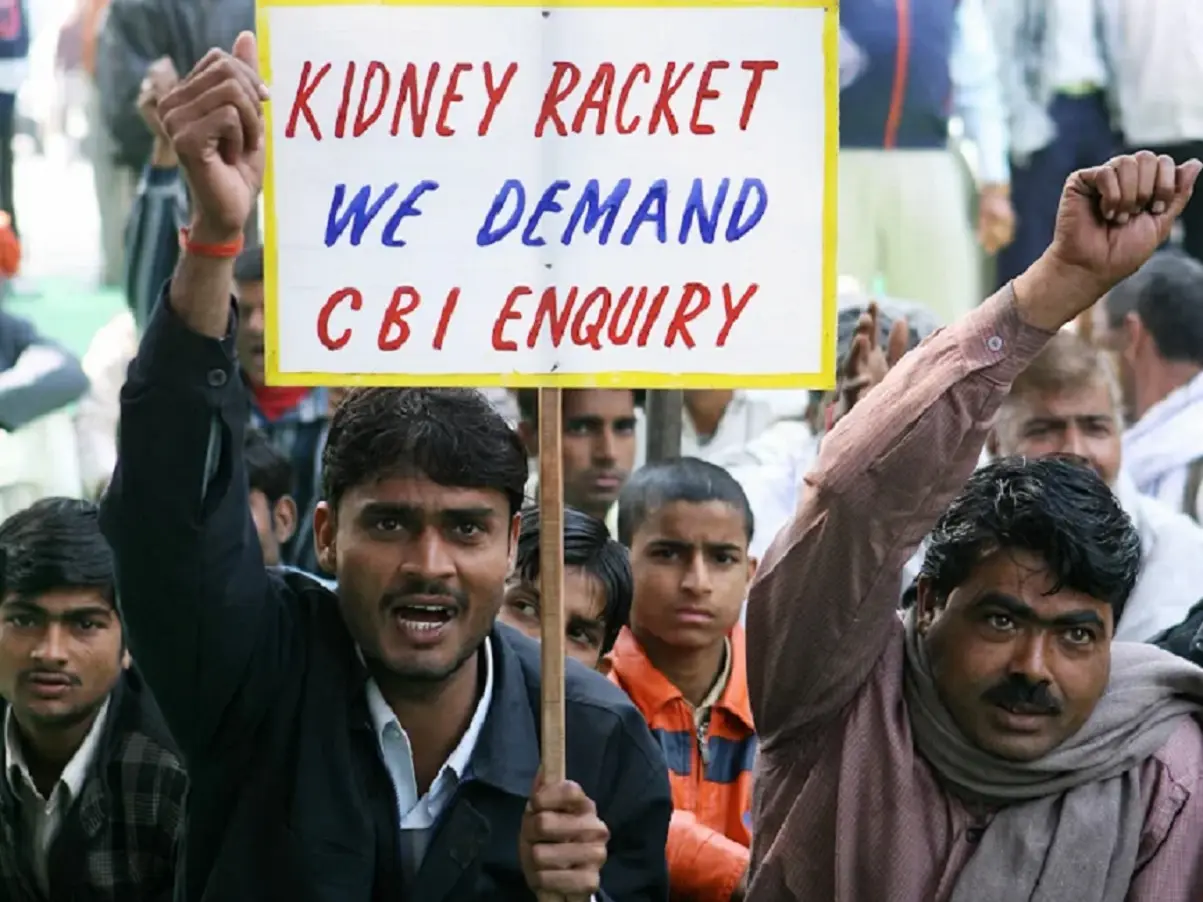
Mumbai: Maharashtra Police have uncovered a sprawling pan-India kidney trafficking racket, allegedly involving agents, donors, medical professionals and hospitals, with international links to Cambodia. The network came to light during an investigation triggered by a debt-ridden farmer’s shocking complaint.
How the case surfaced
The probe began when Roshan Kule, a dairy farmer from Nagbhid in Chandrapur district, approached police alleging that he had been forced to sell his kidney abroad to repay usurious local loans. Kule, who initially borrowed around one lakh rupees from moneylenders, said that due to exorbitant interest rates, his debt had ballooned to over 70 lakh rupees.
Desperate and under pressure, he turned to what he believed was a legitimate kidney donor network he found on social media.
Investigators discovered that Kule had travelled to Cambodia, via Kolkata, where his kidney was removed. The complaint and subsequent technical verification of travel documents and statements prompted police to dig deeper into a larger syndicate operating across states.
Alleged racket structure
Trending Stories
&imwidth=180&imheight=135&format=webp&quality=medium)
'This is humiliation': Vijay Deverakonda under fire over controversial marriage proposal remark on Koffee With Karan 9
&imwidth=180&imheight=135&format=webp&quality=medium)
Shikhar Mohan earns maiden India A call-up, replaces KL Rahul
&imwidth=180&imheight=135&format=webp&quality=medium)
AI slop or smart strategy? South African author Coral Hart defends Her 370 AI- assisted books in 20 months
&imwidth=180&imheight=135&format=webp&quality=medium)
Two BrahMos missiles on Tejas, triple the range and 100% indigenisation, says former BrahMos CEO
&imwidth=180&imheight=135&format=webp&quality=medium)
India-China face-off continues near Arunachal’s Taksing, reveals ITBP chief in first official confirmation of tensions
&imwidth=180&imheight=135&format=webp&quality=medium)
Ilhan Omar breaks silence over alleged marriage to her brother; Trump thinks it's 'really good answer'
&imwidth=180&imheight=135&format=webp&quality=medium)
WATCH: Trump demands Ilhan Omar removal from Congress for 'using fake name to be sworn in'. So what is her real name?
&imwidth=180&imheight=135&format=webp&quality=medium)
Netanyahu dials PM Modi, invites him and Capt Smit Machchhar to light torch on Israel’s Independence Day
&imwidth=180&imheight=135&format=webp&quality=medium)
Pakistan airline PIA unveils new crew uniforms, faces online criticism
&imwidth=180&imheight=135&format=webp&quality=medium)
Christa Pike's failed execution: Tennessee team struggled to insert IV lines, lawyer says
&imwidth=180&imheight=135&format=webp&quality=medium)
Did Neha Bora call for Bangladesh-like GenZ protest, 'anarchy' in India? WION Fact-checks viral claim
&imwidth=180&imheight=135&format=webp&quality=medium)
US midterms 2026: US Supreme Court allows New Hampshire to restrict student IDs for voting
&imwidth=180&imheight=135&format=webp&quality=medium)
A secret code, a midnight escape and 300 deaths: The Russian officer who turned on Putin
&imwidth=180&imheight=135&format=webp&quality=medium)
India’s 2022 CWG silver medallist Sabbhineni Meghana announces international retirement
&imwidth=180&imheight=135&format=webp&quality=medium)
Trump ordered to answer questions under oath in BBC defamation lawsuit by December 11
&imwidth=180&imheight=135&format=webp&quality=medium)
Putin says Russia is ready to resume Ukraine-US peace talks but rejects 'short ceasefire' amid deadly attacks
&imwidth=180&imheight=135&format=webp&quality=medium)
Horrific video shows the moment 18-year-old fell to her death from Mexico amusement park ride
&imwidth=180&imheight=135&format=webp&quality=medium)
'It's a crime not to see this scene': Tehran puts Trump 'behind bars'
&imwidth=180&imheight=135&format=webp&quality=medium)
IND-W vs ZIM-W, 1st ODI: Rawal, Charani star in India’s nine-wicket win over Zimbabwe
&imwidth=180&imheight=135&format=webp&quality=medium)
Meghan Markle’s father Thomas under investigation over alleged child abuse images: Report
&imwidth=180&imheight=135&format=webp&quality=medium)
SA vs AUS 2nd Test: Temba Bavuma reveals 'Tendulkar inspiration' behind career-best 179
&imwidth=180&imheight=135&format=webp&quality=medium)
China's dancing robot turns violent bodyguard, lifts cars and fights intruders - Watch
&imwidth=180&imheight=135&format=webp&quality=medium)
Watch: India rejects ‘imprecise and unsupported’ references in UN migrant rights report
&imwidth=180&imheight=135&format=webp&quality=medium)
US to get 850 F-35 stealth fighter jets under 10-year Pentagon-Lockheed deal
&imwidth=180&imheight=135&format=webp&quality=medium)
GRAVITAS | Putin fires nuclear-capable hypersonic missiles, Zelensky ready to surrender 25% territory
&im=FitAndFill=(700,400)&imwidth=180&imheight=135&format=webp&quality=medium)
New Friday OTT releases (October 23, 2026): Gajab Raat, Dorothy, Chaar Yaar- Watch these 6 new movies and TV shows on Netflix, Prime Video and more
&im=FitAndFill=(700,400)&imwidth=180&imheight=135&format=webp&quality=medium)
Serbia elections: Nearly 150,000 people take to streets in massive rally against Aleksandar Vucic | In pics
&imwidth=180&imheight=135&format=webp&quality=medium)
BCCI’s CoE cautious over Hardik Pandya’s fitness, sets expected comeback timeline
&imwidth=180&imheight=135&format=webp&quality=medium)
First Lady Melania Trump secures ceasefire between Russia, Ukraine in Oleshky: White House
&imwidth=180&imheight=135&format=webp&quality=medium)
Finance influencer dies by suicide in Chennai; father accuses tech CEO, who denies charge
&imwidth=180&imheight=135&format=webp&quality=medium)
'Vivek should keep it up': Trump defends Ramaswamy's controversial campaign ad targeting Amy Acton
&imwidth=180&imheight=135&format=webp&quality=medium)
One man, 8 months of work, and a river dirty again: Why Bittu Tabahi may quit
&imwidth=180&imheight=135&format=webp&quality=medium)
450 villagers in UP rush to take anti-rabies shots after consuming 'charnamrit'
&imwidth=180&imheight=135&format=webp&quality=medium)
US midterms 2026: Elon Musk’s political spending hits $445 million as Republicans battle to retain Senate control
&imwidth=180&imheight=135&format=webp&quality=medium)
ENG vs SL: Harry Brook breaks Shubman Gill’s record for fastest ODI double century
According to the police, patients seeking kidneys were charged between Rs 50-80 lakh for transplant procedures. “Donors, often economically vulnerable, received only 5-8 lakh rupees, with the rest was distributed among intermediaries, medical professionals, and hospitals,” noted a police official investigating the case.
On further investigation, the racket appeared to have been active across multiple states, with victims drawn from poor and indebted communities. Police officials leading the probe have emphasized that the case exposes systemic exploitation—where vulnerable individuals are lured with promises of quick money under the guise of organ donation, only to be left worse off while intermediaries and medical players profit.
One of the key accused, Ramakrishna Sanchu, also known as Dr Krishna, is not a qualified surgeon but allegedly acted as an agent, recruiting donors online and arranging their travel to Cambodia for organ removal. He claimed to have once been a donor himself, highlighting the cycle of exploitation within the network. His associate, Himanshu Bharadwaj, who also allegedly sold his own kidney previously, helped organize donors’ journeys and hospital admissions.
Investigation status
The investigation has revealed networks of moneylenders, social media recruiter pages, fake doctor identities, and cross-border logistics that appear to have facilitated this large organ trafficking syndicate. Police are now scrutinizing bank accounts, medical records, digital footprints, and travel routes to identify additional suspects and victims. “We are also seeking assistance from state and central agencies to map the full extent of the racket across India and possibly beyond. We are also recording statements of people who accompanied donors on their travels, hoping to identify additional layers of the operation,” stated a senior police official.
Doctors and hospitals now under scrutiny
The investigation has now moved from frontline agents to examine alleged involvement by medical professionals. Dr. Ravinder Pal Singh, based in New Delhi, has been arrested in connection with the racket. Dr Rajaratnam Govindswamy, the managing director of Star Kims Hospital in Trichy, Tamil Nadu, is reportedly absconding and being actively sought by investigators.
Both doctors’ names emerged from digital and financial evidence gathered by a Special Investigation Team (SIT) and the Local Crime Branch (LCB) dispatched to multiple states. Authorities believe that illegal transplants were not limited to Cambodia; several operations were also conducted inside India, possibly at facilities connected to the syndicate.
During transit remand hearings, a Delhi court granted interim bail to Dr. Singh, directing him to appear in Chandrapur court in early January. Meanwhile, efforts are underway to apprehend Dr. Govindswamy in Tamil Nadu.
The Maharashtra SIT is also exploring possible international links and money trails that could extend beyond Cambodia, especially given the cross-border movement of donors and recipients.
