Congress ‘new Muslim League’? 18/20 Muslim candidates win in Assam; 30 of 35 Muslim MLAs win in Kerala

&imwidth=600&imheight=450&format=webp&quality=medium "Congress ‘new Muslim League’? 18/20 Muslim candidates win in Assam; 30 of 35 Muslim MLAs win in Kerala")
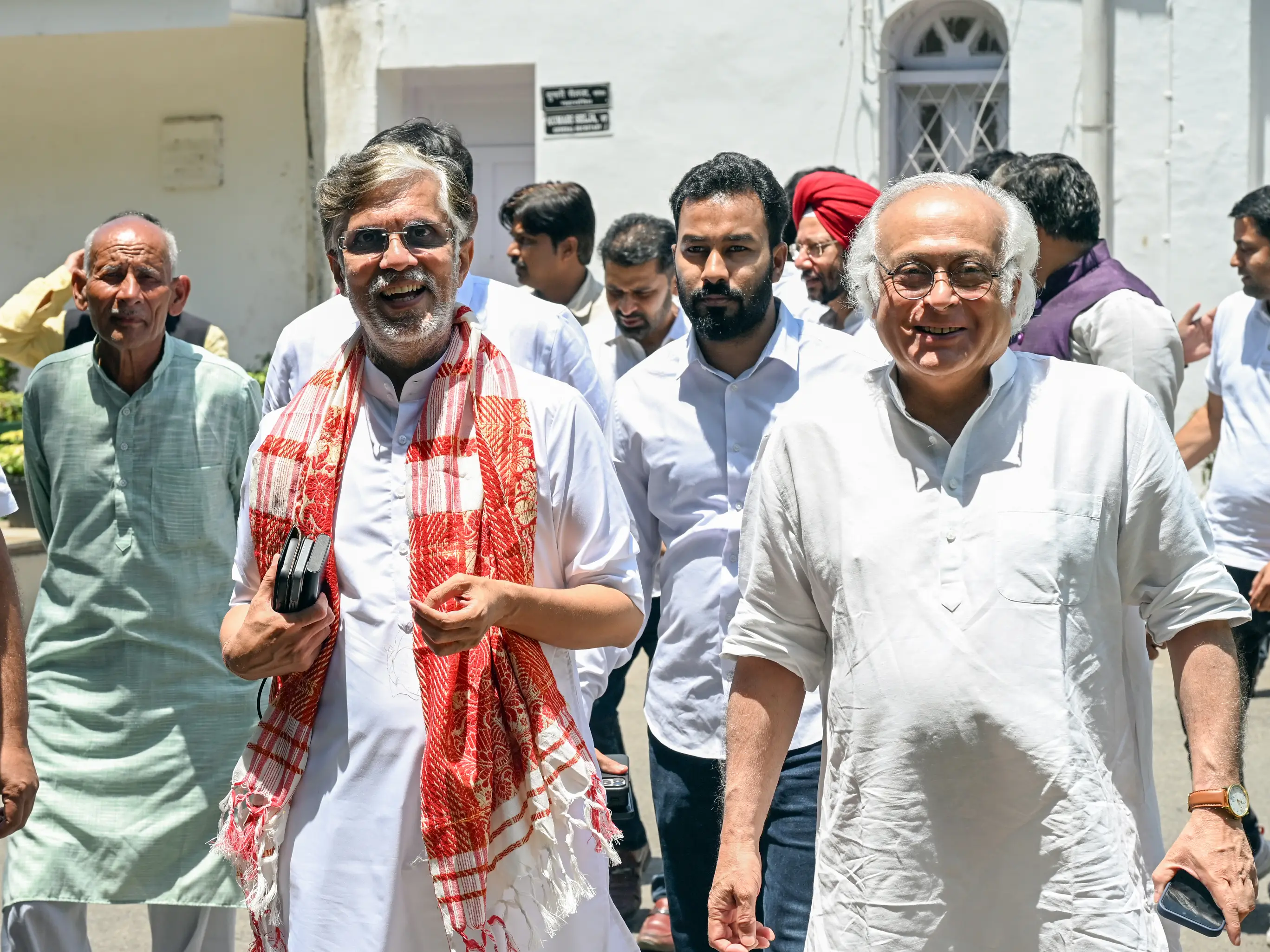
Congress leaders Jairam Ramesh and Pawan Khera celebrates on the counting day of the Kerala Assembly elections 2026. Photograph: (ANI)
The 2026 results show a polarised landscape. Congress broke its 10-year Kerala drought with 30 Muslim MLAs winning under the UDF. However, in Assam, Congress faced criticism as 18 of its 20 winners were Muslim, leading rivals to claim the party has transitioned into a "Muslim League".
The 2026 Assembly election results in West Bengal, Tamil Nadu, Keralam, Assam and Puducherry have surprised the political party and voters with a mixed outcome. Along with the BJP in West Bengal, the Congress party managed to break its 10-year losing streak in Keralam but experienced setbacks in Tamil Nadu, Assam and West Bengal. Notably, a significant share of the seats won by Congress in Kerala and Assam were secured by Muslim candidates.
In Keralam, out of 35 Muslim MLAs elected, 30 seats were secured by the United Democratic Front (UDF), including eight from the Congress and 22 from the Indian Union Muslim League (IUML). Similarly, 18 out of 20 Muslim candidates in Assam positioned by the Congress clinched victories, as compared to a significantly lower success rate among its non-Muslim candidates. Congress's ally, Raijor Dal, secured two seats, one of them won by a Muslim candidate, and the other won by Akhil Gogoi, who is under NIA probe for reportedly being the "kingpin of Maoist activities in Assam."
In contrast, just one out of the remaining 79 non-Muslim candidates fielded by Congress managed to win, even though the party had pronounced candidates for 101 seats in Assam. In response, the All India United Democratic Front (AIUDF) President, Maulana Badruddin Ajmal, remarked that the Congress is "finished in Assam" and has effectively turned into a Muslim league. "Those who dig wells for others, themselves fall into them. Congress had tried to dig a well (defeat) the AIUDF, and now Congress is finished. Congress has become the Muslim League, I am very sad with that," said Ajmal.
Congress' muslim candidates victory
In Assam’s Gauripur constituency, Congress candidate Abdul Sobahan Ali Sarkar secured a decisive win, defeating BJP-backed AIUDF candidate Nizanur Rahman by 19,097 votes. Similarly, Aftab Mollah of Congress triumphed in Jaleshwar with a margin of 109,688 votes over AIUDF leader Sheikh Alam. The party also put up a strong performance in Samaguri, where Tanzil Hussain defeated the BJP’s Anil Saikia by 108,310 votes.
In West Bengal, Congress won two seats, both in constituencies with sizeable Muslim populations, and notably fielded more Muslim candidates than the Trinamool Congress. In Tamil Nadu, the party nominated two Muslim candidates, one of whom won. Overall, Muslim candidates fielded by Congress and its allies in states such as Kerala and Assam achieved a high success rate, exceeding 80 per cent in certain instances.
Trending Stories
)
)
)
)
)
)
)
)
)
)
)
)
)
)
)
)
)
)
)
)
)
)
)
)
&im=FitAndFill=(700,400))
)
)
)
)
)
)
)
)
&im=FitAndFill=(700,400))
)
)
&im=FitAndFill=(700,400))
)
One of the best examples comes from the Indian Union Muslim League (IUML), a part of the United Democratic Front (UDF) in Kerala. The party gave a seat to Fathima Thahiliya, who won the Perambra constituency in Kozhikode by over 5,000 votes. After her victory against CPI (M) leader TP Ramakrishnan, Fathima became the first Muslim woman MLA from the party.
Congress’s performance highlights strong support among Muslim voters in Assam, with most winning candidates securing margins of around 20,000 votes and over 100,000 in constituencies like Gauripur, Jaleshwar, Samaguri, and Algapur-Katlicherra. BJP led with 37.81 per cent vote share, Congress had 29.84 per cent, while in Kerala, Congress-IUML combined reached 39.80 per cent.
Also read: 'I will not resign, I did not lose': Mamata Banerjee accuses BJP, EC of collusion after Bengal loss

