Cheap, fast, successful: Why NASA wants ISRO on the Moon

&imwidth=600&imheight=450&format=webp&quality=medium "Cheap, fast, successful: Why NASA wants ISRO on the Moon")
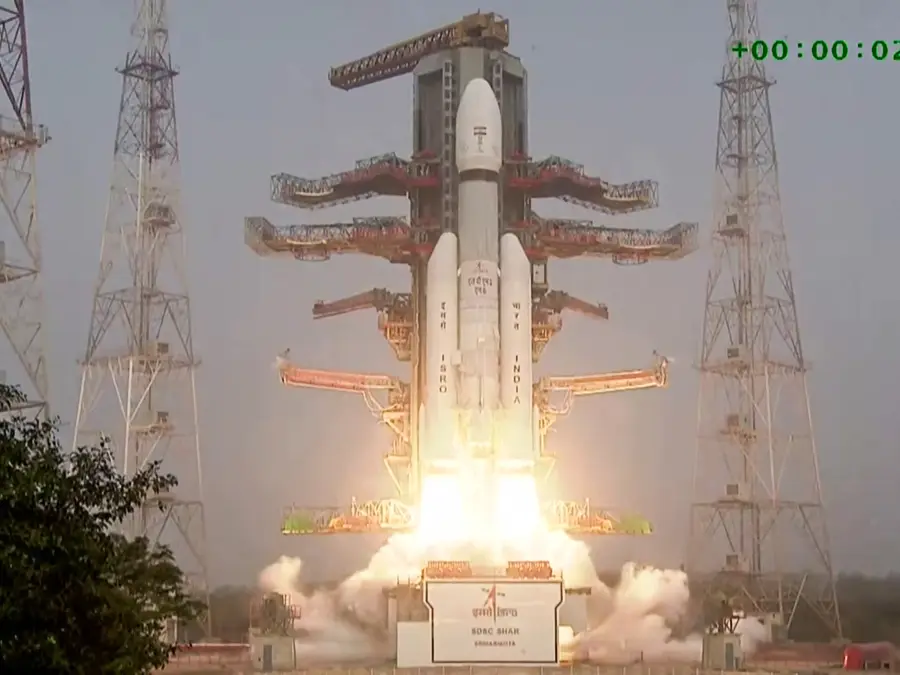
Indian Space Research Organisation (ISRO) launches LVM3-M6 carrying BlueBird Block-2 satellite into orbit under a commercial agreement with US-based AST SpaceMobile from Sriharikota on December 24, 2025. Photograph: (ANI)
NASA is looking to partner with ISRO for its planned lunar base, seeing India's cost-effective space missions, Chandrayaan-3's success and growing human spaceflight capabilities as valuable assets for long-term Moon exploration.
America wants to build a base on the Moon, and NASA wants ISRO on board. The reasons are clear. The United States needs to make the next era of lunar exploration bigger, faster and more cost-efficient. India has built its space programme around exactly that formula. Most importantly, it has already shown the world how to reach the Moon for a fraction of the cost.
To sum it up in a nutshell, India has got more done, spent less, and above all, got the mission done, making India and ISRO extremely lucrative.
NASA's Moon base programme invitation to ISRO is aimed at establishing a lasting human presence near the Moon's south pole by establishing humanity's first outpost. One that could prepare for crewed missions to Mars and drive lunar scientific breakthroughs.
The invitation came during the ninth meeting of the India-US Civil Space Joint Working Group in Bengaluru. US Ambassador Sergio Gor called it a step towards deepening the US-India deep-space partnership.
And Chandrayaan-3 explains why.
In 2023, ISRO landed safely near the lunar south pole, a historic first, with a mission that cost roughly $75 million. Cheaper did not mean smaller. The mission delivered a landmark result and demonstrated the core strength of India's space model: engineering at a frugal cost, fast execution and the ability to turn limited resources into global-scale achievements.
Trending Stories
)
)
)
)
)
)
)
)
)
)
)
)
)
)
)
)
)
)
)
)
)
)
)
)
)
)
)
)
)
)
)
)
)
)
&im=FitAndFill=(700,400))
)
)
)
)
And that is exactly the kind of partner NASA perhaps needs now.
Because a Moon base is not one mission. NASA envisions a permanent, habitable outpost where astronauts can live, work and conduct scientific research for extended periods. The base would be built through a series of crewed and uncrewed missions, with habitats, power systems, rovers and cargo operations developed over time.
China also has a similar lunar ambition, targeting a crewed Moon landing before 2030 and the construction of an International Lunar Research Station at the Moon's south pole, running directly in a competitive space race alongside NASA's Artemis programme.
And the development comes at a time when India is also building its first national space station, the Bharatiya Antariksh Station, with the first module planned for launch by 2028 and full completion targeted by 2035.
India's maiden human spaceflight is targeted for 2027. And to ensure that Gaganyaan becomes a sustained space exploration mission, ISRO is also reportedly establishing a crew isolation facility and astronaut quarters in Sriharikota, where future astronauts will be trained and equipped for space travel.
The location near the lunar south pole is also strategic. Scientists believe permanently shadowed craters there contain water ice, a potential source for life support and even future fuel production. Some elevated areas also receive near-continuous sunlight, making them valuable for solar power.
But a permanent presence comes with a permanent bill.
Habitats, power, rovers, cargo, life support, science and crewed flights will all have to work again and again. Every mission will cost money. Every failure will come at a high price.
And that is where ISRO's experience becomes a strategic asset.
India has shown it can build, launch and operate complex space missions without the budgets of the world's biggest space powers. It has also shown resilience. Chandrayaan-2 ended in partial success in 2019. Four years later, Chandrayaan-3 landed.
NASA likely sees ISRO as a partner that brings technological sophistication but also something just as important for a long-term Moon programme: cost discipline and proven success.
ISRO could also bring its experience in cost-effective mission design, reliable launch services and lunar science while in return gaining access to advanced expertise in habitats, life-support systems, in-situ resource utilisation and deep-space operations.
India's participation would also push ISRO from robotic lunar exploration towards a role in sustained human presence on the Moon.
So, the next space race may not be won simply by the country that can spend the most. It could also be won by the countries that can achieve the most with the least.