Assam's 'Maidams' as India's entry for UNESCO tag: A look into Ahom kingdom, its history and significance

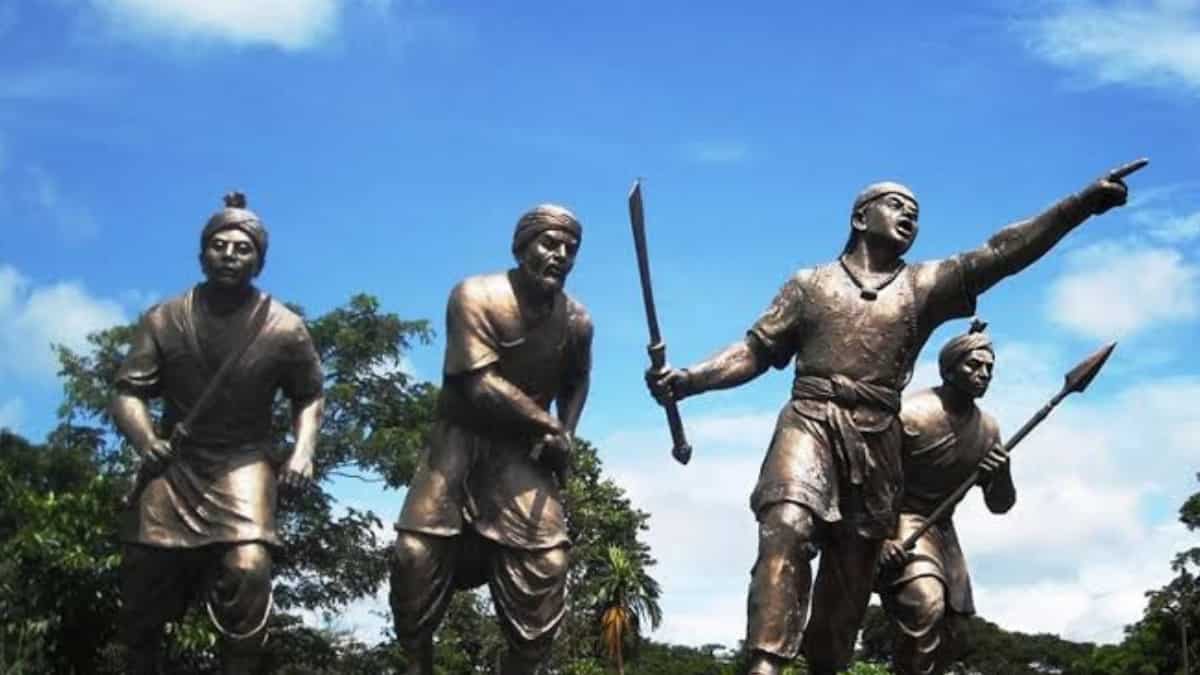
Ahom Kingdom
The Chief Minister of Assam, Himanta Biswa Sarma announced on Monday that the Centre has nominated the maidams of Ahom Kingdom in Charaideo to seek a UNESCO World Heritage Site tag for the historic site. These maidams were chosen out of 52 sites for the UNESCO World Heritage Site tag for the cultural heritage category.
The nomination of the Charaideo maidams comes at the time when India is celebrating the 400th birth anniversary of Lachit Barphukan, who was the legendary general from the Ahom Kingdom who fought the Mughals in 1671.
What are Charaideo Maidams?

The Charaideo Maidams are the representation of the late medieval mound burial tradition of the Tai Ahom community in Assam. The Ahoms ruled Assam for more than 600 years after which the British took over Assam in 1826 ending their rule over the region. The Charaideo is situated more than 400 km east of Guwahati. Guwahati was the first capital of the Ahom dynasty and was founded by Chao Lung Siu-Ka-Pha in 1253.
Till now, 386 Maidams are explored and 90 royal burials have been preserved at Charaideo. These burials are seen as showpieces of the mound burial tradition of the Ahom community. After the 18th century, Ahoms adopted the Hindu cremation method and began to entomb the cremated bones and ashes in a Maidam at Charaideo.
Currently, the Maidams are managed by the Archaeological Survey of India and the State Department of Archaeology under the Ancient Monuments and Sites Remains Act 1958, and under the Assam Ancient Monuments and Records Act 1959.
)
BRICS Summit 2026: PM Modi addresses Day 2 of 18th BRICS summit
)
Bigg Boss 20: Qazi Touqeer gets a special ‘rockstar’ moment from Salman Khan
)
'Iran won't surrender': Pezeshkian sends blunt message to US while attending BRICS Summit in India
)
Did Iran President Pezeshkian touch feet of Hindu spiritual leader at Delhi event as shown in viral video?
)
Why going digital does not always mean becoming more efficient
)
Humans may lose control of AI: Anthropic CEO calls for slowdown, Altman, Musk back him
)
Who is the smiling man beside Modi, Putin and Xi at BRICS Summit 2026?
)
PM Modi and China's Xi offered to help resolve Russia-Ukraine war: Kremlin
)
IND vs AFG, 1st T20I: When and where to watch live streaming in India?
)
BRICS Summit 2026: Consensus on joint declaration, diplomatic win for India
)
BRICS Summit 2026: PM Modi, Xi reach key consensus on ties, China to assume BRICS chairmanship in 2027
)
BRICS Summit day 1: New Delhi declaration adopted with full consensus, big diplomatic win for India
)
War is making Russia stronger? How Ukraine is shaping Moscow’s next generation of weapons
)
Why does your body need time to adjust after a long journey?
)
Why does your skin need protection from UV rays?
&im=FitAndFill=(700,400))
Meet top 5 batters fastest to 3000 runs in T20Is
)
9-year-old Chennai prodigy clears Cambridge IGCSE grade 10 exams
)
From severe mobility problems to recovery: Madhuri the elephant’s journey of wildlife care
)
BRICS Summit 2026: Chinese president Xi Jinping departs from New Delhi after attending BRICS summit
)
Why asking questions could be more important than memorising answers
)
BRICS Summit 2026: PM Modi to hold bilateral with leaders of seven countries
&im=FitAndFill=(700,400))
Why do air defence missiles explode near their target instead of hitting it?
)
BRICS Summit 2026: Global leaders of BRICS nations attend main open session
)
‘Partners, not rivals’: Xi outlines four point plan for stronger India-China ties
)
Ramanathaswamy temple takes centre stage as PM Modi welcomes world leaders at BRICS
)
800 million years old - Scientists discover 'fingerprints' of supercontinent Gondwana in ancient rocks
)
Osama Bin Laden ‘planned’ to target India, CIA reveals dozens of declassified documents
)
Celine Dion makes emotional stage comeback after six years: 'I'm so delighted to see you'
)
Why do wild animals need quiet places to survive?
)
How does the loss of forests affect the way wildlife lives and moves?
)
'He is popular...': Malaysian PM Anwar Ibrahim's praise for PM Modi during bilateral meeting | WATCH
)
Migration protests return to Portsmouth as rival demonstrations face off
)
Why dehydration is the hidden cause of travel fatigue on long flights
)
Trump says Canada eager to reach a deal, it could come ‘fairly soon’ if Ottawa treats US farmers better
)
Houthis launch cross-border strike on Saudi Arabia as Yemen war escalates
)
Top 5 places to visit in Goa beyond its famous beaches
&im=FitAndFill=(700,400))
Why Chinese PL-15 air-to-air missiles use dual-pulse motors compared to European interceptors
)
Could staying indoors all day affect your health?
Who are the Ahom people?
The Ahom, also known as the Tai-Ahom, are an ethnic group found in the Indian states of Assam and Arunachal Pradesh. Members of this group are mixed descendants of the Tai people who arrived in Assam's Brahmaputra valley in 1228 and the local indigenous people who joined them over time. Sukaphaa, the Tai group's leader, and his 9000 followers founded the Ahom kingdom (1228-1826 CE), which ruled over much of the Brahmaputra Valley in modern Assam until 1826.
Ahom Kingdom(1228–1826)
The Ahom Dynasty, a late medieval kingdom, was established in Assam's Brahmaputra Valley in 1228. It was known for its multi-ethnic mix and for successfully retaining its autonomy for 600 years, even fighting the Mughal Empire to keep its independence at one point. Chaolung Sukaphaa, the first King of the Ahom Kingdom, crossed the Patkai mountainous region to reach the Brahmaputra valley and lay the foundations of the Ahom Dynasty.
How did the Ahom Kingdom expand?
Sukaphaa and his followers obtained wet rice farming technology and shared it with the residents of the region. This technology increased agricultural output in the region. The Ahom way of life and government gradually absorbed other people in the region, such as the Barahi, resulting in a large population increase. The absorption process lasted until the Ahom Empire grew large enough to accept other ethnic groups in the 16th century.
Ahoms vs Mughals conflict of 1662
The Ahom Dynasty faced its first significant conflict with an imperial force, the Mughal Empire, in 1615. In 1662, the Mughals conquered the Ahom capital of Garhgaon but were defeated in subsequent battles. Finally, in 1671, the Ahoms, led by Lachit Borphukan, successfully repelled a strong Mughal assault, extending their borders west to the Manas River.