

&imwidth=800&imheight=600&format=webp&quality=medium "Apple growers seek clarity as India-US trade deal raises concerns")
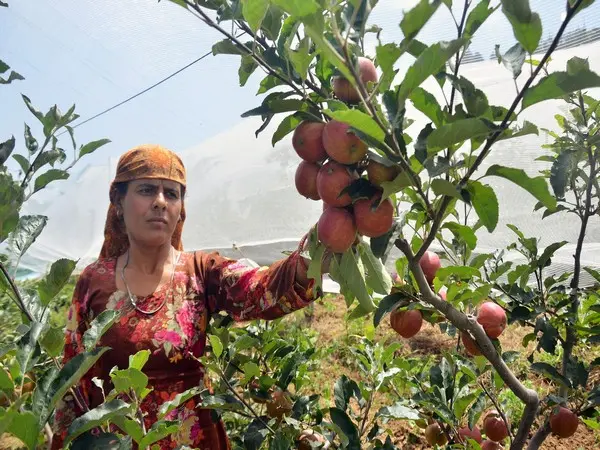
Apple growers in Jammu and Kashmir and Himachal Pradesh have expressed concern and sought clarity from the government of India following the import duty waiver on US apples under the India–US trade agreement. The government, however, maintains that the apple market has not been opened, and domestic growers remain protected through quotas, minimum import prices, and duties. The quota allotted to the U.S. is lower than existing import levels, ensuring no added market pressure.
Growers in the Kashmir Valley fear that cheaper U.S. apple imports could flood Indian markets, depress prices of local produce from Jammu and Kashmir, Himachal Pradesh, and Uttarakhand, and threaten the livelihoods of thousands of farmers.
India is the world’s seventh-largest producer of apples and also one of the largest consumers, with an annual demand of around 2.5 million metric tonnes. The country produces approximately 2.0 to 2.1 million metric tonnes of apples each year. Nearly 80 percent of this production comes from orchards in Jammu and Kashmir, while the remaining share is contributed by Himachal Pradesh and Uttarakhand.
“The recent India trade deal raises serious concerns. If imported apples become cheaper than domestically grown apples, it will not be suitable for Kashmir. Apple growers are the backbone of Jammu and Kashmir’s horticulture sector, and any adverse impact on them will directly affect our economy. This development will severely hurt our local apple growers. I respectfully urge the Hon’ble Home Minister, the Union Government, and the Hon’ble Lieutenant Governor to take note of this issue and introduce a policy to safeguard the horticulture sector of Jammu and Kashmir, particularly the apple industry. Kashmiri apples are among the finest in the world and deserve fair market value. If US apples are priced cheaper than Kashmiri apples, they will inevitably dominate the market. Therefore, I request the government to prioritise domestic apple growers from Jammu and Kashmir and Himachal Pradesh. Our focus should first be on protecting and promoting our local growers, and only thereafter on importing or exporting apples from other countries," said Tariq Ghani, President, Chamber of Commerce.
Also read: In a first, Indian Railways launches first parcel train from Kashmir to Delhi to aid apple growers
Trending Stories
&imwidth=180&imheight=135&format=webp&quality=medium)
Other Mommy leads North American box Office as Verity, Resident Evil round out top four
&im=FitAndFill=(700,400)&imwidth=180&imheight=135&format=webp&quality=medium)
Navratri 2026: 9 days, 9 forms of Goddess Durga and 9 colours- Check the complete list
&imwidth=180&imheight=135&format=webp&quality=medium)
Anti-SIR protest in Mumbai: Protestors wear black masks & ribbons in Mumbai
&imwidth=180&imheight=135&format=webp&quality=medium)
BCCI rejects venue shift reports, India vs Sri Lanka 1st ODI to remain in Delhi
&imwidth=180&imheight=135&format=webp&quality=medium)
Diljit Dosanjh’s Delhi concert gets a new date: When and where to catch the singer
&im=FitAndFill=(700,400)&imwidth=180&imheight=135&format=webp&quality=medium)
Is sending robots to Mars easier than sending humans?
&imwidth=180&imheight=135&format=webp&quality=medium)
A watchdog rated 'ChatGPT for Teens' an unacceptable risk and says keep under-18s off it
&imwidth=180&imheight=135&format=webp&quality=medium)
1,500 drones illuminate Mumbai sky as Cordelia Cruises unveils second ship, Cordelia Sky
&imwidth=180&imheight=135&format=webp&quality=medium)
'Just coincidence': Police mistakes protester as AISA chief Neha Bora, arrests her from site
&imwidth=180&imheight=135&format=webp&quality=medium)
Anthropic's AI invented a murder witness and sent the fake tip to Philadelphia police
&imwidth=180&imheight=135&format=webp&quality=medium)
Congress demands action against chief election commissioner
&imwidth=180&imheight=135&format=webp&quality=medium)
CJI Surya Kant declines INDIA bloc leaders’ request for meeting ahead of march to SC, asks them to file petition
&imwidth=180&imheight=135&format=webp&quality=medium)
Saif Ali Khan is finally on Instagram! Here's what he shared in his first post
&imwidth=180&imheight=135&format=webp&quality=medium)
'Turn approver, resign, we'll forgive you': Rahul Gandhi claims receiving messages from CEC Gyanesh Kumar
&imwidth=180&imheight=135&format=webp&quality=medium)
One Indian killed in Riyadh airport attack; 11 others injured : MEA
&imwidth=180&imheight=135&format=webp&quality=medium)
Top AI models flunked a test of inventing new AI research, so much for self-improving AI
&imwidth=180&imheight=135&format=webp&quality=medium)
Wasim Jaffer blames Ajit Agarkar-led selection panel for Virat Kohli’s Test retirement
&imwidth=180&imheight=135&format=webp&quality=medium)
'Ouch!!! That must hurt': Kangana Ranaut hails Kamal Haasan's sharp reply to Elon Musk over Starlink row
&imwidth=180&imheight=135&format=webp&quality=medium)
Sidhu Moose Wala’s younger brother wins hearts by recreating late singer’s signature move at Toronto Hologram Show
&imwidth=180&imheight=135&format=webp&quality=medium)
UK school ditches technology, shifts from screen to pen and paper for learning
&imwidth=180&imheight=135&format=webp&quality=medium)
Telangana ATM heist: Thieves in nighties arrive in ambulance, break into SBI ATM in Kamareddy - VIDEO
&imwidth=180&imheight=135&format=webp&quality=medium)
Houthis claim Riyadh airport attacks, Aramco strikes; issue fresh warning to airlines, travellers and workers
&imwidth=180&imheight=135&format=webp&quality=medium)
Portugal Federation confirms Cristiano Ronaldo’s return to national team despite suspension
&imwidth=180&imheight=135&format=webp&quality=medium)
Delhi protests: 'Court should not be dragged into political activity', says CJI Surya Kant
&im=FitAndFill=(700,400)&imwidth=180&imheight=135&format=webp&quality=medium)
New OTT releases this week (October 12-18, 2026): Sacrifice, Koffee with Karan S9, Roadies Rebirth- 6 titles coming on Netflix, JioHotstar and more
&imwidth=180&imheight=135&format=webp&quality=medium)
Microsoft's Nadella says treat every AI model as already hacked, and build an 'emergency brake'
&imwidth=180&imheight=135&format=webp&quality=medium)
Delhi protest: CJI Surya Kant declines to meet India Bloc leaders
&imwidth=180&imheight=135&format=webp&quality=medium)
Telangana man allegedly recruited into Russian military dies near Ukraine border
&imwidth=180&imheight=135&format=webp&quality=medium)
China imposes first-ever sanctions on ministers from Taiwan allies: What this means
&imwidth=180&imheight=135&format=webp&quality=medium)
McSweeney reveals how studying Virat Kohli’s YouTube clips helped Australia A conquer India
&imwidth=180&imheight=135&format=webp&quality=medium)
Maharashtra appoints FDA commissioner Tukaram Mundhe as secretary of committee for MPSC overhaul amid stir
&imwidth=180&imheight=135&format=webp&quality=medium)
Iran: US accepted some conditions, Clarity needed on others
&imwidth=180&imheight=135&format=webp&quality=medium)
Nana Patekar's cause of death confirmed; here's what his postmortem report says
&imwidth=180&imheight=135&format=webp&quality=medium)
iPhone Duo price index: Tracking Apple’s latest pricing trends
&imwidth=180&imheight=135&format=webp&quality=medium)
'Say no to Muse': Meta has no control over its own moderation AI while it forces a security nightmare on everyone
Growers fear that with the duty waiver, the price of imported US apples could fall significantly, making it difficult for Indian farmers to compete. Domestic apples typically have higher production and transportation costs, especially in hilly regions.
While other imported varieties, such as apples from Iran, already sell at relatively lower prices in India, US apples are more popular among Indian consumers due to their appearance, shelf life, and branding. Industry experts warn that the new trade arrangement could further tilt consumer preference toward imported apples.
''With regard to India’s trade deal that allows American products to enter India at zero percent tax, it is evident that U.S. apples could gain a stronger foothold in the Indian market. Kashmiri apples are currently supplied across the country and fetch good prices. However, if American apples enter at lower prices due to tax concessions, they may be sold cheaper in the market. It must also be acknowledged that American produce benefits from more advanced technology. This is a wake-up call for our growers to upgrade their technology and improve quality so their produce remains competitive and sells smoothly in the mandis.At the same time, the government must provide a clear and transparent picture to the people of Jammu and Kashmir and Himachal Pradesh, assuring them that this trade deal will not harm the domestic apple market. Proper safeguards and support mechanisms are essential to protect our local growers,' said Rashid Raahil, Horticulture Expert.
Horticulturists have urged the government to clarify the impact of the trade deal on domestic farmers and consider protective measures to safeguard the apple-growing economy of Jammu and Kashmir and Himachal Pradesh, which plays a crucial role in rural employment and regional income.
