
&imwidth=800&imheight=600&format=webp&quality=medium "‘Request for talks came from Pakistan’: Islamabad aimed to bring 'India to its knees in 48 hours' on May 10, but New Delhi turned the tables in 8")
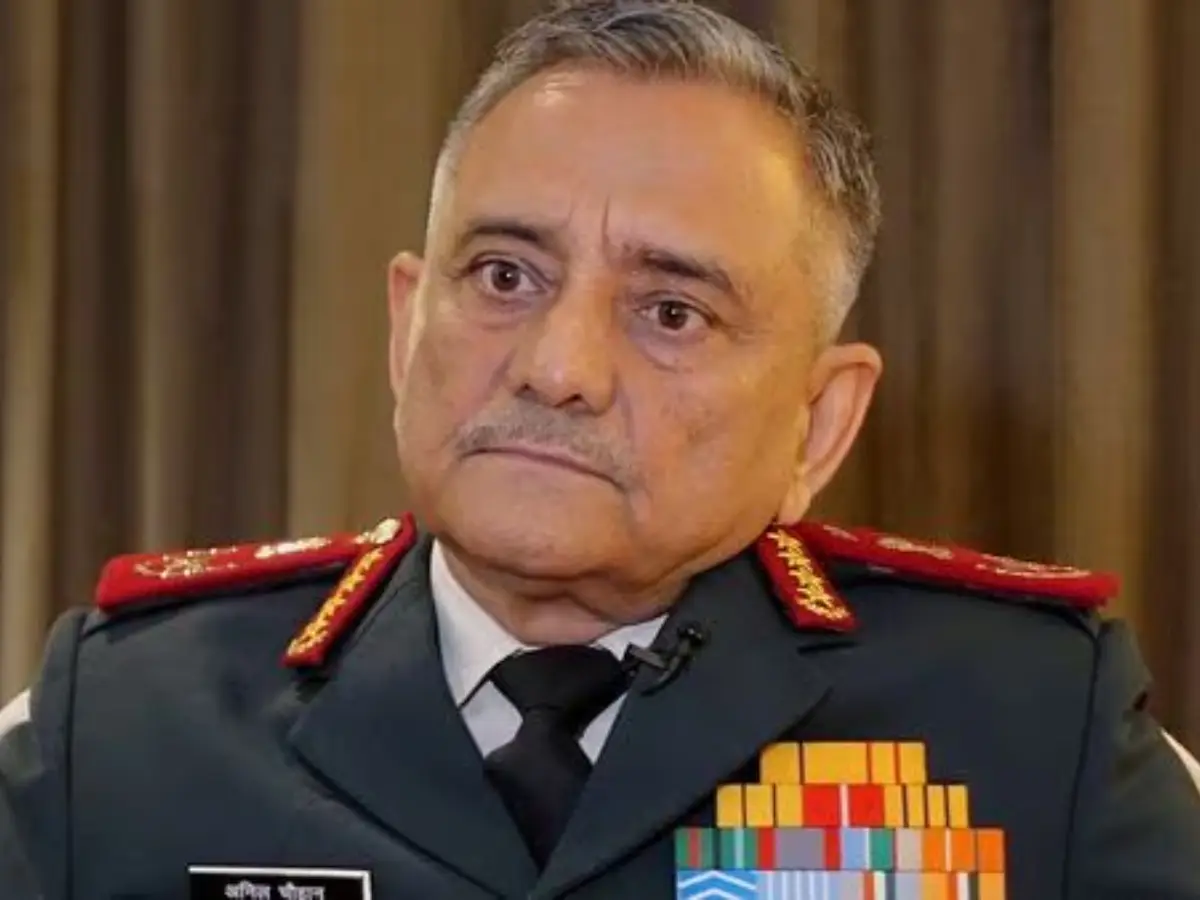
Chief of Defence Staff (CDS) General Anil Chauhan on Tuesday said that Pakistan was responsible for escalating the recent military conflict, following Indian strikes on terrorist infrastructure in Pakistan and PoK under Operation Sindoor.
Speaking at Savitribai Phule Pune University, General Chauhan said that Pakistan had planned to push India “to its knees in 48 hours” with a series of attacks launched on the night of May 10, three days after India carried out pre-emptive military operations targeting terror sites in Pakistan and Pakistan-occupied Kashmir (PoK).
“On the 10th of May, at about 1 am, their (Pakistan) aim was to get India to its knees in 48 hours. Multiple attacks were launched and in some manner, they have escalated this conflict, which we had actually hit only terror targets,” he said.

India responded swiftly, halted Pakistani operations in 8 hours
General Chauhan added that the escalation did not go according to Pakistan’s plan. “Operations, which Pakistan thought would continue for 48 hours, folded up in about eight hours,” he said.
In response to Pakistan’s offensive, India struck back by targeting several key airbases across the border, including Nur Khan, Murid, and Rafiqui. These precision strikes marked a strong military response to what India viewed as a full-scale escalation by Islamabad.
Trending Stories
)
BRICS Summit 2026: Global leaders of BRICS nations attend main open session
)
Houthis launch cross-border strike on Saudi Arabia as Yemen war escalates
)
Why asking questions could be more important than memorising answers
)
BRICS Summit 2026: PM Modi addresses Day 2 of 18th BRICS summit
)
IND vs AFG, 1st T20I: When and where to watch live streaming in India?
)
Why going digital does not always mean becoming more efficient
)
Migration protests return to Portsmouth as rival demonstrations face off
)
PM Modi and China's Xi offered to help resolve Russia-Ukraine war: Kremlin
)
War is making Russia stronger? How Ukraine is shaping Moscow’s next generation of weapons
)
Could staying indoors all day affect your health?
)
Humans may lose control of AI: Anthropic CEO calls for slowdown, Altman, Musk back him
)
BRICS Summit 2026: PM Modi, Xi reach key consensus on ties, China to assume BRICS chairmanship in 2027
)
Bigg Boss 20: Qazi Touqeer gets a special ‘rockstar’ moment from Salman Khan
)
800 million years old - Scientists discover 'fingerprints' of supercontinent Gondwana in ancient rocks
)
Top 5 places to visit in Goa beyond its famous beaches
)
Osama Bin Laden ‘planned’ to target India, CIA reveals dozens of declassified documents
)
BRICS Summit 2026: PM Modi to hold bilateral with leaders of seven countries
)
BRICS Summit 2026: Consensus on joint declaration, diplomatic win for India
)
BRICS Summit 2026: Chinese president Xi Jinping departs from New Delhi after attending BRICS summit
)
'He is popular...': Malaysian PM Anwar Ibrahim's praise for PM Modi during bilateral meeting | WATCH
)
How does the loss of forests affect the way wildlife lives and moves?
)
Trump says Canada eager to reach a deal, it could come ‘fairly soon’ if Ottawa treats US farmers better
)
Who is the smiling man beside Modi, Putin and Xi at BRICS Summit 2026?
)
Why does your skin need protection from UV rays?
)
'Iran won't surrender': Pezeshkian sends blunt message to US while attending BRICS Summit in India
&im=FitAndFill=(700,400))
Why do air defence missiles explode near their target instead of hitting it?
&im=FitAndFill=(700,400))
Why Chinese PL-15 air-to-air missiles use dual-pulse motors compared to European interceptors
)
Ramanathaswamy temple takes centre stage as PM Modi welcomes world leaders at BRICS
)
BRICS Summit day 1: New Delhi declaration adopted with full consensus, big diplomatic win for India
)
Why dehydration is the hidden cause of travel fatigue on long flights
)
Did Iran President Pezeshkian touch feet of Hindu spiritual leader at Delhi event as shown in viral video?
)
Celine Dion makes emotional stage comeback after six years: 'I'm so delighted to see you'
&im=FitAndFill=(700,400))
Meet top 5 batters fastest to 3000 runs in T20Is
)
9-year-old Chennai prodigy clears Cambridge IGCSE grade 10 exams
)
Why do wild animals need quiet places to survive?
)
‘Partners, not rivals’: Xi outlines four point plan for stronger India-China ties
)
Why does your body need time to adjust after a long journey?
)
From severe mobility problems to recovery: Madhuri the elephant’s journey of wildlife care
Pakistan reached out for talks after heavy military response
According to CDS Chauhan, it was after this decisive Indian counteraction that Pakistan sought to de-escalate the situation. “Pakistan’s decision to talk to India on May 10 stemmed from realisation that it will suffer more if its operation continues. When request for talks and de-escalation came from Pakistan, we accepted it,” he said.
Later that day, Pakistan’s Director General of Military Operations (DGMO) contacted their Indian counterpart via the hotline, signalling readiness to begin dialogue.
What happened on the night of May 10?
Tensions peaked on the night between May 9 and 10, when Pakistan launched attacks across 26 locations—stretching from Srinagar in Jammu & Kashmir to Naliya in Gujarat. These strikes included high-speed missile attacks at 1:40 AM aimed at Indian airbases in Punjab.
Indian Air Force (IAF) stations in Udhampur, Pathankot, Adampur, and Bhuj were among those targeted. According to statements from the Defence and External Affairs Ministries, Pakistan also attacked schools and medical centres at IAF bases in Srinagar, Udhampur, and Awantipora.
The majority of these attacks were intercepted or neutralised by Indian forces.
In response, India carried out precise airstrikes on military facilities inside Pakistan, hitting strategic locations such as Chaklala, Rahim Yar Khan, Sukkur, and Chunian.
By 5 PM on May 10, both countries declared a ceasefire, officially halting hostilities.
