'No cosmetic permitted as injection under law': India drug regulator CDSCO issues strict warning

&imwidth=600&imheight=450&format=webp&quality=medium "'No cosmetic permitted as injection under law': India drug regulator CDSCO issues strict warning")
Injectables excluded from cosmetic category Photograph: (Pexels)
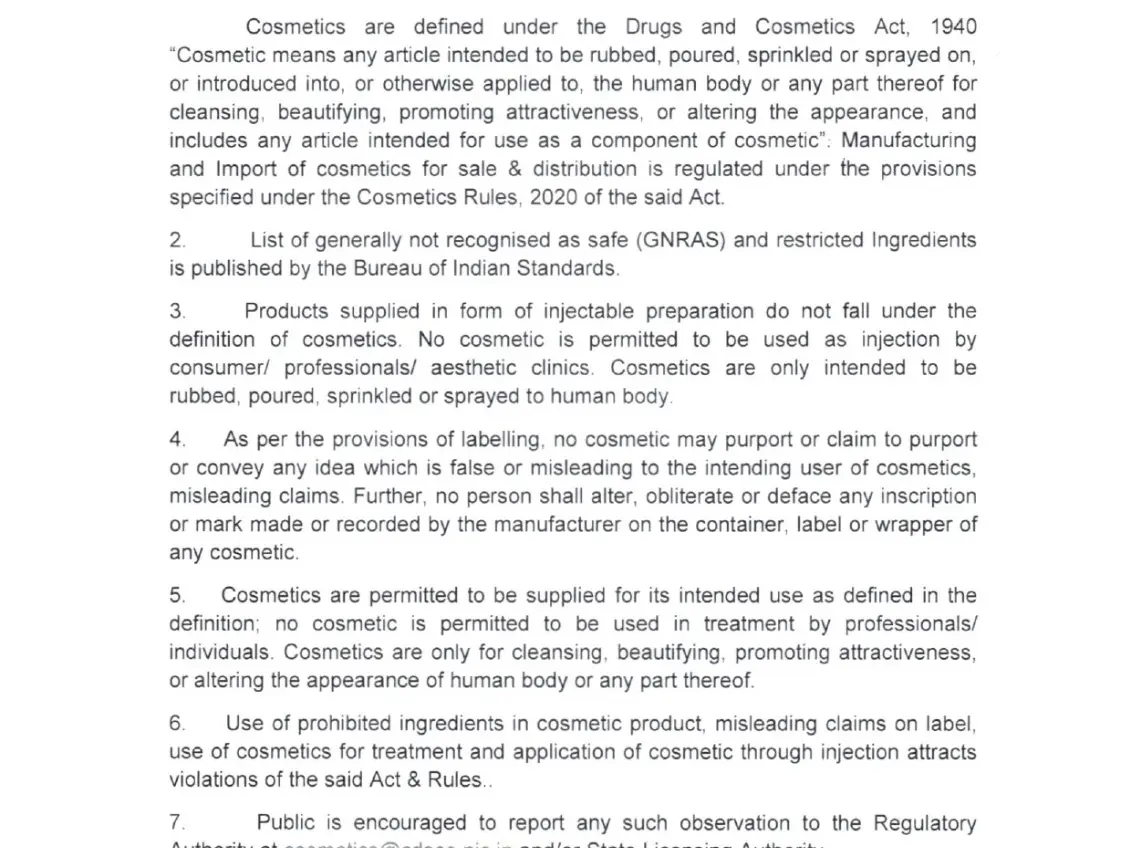
According to the regulator, cosmetics are legally defined under the Drugs and Cosmetics Act, 1940 as substances intended to be 'rubbed, poured, sprinkled or sprayed' on the human body for cleansing, beautifying, promoting attractiveness, or altering appearance.
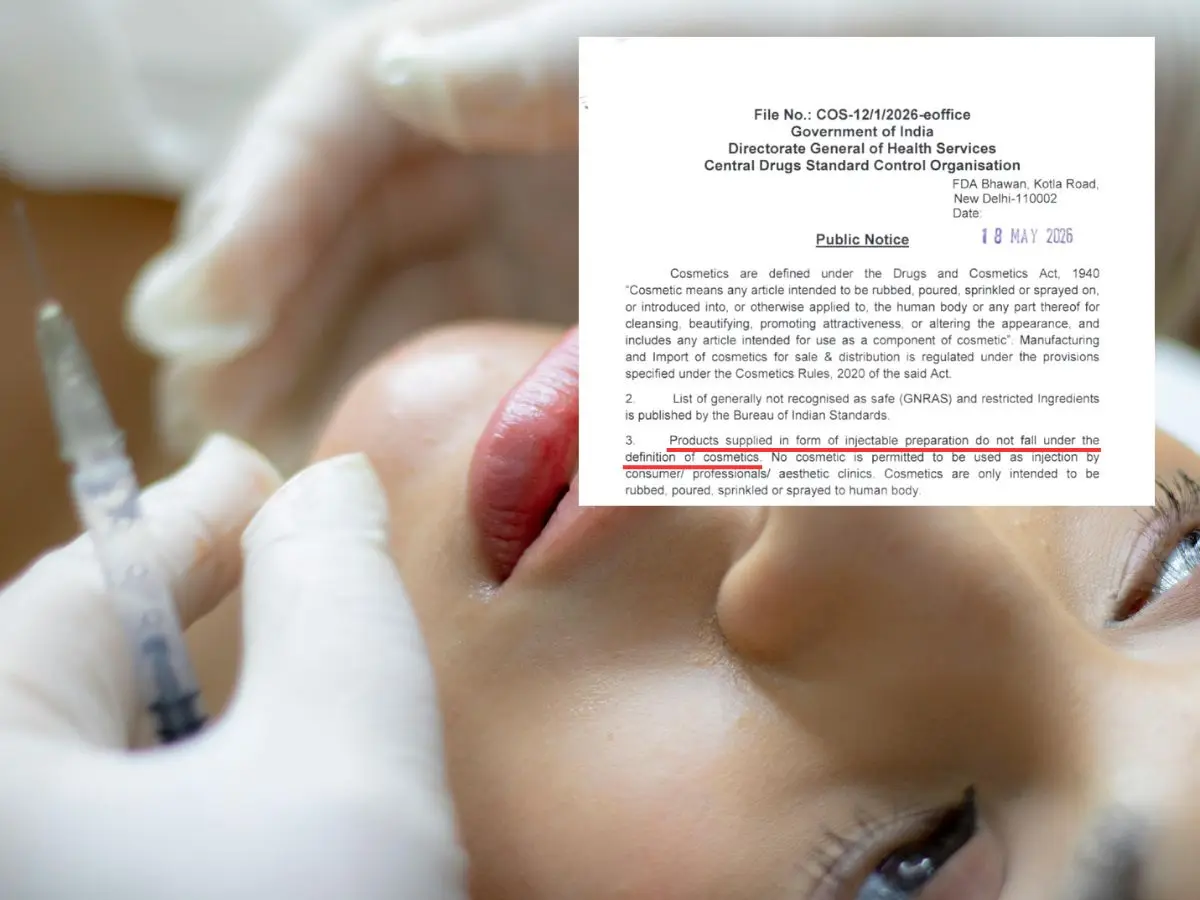
India’s central drug regulator, the Central Drugs Standard Control Organisation (CDSCO), has issued a clear advisory stating that cosmetic products supplied in injectable form do not fall within the legal definition of cosmetics and are not permitted for use by consumers, professionals, or aesthetic clinics. The clarification comes amid the rising popularity of non-surgical aesthetic procedures promoted as cosmetic treatments in clinics and wellness centres.
According to the regulator, cosmetics are legally defined under the Drugs and Cosmetics Act, 1940 as substances intended to be “rubbed, poured, sprinkled or sprayed” on the human body for cleansing, beautifying, promoting attractiveness, or altering appearance.
Injectables Excluded Under Drugs and Cosmetics Act
The CDSCO notice, issued on May 18, explicitly states: “Products supplied in form of injectable preparation do not fall under the definition of cosmetics. No cosmetic is permitted to be used as injection by consumer/ professionals/ aesthetic clinics.”
It further reinforces that cosmetics are strictly intended for external application and cannot be used for treatment purposes. “Cosmetics are only intended to be rubbed, poured, sprinkled or sprayed to human body,” the notice added, emphasising that injectable use falls outside the legal framework governing cosmetics.
Trending Stories
)
)
)
)
)
)
)
)
)
)
)
)
)
)
)
)
)
)
)
)
)
)
)
)
)
)
)
)
)
)
)
)
)
)
&im=FitAndFill=(700,400))
)
)
)
)
The regulator also warned that misleading labelling, false claims, and the use of prohibited ingredients violate the Drugs and Cosmetics Act and Cosmetics Rules, 2020.
)
Injectables excluded from cosmetic category Photograph: (Pexels)
Misleading Claims and Safety Concerns Flagged
CDSCO highlighted concerns over misleading advertising and unauthorised cosmetic practices, noting that such violations attract legal action under existing regulations. It also referred to the Bureau of Indian Standards (BIS) list of “generally not recognised as safe (GNRAS)” and restricted ingredients used in cosmetic formulations. The notice states: “As per the provisions of labelling, no cosmetic may purport or claim to purport or convey any idea which is false or misleading to the intending user of cosmetics.”
READ MORE: Elon Musk’s SpaceX plans 10,000 launches annually in 5 years; FAA says more reliability is required!
It further added that cosmetics cannot be used for treatment purposes by professionals or individuals, reinforcing that their function is limited to “cleansing, beautifying, promoting attractiveness, or altering the appearance” of the human body.
Enforcement and Public Advisory
The regulator has urged manufacturers, importers, professionals, and consumers to comply with the law and avoid unauthorised use of cosmetic products in injectable form. It warned that violations involving injectable use, prohibited ingredients, or misleading claims would be treated as offences under the Act and Rules. The Drugs Controller General of India (DCGI), Dr Rajeev Singh Raghuvanshi, issued the notice to all stakeholders, including state licensing authorities, and encouraged the public to report violations via official channels. The advisory aims to curb the growing misuse of cosmetic products in aesthetic procedures and ensure consumer safety amid increasing demand for cosmetic enhancements.