Pakistan angle to ‘Cockroach Janta Party’? Some netizens question foreign followers on Instagram — Founder reacts!

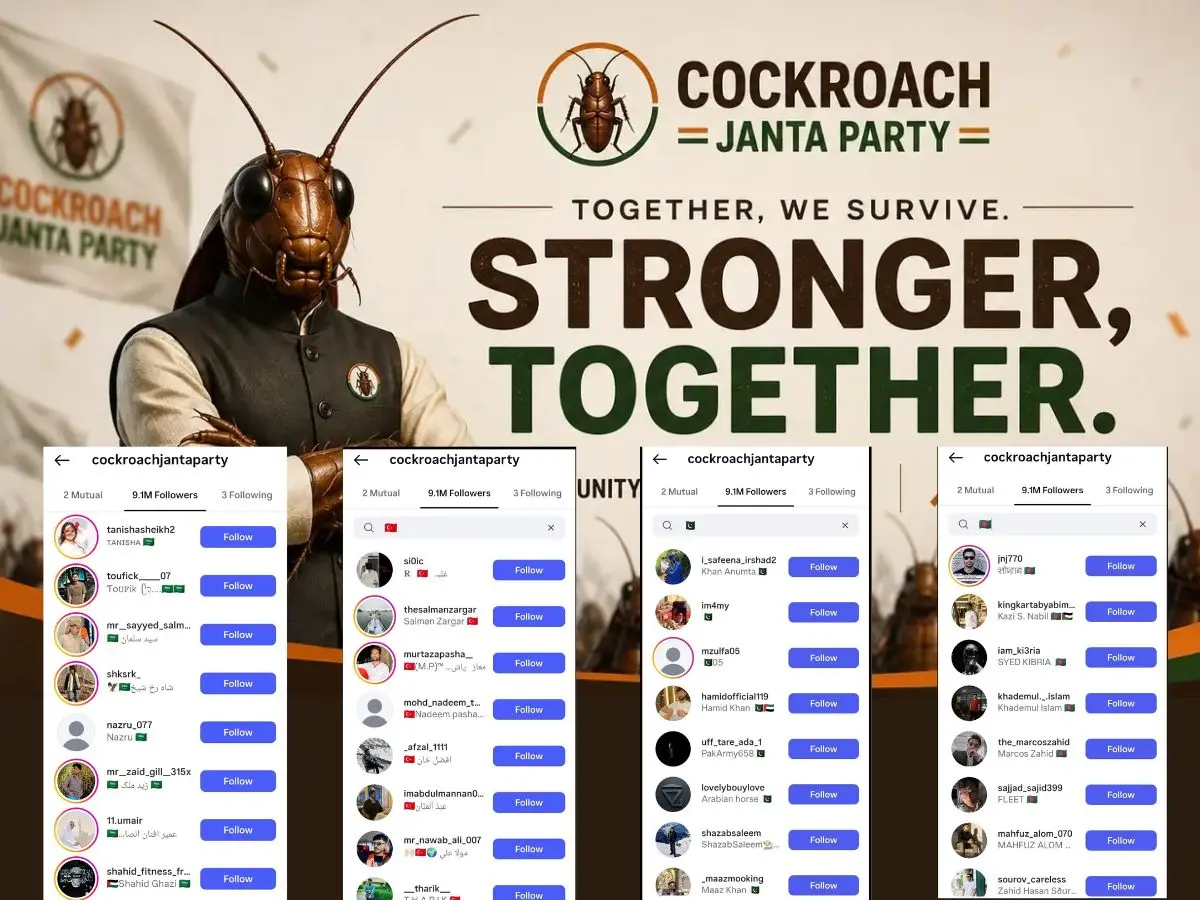
The composition of CJP’s social media audience has become a major talking point online, with several users claiming that a large share of the party’s followers are based outside India.
Overseas Followers Trigger Political Debate
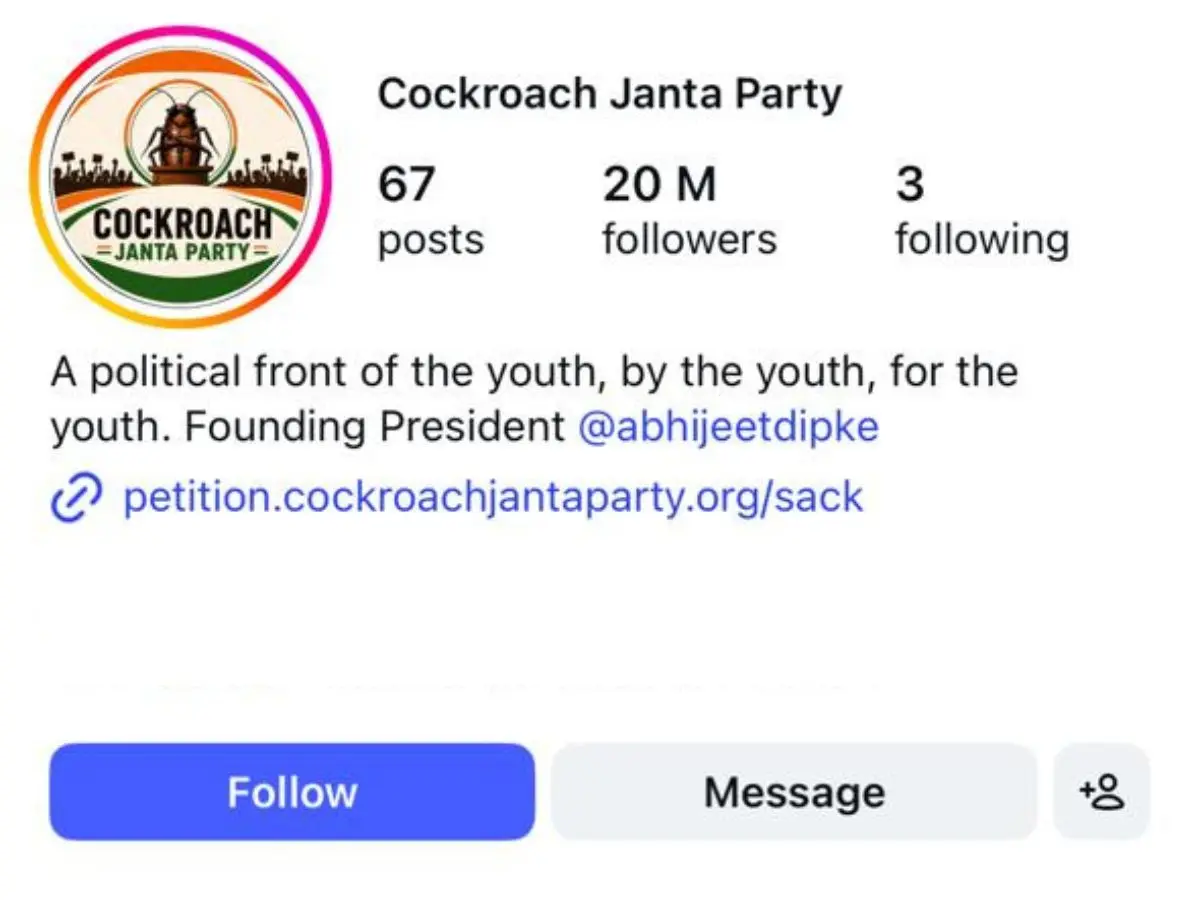
India’s newest viral political satire phenomenon, the Cockroach Janta Party (CJP), has triggered fierce debate online after crossing 20 million followers on Instagram, overtaking the official Instagram followings of both the Bharatiya Janata Party and the Indian National Congress. The sudden rise has also drawn attention to the party’s overseas audience, with some social media users claiming that large sections of its followers are based in Pakistan, Bangladesh and Turkey. Now, the founder of CJP has reacted sharply to the allegations.
Questions Raised Over Foreign Follower Base
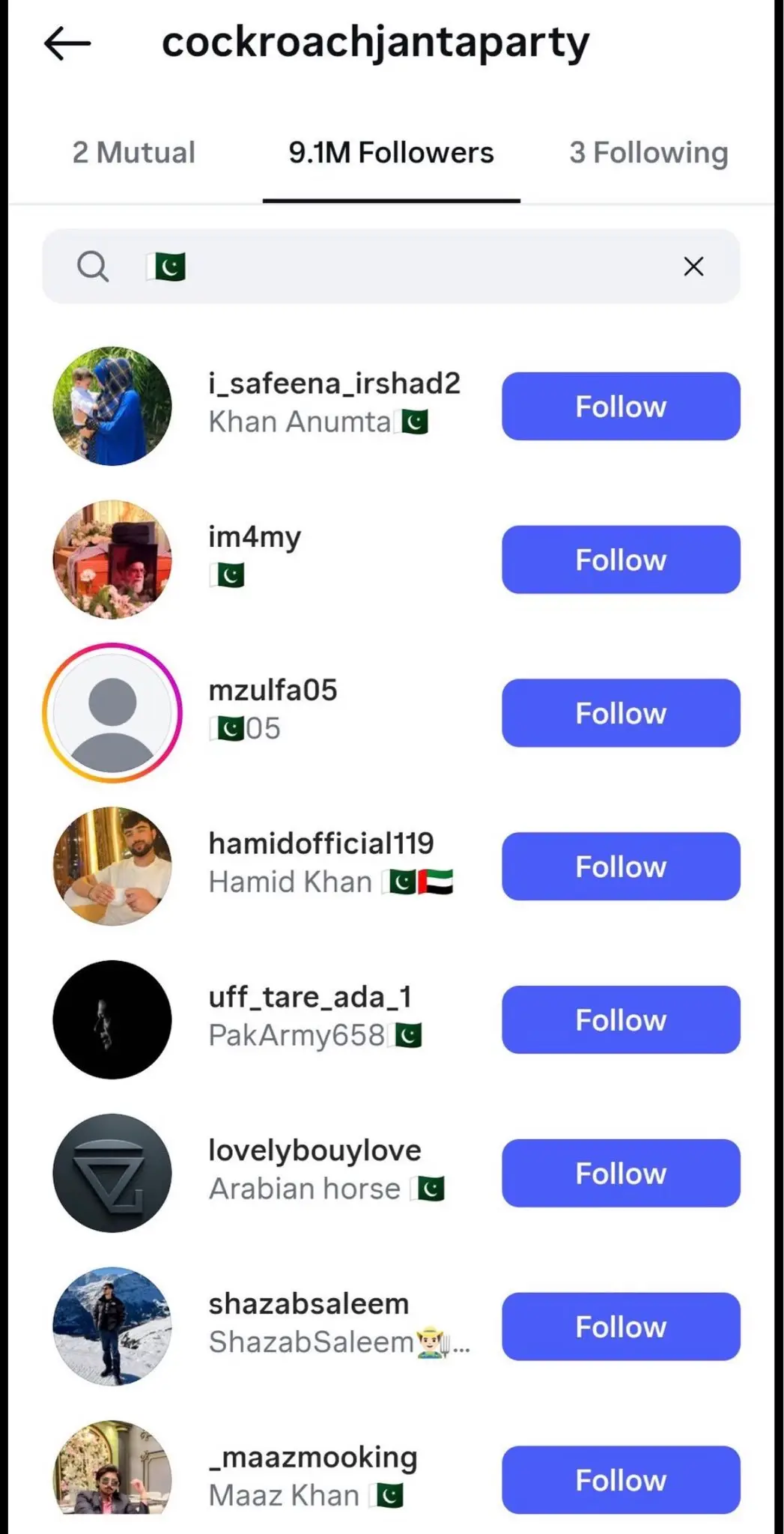
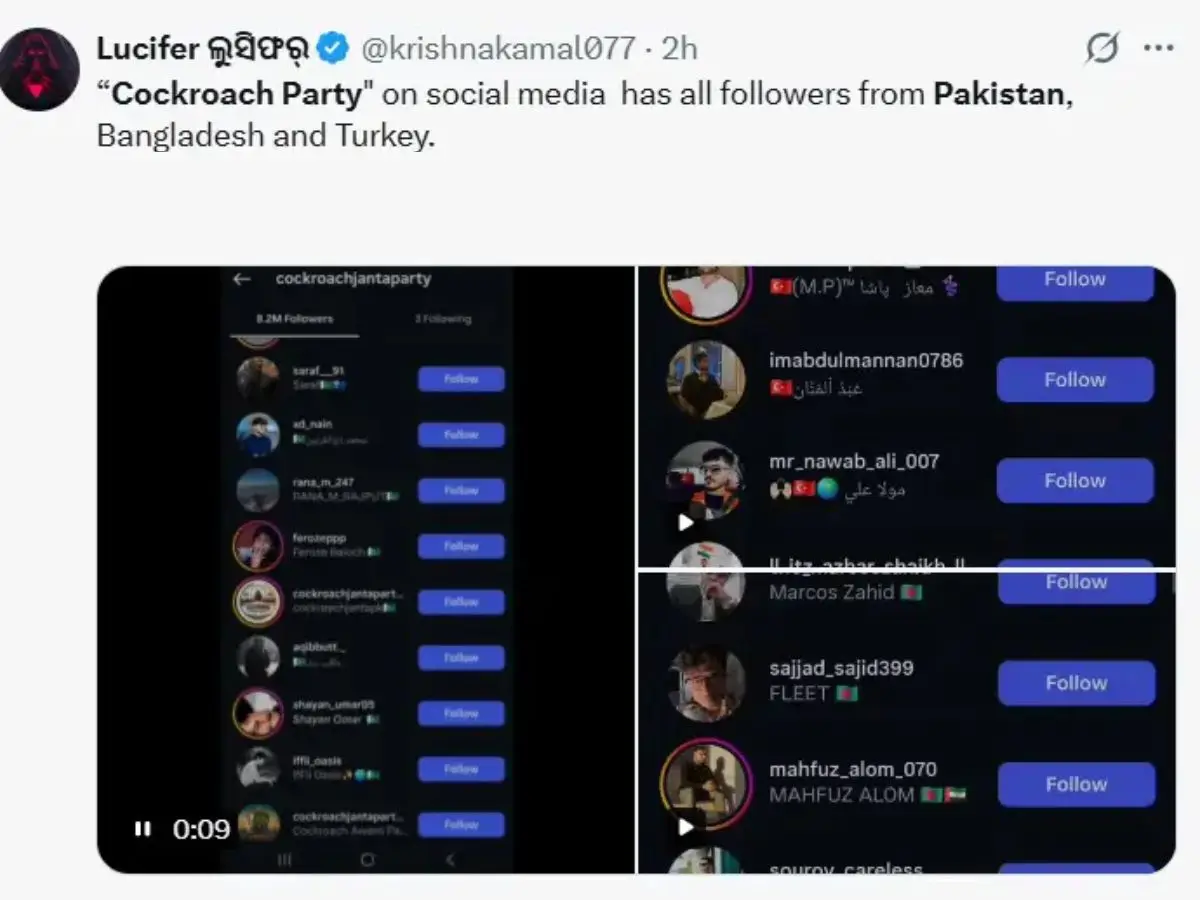
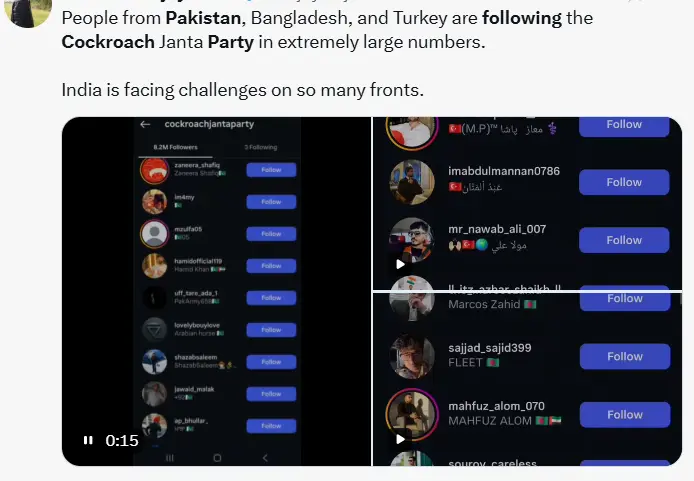
The composition of CJP’s social media audience has become a major talking point online, with few users claiming that a large share of the party’s followers are based outside India. Screenshots and videos circulated on Instagram and X appeared to show follower analytics listing Pakistan, Bangladesh, Saudi Arabia and Turkey among the top audience locations. Some users alleged that Indian followers accounted for only a small percentage of the total audience, although these claims have not been independently verified. The issue has fuelled political reactions online, with critics questioning how a newly-created satire page amassed millions of followers within days.
Netizen point out observations
Some users also alleged that a significant number of the followers could be bot or inactive accounts, pointing to the unusually rapid growth of the page within a short span of time. This claims also, however, has not been independently verified by WION. One X user alleged that “Citizens from Pakistan, Bangladesh & USA forms 77% of their Insta followers. India contributes only 9%.” Others claimed that “Pakistan, Bangladesh, Turkey and supporters of Congress, Aam Aadmi Party, and SDPI have all started promoting Cockroach Janata Party.”
How the ‘Cockroach’ Controversy Began
The controversy erupted after reports around remarks made by Chief Justice of India Surya Kant during a court hearing on May 15. Comments referring to individuals using fake degrees as “cockroaches” and “parasites” sparked backlash online, particularly among unemployed youth frustrated over job scarcity and competitive examination controversies. Justice Kant later clarified that his remarks had been misquoted and were directed specifically at those entering professions with “fake and bogus degrees”. He stated that reports suggesting he insulted India’s youth were “totally baseless”. However, by then, the Cockroach Janta Party had already transformed the episode into a full-scale internet movement.
From Satire Page to Viral Political Movement
The digital-only collective was founded by former AAP social media worker Abhijeet Dipke. The group describes itself as “a political party for the lazy, the unemployed, and the chronically correct”, with headquarters “wherever the wifi works”. Within two days of launch, CJP claimed it had attracted more than 40,000 members. Its rapid rise on Instagram has been one of the more striking aspects of the controversy. The BJP currently has around 8.8 million Instagram followers, while Congress has roughly 13.3 million, both below CJP’s tally.
Despite its humorous branding, the group’s manifesto contains pointed political demands. These include a ban on post-retirement Rajya Sabha seats for chief justices, a 20-year election ban for defecting MPs and MLAs, and 50 per cent reservation for women in Parliament and the Union Cabinet. Other proposals include action against the Chief Election Commissioner in cases of “legit vote deletion” and cancellation of licences of media houses owned by Ambani and Adani. The organisation says it “firmly believes in the Constitution of India” and claims its politics is rooted in constitutional values and public accountability.
Claims of ‘Toolkit’ Remain Unverified
As the party’s popularity surged, few social media users accused the movement of being part of a larger “toolkit” designed to provoke unrest and riots. However, no evidence has been publicly produced to substantiate those allegations. For now, the Cockroach Janta Party remains an unusual mix of satire, protest politics and internet culture, one that has rapidly moved from meme pages to the centre of India’s online political discourse.
Founder reacts
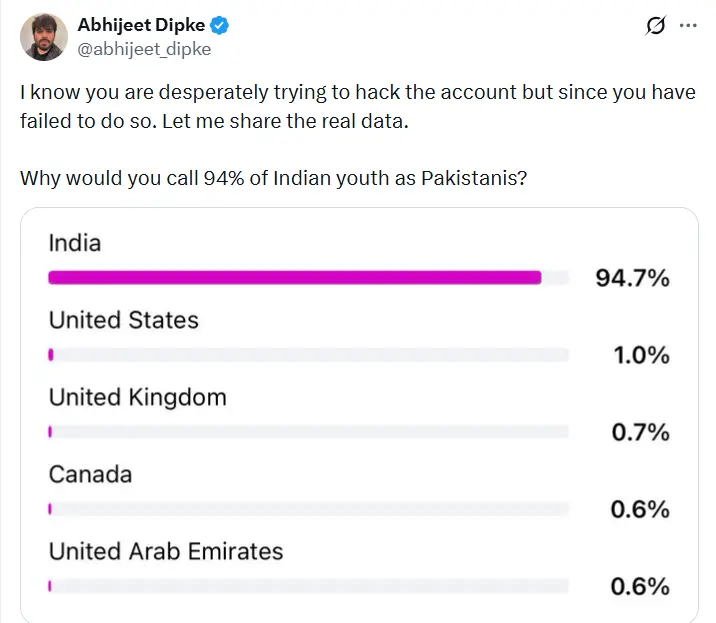
Reacting to the allegations, Dipke took to social media platform X to share a detailed breakdown of the Instagram handle’s audience demographics. The data revealed that nearly 95 per cent of the followers are based in India, while the United States ranks second with around 1 per cent of the total audience. Notably, no Pakistan or Bangladesh-based users featured among the top five countries in the follower distribution.
)
)
)
)
)